Junior dos Santos Biography: A Poor Kid Punches to a Crown
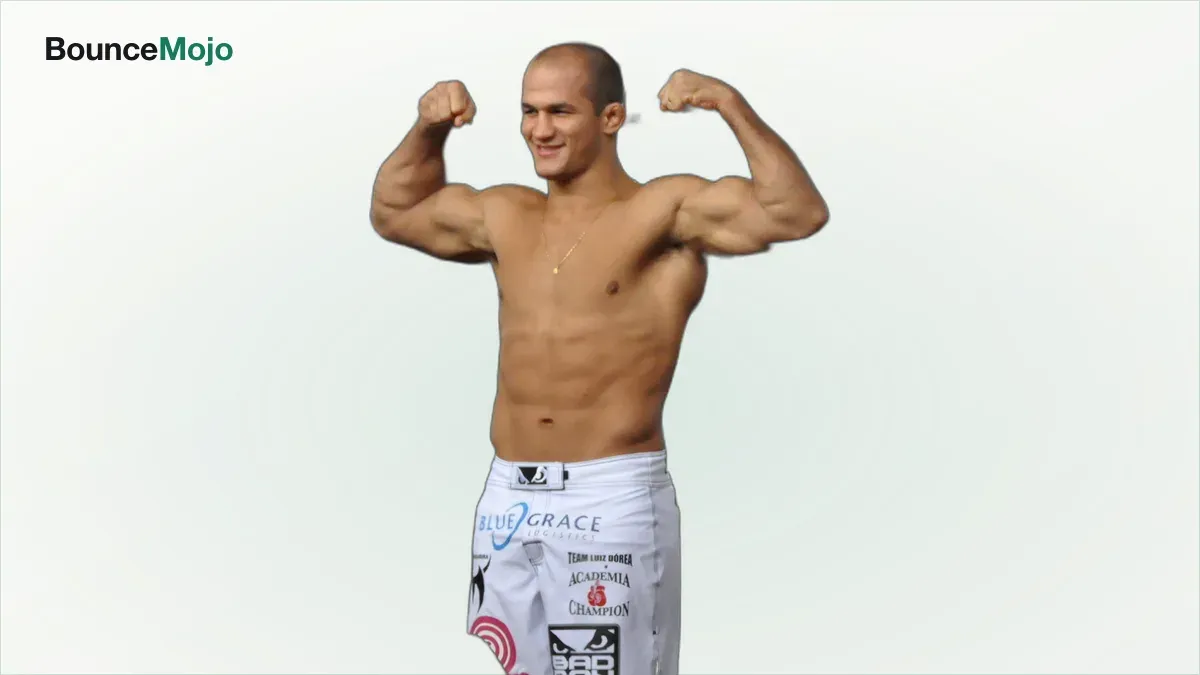
Junior dos Santos owned one of the most feared right hands in heavyweight history. When it landed, fights ended.
Here’s what most people miss: the man behind that terrifying punch is famous for his warmth. Teammates and opponents alike describe one of the kindest, most gracious fighters the sport ever produced. The violence was a job. The smile was the man.
The Myth vs. The Reality
The myth is that Junior dos Santos was pure brutality, a heavyweight defined only by knockout power.
Here’s the truth: the power was real, but it was the smaller part of the story.
The reality is a fighter of unusual grace and humility, a man who came from very little and never let success change his character. Opponents who tried to hate him often could not, because dos Santos treated everyone with respect. His right hand ended fights, but his conduct won admirers across the sport.
What made dos Santos different was not just his boxing. It was the combination of devastating skill and genuine decency, a rare pairing in a violent business. He was a knockout artist with the temperament of a gentleman.
And to understand that character, you have to go back to a poor town in Brazil.
The World That Made Junior dos Santos
Junior dos Santos Almeida was born on January 30, 1984, in Cacador, in the Brazilian state of Santa Catarina, and his early life was shaped by hardship. His family had little money, and dos Santos worked ordinary jobs to help get by, far from any dream of fighting fame.
Picture it: a big, strong young man in working-class Brazil, grinding through labor with no clear path forward.
Here’s the deal: he had power and heart but no roadmap. Mixed martial arts was still growing, and a poor kid from the Brazilian interior had no obvious route to the top of a global sport.
But Brazil was, and is, a country with a deep combat-sports culture, from Brazilian jiu-jitsu to a proud tradition of MMA legends. That environment gave dos Santos a chance. When he found the gym, he found something he could pour his hunger into, and his natural power did the rest.
Consider what fighting meant to a kid in his position. It was not a glamorous dream of fame. It was a practical path out of hardship, one of the few available to a poor young man with an extraordinary body and little else. That grounding never left him. Even at the height of his fame, dos Santos carried himself like someone who remembered exactly how little he once had, and that memory kept him humble in a sport that inflates egos. The hunger that drove him was real, and it came from a place most of his opponents never had to know.
He just needed the right people to shape it.
The Crucible: Early Life and the Climb
The Environment That Shaped Them
Dos Santos gravitated to fighting and quickly earned the nickname “Cigano,” Portuguese for “Gypsy,” which stuck for the rest of his career. He trained hard, developing a boxing-based style that was unusual and dangerous for a heavyweight.
The catalyst was opportunity meeting talent. His knockout power was obvious from early on, and he threw himself into the sport with the desperation of someone who knew fighting could change his life. There was no safety net, only the drive to make it.
Now: raw power alone rarely reaches the top. Dos Santos needed guidance, and he found it in some of Brazil’s finest.
The Catalyst for Breakout
His association with the legendary Nogueira brothers and the Brazilian MMA scene sharpened him into a complete fighter. He debuted in the UFC as a heavy underdog and stunned the division with a first-round knockout, announcing himself immediately.
Here’s the truth: he kept winning. Dos Santos ran through the UFC heavyweight ranks with brutal efficiency, his boxing overwhelming opponent after opponent. The poor kid from Cacador was suddenly a title contender on the sport’s biggest stage.
The championship was within reach. And the night he seized it would make him a household name.
The Key Players
Dos Santos’ rise ran through mentors and one defining rival.
The most important early figures were the Nogueira brothers, Antonio Rodrigo and Antonio Rogerio, Brazilian legends who helped develop dos Santos and connected him to the elite level of the sport. Their influence shaped his early career.
Then there was the rival who defined his legacy: Cain Velasquez. The two would fight three times for the heavyweight crown, a trilogy that became one of the most significant rivalries in the division’s history and pushed both men to their limits.
You might be wondering how it started.
Dos Santos won the first meeting in spectacular fashion, but Velasquez answered in the two rematches, delivering some of the most punishing beatings of dos Santos’ career. The rivalry gave him his greatest triumph and his hardest nights.
Those relationships forged a champion. And the summit, when it came, was historic.
The Turning Point
The Pinnacle of Achievement
The turning point came on November 12, 2011. Dos Santos faced Cain Velasquez for the UFC heavyweight championship in the main event of UFC on Fox 1, the promotion’s first show on network television, in front of a massive mainstream audience.
It gets better: he ended it in just over a minute. A single clean right hand dropped Velasquez, and dos Santos was the new UFC heavyweight champion, crowned on the biggest platform the sport had ever had. The poor kid from Brazil was now a world champion watched by millions.
It was the peak of his career and the moment that made him a star.
The Price of Admission
But the crown came with a brutal price. In the rematch, Velasquez turned the tables and dominated dos Santos over five grueling rounds, one of the most punishing fights in heavyweight history. The trilogy’s third bout was similarly harsh.
Here’s the kicker: those wars took a lasting toll. The damage dos Santos absorbed, in the Velasquez rematches and later fights against elite strikers, accumulated over the years and shaped the back half of his career.
The championship glory was real, but so was the cost measured in punishment. Dos Santos gave his body to the sport that lifted him out of poverty.
Behind the tough exterior was a man shaped by both triumph and pain.
The Unvarnished Truth
Dos Santos’ honesty about his career is refreshing in a sport full of bravado.
He never hid from his losses. The beatings he took from Velasquez and others were public and brutal, and dos Santos accepted them with grace rather than excuses. He acknowledged when he was beaten and credited the men who beat him.
His late career also raised hard questions about the cumulative damage heavyweights absorb. Dos Santos suffered several tough knockout losses toward the end, and the concern over fighter safety at the top level is a real part of his story.
Think about it: his dignity in defeat is part of what made him beloved. Dos Santos showed that you can be a fearsome finisher and still carry yourself with humility and honor. He humanized a violent sport.
His character shaped how even his controversies were received.
Controversies and Criticisms
Dos Santos’ career is notably light on scandal, a rarity among top fighters.
The main criticisms were sporting rather than personal, questions about his takedown defense against elite wrestlers like Velasquez, and concerns late in his career about whether he was absorbing too much damage to keep fighting.
Here’s the deal: he earned respect precisely because he stayed clean and gracious. In a sport where controversy is common, dos Santos was known for sportsmanship and decency, and that reputation followed him throughout his career. His challenges were the ordinary ones of a long combat career, not headlines of misconduct.
His words reflected that grounded character.
Quote Analysis and Literary Breakdown
Dos Santos spoke like the humble, grateful man his peers described.
He often expressed gratitude for how far the sport had taken him, framing his success against the hardship of his youth. For a kid who came from little, becoming champion was a gift he never took for granted.
On his rivalry with Velasquez, he was gracious in both victory and defeat, crediting his opponent’s greatness rather than making excuses. That sportsmanship defined how he handled the toughest chapter of his career.
On his identity as “Cigano,” he embraced the fighter’s nickname with pride, a symbol of the journey from a poor Brazilian town to a world championship.
Read together, his words reveal a man defined by gratitude and grace, not ego.
There is a real lesson in that character.
What We Can Learn From Junior dos Santos
Navigating Hard Times
Dos Santos’ rise from poverty teaches that a hard start can fuel an extraordinary drive. He had no advantages, only hunger and power, and he turned them into a world title. His story is proof that where you begin does not determine where you end.
His grace in defeat teaches resilience with dignity. He lost brutal fights and kept his honor intact, showing that how you handle failure matters as much as how you handle success.
The Success Blueprint
The professional lesson is about becoming a genuine draw. Dos Santos won the belt and headlined a landmark network-TV event, and that platform elevated his earning power for years. His pedigree is why he sits among the sport’s wealthiest heavyweights on our richest MMA fighters list.
The character lesson is quieter but just as valuable: reputation is an asset. His decency earned him respect that still opens doors in coaching and the fight business long after his last bout.
Becoming Better
The deepest lesson from dos Santos is that success does not have to change who you are. He went from working ordinary jobs in Brazil to knocking out champions on national television, and through all of it he stayed the same gracious, grateful man. He never used his power as an excuse for cruelty, never let his fame curdle into arrogance. In a sport that rewards menace and bravado, he proved that you can win at the highest level while remaining fundamentally decent. That is a harder achievement than any knockout, and it is the part of his legacy that will outlast the highlight reels.
That points to a clear final take.
Final Verdict
Junior dos Santos’ story is about power, poverty, and grace. From a hard childhood in Brazil, he turned a devastating right hand into a UFC heavyweight championship, crowned on the biggest stage the sport had ever offered.
He did it with humility. He rose from nothing, respected everyone, and handled brutal defeats with a dignity that made even rivals admire him. The trilogy with Cain Velasquez gave him his greatest night and his hardest ones, and he met both with the same grace.
What lingers is the contrast: one of the most feared punchers in heavyweight history was also one of its kindest men. Dos Santos proved that you can conquer a violent sport without losing your character, and that punching your way out of poverty need not cost you your humanity. “Cigano” remains a model of what a champion can be.
His trophy case is not the whole story, and it was never meant to be. The belt came and went, the trilogy with Velasquez broke his way once and against him twice, and the punishment of a long career left its marks. Yet ask almost anyone who shared a cage or a locker room with him, and the word that comes back is respect. Dos Santos took the hardest road a fighter can take, from poverty to a world title and back through brutal defeat, and he walked all of it with grace. That is a legacy no knockout loss can touch.
Shop Junior dos Santos on Amazon
Books, audiobooks, merch and more, handpicked for fans.
As an Amazon Associate we earn from qualifying purchases.
Frequently Asked Questions
Where is Junior dos Santos from?+
Junior dos Santos was born on January 30, 1984, in Cacador, Santa Catarina, Brazil, and grew up in humble circumstances, working various jobs before committing fully to mixed martial arts.
What is Junior dos Santos famous for?+
He is famous for his heavy hands and boxing, and for winning the UFC heavyweight title by knocking out Cain Velasquez in the promotion's first network-television main event in 2011.
What does the nickname 'Cigano' mean?+
'Cigano' is Portuguese for 'Gypsy', a nickname dos Santos picked up early in his career that became his lasting fighting identity.
Who was Junior dos Santos' biggest rival?+
His defining rivalry was with Cain Velasquez. The two fought a trilogy for the UFC heavyweight title, with dos Santos winning the first and Velasquez taking the next two.
Did Junior dos Santos train with the Nogueira brothers?+
Yes. Dos Santos was closely associated with Brazilian legends Antonio Rodrigo and Antonio Rogerio Nogueira, key figures in his early development as a fighter.
Want the money side of the story?
Read Junior dos Santos's Full Net Worth Breakdown →Shop Junior dos Santos on Amazon
Books, audiobooks, merch and more, handpicked for fans.
As an Amazon Associate we earn from qualifying purchases.