Juan Pablo Montoya Biography: The Colombian Who Won Everywhere
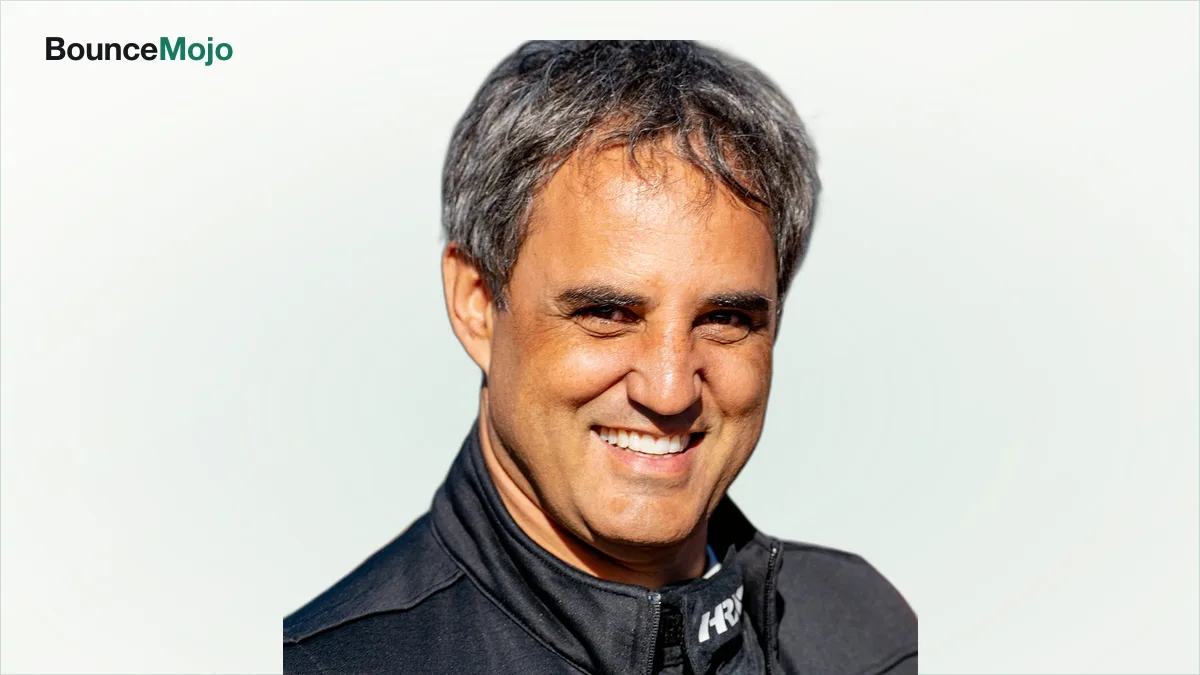
Everybody argues about the greatest all-around racing driver. Almost nobody remembers that the strongest answer might be a kid from Bogotá.
Here’s what most people miss: while most champions master one discipline, Juan Pablo Montoya conquered nearly all of them.
The Myth vs. The Reality
The myth is a highlight reel. Juan Pablo Montoya, the swashbuckling Colombian who dove into gaps nobody else dared, banged wheels with the best, and won on ovals, street circuits and road courses alike.
That version is real. It’s also wildly incomplete.
Here’s the truth: the “fearless natural” story undersells the calculation. Montoya was aggressive, yes, but he was also a supremely quick and adaptable driver who could jump between wildly different cars and disciplines and be fast almost immediately. The bravado was wrapped around genuine, rare talent.
Think about it. We love a fearless-underdog story because it’s thrilling and simple. But that framing misses how much skill it takes to win a CART title, an Indy 500, a Daytona 500 and Formula 1 races. Bravery alone doesn’t do that. Mastery does.
Now, that combination of daring and versatility came from a specific place and a specific journey. Which raises the question: what world produces a driver this bold and this adaptable at once?
The World That Made Juan Pablo Montoya
To understand Montoya, you have to understand the Colombia he came up in, and how far he had to travel to make it.
He was born on September 20, 1975, in Bogotá, Colombia, a country with little tradition of producing top-level international racing drivers. His father was a karting enthusiast, and young Juan Pablo grew up around the sport, starting in karts as a child.
But context mattered enormously. Colombia was not a motorsport pipeline like Italy or Britain. For a Colombian kid to reach the top, he had to leave home, prove himself abroad, and battle for opportunities against drivers from established racing nations. Montoya’s rise was a genuine outlier.
Here’s the deal: Montoya showed blistering speed in karting and junior formulae, earning moves to Europe and then a path that would take him across the Atlantic and around the racing world. He was a talent too big for his country’s small scene to contain.
But raw speed had to survive a long, competitive climb. And that climb is where the real story starts.
The Crucible: Early Life and the Climb
The environment that shaped him
Two things defined young Juan Pablo Montoya: speed and self-belief.
The speed was undeniable from his karting days, and it carried him through junior single-seaters in South America and then Europe. But the self-belief mattered just as much. Coming from a country outside racing’s traditional heartland, Montoya had to back himself completely, arriving in unfamiliar environments and simply outpacing more established rivals.
His family’s love of the sport gave him the foundation, but the drive to leave Colombia and chase a global career was all his own.
You might be wondering: how does a driver from outside the traditional system reach the very top? The answer is that Montoya combined obvious raw pace with an almost fearless confidence. He didn’t defer to reputations. He raced everyone the same way, hard, and that attitude got him noticed fast.
By his early twenties he was making waves, and a move to American open-wheel racing would make him a star.
The catalyst
The catalyst was CART and the Indianapolis 500.
Montoya moved to America’s premier open-wheel series and immediately dominated, winning the 1999 CART championship as a rookie sensation. He followed it by winning the Indianapolis 500 in 2000, one of the most famous races on earth, in only his first attempt.
Here’s the kicker: those results didn’t just win trophies. They announced Montoya as a global talent and opened the door to Formula 1. Winning the Indy 500 as a newcomer is one of the hardest feats in racing, and he made it look inevitable.
The kid from Bogotá was about to take his fearlessness to the pinnacle of the sport. And he’d point it straight at a legend.
The Key Players
No career this sprawling is a solo act, and Montoya crossed paths with the sport’s biggest figures.
Start with Frank Williams and the Williams team, who signed Montoya for Formula 1 and gave him the machinery to fight at the front. His Williams years produced his first F1 wins and some of his most memorable battles.
Then there’s Michael Schumacher, the era-defining champion Montoya refused to be intimidated by. Montoya famously raced Schumacher wheel-to-wheel and beat him on track more than once, one of the few drivers of the period who genuinely rattled the Ferrari star. (Schumacher’s career later ended, and after a 2013 skiing accident his family has kept his condition private, so it’s a chapter remembered here strictly through their on-track rivalry.)
There’s also Chip Ganassi and Roger Penske, the American team owners whose championship-winning organizations gave Montoya his open-wheel triumphs on both sides of his F1 career.
Now: take on the very best without blinking, and you write yourself into history. Montoya did exactly that. But his boldness came with turbulence.
The Turning Point
The pinnacle
The pinnacle wasn’t a single race. It was the sheer range of what Montoya won.
Consider the list. He took the 1999 CART title, won the Indianapolis 500 in 2000, scored multiple Formula 1 victories with Williams and later McLaren between 2001 and 2006, then crossed into stock cars and won the Daytona 500 in 2007. Years later he returned to IndyCar and won a second Indianapolis 500 in 2015.
That combination, CART champion, two-time Indy 500 winner, Daytona 500 winner, and F1 race winner, is one of the most versatile résumés in the history of the sport. Very few drivers have ever conquered such different worlds.
Here’s the truth: he became living proof that a truly great driver can win anywhere, on any surface, in any car.
The price
Because the same fearless aggression that thrilled fans also created friction.
Montoya’s uncompromising style led to collisions, controversies and clashes with rivals and teams. His Formula 1 tenure, while producing wins, was also marked by tension, and he left F1 partway through the 2006 season to pursue NASCAR, a decision that surprised many and split opinion about whether he’d walked away from unfinished business.
There’s a cost to racing everyone flat-out, too. His career zig-zagged across continents and disciplines rather than settling into a single title-chasing dynasty, which meant his greatness was spread across many series rather than concentrated into one championship legacy.
He’d proven he could win anywhere. Whether he might have won even more by staying in one place is a debate that follows him.
The Unvarnished Truth
Montoya is not just a wild, crash-happy charger, and pretending otherwise misses the point.
He is one of the most naturally gifted and adaptable drivers of his era, a man who could win in machinery and on surfaces that demand completely different skills. That adaptability is the real story, and it’s rarer than raw speed alone.
There’s also the reality that his aggression cut both ways. It won him races and admirers, but it also cost him results and made some relationships combustible. His career is a study in the trade-offs of an all-out style.
Here’s what’s easy to miss: his greatest strength, his refusal to back down, was also his greatest complication. The same fearlessness that let him beat Schumacher and win the Indy 500 as a rookie sometimes put him in the wall or in conflict. The gift and the friction were the same trait.
None of that dims the achievements. But it explains why his legacy is about versatility and boldness rather than a single dominant title run.
Controversies and Criticisms
Montoya’s career carried real debate, and it’s worth being honest about it.
The sharpest criticism concerns his aggressive incidents. Across CART, F1 and NASCAR, Montoya was involved in collisions and controversial moments that drew scrutiny, part of the price of his no-quarter racing style.
There’s also the question of his F1 exit. Some argued that leaving Formula 1 midway through 2006 for NASCAR cut short a career that could have won far more at the top level, while others admired his willingness to chase a new challenge. It’s a genuine debate about ambition versus what-might-have-been.
And his versatility itself invites a counterargument: because he spread his talent across so many series, he never built the single-championship dynasty that defines the sport’s very biggest names. Admirers see range; critics see a legacy without one towering title haul.
So what does a career like this actually teach the rest of us? Quite a lot.
What We Can Learn From Juan Pablo Montoya
Navigating hard times
Montoya’s real lesson is about adaptability.
He repeatedly walked into unfamiliar environments, different cars, different countries, different racing cultures, and made himself fast almost immediately. That ability to reinvent and adapt is a lesson that reaches far beyond racing.
In other words: the wins were the highlight. The willingness to keep starting over in new worlds, and to keep winning, is the real skill.
The success blueprint
The blueprint here is about backing your talent everywhere it can travel.
Montoya didn’t limit himself to one series or one comfort zone. He took his ability to CART, to Formula 1, to NASCAR and back to IndyCar, and he built a global reputation and a lasting brand in the process, later leveraging his fame into ventures and ambassadorial roles.
Want the fuller picture of how that translated into wealth? The full net worth breakdown shows how his championships, salaries and business interests added up. And to see how he ranks among the sport’s biggest fortunes, the richest race car drivers list puts it in context.
The deeper takeaway is about courage. Montoya proved that betting on yourself, even against legends and even in unfamiliar territory, can carry you further than playing it safe ever would.
Which brings us to the final reckoning on the man.
Final Verdict
Juan Pablo Montoya is going to be remembered for the wrong reasons if we only count championships.
Most people will file him under “the aggressive Colombian,” the fearless charger who took on Schumacher. A smaller, smarter group will remember something more remarkable: a kid from Bogotá, far outside racing’s traditional heartland, who won a CART title, two Indy 500s, a Daytona 500 and Formula 1 races, mastering worlds that most drivers never even attempt.
Here’s the bottom line: the aggression made him thrilling. The versatility made him historic. Together they turned a Colombian outsider into one of the most complete racing drivers the sport has ever seen.
He is one of the most versatile champions in motorsport history. He is also proof that betting boldly on your own talent, everywhere it can go, can build a legacy no single-series specialist can match. And in the long run, that is the version worth remembering.
Shop Juan Pablo Montoya on Amazon
Books, audiobooks, merch and more, handpicked for fans.
As an Amazon Associate we earn from qualifying purchases.
Frequently Asked Questions
Where is Juan Pablo Montoya from?+
Montoya was born on September 20, 1975, in Bogotá, Colombia. He began karting as a child, encouraged by his father, and became his country's most successful international racing driver.
What has Juan Pablo Montoya won?+
Montoya's résumé is one of the most versatile in racing: the 1999 CART championship, the Indianapolis 500 (2000 and 2015), the Daytona 500 (2007), and multiple Formula 1 Grands Prix with Williams and McLaren.
Did Juan Pablo Montoya race in Formula 1?+
Yes. Montoya raced in F1 from 2001 to 2006 for Williams and McLaren, winning several Grands Prix and famously challenging Michael Schumacher during his prime.
Is Juan Pablo Montoya the only driver to win the Indy 500 and Daytona 500?+
Montoya is one of a very rare group to win both the Indianapolis 500 and the Daytona 500, and he also won the CART title and F1 races, making him one of the most versatile champions in motorsport history.
What did Juan Pablo Montoya do after Formula 1?+
After F1, Montoya raced for years in NASCAR, then returned to IndyCar, winning his second Indy 500 in 2015, and later competed in sports-car endurance racing.
Want the money side of the story?
Read Juan Pablo Montoya's Full Net Worth Breakdown →Shop Juan Pablo Montoya on Amazon
Books, audiobooks, merch and more, handpicked for fans.
As an Amazon Associate we earn from qualifying purchases.