Juan Martin del Potro Biography: The Gentle Giant Who Fought On
Most people remember Juan Martin del Potro for one thing: the biggest forehand tennis has ever seen. That single shot hides a far more human story.
Here’s what most people miss: the giant with the cannon forehand spent more of his career fighting his own body than fighting anyone across the net. His greatness was never the problem. Staying healthy enough to show it was.
The Myth vs. The Reality
The myth is power. Juan Martin del Potro: a towering giant who blasted a forehand so heavy it dented the racket strings of the greatest players in history.
The reality is far more tender.
Here’s the deal: del Potro wasn’t a bully. He was a shy, gentle, emotional man who happened to hit the ball harder than almost anyone alive. The violence lived only in that one shot. Everything else about him, the soft voice, the easy tears, the humility, ran in the opposite direction.
And the “what could have been” framing misses the courage it took just to keep going. Most players would have quit after one of his surgeries. Del Potro came back from several, each time rebuilding a body that kept betraying him, chasing a level his own arm and knees would no longer reliably grant.
You might be wondering: how does a quiet kid from a small Argentine town end up beating gods, then losing years to the operating table? To understand that, you have to understand the world that made him.
The World That Made Juan Martin del Potro
Del Potro was born in 1988 in Tandil, a small city in Argentina far from the glamour of the tennis tour.
Argentina is a nation that adores its athletes, and it had a proud tennis lineage before him. But Tandil was no tennis capital. It was a modest place, and del Potro grew into an unusually tall, gangly kid who had to grow into a frame most players never carry. That size would become his gift and, eventually, part of his curse.
Now: that background shaped the man he became. Del Potro never lost his connection to Tandil or to the down-to-earth values he was raised on. As his fame grew, he stayed grounded, humble, and openly proud of where he came from, which is exactly why his country embraced him so completely.
This was also the golden age of the “Big Three,” an era ruled by Federer, Nadal, and Djokovic. To matter, del Potro would have to break through a wall almost no one else could crack. And for one glorious stretch, he did.
The Crucible: Early Life and the Climb
The Environment That Shaped Him
Del Potro’s rise was built on that one unforgettable weapon.
From a young age it was clear the tall kid from Tandil hit a forehand unlike anyone else, a flat, thunderous shot that could end points from anywhere on the court. He rose through the junior ranks and turned professional, marked early as a future star because of the sheer force he generated. But raw power alone doesn’t win majors.
Here’s the truth: what made del Potro special wasn’t just the forehand. It was the calm behind it. He played with a quiet, almost humble confidence, letting his ground strokes do the talking while he kept his emotions in check. Opponents faced a giant who never seemed rattled and could take the racket out of their hands with two or three swings.
You might be wondering how good he really was in those early years. Consider this: by his early twenties he was already ranked among the very best in the world and knocking on the door of the sport’s untouchable elite. Then came the two weeks that put his name in the history books.
The Catalyst
Then came New York, 2009.
At the 2009 US Open, a 20-year-old del Potro did what almost no one in that era managed. He beat Rafael Nadal in the semifinal, then took down Roger Federer in a grueling five-set final to win his first and only Grand Slam. He didn’t just win a major. He beat two of the greatest players who ever lived, back to back, on the biggest stage in the sport.
But here’s the kicker: that triumph came with a warning few noticed at the time. His body, the huge frame that generated all that power, was already a ticking clock. The kid who beat the gods in 2009 was about to spend the next decade fighting to stay on the court at all.
The Key Players
No champion rises alone, and del Potro’s story is full of the people who shaped him.
Franco Davin. His coach during the 2009 US Open triumph, the man who guided him to the peak of his career and helped a raw talent become a Grand Slam champion.
Roger Federer and Rafael Nadal. His idols and his victims. Del Potro grew up admiring them, then beat them both to win his major. Their rivalry defined the mountain he had to climb, and his respect for them never wavered even as he toppled them.
The Argentine faithful. His country adored him, and that love became a force in its own right. Davis Cup crowds and home fans carried him through his darkest injury years and roared him on to national glory.
His family and Tandil. The people and place that kept him grounded. Through every surgery and setback, del Potro’s roots in his hometown were the anchor he returned to.
Think about it: a coach, two idols-turned-rivals, a nation, and a hometown. Each shaped a different part of the story. And his country, above all, would witness both his greatest joy and his deepest pain.
The Turning Point
The Pinnacle
Del Potro’s peak wasn’t one moment. It was a series of impossible comebacks.
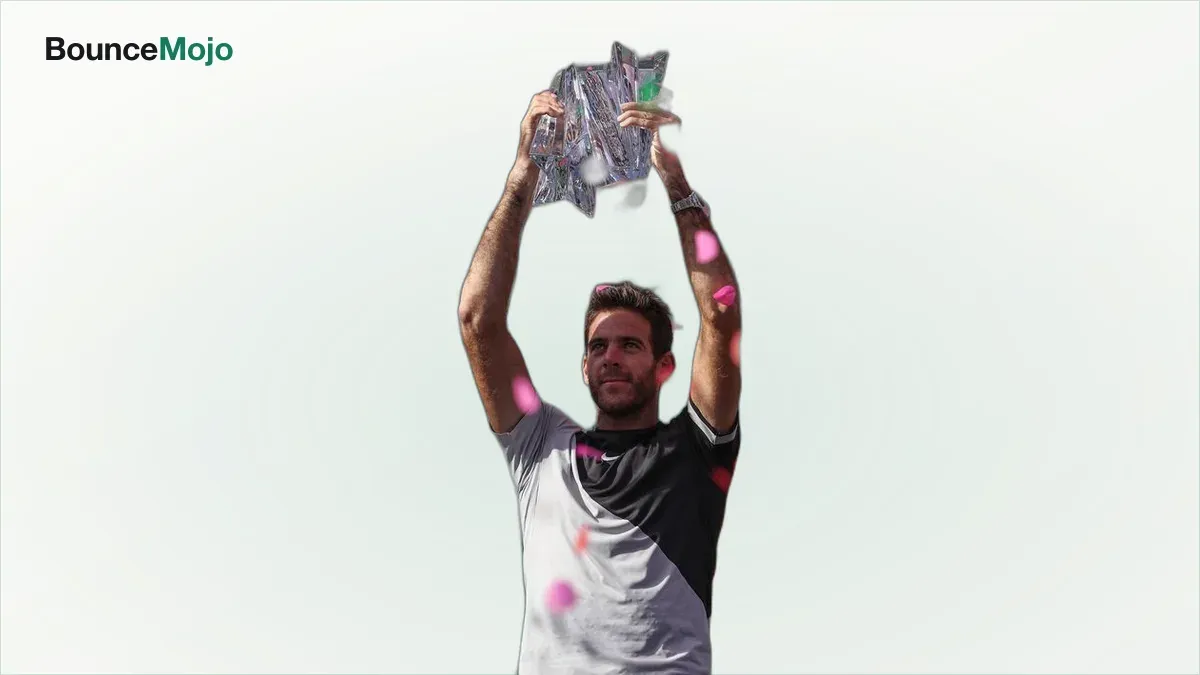
After the 2009 title, injuries knocked him down again and again, yet he kept returning. He won Olympic bronze in 2012 and silver in 2016, beating Djokovic and Nadal along the way, and in 2016 he led Argentina to its first-ever Davis Cup title, dragging his country to glory on a wounded body. Those triumphs, and the wealth they helped build, are traced in his net worth breakdown.
The giant who kept getting hurt kept refusing to disappear.
Want to know the best part? Each comeback made the crowds love him more. Fans didn’t just admire del Potro’s tennis. They lived his struggle with him, celebrating every return from surgery like a resurrection. The 2016 Davis Cup, in particular, turned him into a permanent Argentine hero, the man who delivered a trophy his country had chased for decades. He wasn’t the most decorated player of his era. But few were more beloved, and that affection became its own kind of greatness.
The Price
Here’s the kicker: the price of that power was his own body.
The same enormous frame that generated his forehand put brutal stress on his wrists and knees. Del Potro endured multiple wrist surgeries and later devastating knee injuries, each one costing him months or years. He’d claw his way back to form, threaten the top again, then break down once more. The career that could have rivaled anyone’s was repeatedly interrupted just as it caught fire.
The talent brought a major, Olympic medals, and a nation’s love. It also brought operating tables, rehab, and the quiet agony of knowing his best was being stolen from him. Which brings us to the harder truths behind the beloved image.
Controversies and Criticisms
Del Potro’s career is remarkably free of scandal, which is part of why fans adore him. But a few debates follow him.
The unfulfilled potential. The biggest “controversy” isn’t a scandal at all. It’s the haunting question of what del Potro might have achieved with a healthy body. Many believe he had the game to win multiple majors and challenge the Big Three for years, and his injuries robbed the sport of that.
The long farewells. Del Potro announced what looked like retirement in emotional fashion, then left the door ajar for comebacks that never fully materialized. Some found the drawn-out goodbye painful to watch, though most saw only a man unwilling to let go of the game he loved.
A one-Slam career. Statistically, a single Grand Slam places him below the era’s giants. Critics point to the lone major as a limit on his legacy, while his defenders argue the injuries, not the talent, wrote that number.
The single-shot label. Some reduced del Potro to “the forehand,” underrating his competitiveness and his ability to trouble the very best. It’s a lazy read of a far more complete player.
What We Can Learn From Juan Martin del Potro
Navigating Hard Times
The first lesson is about resilience. Del Potro was knocked down by injury more times than almost any star of his era, and he got up every single time. He didn’t get bitter. He got back to work.
But here’s the truth his story makes plain: how you handle the setbacks matters more than the setbacks themselves. Del Potro could have surrendered to a body that kept failing him. Instead he turned each comeback into a story of hope, and in doing so he won something more durable than trophies: the lasting love of millions of fans.
Now: it’s worth remembering the emotional honesty too. Del Potro cried openly, in defeat and in victory, and never pretended to be tougher than he was. That vulnerability didn’t make him look weak. It made him human, and it made people root for him harder. In a sport that often prizes cold machinery, his willingness to feel everything out loud was its own kind of strength, and it’s a big reason his popularity never faded even when his ranking did.
The Success Blueprint
If you want the replicable part, it’s this: build a signature so powerful that one thing you do becomes unforgettable. Del Potro’s forehand was that thing, a shot so devastating it defined him and drew fans and sponsors alike. It’s a big reason he ranks among the well-earning names on our richest tennis players list, even in a field that includes fortunes like Roger Federer and Novak Djokovic.
That’s transferable. You don’t have to be the best at everything. Be undeniably great at one thing, the thing people remember you for, and let it carry your name further than a balanced resume ever could.
Here’s the deal: his connection with fans proves the deeper point. Del Potro’s commercial value survived years of injury because people simply loved him, and loyalty like that is worth more than any single result. When he couldn’t play, his popularity kept him marketable, his comebacks kept him relevant, and his humility kept him admired. Most athletes trade purely on winning. Del Potro built something rarer: an emotional bond with fans that outlasted his own body, and that bond is the truest measure of what he achieved.
Becoming Better
The deepest lesson is about grace under suffering. Del Potro faced years of pain and lost time with dignity, warmth, and gratitude rather than resentment. He thanked fans, praised rivals, and left the game more loved than most players who won far more.
In other words, how you carry your hardest chapters defines you as much as your best days. Del Potro’s real trophy isn’t the 2009 US Open. It’s the fact that a career full of heartbreak somehow made people love him even more.
Final Verdict
Juan Martin del Potro is one of the most beloved players tennis has ever produced, a gentle giant who beat the greatest of his era, won Olympic medals, and delivered his country its first Davis Cup while fighting a body that kept breaking down. He hit a forehand no one will forget, and he carried himself with a humility that made the whole sport root for him.
And here’s the twist that reframes everything: his greatness was never really measured in titles. It was measured in comebacks, in the number of times he refused to let injury be the end of his story. The one major and the Olympic medals matter, but what people remember is the man who kept coming back, and kept smiling through the pain.
Del Potro’s fortune, detailed in his net worth breakdown, rewards a career of huge results and even huger fan love. But his story rewards something rarer: the resilience to rise from setback after setback, the humility to stay grounded through fame, and the emotional honesty to let the world see him hurt. The gentle giant from Tandil didn’t win the most. He won something better: a place in the hearts of everyone who watched him fight.
Shop Juan Martin del Potro on Amazon
Books, audiobooks, merch and more, handpicked for fans.
As an Amazon Associate we earn from qualifying purchases.
Frequently Asked Questions
Where did Juan Martin del Potro grow up?+
Del Potro grew up in Tandil, Argentina, a small city where he first picked up a racket. Standing 6 foot 6, he became the town's greatest sporting hero and stayed closely tied to it his whole life.
Why is the 2009 US Open so important to del Potro's story?+
At the 2009 US Open, a 20-year-old del Potro beat both Rafael Nadal and Roger Federer, taking down the world No. 1 in a five-set final. It was one of the great upsets of the era and the peak of his career.
What injuries derailed del Potro's career?+
Del Potro battled repeated wrist and knee injuries that required multiple surgeries and years of layoffs, robbing him of a career many believed could have been among the greatest ever.
Did del Potro win Olympic medals?+
Yes. Del Potro won Olympic bronze in 2012 and silver in 2016, and he led Argentina to its first-ever Davis Cup title in 2016, cementing his status as a national hero.
Why is Juan Martin del Potro so beloved?+
Del Potro is adored for his emotional comebacks, humility, and warmth. His repeated returns from surgery and his openly emotional farewell made him one of the most beloved figures in tennis.
Want the money side of the story?
Read Juan Martin del Potro's Full Net Worth Breakdown →Shop Juan Martin del Potro on Amazon
Books, audiobooks, merch and more, handpicked for fans.
As an Amazon Associate we earn from qualifying purchases.