Jose Mourinho Biography: The Translator Who Became the Special One
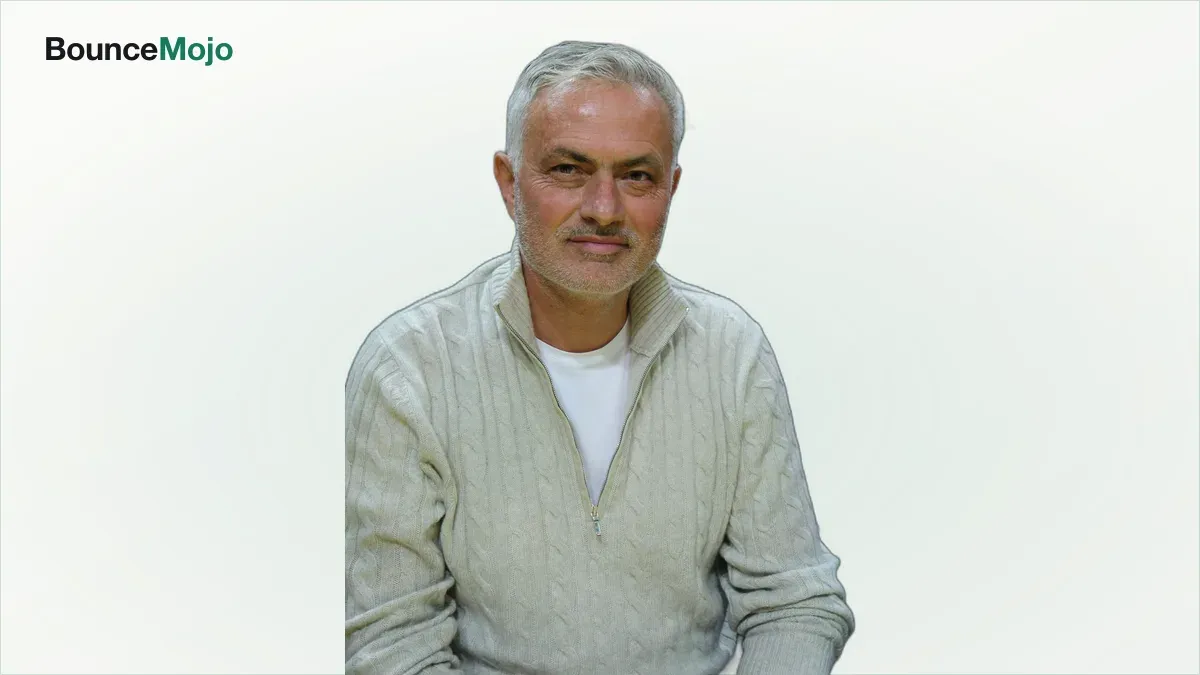
Most people know Jose Mourinho as the “Special One,” the arrogant genius who wins wherever he goes. That label hides a far more surprising story.
Here’s what most people miss: the most self-assured manager in football history started his career as a translator, carrying another man’s words because he wasn’t good enough to make it as a player.
The Myth vs. The Reality
The myth is loud. Jose Mourinho: the swaggering “Special One,” born to command dressing rooms, a natural winner who intimidates opponents and charms cameras. Arrogant, brilliant, untouchable.
The reality is a story of reinvention.
Here’s the deal: Mourinho was never a gifted player. He was an ordinary footballer who understood, early and clearly, that his future was on the touchline, not the pitch. Everything he became, the confidence, the tactics, the theater, he built from the ground up.
And the “born winner” framing misses the years of grinding apprenticeship. Before he was the Special One, Mourinho was a note-taker, a translator, an assistant, absorbing the game from the men he served. The ego came later, and it was earned.
You might be wondering: how does a translator become the most feared manager in Europe? To understand that, you have to understand where he came from.
The World That Made Jose Mourinho
Mourinho was born in 1963 in Setubal, Portugal, into a country and a family steeped in football.
His father, Felix Mourinho, was a professional goalkeeper who earned a cap for Portugal and later became a coach and club director. His mother was a primary school teacher. The family was middle-class and well-connected in the local game. Young Jose grew up around dressing rooms, watching his father manage, learning that football was as much about people and psychology as it was about talent.
Now: that upbringing mattered. Mourinho didn’t stumble into coaching. He was raised inside it. He would go to matches, study his father’s teams, and even, as a boy, help scout opponents. The tactical mind that would later dominate Europe was forming before he ever kicked a professional ball.
This was also Portugal under and just after the Salazar era, a country on the edge of European football’s elite, hungry to prove itself. Mourinho absorbed that ambition.
But before the trophies, there was a young man forced to admit a hard truth about his own limits.
The Crucible: Early Life and the Climb
The Environment That Shaped Him
Mourinho tried to make it as a player. He turned out for clubs including Rio Ave, where his father was manager, but the level was modest and the ceiling was low.
He made a clear-eyed decision that defined the rest of his life: he lacked the pace and power to reach the top as a player, so he would master it another way. He earned a degree in sport science, worked as a PE teacher, and coached youth teams. He studied coaching methodology obsessively, treating the profession as a science.
Here’s the truth: that early acceptance of his limits was a gift. While others clung to fading playing dreams, Mourinho was already building the deep tactical and psychological toolkit that would set him apart. The failure freed him.
The Catalyst
The turning point came through language. In the 1990s, Mourinho landed a role as an interpreter for Sir Bobby Robson, the English manager, first at Sporting Lisbon, then Porto, then Barcelona.
The job was supposed to be about translation. It became an apprenticeship. Mourinho didn’t just relay Robson’s words. He offered opinions, scouted opponents, and shaped training. Robson came to trust the young Portuguese, and Mourinho absorbed everything, tactics, man-management, and how to handle a superclub.
It gets better, and stranger. The translator would soon out-achieve almost everyone he once served. Within a few years, he would win the biggest prize in club football. That’s where the climb turned into a rocket.
The Key Players
No one builds a career like this alone, and Mourinho’s story is full of the people who shaped it.
Felix Mourinho. His father, the goalkeeper turned coach, gave Jose his first football education. Growing up inside the game taught him that management was about psychology as much as tactics.
Sir Bobby Robson. The English mentor who took Mourinho from translator to trusted assistant. Robson gave him a stage at Porto and Barcelona and the confidence to believe he could lead.
Louis van Gaal. At Barcelona, Mourinho worked under the demanding Dutchman, who gave him real coaching responsibility with the reserve team and further sharpened his methods.
Roman Abramovich. The Chelsea owner who hired Mourinho twice, funding the squads that delivered his English titles and, later, paying the severance that padded his fortune.
Think about it: each of these figures handed Mourinho a piece of the manager he became. But the ego that would define him was his alone, and it announced itself the moment he arrived in England.
The Turning Point
The Pinnacle
Mourinho’s breakthrough was a genuine miracle.
At FC Porto, an unfancied Portuguese side, he won the UEFA Cup in 2003 and then the Champions League in 2004, beating Monaco 3-0 in the final. Winning Europe’s biggest trophy with a club far outside the continent’s rich elite was stunning. It made him the most sought-after manager in the world.
Chelsea came calling, and Mourinho announced himself with a line that became legend: “I’m European champion, and I think I’m a special one.” He won back-to-back Premier League titles, then added trophies at Inter Milan, including a Champions League, and Real Madrid. As his own net worth breakdown shows, those titles turned into two decades of elite pay.
The Price
Here’s the kicker: the same ego that fueled his rise began to cost him.
Mourinho’s confrontational style burned bright and fast. He clashed with players, referees, and boards. His teams often peaked in his first two seasons, then fractured amid conflict. The sackings piled up, at Chelsea twice, at Manchester United, at Tottenham. Ironically, each dismissal paid him millions in severance, a strange reward for a pattern that hinted at deeper problems.
The pinnacle brought fame, trophies, and a fortune. It also brought a reputation for combustible endings. Which brings us to the flaws beneath the swagger.
The Unvarnished Truth
Mourinho is not the flawless winner his brand suggests, and pretending otherwise misses the man.
His management style has a shelf life. Time and again, his intense, us-against-the-world approach delivered fast success, then curdled into conflict. Star players turned on him. Boardrooms lost patience. The very traits that won dressing rooms in year one alienated them by year three.
Now: none of this erases his brilliance. Mourinho remains one of the most decorated managers in history, and his methods, defensive solidity, psychological warfare, ruthless focus, reshaped modern coaching. But the honest read is that his ego is both his engine and his brake.
He can be graceless in defeat, dismissive of critics, and quick to blame others. He has grown, by his own account, more reflective with age. Yet the pattern of brilliant beginnings and bitter endings has followed him across a career, a reminder that the same fire that lights a room can eventually burn it down.
Controversies and Criticisms
Mourinho’s career is dotted with flashpoints that still divide opinion.
The eye-poke. During his Real Madrid years, Mourinho was filmed poking Barcelona assistant Tito Vilanova in the eye during a heated match. It became a symbol of how far his rivalry with Barcelona had escalated.
Player fallouts. Mourinho has publicly clashed with major stars, from Iker Casillas at Real Madrid to Paul Pogba at Manchester United. Critics argue his combative style damages the very talent he needs.
The parked bus. Tactically, Mourinho is often accused of being too defensive, “parking the bus” to grind out results at the expense of attractive football. Purists say his pragmatism sucks the joy from the game.
Serial sackings. The repeated dismissals, and the huge payouts that followed, raised questions about whether Mourinho’s approach had a built-in expiry date, even as it kept enriching him.
What We Can Learn From Jose Mourinho
Navigating Hard Times
The first lesson is about reinvention: accepting one limit can unlock a bigger future. Mourinho faced the hard truth that he would never be a great player and turned that acceptance into fuel. He became a great manager precisely because he stopped chasing the wrong dream.
But here’s the truth his career makes plain: your greatest weapon can become your greatest liability. The intensity that won titles is the same intensity that ended jobs. Learning to manage your strengths, not just deploy them, is the harder discipline.
The Success Blueprint
If you want the replicable part, it’s this: master the parts of your field that others overlook. Mourinho didn’t have elite playing talent, so he out-prepared, out-thought, and out-psyched everyone. He treated coaching as a science and a performance at once, a combination that made him rich enough to rank among the names on our richest soccer players list.
That’s transferable. The lesson is that deep expertise and relentless preparation can beat raw talent, especially in fields where most people coast on ability. Mourinho proved the studious outsider can conquer the establishment.
Becoming Better
The deepest lesson is about the cost of ego. Mourinho’s confidence was a superpower and a trap. It won dressing rooms and lost them. It inspired players and eventually pushed them away.
In other words, self-belief is essential until it stops you from adapting. Mourinho’s story shows both the extraordinary heights that conviction can reach and the recurring falls that rigidity can cause. The goal is to keep the confidence while staying humble enough to change.
Final Verdict
Jose Mourinho is one of the greatest and most influential managers football has ever produced, and one of its most complicated characters. He rewrote what a coach could be, built a global brand from a translator’s headset, and won trophies across four countries. He also became a case study in how ego can both create and corrode a career.
And here’s the twist that reframes everything: the man branded the “Special One,” the very picture of arrogance, was forged in humility. He only became great after admitting he wasn’t good enough as a player. The swagger came from mastery, and the mastery came from failure.
Mourinho’s fortune, detailed in his net worth breakdown, rewards a career of elite pay and even more lucrative exits. But his story rewards something deeper: a look at how accepting your limits can be the first step to greatness, and how the confidence you build to overcome them can, unchecked, become the thing that trips you up. Both truths live in the Special One, and that’s exactly what makes him unforgettable.
Shop Jose Mourinho on Amazon
Books, audiobooks, merch and more, handpicked for fans.
As an Amazon Associate we earn from qualifying purchases.
Frequently Asked Questions
Where did Jose Mourinho grow up?+
Mourinho grew up in Setubal, Portugal, in a middle-class family. His father, Felix Mourinho, was a professional goalkeeper and later a coach, and his mother was a primary school teacher.
Did Jose Mourinho play professional football?+
Only briefly and at a low level. Mourinho realized he lacked the pace and power to succeed as a player and pivoted to coaching, first as a youth coach and PE teacher.
How did Mourinho start his coaching career?+
He began as an interpreter and assistant to Sir Bobby Robson at Sporting Lisbon, Porto, and Barcelona in the 1990s, learning the trade before becoming a head coach himself.
Why is Jose Mourinho called the 'Special One'?+
At his 2004 Chelsea unveiling, Mourinho told reporters: 'Please don't call me arrogant, but I'm European champion and I think I'm a special one.' The nickname stuck.
What is Mourinho's biggest achievement?+
Winning the 2004 Champions League with unfancied Porto, then back-to-back Premier League titles with Chelsea, established him as one of the greatest managers of his era.
Want the money side of the story?
Read Jose Mourinho's Full Net Worth Breakdown →Shop Jose Mourinho on Amazon
Books, audiobooks, merch and more, handpicked for fans.
As an Amazon Associate we earn from qualifying purchases.