José Aldo Biography: The Hungry Kid Who Ruled Featherweight
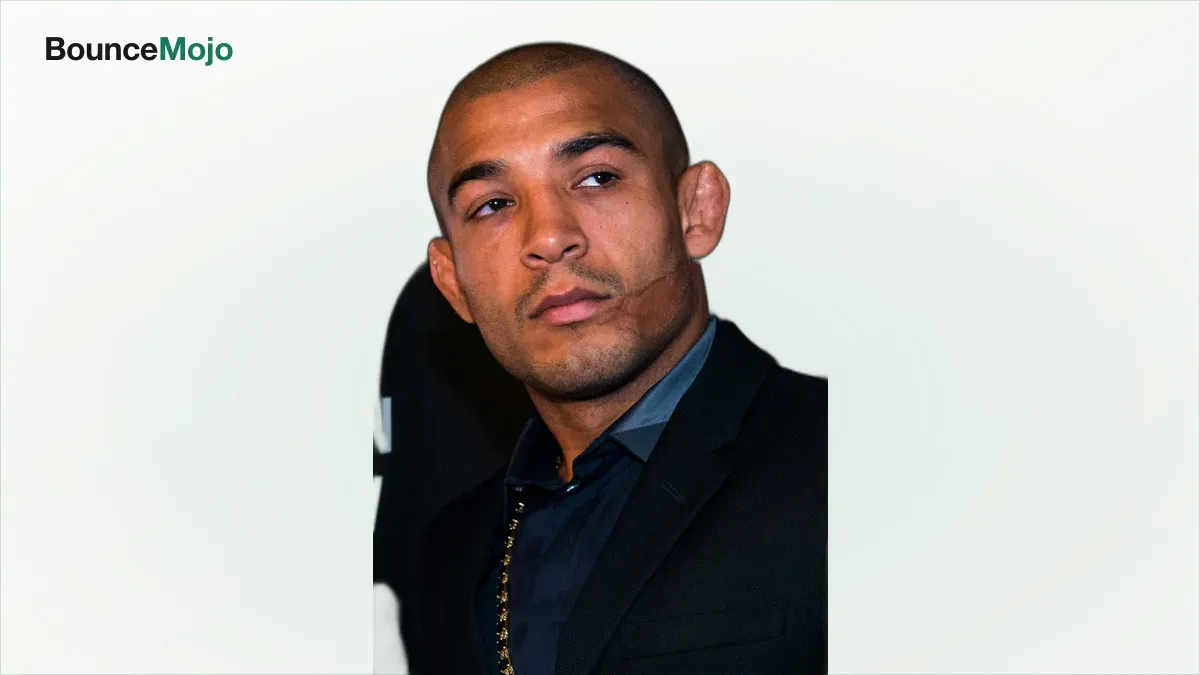
Most fans know José Aldo for the 13 seconds that ended his reign. That single knockout buried a decade of dominance almost nobody has matched.
Here’s what most people miss: before he was a legend, Aldo was a hungry kid in Rio, sometimes depending on his gym just to eat. The empty plates shaped the fighter far more than any belt did.
The Myth vs. The Reality
The myth is cruel and simple. José Aldo: the great champion who got starched in 13 seconds by Conor McGregor and was never the same.
The reality runs much deeper.
Here’s the truth: Aldo is one of the most dominant champions the sport has ever produced, a fighter who went unbeaten in his division for more than a decade before that famous night. One highlight-reel loss doesn’t erase ten years of destroying everyone the sport put in front of him.
The McGregor framing flattens a legend into a punchline. It ignores the hunger, literal and otherwise, that built him, and the greatness that made that fight a global event in the first place.
You might be wondering: how does a poor kid from Manaus become the best featherweight alive? To understand that, you have to understand where he started.
The World That Made José Aldo
Aldo came up in a Brazil where MMA was a lifeline as much as a sport.
He was born in 1986 in Manaus, in the Amazon region, into poverty. Brazil in the 1990s and 2000s was a country producing a wave of world-class fighters, jiu-jitsu artists and Muay Thai specialists who saw combat sports as a genuine path out of hardship.
Think about it: for a talented, poor kid, the cage wasn’t a hobby. It was one of the few doors that might actually open.
Aldo moved to Rio de Janeiro as a teenager to chase that door. There, he trained under respected coaches and joined the famous Nova União camp. But the early days were brutal. He has spoken about going without food, about training partners and gyms making sure he ate. This wasn’t a comfortable athlete choosing a sport. This was survival with gloves on.
That desperation forged a fighter with nothing to lose and everything to prove.
But before Rio, there was a small boy in Manaus and an accident that marked him for life.
The Crucible: Early Life and the Climb
The Environment That Shaped Him
Aldo’s childhood in Manaus was hard, and it left a literal mark.
As a toddler, he fell against a barbecue, leaving the facial scar that would later become part of his recognizable look. He grew up playing football, like most Brazilian kids, before turning to martial arts as a teenager.
Here’s the deal: poverty gave Aldo a work ethic that terrified opponents. When he moved to Rio and started going hungry to train, quitting wasn’t an option, because there was nothing to go back to.
He found a home at Nova União, one of Brazil’s elite camps, and his talent exploded under real coaching. The football-honed leg kicks, the jiu-jitsu, the killer instinct, it all came together fast.
Those leg kicks deserve their own mention, because they became his signature weapon. Aldo grew up playing football like every Brazilian kid, and the power and precision in his lower body translated straight into the cage. Opponents talked for years about how his kicks felt like being hit with a baseball bat, chopping down even bigger, stronger fighters and taking away their movement. It was a weapon born on the football pitches of Manaus and refined in the gyms of Rio, a perfect example of how his hard, humble beginnings shaped the specific fighter he became.
The Catalyst for Breakout
Aldo’s breakout came in World Extreme Cagefighting.
He tore through the featherweight division and won the WEC title in 2009 by stopping Mike Brown. His finishes were violent and spectacular, flying knees, brutal leg kicks, and a knockout of Cub Swanson in eight seconds that announced him to the world.
It gets better: when the WEC merged into the UFC, Aldo was named the first UFC featherweight champion, and the reign that followed cemented his legend.
But dominance in a small division meant chasing the money and rivals who could make him a global name.
The Key Players
Aldo’s career was defined by the elite fighters he beat and the two who finally beat him.
For years, he ran through the division’s best. Chad Mendes, Frankie Edgar, Ricardo Lamas, Kenny Florian, all elite, all defeated. His two-fight series with Frankie Edgar was a highlight of his reign, close, tactical, and hard-earned.
Then came Conor McGregor. The buildup to their 2015 title unification bout was one of the biggest promotions in UFC history, a global tour of trash talk and spectacle. It ended in 13 seconds.
Here’s the kicker: even that crushing loss made Aldo bigger. The fight was a massive event, and Aldo’s greatness was the reason it mattered so much.
Later, Max Holloway would take the featherweight title from Aldo in two fights, marking the end of one era and the start of another.
Those defeats set up the hardest chapter of Aldo’s career, and its hidden cost.
The Turning Point
The Pinnacle
Aldo’s pinnacle was the reign itself.
For roughly a decade, he was the undisputed king of featherweight, first in the WEC, then as the first and long-reigning UFC champion. He defended the belt against a murderer’s row of contenders and was routinely ranked among the best pound-for-pound fighters on the planet. In a division the sport once ignored, Aldo made himself the standard.
That’s an achievement almost no one in MMA history can match.
The Price of Admission
The cost was the fall, and how public it was.
The 13-second knockout against McGregor, after a year of intense buildup and a canceled first date, was devastating. Aldo lost the aura of invincibility in the time it takes to read this sentence. He later lost the belt again to Max Holloway.
You might be wondering: how does a fighter recover from that? Aldo answered by refusing to disappear. He kept fighting, dropped to bantamweight, and eventually boxed professionally, chasing new challenges instead of hiding from the shadow of one loss.
That resilience is the real measure of the man.
The Unvarnished Truth
Aldo’s career had its struggles beyond the losses.
Weight cutting was a documented battle. Making 145 pounds took a punishing toll on his body over the years, and it’s part of why he eventually moved up to bantamweight. Those brutal cuts likely affected his performances and shortened his prime.
There were also the natural frustrations of a proud champion watching a newcomer leapfrog him. The McGregor buildup got personal, and Aldo, a fighter who let his fists talk, was thrust into a promotional circus that didn’t suit him.
In other words, Aldo was a throwback in a changing sport, a pure fighter in an era increasingly built on personality and spectacle. That authenticity was his strength and, commercially, sometimes his limit.
None of it dimmed the respect he earned inside the cage.
Controversies and Criticisms
Aldo’s career was relatively free of scandal, which itself says something.
The main criticisms were competitive. Some questioned his activity level during his reign, with injuries causing delays and cancellations. The brutal weight cuts drew concern for his health. And the manner of the McGregor loss led critics to unfairly question his chin, ignoring a decade of durability.
There were flashes of temper, and the intense pressure of carrying Brazilian fans’ expectations weighed on him. But compared with the legal and disciplinary troubles that follow some names near the top of our richest MMA fighters rankings, Aldo’s record is clean, a career defined by fighting, not headlines.
If anything, the criticism of Aldo often said more about the sport’s shifting values than about the man. As MMA leaned harder into spectacle and trash talk, a quiet, respectful, relentless champion could look almost old-fashioned. Aldo never chased viral moments or manufactured beef. He just fought, and won, and let the results speak. In an era that increasingly rewarded noise, his silence was sometimes mistaken for a lack of star power, when it was really just a different kind of greatness.
That clean, relentless focus is exactly what made him great.
What We Can Learn From José Aldo
Navigating Hard Times
Aldo’s life is a lesson in turning hunger into fuel.
He went without food to chase a dream. He lost the aura he’d spent a decade building in 13 seconds. Both could have broken him. Instead, the hunger built a champion, and the loss built a survivor who kept competing across weight classes and even a new sport.
Here’s the deal: adversity is raw material. Aldo turned the worst of it into the foundation of greatness.
The hunger never really left him, and that’s the point. Fighters who come from comfort often lose their edge once they get rich. Aldo, having known real hunger, fought with a desperation that stayed long after the paydays arrived. He kept competing years past the point most legends retire, dropping weight classes and even changing sports, because the drive that got him out of poverty didn’t switch off just because the poverty did. That’s a hard thing to teach and a rare thing to have. Aldo carried it from Manaus all the way to the end of his career.
The Success Blueprint
Aldo’s blueprint is about relentless excellence over time.
He didn’t build a whiskey brand or a media empire. He became the best in the world and stayed there longer than almost anyone, and that dominance is what made him money and legacy alike. You can trace the earnings in his full net worth breakdown.
The lesson: sustained greatness is its own business plan.
Becoming Better
The deeper takeaway is resilience without reinvention of who you are.
Aldo never became a showman. He stayed a fighter, a hungry kid from Manaus who let his skills speak. When the sport changed and losses came, he adapted his weight class and his opponents, but not his identity. He proved you can evolve without pretending to be someone else.
So what’s the final verdict on Aldo?
Final Verdict
José Aldo is, by most serious measures, the greatest featherweight in MMA history.
He rose from real hunger in Rio to rule a division for a decade, beating a generation of elite contenders and making the smallest classes matter. Few champions in any sport have ever dominated so completely for so long. One famous knockout couldn’t erase that. He fought on, moved up, boxed, coached, and stayed true to the fighter he’d always been.
Here’s the truth the McGregor loss can’t touch: legacies aren’t built in 13 seconds. They’re built over 13 years. Aldo spent more than a decade proving there was no one better in his division, and history remembers reigns, not single moments. When the featherweight greats are ranked a generation from now, Aldo’s name will sit at or near the top, and the empty plates in Rio will be a footnote to one of the great rags-to-royalty stories in combat sports.
The hungry kid from Manaus never stopped fighting, and that hunger is exactly why he became a king.
For the money side of that story, see his full net worth breakdown, and for how he ranks among the sport’s earners, our richest MMA fighters list.
Shop José Aldo on Amazon
Books, audiobooks, merch and more, handpicked for fans.
As an Amazon Associate we earn from qualifying purchases.
Frequently Asked Questions
Where did José Aldo grow up?+
José Aldo grew up in Manaus, Brazil, in a poor neighborhood. As a teenager he moved to Rio de Janeiro to train, at times going without food while chasing a career in MMA.
What is the scar on José Aldo's face?+
Aldo has a facial scar from a childhood accident when he fell against a barbecue as a toddler. It became part of his recognizable look as he rose to fame.
Why is José Aldo considered the greatest featherweight ever?+
Aldo was the first UFC featherweight champion and reigned for years with an unbeaten streak in the division that lasted well over a decade, beating a long list of elite contenders. That dominance makes him a leading pick for the greatest 145-pound fighter in history.
What happened in the José Aldo vs. Conor McGregor fight?+
At UFC 194 in December 2015, Conor McGregor knocked Aldo out in 13 seconds, ending Aldo's long featherweight reign and marking his first loss in the division in years. It remains one of the most shocking finishes in UFC history.
Did José Aldo box after MMA?+
Yes. After his featherweight peak, Aldo dropped to bantamweight, later took up professional boxing, and moved into coaching, keeping himself active in combat sports well past his prime.
Want the money side of the story?
Read José Aldo's Full Net Worth Breakdown →Shop José Aldo on Amazon
Books, audiobooks, merch and more, handpicked for fans.
As an Amazon Associate we earn from qualifying purchases.