John Force Biography: Truck Driver Turned Drag-Racing Legend
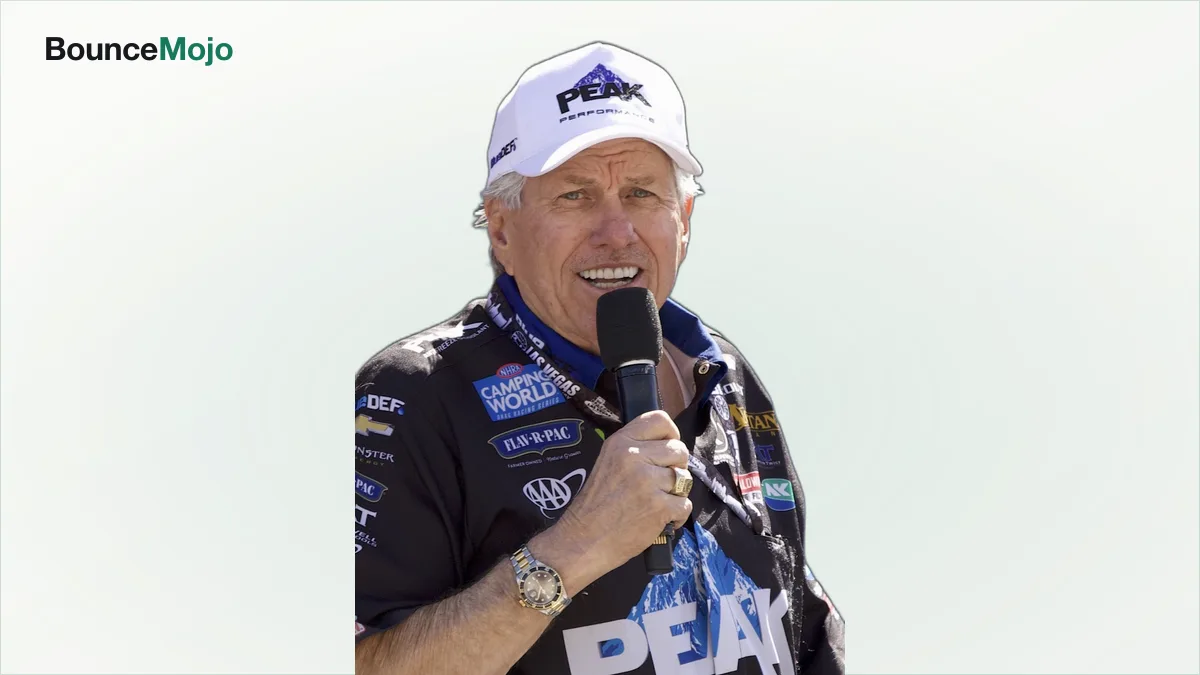
Everybody remembers the 16 championships and the wild victory speeches. Almost nobody remembers the broke trucker who lost for years before he ever won a thing.
Here’s what most people miss: the stubbornness that made John Force look foolish in his early racing days is the exact thing that made him unbeatable later.
The Myth vs. The Reality
The myth is loud and fun. John Force, the manic showman, the guy who talks a mile a minute, who wins championships and gives speeches so wild they become their own highlight reel. Sixteen titles. A ten-year winning streak. A larger-than-life character who seemed born to dominate.
That version is real. It’s also wildly incomplete.
Here’s the truth: the showman narrative erases the most important part. Force was a working-class kid from the L.A. suburbs who drove trucks to fund a Funny Car dream that, for years, looked like a losing bet. He didn’t arrive as a champion. He arrived as a guy who kept coming back after getting beaten, race after race, season after season.
Think about it. We love a story of a natural-born winner because it’s simpler. But that’s not what happened here. Force was an underdog who refused to quit long enough to become the establishment.
Now, that refusal didn’t come from nowhere. It was forged by a specific place and a specific kind of hard, unglamorous work. Which raises the question: what world produces a man that stubborn?
The World That Made John Force
To understand Force, you have to understand the blue-collar Southern California he came up in.
He was born on May 4, 1949, and raised in Bell Gardens, a working-class suburb of Los Angeles. This was not a world of resources and connections. It was a world of modest means, hard jobs and the drag strips that dotted Southern California, the birthplace of American hot-rod culture.
The era mattered too. Force came of age when drag racing was still raw and accessible, a sport where a determined nobody with a car and a sponsor could, in theory, make it to the top. The nitro Funny Car scene was dangerous, expensive and thrilling, and for a restless kid with something to prove, it was irresistible.
Here’s the deal: Force didn’t have money, so he made it the hard way, including years behind the wheel of a truck. That trucking income helped bankroll his early, unpromising racing efforts. The dream was built on diesel and stubbornness, not a trust fund.
But wanting it and winning it are very different things. And the gap between the two is where the real story lives.
The Crucible: Early Life and the Climb
The environment that shaped him
Two things defined the young John Force: no money and no quit.
He grew up without much, in a big working-class family, and learned early that anything he wanted he’d have to grind for. That shaped a work ethic bordering on obsession. When he found drag racing in the 1970s, it gave that obsession a target, even though the sport was a brutal, expensive place to chase glory on a shoestring.
For years, that chase looked hopeless. Force raced, and lost, and raced again, funding the operation however he could and refusing to walk away when quitting would have been the sensible move.
You might be wondering: how does a guy who loses that much become the winningest driver in the sport? The answer is that Force treated every defeat as tuition. He learned the cars, the tuning, the business and the show, absorbing everything the sport could teach a man willing to keep showing up. The losing wasn’t failure. It was the apprenticeship.
By the 1980s, the grind started to pay. Force became competitive, then dangerous, then dominant. The trucker was turning into a champion.
The catalyst
The catalyst was Force finally getting the equipment, the crew and the tuning to match his relentless drive.
Once Force surrounded himself with the right people and built a genuine race team, his natural talent for the show and his obsessive work ethic had somewhere to go. He started winning, and winning changed everything, bringing sponsors, resources and the momentum that turns a competitor into a dynasty.
Here’s the kicker: Force didn’t just want to win races. He wanted to build something. That instinct, to turn his own driving career into a team and a brand, is what separated him from every other fast driver of his era.
The underdog was about to become the establishment. And he was going to bring his whole family along for the ride.
The Key Players
No career this big is a solo act, and Force was surrounded by people who shaped his path.
Start with his daughters, Brittany and Courtney Force, who both became professional NHRA drivers for the family team. Brittany went on to win a Top Fuel championship, while Courtney raced Funny Car before retiring. Their careers turned Force’s operation from a one-man show into a genuine dynasty.
Then there’s Robert Hight, a longtime John Force Racing driver and former son-in-law who became a champion in his own right under the JFR banner, proof that Force could develop talent, not just be it.
And there’s the broader John Force Racing crew, the tuners, mechanics and staff who turned Force’s ambition into a championship-winning operation year after year.
Now: surround yourself with the right people and build the right team, and you can turn a personal dream into an institution. Force did exactly that. But the sport he loved never stopped being dangerous.
The Turning Point
The pinnacle
The pinnacle was the streak. From 1993 to 2002, Force won 10 consecutive NHRA Funny Car championships, a run of sustained dominance almost without parallel in motorsport.
Across his career, the totals became staggering: 16 Funny Car championships and more than 150 national event wins, making him the most successful driver in NHRA history. The kid who lost for years had become the standard by which the entire sport measured greatness.
Here’s the truth: Force didn’t just win. He became the face of NHRA drag racing, the personality that drew television cameras and casual fans to a niche sport, and the owner of a team that carried the family name to the top.
The price
Because nitro Funny Car racing is one of the most dangerous forms of motorsport on earth.
Force’s career included serious, high-speed crashes, the kind that end careers or worse. He suffered a severe accident that required a long and grueling recovery, a reminder that every run down the strip carried real risk. Force kept racing anyway, well past the age most drivers retire, because the sport was who he was.
He’d spent decades building a life and a business around going 300 miles an hour on nitromethane. That commitment was total, and it came with a physical price that few outside the sport fully appreciate.
The Unvarnished Truth
Force is not a polished corporate figure, and pretending otherwise misses what makes him compelling.
He is loud, emotional and relentlessly self-promoting, a showman as much as a racer. Some in the sport have found his personality overwhelming. But that same personality is exactly what turned a niche motorsport into must-watch television and made Force a household name far beyond the drag strip.
There’s also the reality of the risk. Force built his fortune and his fame in a sport where the danger is genuine and unforgiving, and he asked the same of the drivers he put in his cars, including his own daughters.
Here’s what’s easy to miss: his greatest strength and his greatest liability were the same trait. The obsessive, all-in intensity that made him a 16-time champion is the same intensity that kept him racing through injury and made him impossible to ignore. The drive was the whole thing.
None of that diminishes the achievement. But it does explain why Force’s real legacy is bigger than any trophy count.
Controversies and Criticisms
Force’s long career hasn’t been without friction, and it’s worth being honest about it.
His larger-than-life persona has divided opinion. To fans, he’s the beating heart of NHRA drag racing. To some critics, the constant showmanship overshadowed the racing itself. Both things can be true.
There’s also the danger question that shadows all of nitro racing. Force put family members in extremely fast, extremely dangerous cars, a decision that draws admiration and unease in equal measure depending on who you ask.
And as with any long-tenured champion, some argued Force raced too long, staying in the seat well past the point when many thought he should step aside. Force, characteristically, kept his own counsel and kept driving.
So what does a life like this actually teach the rest of us? More than the trophy count suggests.
What We Can Learn From John Force
Navigating hard times
Force’s real lesson isn’t about winning. It’s about surviving the long stretch before the winning starts.
For years, Force lost, funded his dream with truck-driving money, and looked like a man chasing something out of reach. He didn’t quit. He treated the grind as an education and stayed in the sport long enough for his relentlessness to finally pay off.
In other words: the championships were the reward. The refusal to quit during the losing years was the actual achievement.
The success blueprint
The blueprint here is about turning a driving career into an enterprise.
Force didn’t just want to be a great driver. He built John Force Racing, a multi-car team that wins titles and lands major sponsorship across a whole roster of drivers. He turned his own fame into a business and his family name into a franchise.
Want the fuller picture of how that translated into wealth? The full net worth breakdown shows how 16 championships became a multimillion-dollar operation built on team ownership and long-term sponsorship. And to see how he ranks among motorsport’s biggest fortunes, the richest race car drivers list puts it in context.
The deeper takeaway is about ownership. Force proved that the biggest returns in racing go to the people who build the operation, not just the ones who drive the car. He turned a losing underdog’s career into a lasting institution.
Which brings us to the final reckoning on the man.
Final Verdict
John Force is going to be remembered as a champion. That undersells him.
Most people will file him under “16 titles,” the winningest driver in NHRA history. A smaller, smarter group will remember something harder-won: a broke trucker from the L.A. suburbs who lost for years, refused to quit, learned every corner of a brutal sport, and then built not just a record but a whole dynasty around the family name.
Here’s the bottom line: the championships made him famous. The team he built made him matter. By turning his own career into an enterprise and putting the next generation in his cars, Force created something that outlasts any single driver.
He is the most successful drag racer in history. He is also living proof that grit and ownership, not raw talent alone, are what build something that lasts. And in the long run, that is the version worth remembering.
Shop John Force on Amazon
Books, audiobooks, merch and more, handpicked for fans.
As an Amazon Associate we earn from qualifying purchases.
Frequently Asked Questions
Where did John Force grow up?+
Force grew up in Bell Gardens, in the working-class suburbs of Los Angeles, California, one of several children in a family of modest means, and worked blue-collar jobs, including driving trucks, before racing became a career.
How did John Force get started in drag racing?+
Force started racing in the 1970s, funding his early nitro Funny Car career with truck-driving money and sponsorship scraped together on a shoestring. It took years of losing before he became competitive at the top level.
How many championships has John Force won?+
Force has won 16 NHRA Funny Car championships, including 10 straight from 1993 to 2002, and more than 150 national event wins, making him the most successful driver in NHRA history.
Who are John Force's daughters?+
Force's daughters Brittany and Courtney both became professional NHRA drivers. Brittany won a Top Fuel championship, while Courtney raced Funny Car for the family team before retiring.
Does John Force own a race team?+
Yes. Force owns John Force Racing, a multi-car NHRA operation he built himself. It fields Funny Car and Top Fuel entries and has won multiple championships across its roster of drivers.
Want the money side of the story?
Read John Force's Full Net Worth Breakdown →Shop John Force on Amazon
Books, audiobooks, merch and more, handpicked for fans.
As an Amazon Associate we earn from qualifying purchases.