Jimmy Johnson Biography: The Genius Behind the Cowboys Dynasty
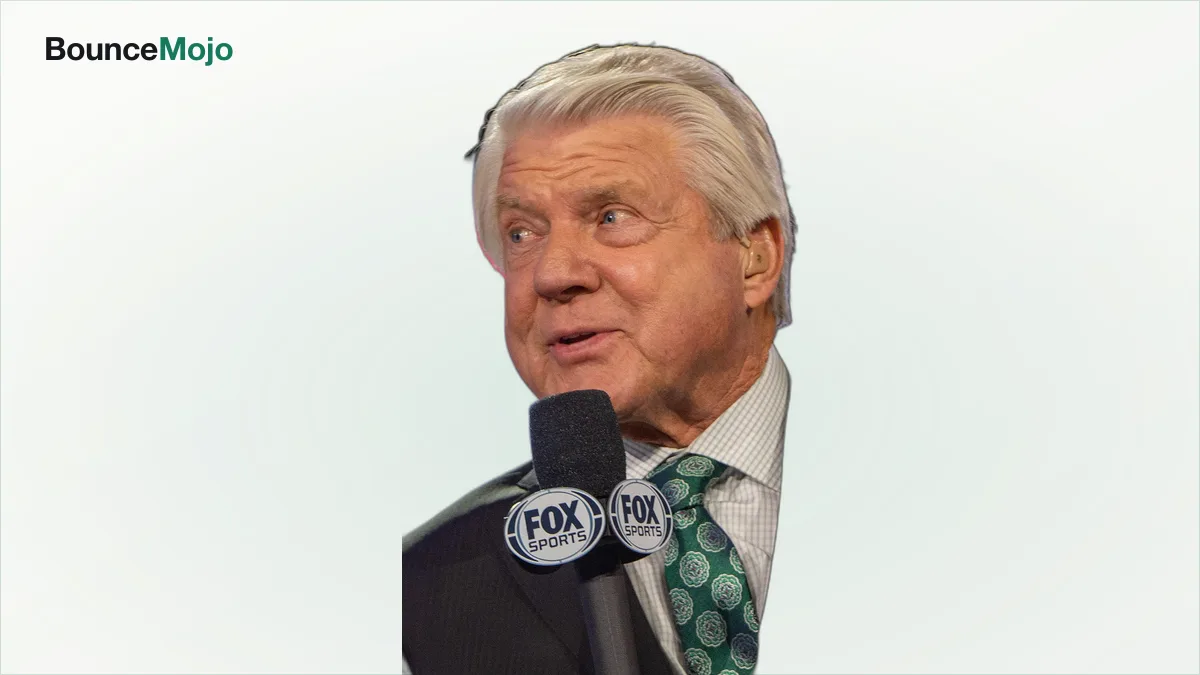
Everybody remembers the two Super Bowl trophies. Almost nobody remembers that he walked away from the dynasty at its absolute peak.
Here’s what most people miss: the same restless, uncompromising drive that built the Cowboys into champions is exactly what made Jimmy Johnson unable to stay and enjoy it.
The Myth vs. The Reality
The myth is clean. Jimmy Johnson, the swaggering, perfectly-coiffed mastermind, who strolled into Dallas and simply willed a dynasty into being with sheer force of personality.
That version is real. It’s also wildly incomplete.
Here’s the truth: the “born winner” story erases the most important part. Johnson was a refinery-town kid with a scientist’s mind and a gambler’s nerve, a coach who obsessed over roster math and psychology, and a man whose need to control everything eventually blew up the very thing he built. The swagger was real. So was the friction underneath it.
Think about it. We love a story of effortless charisma because it lets us off the hook. If Johnson just won on personality, then his success is nothing we could study. But that’s not what happened. He was a meticulous, calculating builder who out-thought the rest of the league on how to acquire and motivate talent.
Now, that intensity didn’t appear from nowhere. It was forged by a specific place, a specific rivalry, and a specific era of pro football. Which raises the question: what makes a man good enough to build a dynasty and restless enough to leave it?
The World That Made Jimmy Johnson
To understand Johnson, you have to understand the hard-edged Texas he came from.
He was born on July 16, 1943, in Port Arthur, Texas, a Gulf Coast town defined by oil refineries and blue-collar grit. His father superintended a dairy plant. This was a place where toughness was currency and competition was constant, and it built into young Jimmy a relentless will to win.
But the era mattered too. Johnson came up as football was becoming a science, when film study, roster strategy and psychology were starting to separate the great coaches from the good ones. A curious, analytical mind, Johnson actually studied psychology in college, was perfectly suited to that shift.
Here’s the deal: at the University of Arkansas, Johnson was a scrappy defensive lineman on the 1964 national championship team. A teammate on that squad was a brash, ambitious lineman named Jerry Jones, a relationship that would one day make them both rich and then tear them apart.
But the road from player to championship coach was long and winding. And where it led is the real story.
The Crucible: Early Life and the Climb
The environment that shaped him
Two things defined the young Jimmy Johnson: a refinery town’s toughness and an analyst’s curiosity.
Port Arthur gave him the chip on his shoulder, the sense that nothing came for free and everything had to be earned by out-competing the next guy. But Johnson wasn’t only a brawler. He studied psychology at Arkansas, fascinated by what makes people perform, a subject that would become his secret coaching weapon.
Then came the grind. Johnson spent years as an assistant coach at a string of colleges, learning the trade the hard way, building a reputation as a sharp defensive mind and a relentless recruiter. So picture it: a driven young coach crisscrossing the country, absorbing every lesson, waiting for a program of his own.
You might be wondering how a journeyman assistant becomes a championship coach. The answer is that Johnson understood people and rosters better than almost anyone. He knew how to identify talent, how to motivate it, and how to make brutal personnel decisions others were too sentimental to make.
By the mid-1980s, as head coach at the University of Miami, he had built one of the most fearsome, swaggering programs in college football, winning a national championship in the 1987 season.
The catalyst
The catalyst was a phone call from an old teammate.
In 1989, Jerry Jones bought the Dallas Cowboys and immediately hired his former Arkansas teammate to coach them. The franchise was in ruins, coming off a 1-15 season. What Johnson did next became a case study in team-building.
Here’s the kicker: Johnson made one of the boldest trades in NFL history, dealing star running back Herschel Walker to Minnesota for a haul of players and draft picks. He used that treasure to stockpile talent, drafting and acquiring the core, including quarterback Troy Aikman, that would become a dynasty.
The 1-15 team he inherited was about to become the best in football. But the partnership that built it was already carrying a fault line.
The Key Players
No rise this dramatic is a solo act, and Johnson was surrounded by people who shaped his path, and his exit.
Start with Jerry Jones, his college teammate turned owner, whose money and ambition gave Johnson the platform, and whose need for credit would eventually collide with Johnson’s. Their partnership built a champion and then detonated.
Then there’s Troy Aikman, the number-one overall pick Johnson built the offense around, the steady franchise quarterback at the center of the Cowboys’ three-Super-Bowl core.
And there’s Herschel Walker, the star Johnson traded away in the deal that supplied the draft capital for the entire dynasty, one of the most consequential transactions in league history.
There was also Barry Switzer, the coach who replaced Johnson in Dallas and won a Super Bowl with the roster Johnson built, a bittersweet epilogue to Johnson’s work.
Now: assemble the right people and make the hard calls, and you can build something historic. Johnson did exactly that. But triumph came with a bill that arrived faster than anyone expected.
The Turning Point
The pinnacle
The pinnacle came in the early 1990s, in a rush.
The Cowboys Johnson rebuilt from 1-15 tore through the league, winning Super Bowl XXVII following the 1992 season and Super Bowl XXVIII the year after, back-to-back titles achieved in just his fourth and fifth seasons in Dallas. It was one of the fastest turnarounds in NFL history, from worst to dynasty in a handful of years.
Johnson’s roster-building blueprint, the Walker trade, the draft hoarding, the ruthless roster churn, became the template other franchises would study for decades. He had proven himself one of the great team-builders the sport had ever seen.
The price
Because the same control that built the dynasty made it impossible to share.
Johnson and Jerry Jones, the old teammates, could not agree on who deserved the credit. The tension between a coach who wanted full authority and an owner who wanted to be seen as the architect grew unbearable. In 1994, at the absolute peak, with two straight titles in hand, the two men parted ways. Johnson left with a reported multimillion-dollar buyout, walking away from a team that might have won more.
He’d built a champion and couldn’t stay to enjoy it. That was the price of his intensity, and it cost him the dynasty he created.
The Unvarnished Truth
Johnson is not a simple hero, and pretending otherwise flattens the story.
His need for control and credit, the very trait that made him a great builder, is what ended his time in Dallas. He could be cold and ruthless in personnel decisions, cutting beloved players without sentiment, and his clashes with Jones were as much about ego as football. He later coached the Miami Dolphins but never recaptured the same magic.
There’s also a fair debate about the dynasty’s authorship. Barry Switzer won a Super Bowl with Johnson’s roster, and Jones would spend years arguing over how much of the success was his. Johnson built the team. Others harvested part of what he planted, and the arguments never fully died.
Here’s what’s easy to miss: his greatest strength and his greatest flaw were the same trait. The uncompromising drive that rebuilt a franchise also made him unable to coexist with a partner who wanted equal billing.
So what does a life like this actually teach the rest of us?
What We Can Learn From Jimmy Johnson
Navigating hard times
Johnson’s real lesson isn’t about winning. It’s about what you do when the winning costs too much.
He walked away from a dynasty rather than stay in a partnership that made him miserable, a stunning choice that cost him championships but bought him peace. Years later he found a genuinely happy second act, in a Fox studio and on the water in the Florida Keys, that his coaching life never allowed.
In other words: the trophies were the easy part. Choosing a life he could actually enjoy, over more titles won in misery, was the harder and wiser call.
The success blueprint
The blueprint here is about out-thinking the competition on talent.
Johnson didn’t win on speeches. He won because he understood roster-building and human motivation better than his rivals, and he had the nerve to make bold, unpopular moves like the Walker trade. He treated team-building as a science, and it worked.
Want the fuller picture of how that translated into wealth? The full net worth breakdown shows how two Super Bowls became a $45 million fortune, most of it earned in television. And to see how he ranks among the sport’s biggest sideline earners, the richest coaches list puts it in context.
The deeper takeaway is about knowing when to leave. Johnson proved that walking away at the top, on your own terms, can be a kind of victory that a trophy never delivers.
Which brings us to the final reckoning on the man.
Final Verdict
Jimmy Johnson is going to be remembered for the wrong thing.
Most people will file him under “two Super Bowls,” the Cowboys mastermind who feuded with Jerry Jones. A smaller, smarter group will remember something more interesting: a refinery-town kid who studied psychology, rebuilt a 1-15 team into a dynasty in five years, then had the nerve to walk away from it and build an even longer, happier career on television.
Here’s the bottom line: the trophies made him a legend. Walking away made him free. By refusing to stay in a partnership that drained him, he traded championships for a life on his own terms, and found a second act that lasted three decades.
He is a Hall of Fame coach and one of the great team-builders in football history. He is also living proof that knowing when to leave can be worth more than one more trophy. And in the long run, that quieter story is the version worth remembering.
Shop Jimmy Johnson on Amazon
Books, audiobooks, merch and more, handpicked for fans.
As an Amazon Associate we earn from qualifying purchases.
Frequently Asked Questions
Where did Jimmy Johnson grow up?+
Johnson grew up in Port Arthur, Texas, a Gulf Coast refinery town, the son of a dairy-plant superintendent. The blue-collar, competitive environment shaped his relentless drive.
Did Jimmy Johnson play football?+
Yes. Johnson was a defensive lineman at the University of Arkansas, where he was a teammate of future Cowboys owner Jerry Jones on the 1964 national championship team.
What did Jimmy Johnson win as a coach?+
Johnson won a college national championship at the University of Miami in the 1987 season and back-to-back Super Bowls with the Dallas Cowboys following the 1992 and 1993 seasons.
Why did Jimmy Johnson leave the Cowboys?+
Johnson left the Cowboys in 1994 after a bitter falling-out with owner Jerry Jones, despite winning two straight Super Bowls. He departed with a reported multimillion-dollar buyout.
What did Jimmy Johnson do after coaching?+
After a stint coaching the Miami Dolphins, Johnson became a longtime analyst on Fox NFL Sunday, a role he held for roughly three decades before retiring in early 2025. He was inducted into the Pro Football Hall of Fame in 2020.
Want the money side of the story?
Read Jimmy Johnson's Full Net Worth Breakdown →Shop Jimmy Johnson on Amazon
Books, audiobooks, merch and more, handpicked for fans.
As an Amazon Associate we earn from qualifying purchases.