Danica Patrick Biography: The Woman Who Rewrote Racing's Rules
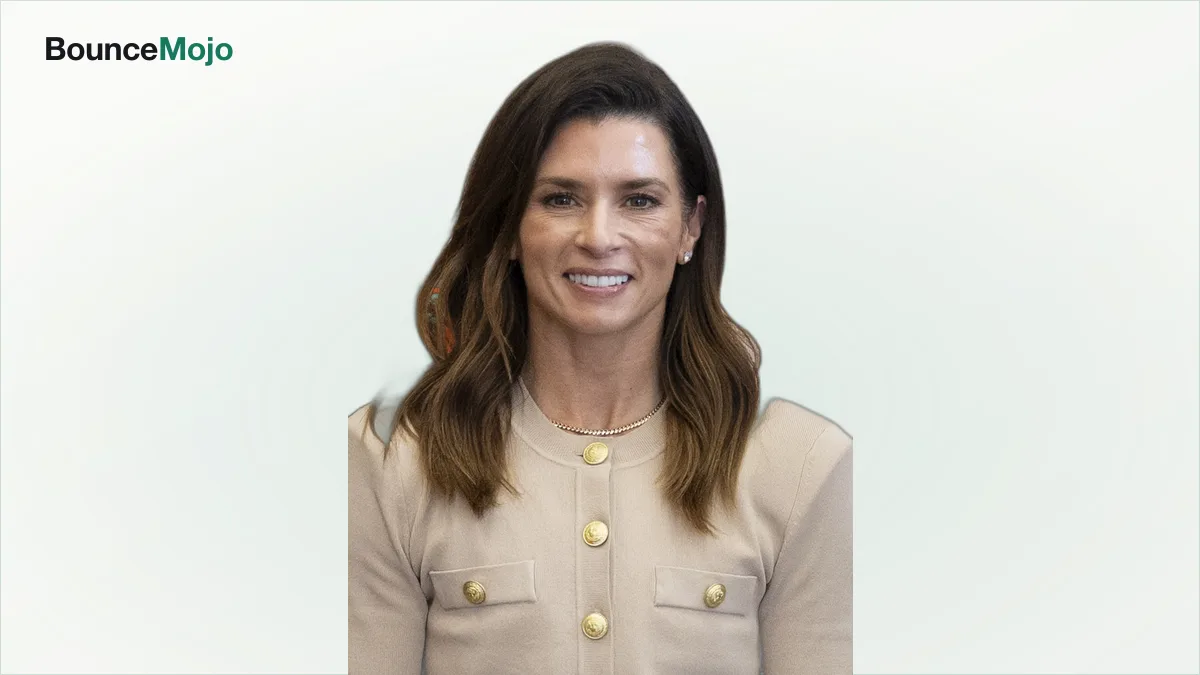
Everybody remembers the woman who made history in racing. Almost nobody remembers the ten-year-old in a go-kart who was already beating grown boys.
Here’s what most people miss: the thing that made Danica Patrick a target, being the girl in a man’s sport, is the exact thing that made her a phenomenon.
The Myth vs. The Reality
The myth is loud. Danica Patrick, the marketing creation, the pretty face sponsors invented to sell a sport to new audiences. A driver, some critics claimed, who was famous for who she was rather than what she did.
That version is real, in the sense that it was said constantly. It’s also wildly incomplete.
Here’s the truth: the “manufactured star” story erases the actual racer underneath. Patrick was a genuinely talented driver who won at the karting level as a kid, moved to England alone as a teenager to chase the sport, and then did something no woman had ever done, won an IndyCar race. The marketing was real. So was the driving that earned the platform in the first place.
Think about it. We reduce trailblazers to their image because it’s easier than reckoning with what they broke. If Patrick was just a marketing product, then her success requires no rethinking of a sport that had never let a woman in. But that’s not what happened. She earned her seat, then used the spotlight it created.
Now, that spotlight didn’t appear by accident. It came out of a specific place, a specific family, and a specific relentlessness. Which raises the question: what makes a kid from small-town Illinois willing to cross an ocean alone?
The World That Made Danica Patrick
To understand Patrick, you have to understand the small-town, working-family world she came up in.
She was born on March 25, 1982, and raised in Roscoe, Illinois, a small town near the Wisconsin border. This was middle-American, blue-collar territory, not a motorsports hub. Her parents ran businesses, and the family’s shared love of racing pulled a young Danica toward go-karts at age ten.
The era mattered too. Patrick came up as American racing was hungry for new stars and new audiences. Open-wheel and stock-car racing were fighting for mainstream attention, and a genuinely fast female driver represented something the sport had never successfully marketed before. The timing set up an opportunity as much as a challenge.
Here’s the deal: Patrick had a younger sister, Brooke, and a family that took her racing seriously from the start. When she showed she could win karting titles, her parents backed her fully, and that early support gave her the runway to dream far beyond Roscoe.
But small-town go-kart success was only the beginning. To go further, she’d have to leave everything familiar behind.
The Crucible: Early Life and the Climb
The environment that shaped him
Two things defined the young Danica Patrick: dominance in karting and constant underestimation.
By her early teens she was racking up karting championships, routinely outracing boys who assumed she couldn’t keep up. That combination, winning while being doubted, became the pattern of her entire career. She learned early that results alone wouldn’t silence the skeptics, but they were the only way to earn a seat at the table.
Then came the boldest move of her youth. As a teenager, Patrick left the United States to race in England, where the open-wheel development ladder was fiercely competitive. It was a lonely, difficult stretch, a young American far from home in an unforgiving environment, but it toughened her and sharpened her craft against elite young talent.
You might be wondering: how does a teenager handle being that far outside her comfort zone? The answer is that Patrick’s whole life had already trained her to be the outsider who proves people wrong. The isolation abroad was just a bigger version of the go-kart tracks where she’d always been the one they didn’t expect.
By her early twenties, the girl from Roscoe was ready for America’s biggest open-wheel stage. And she was about to make an entrance no one could ignore.
The catalyst
The catalyst came at the Indianapolis Motor Speedway.
In 2005, Patrick made her IndyCar debut and, as a rookie, led laps at the Indianapolis 500 and finished fourth, an electrifying performance that instantly made her a national story. Suddenly the sport had exactly what it had been missing: a fast, marketable, genuinely competitive female driver at its biggest event.
Here’s the kicker: the fame arrived before the signature win, which is what made 2008 so important. That year, at the Indy Japan 300 in Motegi, Patrick won, becoming the first woman ever to win an IndyCar race. The result gave the hype its foundation and cemented her place in history.
The girl who was always doubted had done something no one, man or woman, could take away. But the platform it created would pull her in a new direction.
The Key Players
No career this big is a solo act, and Patrick was surrounded by people who shaped her path.
Start with her family, the parents who funded and drove her early karting career and the household that made racing the family language. Their backing gave her the foundation to chase a sport with brutal odds.
Then there’s Bobby Rahal, the racing legend and team owner whose organization gave Patrick her IndyCar break and the platform for her breakout Indy 500 run. That opportunity launched her into the national spotlight.
And there’s GoDaddy, less a person than a partnership that defined her fame. The company made Patrick the centerpiece of national ad campaigns, including Super Bowl spots, turning her into a household name far beyond racing and proving her marketing value was in a class of its own.
There was also Tony Stewart, whose Stewart-Haas Racing team gave Patrick her full-time NASCAR ride when she made the leap to stock cars.
Now: surround yourself with the right backers and seize the right moment, and you can build something historic. Patrick did exactly that, but the fame came with a bill of constant scrutiny.
The Turning Point
The pinnacle
The pinnacle was that 2008 win in Japan, and the career it unlocked.
Becoming the first woman to win an IndyCar race was a genuine sporting milestone, the kind that rewrites what’s considered possible. It validated every hard mile she’d logged, from Illinois go-karts to lonely seasons in England, and it made her the most famous driver in American open-wheel racing.
Then came the crossover. Patrick moved to NASCAR, and in 2013 she won the pole position for the Daytona 500, the first woman ever to do so, and later became the first woman to lead laps in the race. She had now made history in two different disciplines of American racing.
Here’s the truth: she became a genuine trailblazer, and the fame that came with it dwarfed almost every driver of her generation.
The price
Because being first came with relentless pressure.
Patrick faced constant criticism that her fame outstripped her results, a charge leveled at her far more harshly than at male drivers with similar records. Every race was scrutinized through the lens of her gender, and both praise and criticism were amplified beyond reason. Carrying the weight of being “the first” meant there was no room to just be a driver.
There was also the grind of the NASCAR years, where full-time Cup racing proved brutally competitive and wins never came. Living under expectations that no single driver could fully satisfy was its own kind of burden, season after season.
She’d spent her whole life being underestimated. Now she was over-scrutinized, and neither left much room to simply race.
The Unvarnished Truth
Patrick is not a simple hero, and pretending otherwise does her story a disservice.
She was a polarizing figure. Her fame and endorsement value genuinely did exceed her win total, and honest observers acknowledge that her marketing appeal was central to her platform. That doesn’t erase her achievements, but it’s part of the real picture.
There’s also the debate about what she represented. To many, she was an inspiration who opened doors; to some critics, she was a symbol of style over substance. The truth sits in between: she was a real racer whose cultural impact happened to be even bigger than her results.
Here’s what’s easy to miss: her greatest strength and her greatest criticism were the same trait. The marketability that made her a phenomenon also fueled the claim that she was hype. The spotlight was both the reward and the target.
None of that erases the history she made. But it does explain why her second act, as a businesswoman and media figure, feels like the natural next chapter.
Controversies and Criticisms
Patrick’s career carried real debate, and it’s worth being honest about it.
The central criticism followed her throughout: that her endorsements and fame were disproportionate to her on-track results. It was a persistent narrative, and while it ignored her genuine achievements, the gap between her marketing profile and her win column was real.
She also drew scrutiny for occasional on-track incidents and rivalries, the ordinary friction of competitive racing, magnified by her fame. And she has weathered plenty of tabloid attention about her personal life, the kind that comes with being one of the most recognizable athletes in the country.
So what does a life like this actually teach the rest of us? More than the debates suggest.
What We Can Learn From Danica Patrick
Navigating hard times
Patrick’s real lesson is about turning constant doubt into fuel.
From the go-kart tracks where she beat boys who dismissed her, to the lonely seasons abroad, to the years of being told her fame was undeserved, Patrick faced skepticism at every level. She answered it the only way that works, by showing up and doing something no one else had done.
In other words: the doubt was the constant. She built a historic career by refusing to let other people’s low expectations set her ceiling.
The success blueprint
The blueprint here is about converting a platform into ownership.
Patrick could have let her fame fade with her racing career. Instead, she built the Somnium wine label and the Warrior clothing line, launched a podcast, and moved into media, turning a marketing profile into owned businesses. She used the spotlight while she had it to build things that would outlast it.
Want the fuller picture of how that translated into wealth? The full net worth breakdown shows how a trailblazing career became an estimated $80 million fortune built on endorsements and her own brands. And to see how she ranks among the sport’s biggest earners, the richest race car drivers list puts it in context.
The deeper takeaway is about being first. Patrick proved that breaking a barrier is only half the job; the other half is using the platform it creates to build something lasting. The people who matter are the ones who turn a moment into a legacy.
Which brings us to the final reckoning on the woman.
Final Verdict
Danica Patrick is going to be remembered for the wrong debate.
Most people will file her under “was she overrated,” an argument about hype and results that misses the point entirely. A smaller, smarter group will remember something bigger: a girl from small-town Illinois who beat the boys in go-karts, crossed an ocean alone as a teenager to chase her sport, and then did what no woman had ever done, won an IndyCar race and led the Daytona 500.
Here’s the bottom line: the marketing made her famous. The barriers she broke made her matter. She proved a woman could win at the highest level of American racing, and she opened a door that had been shut for a century.
She is a racing trailblazer. She is also living proof that being first is only powerful if you build something with it. And in the long run, that second story, the businesswoman who turned history into a legacy, is the version worth remembering.
Shop Danica Patrick on Amazon
Books, audiobooks, merch and more, handpicked for fans.
As an Amazon Associate we earn from qualifying purchases.
Frequently Asked Questions
Where did Danica Patrick grow up?+
Patrick grew up in Roscoe, Illinois, a small town near the Wisconsin border, where she started racing go-karts at age ten and quickly showed she could beat the boys.
Why is Danica Patrick famous?+
Patrick is famous as a racing trailblazer. She is the first and only woman to win an IndyCar Series race, and she became one of the most marketable athletes in America across her IndyCar and NASCAR careers.
Did Danica Patrick win an IndyCar race?+
Yes. In 2008, she won the Indy Japan 300 at Motegi, becoming the first woman ever to win an IndyCar race, the defining achievement of her career.
What does Danica Patrick do now?+
Since stepping away from full-time racing after 2018, Patrick has run her Somnium wine label and Warrior clothing line, hosted a podcast, and worked in broadcasting and media.
Did Danica Patrick race in NASCAR?+
Yes. Patrick moved from IndyCar to NASCAR, racing full-time in the Cup Series for Stewart-Haas Racing and earning a pole position for the Daytona 500, a first for a woman.
Want the money side of the story?
Read Danica Patrick's Full Net Worth Breakdown →Shop Danica Patrick on Amazon
Books, audiobooks, merch and more, handpicked for fans.
As an Amazon Associate we earn from qualifying purchases.