Jason Day Biography: A World No. 1's Second Chance
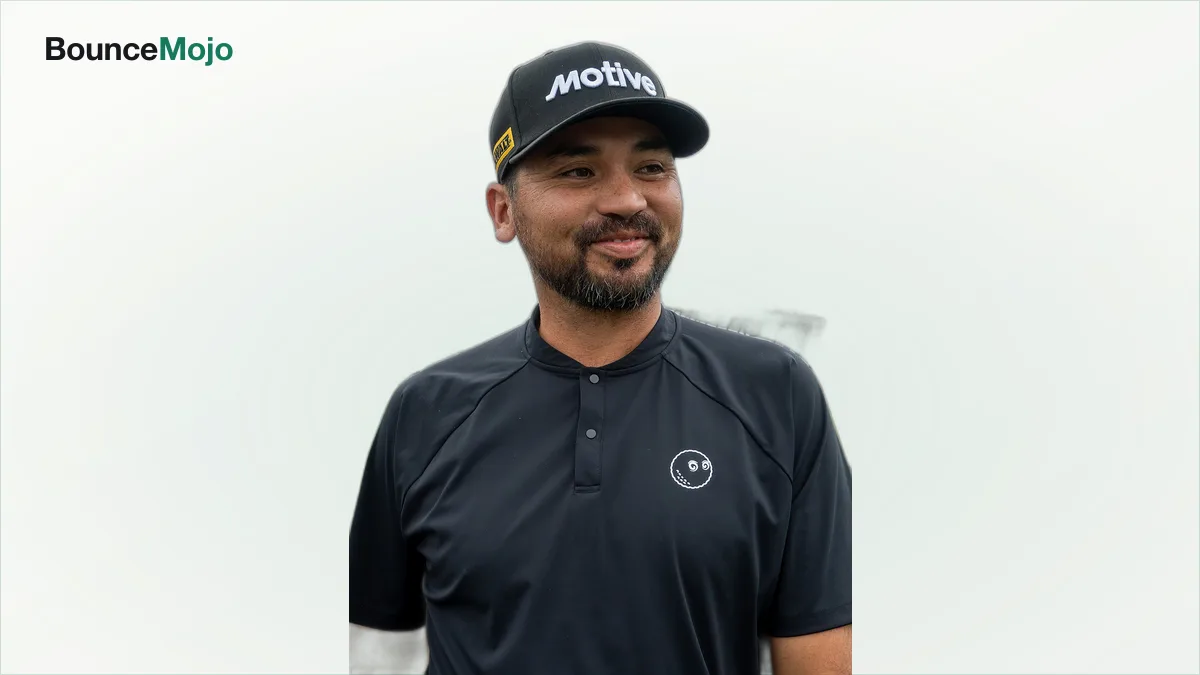
The world No. 1 ranking, the record-setting major, the emotional victories that left him in tears. That’s the Jason Day golf fans remember.
Here’s what most people miss: he came within a whisker of never becoming a golfer at all, or anything else worth remembering.
The Myth vs. The Reality
The myth is a highlight reel. Jason Day is the emotional Aussie who conquered the world, a world No. 1 with a major and a fortune.
The reality is a rescue story.
Here’s the truth: before Day was a champion, he was a grieving, angry kid in a poor Queensland town, getting into fights and drinking at an age most children are still riding bikes. The tears the world saw on his victories came from someone who knew exactly how close he’d come to having nothing.
Now think about the moment that defines him. Most fans point to Whistling Straits in 2015, the record major. But the real turning point came years earlier, in a decision his mother made that cost her almost everything she owned.
That decision is where the champion was actually born.
The World That Made Jason Day
Jason Anthony Day arrived on November 12, 1987, in Beaudesert, Queensland, a small town southwest of Brisbane. His father, Alvin, was Irish-Australian. His mother, Dening, had emigrated from the Philippines to Australia in the early 1980s. Money was tight, and the household was unstable.
Golf entered his life almost by accident. Alvin found a cut-down three-wood at the local dump and gave it to his son, then enrolled him at the Beaudesert Golf Club as a junior just after his sixth birthday. The boy took to it instantly.
This was working-class regional Australia, a world away from the country-club circuit. And it was a home shadowed by his father’s drinking, which made everything harder and more chaotic than a child should have to endure.
But here’s the kicker: the one steady thing in young Jason’s life was about to be taken from him, and the fallout nearly destroyed him.
The Crucible: Early Life and the Climb
The environment that shaped him
For a few years, golf and family held together. Then, when Jason was 12, his father Alvin died of stomach cancer.
The loss unmoored him. Day has spoken openly about what followed: getting into fights at school, drinking at a dangerously young age, and sliding toward a path that ends badly for a lot of kids from hard homes. The discipline golf had given him started to slip away, and so did his direction.
His mother watched her son unravel and made a decision that would define both their lives.
The catalyst
Dening Day did the almost unthinkable. She took out a second mortgage and sold the family home to scrape together the money to send Jason to Kooralbyn International School, a boarding academy built around golf. It was a gamble on structure, on discipline, on the faint hope that the game might save him.
At Kooralbyn, Jason met a coach named Colin Swatton.
Swatton became everything the boy had lost: a mentor, a disciplinarian, and a father figure. He didn’t just teach Day golf, he rebuilt his character, instilling the routine and self-belief that a grieving kid had lost. Day has called Swatton a lifesaver and someone he loves to death.
Want to know how far that partnership would carry him? All the way to the top of the world.
The Key Players
You cannot tell the Jason Day story without three names.
Colin Swatton is the first and the most important. He met Day as a lost teenager and never let go, serving as his coach and, for years, his caddie, standing beside him through the biggest moments of his career. Their bond is one of the most touching mentor relationships in modern sport, and Day credits Swatton with saving his life before saving his golf game.
Dening Day, his mother, is the second. Her sacrifice, mortgaging and selling the home to fund his schooling, is the single decision that made everything else possible. Everything Jason built stands on that act.
Ellie Day, his wife, is the third, the American he married and built a family with, and the partner who supported him through the injuries and the emotional highs and lows of a demanding career.
Here’s the deal: with Swatton at his side, Day was about to erupt into the best golfer on the planet.
The Turning Point: Triumph and Its Hidden Cost
The pinnacle
Start with the triumph, because it was staggering for a kid who nearly lost everything.
After years of near-misses in majors, Day finally broke through at the 2015 PGA Championship at Whistling Straits. He didn’t just win, he demolished the field, finishing at 20 under par, a record score for a men’s major. As the final putt dropped, he wept in Swatton’s arms.
That win was the peak of an extraordinary run. Day piled up victories across 2015 and into 2016, and in September 2015 he climbed to world No. 1. For a stretch, the poor kid from Beaudesert was the best golfer alive, holding the top ranking that his childhood idol Tiger Woods had once owned.
The price
Now the cost, which the world often forgot behind the trophies.
Day’s body betrayed him repeatedly. Chronic back problems and other injuries interrupted his career again and again, sometimes forcing him to withdraw mid-tournament, sometimes sapping the form that made him unbeatable. The dominance of 2015 and 2016 proved hard to sustain as his body broke down.
He also carried grief that never fully left. Day has spoken about losing family members, including to the pandemic, and about the emotional weight he plays under. The tears on the course were real, drawn from a life that had asked more of him than most.
You might be wondering how a man keeps fighting through all that. The answer is rooted in exactly where he came from.
The Unvarnished Truth
Let’s not sand off the struggle.
Day has been candid about his troubled adolescence, the drinking and fighting after his father’s death, and he has never hidden how close he came to ruin. That honesty is part of what makes his story land.
His career has also drawn criticism for slow play, a knock that followed him for years as his deliberate, methodical routine tested the patience of fans and rivals alike. And his injury withdrawals sometimes frustrated observers who wanted to see the best version of him more often.
Here’s the truth: Day’s greatest asset, his intense mental focus and pre-shot routine, was also the source of his slow-play reputation. The very discipline Swatton instilled to save him became a target for critics. He wore that tension throughout his career.
Even so, that discipline is what let a kid from chaos become a world No. 1.
Controversies and Criticisms
For a player so widely liked, Day’s controversies are mostly about the golf itself.
Slow play is the big one. Day’s careful, time-consuming routine drew repeated criticism and even calls for penalties, and it became a recurring talking point during his peak years.
His frequent injury withdrawals also sparked debate, with some questioning his durability and others sympathizing with the genuine back problems he battled. Day always maintained the injuries were real and serious, which the medical record supports.
Beyond that, the criticisms are minor. Day has largely avoided off-course scandal, building a reputation as a devoted family man and a grateful, emotional competitor rather than a villain.
Here’s the thing though: none of it dents the larger story. Because the comeback from his youth outweighs any on-course knock.
What We Can Learn From Jason Day
Navigating the darkness
When grief and chaos hit you young, the odds turn brutal fast.
Day beat those odds because someone believed in him and he let them. His mother’s sacrifice and Swatton’s guidance gave him a lifeline, and he grabbed it. The lesson isn’t just “find a mentor.” It’s that accepting help, really accepting it, can be the bravest and most transformative choice a struggling person makes.
The success blueprint
Now the part that built the career and the fortune.
Day converted a few dominant seasons into lasting wealth by locking in major endorsements at his peak, including a reported $10-million-a-year Nike deal, and by managing his career with the same discipline Swatton taught him. He treated golf as a craft and a business to be protected through the injury years. That approach is why he ranks among the richest golfers in the world. The full money breakdown lives in our Jason Day net worth analysis, and you can see where he sits among the richest athletes overall, alongside fellow Australian Adam Scott.
In other words, the kid who had nothing made sure to build something that would last.
Becoming better
The deepest lesson is about second chances. Jason Day was a grieving, angry boy headed nowhere, and he became one of the best golfers who ever lived. He proved that a terrible start doesn’t have to be the ending, if you accept the hand reaching out to pull you up.
So what’s the final word on golf’s great survivor?
Final Verdict
Jason Day is one of the most inspiring comeback stories the sport has produced.
On the course, he’s a major champion and former world No. 1 who once played the best golf on the planet. Off it, he’s a survivor of poverty and grief who was saved by a mother’s sacrifice and a mentor’s faith, and who repaid both by climbing to the very top.
Here’s the bottom line: the trophies were never the whole story. Behind every emotional victory was a kid who nearly lost everything and chose, with help, to fight instead.
Anyone who sees only the world No. 1 has missed the real drama. Jason Day’s greatest win was the one that happened long before he ever lifted a trophy.
Shop Jason Day on Amazon
Books, audiobooks, merch and more, handpicked for fans.
As an Amazon Associate we earn from qualifying purchases.
Frequently Asked Questions
Where did Jason Day grow up?+
Jason Day was born on November 12, 1987, in Beaudesert, Queensland, Australia, to an Irish-Australian father and a Filipina mother, growing up in poverty in a troubled household.
What happened to Jason Day's father?+
His father, Alvin, who struggled with alcohol, died of stomach cancer when Jason was 12, sending the boy into a period of fighting and drinking before a mentor turned his life around.
Who is Colin Swatton to Jason Day?+
Colin Swatton is Day's coach, longtime caddie, and father figure, whom he met at a golf boarding academy and credits with saving his life and building his career.
What is Jason Day's biggest win?+
His crowning achievement was the 2015 PGA Championship at Whistling Straits, won with a record 20-under-par total, the same year he reached world No. 1.
How did Jason Day become world number one?+
After a dominant run of wins in 2015 including his first major, Day rose to world No. 1 in September 2015 and held the top ranking over the following years.
Want the money side of the story?
Read Jason Day's Full Net Worth Breakdown →Shop Jason Day on Amazon
Books, audiobooks, merch and more, handpicked for fans.
As an Amazon Associate we earn from qualifying purchases.