Jannik Sinner Biography: The Skier Who Chose Tennis and Conquered It
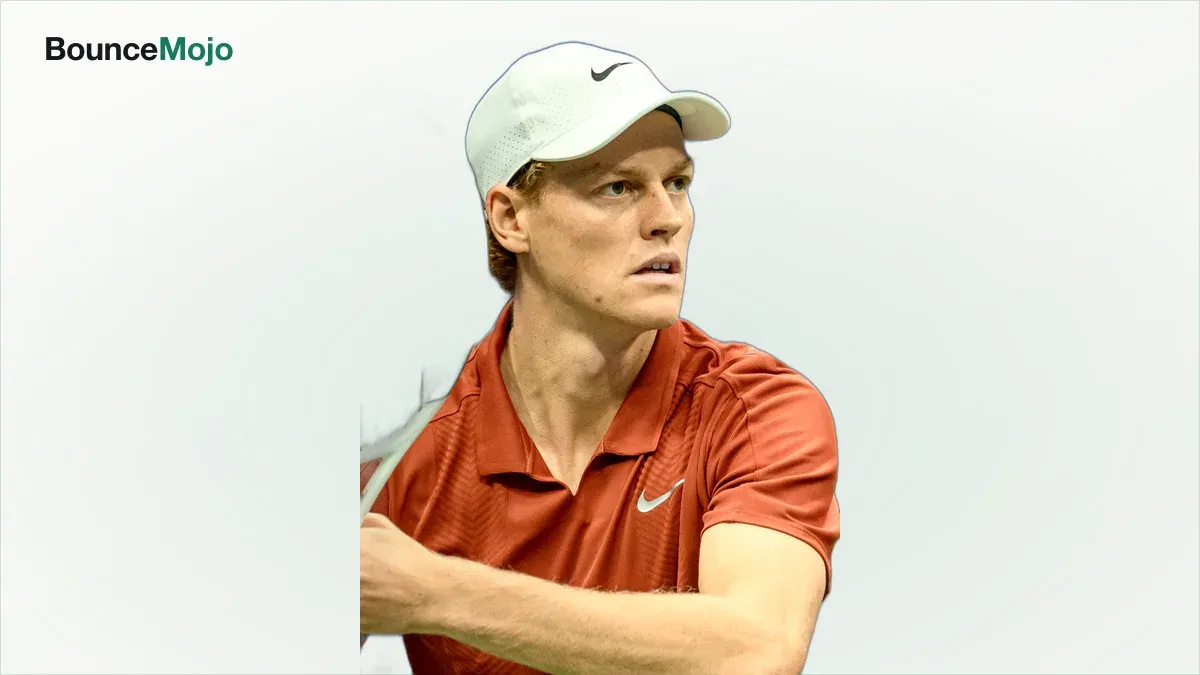
Most people know Jannik Sinner as the calm, red-haired world No. 1 from Italy. That picture is real, and it hides an unlikely origin story.
Here’s what most people miss: the best tennis player in the world was once one of the best junior skiers in his country, and he only picked tennis over the slopes as a teenager, a choice that reshaped the sport.
The Myth vs. The Reality
The myth is simple: Jannik Sinner, the emotionless machine who never misses and never cracks.
The reality has more texture.
Here’s the deal: the calm is real, but it is not emptiness. It is a hard-won discipline, forged in a childhood of mountain sports and a family that valued quiet work over noise. Behind the flat expression is a fierce competitor who chose this life deliberately, against the easier path he was already winning at.
The myth also skips the risk he took. Walking away from an elite skiing career to gamble on tennis, a sport with far more competition and far longer odds, was not the safe choice. It was a leap.
You might be wondering: how does a kid from a tiny Alpine village who spoke German at home become the face of Italian tennis? To understand that, you have to understand the unusual world he came from.
The World That Made Jannik Sinner
Sinner was born in 2001 in San Candido, in South Tyrol, a German-speaking region of the Italian Dolomites with a culture all its own.
This is a place where Austrian and Italian traditions blend, where German is the mother tongue, and where winter sports, not tennis, are the childhood default. His father worked as a chef at a mountain ski lodge, his mother as a waitress. Theirs was a grounded, hardworking family in a landscape of snow and peaks.
Now: this backdrop shaped everything about Sinner. His calm, his discipline, his lack of theatrics, all of it traces back to a quiet mountain upbringing far from the glamour of professional tennis. He was not raised in a tennis academy or a big-city spotlight. He was raised in the Alps, on skis.
Think about it: the least likely place to produce a tennis world No. 1 produced exactly that. That contrast, a snow-country skier becoming a hardcourt king, is the strange heart of his story.
But before the trophies, there was a boy who had to choose between two sports he was already great at.
The Crucible: Early Life and the Climb
The Environment That Shaped Him
Young Jannik was a phenomenal skier. He won a national giant slalom title at seven and ranked among Italy’s best juniors for years. He also played tennis and football on the side.
Here’s the truth: he was talented enough at skiing to have chased a professional career on the snow. That is what makes his choice so remarkable. The mountain life was his by default, and he set it aside.
His family gave him room to decide. They were not pushy tennis parents chasing a dream through their son. They let him find his own path, which is exactly why the path he chose was fully his own.
The Catalyst
At around 13, Sinner made the leap. He left home to train with respected coach Riccardo Piatti at his academy in Bordighera, on the Italian Riviera, hundreds of miles from the Dolomites.
Think about what that meant: a young teenager, leaving a German-speaking mountain home for a tennis-focused life on the coast, betting everything on a sport he had only just prioritized. It was a bold, lonely decision for a boy that age.
It gets better from here. Under Piatti, and later under veteran coach Darren Cahill, Sinner developed a game of ruthless efficiency, flat, hard, precise, that would carry him to the very top. The gamble was about to pay off in full.
The Key Players
No champion rises alone, and Sinner’s story turns on a few essential figures.
His parents. The chef and the waitress who let their son choose his own sport and supported him without pressure. Their steadiness is the foundation of his famous composure.
Riccardo Piatti. The coach who took in a 13-year-old and shaped the raw material of his game during the crucial early years. Piatti saw the ceiling before almost anyone.
Darren Cahill. The veteran Australian coach who helped guide Sinner’s rise to world No. 1 and multiple Grand Slam titles, bringing experience and calm to a young team.
Carlos Alcaraz. The rival. Every great champion needs an equal, and in Alcaraz, Sinner found his. We will get to the duel that is defining them both.
Think about it: each of these figures added something, the steadiness, the technique, the wisdom, the fire of competition. Together they built a No. 1. And that ascent reached its peak just as the sport found its next great rivalry.
The Turning Point
The Pinnacle
Sinner’s climb to the summit came fast. He won his first Grand Slam and soon rose to world No. 1, joining the small club of players to reach the top of the sport.
He backed it up, defending major titles and, in a landmark 2026 season, becoming the first player ever to earn more than $25 million in prize money in a single year. His duel with Alcaraz, trading Grand Slam finals, gave men’s tennis exactly the rivalry it needed after the Big Three era. As his net worth story lays out, the record earnings and a massive Nike deal made him one of the sport’s wealthiest young stars.
The Price
Here’s the kicker: the peak arrived alongside the hardest test of his career.
In 2024, Sinner tested positive for a banned substance. The case hung over him for months, threatening his reputation and his ranking, before investigators concluded there was no fault or intent, attributing the result to contamination. He accepted a three-month suspension in a settlement and returned without losing his top spot.
The episode was a trial by fire. It brought scrutiny, doubt, and pressure that would have rattled many players. What it revealed, though, was the same quiet resolve that had defined him since the Dolomites. Which brings us to the flaws beneath the calm.
The Unvarnished Truth
Sinner is not a robot, and the machine-like image sells the human being short.
His famous composure can read as coldness, and he has faced criticism for a lack of on-court emotion that some fans find hard to warm to. He is intensely private, guarded in interviews, and reluctant to perform for the cameras. That reserve is genuine, not a marketing choice.
Now: none of that is a flaw so much as a temperament. The same calm that some call cold is exactly what let him weather a doping storm without visibly cracking. His steadiness is his strength and, to some, his limitation as a personality.
The most honest thing anyone can say about Sinner is this: his greatest weapon is his equanimity, and it comes at the cost of the fiery charisma fans often crave. He wins the way he lives, quietly, relentlessly, without spectacle.
Controversies and Criticisms
Sinner’s career has been remarkably clean, with one major exception.
The doping case. The 2024 positive test was the defining controversy of his career. Though he was cleared of fault, some rivals and observers questioned the process and the leniency of a three-month ban. Sinner has consistently maintained his innocence, and the official findings backed him.
The “too calm” critique. A softer criticism is that his low-key persona lacks the drama that makes tennis compelling to casual fans. It is less an accusation than a matter of taste.
Here’s the truth: the doping saga tested his character more than his game, and he came through it with his ranking and, per the ruling, his integrity intact. It is the one shadow on an otherwise disciplined career.
What We Can Learn From Jannik Sinner
Navigating Hard Times
The first lesson is the power of staying calm when everything is on the line. Sinner faced a career-threatening controversy and did not let it unravel him. He kept training, kept his composure, and let the facts and the process play out.
But here’s the deeper truth: composure is a skill you build, not a gift you are born with. Sinner’s came from years of quiet discipline in a mountain family, and it is available to anyone willing to cultivate it.
The Success Blueprint
If you want the replicable part, it is this: Sinner made a hard, decisive choice, tennis over skiing, and then committed to it completely, leaving home at 13 and trusting his team for years. Focus and follow-through beat raw talent alone.
That combination of nerve and discipline is what put him among the top current-era earners on our richest tennis players ranking, level with his great rival Carlos Alcaraz. The trophies and the fortune both grew from a single brave decision.
Final Verdict
Jannik Sinner is the quiet cornerstone of tennis’s new era, and “quiet” is the whole point, because his greatness runs on calm rather than fireworks.
He gave up an elite skiing career to gamble on tennis, left his mountain home as a boy, rose to world No. 1, and held his nerve through the biggest storm of his career. And here is the twist that reframes everything: the emotionless machine is actually a young man who made one of the bravest choices in sport, trading a sure thing for a harder dream, and won. The full story of how he turned that resolve into a $45 million fortune lives in his net worth breakdown.
If you want to understand where men’s tennis is going, watch Sinner and Alcaraz push each other to new heights. Sinner is proof that you do not need theatrics to be great. Sometimes the loudest statement is made in total silence, one flat, perfect winner at a time.
Shop Jannik Sinner on Amazon
Books, audiobooks, merch and more, handpicked for fans.
As an Amazon Associate we earn from qualifying purchases.
Frequently Asked Questions
Where did Jannik Sinner grow up?+
Jannik Sinner was born in San Candido and raised in nearby Sesto, in the German-speaking South Tyrol region of the Italian Dolomites. His first language is German, and his father was a chef at a mountain ski lodge.
Was Jannik Sinner a skier before tennis?+
Yes. Sinner was one of Italy's top junior skiers, winning a national giant slalom title at age seven, before choosing to focus on tennis at around 13.
What makes Jannik Sinner special?+
He rose to world No. 1 and won multiple Grand Slams with a game built on flat, powerful, precise ball-striking and a famously calm temperament under pressure.
What happened with Jannik Sinner's doping case?+
Sinner tested positive for a banned substance in 2024. Authorities found no fault or intent, attributing it to contamination, and he accepted a three-month suspension in a settlement.
Who is Jannik Sinner's biggest rival?+
His defining rival is Spain's Carlos Alcaraz. The two have traded Grand Slam finals and are widely regarded as the faces of the sport's next generation.
Want the money side of the story?
Read Jannik Sinner's Full Net Worth Breakdown →Shop Jannik Sinner on Amazon
Books, audiobooks, merch and more, handpicked for fans.
As an Amazon Associate we earn from qualifying purchases.