Jackie Stewart Biography: The Flying Scot Who Made Racing Survivable
Everybody remembers the three world titles. Almost nobody remembers that the boy who won them was told he was stupid.
Here’s what most people miss: the thing that nearly crushed Jackie Stewart as a child is the exact thing that drove him to prove himself, in racing and in the long fight that mattered even more than winning.
The Myth vs. The Reality
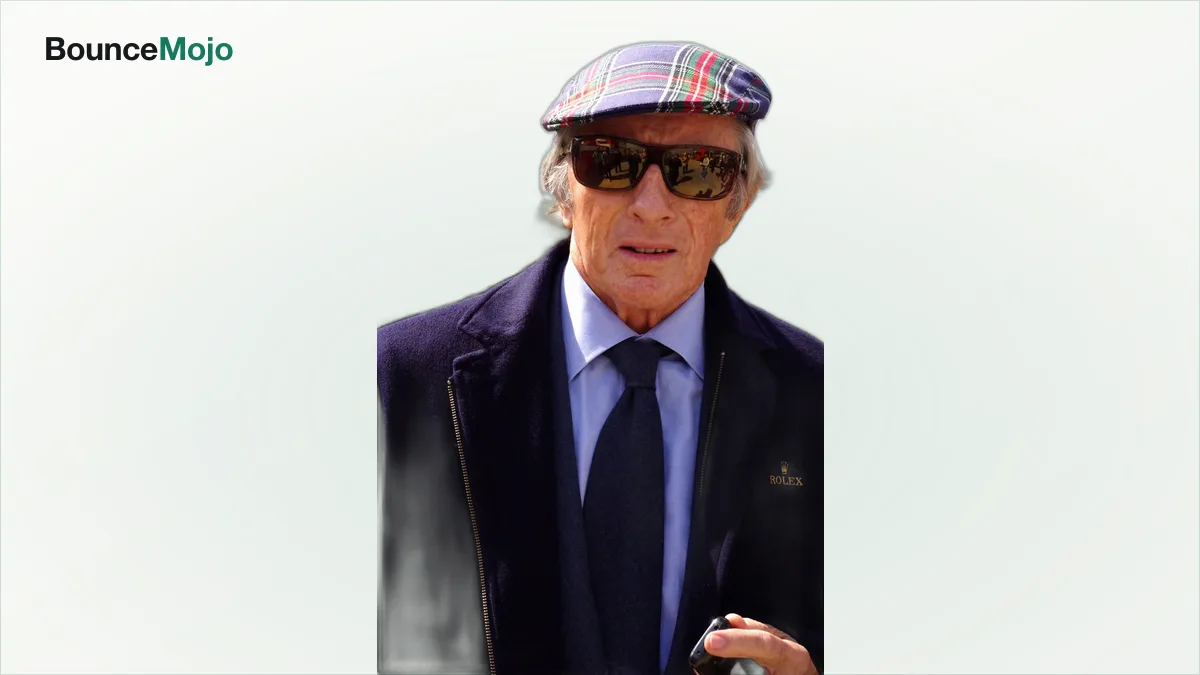
The myth is polished. Sir Jackie Stewart, the impeccably dressed Flying Scot, three-time world champion, motorsport royalty in his tartan cap and Rolex.
That version is real. It’s also wildly incomplete.
Here’s the truth: Stewart grew up believing he was dim. He struggled so badly at school, humiliated in class, that he left with no qualifications and a deep sense of failure. It was only decades later, as an adult, that he learned he had dyslexia. The suave champion the world admires was built by a kid desperate to prove he wasn’t stupid.
Think about it. We love the image of effortless class because it’s flattering to watch. But Stewart’s real story is about a boy carrying a secret wound, who found in racing and, later, in a moral crusade a way to show the world exactly what he was worth.
Now, that drive didn’t come from nowhere. It was forged in a specific Scottish family and a specific, brutal era of motor racing. Which raises the question: what makes a man risk his life to win, and then risk everything to make the sport safe?
The World That Made Jackie Stewart
To understand Stewart, you have to understand the family garage and the deadly era of racing he entered.
He was born on June 11, 1939, in Milton, near Dumbarton in Scotland, where his family ran a garage and a Jaguar dealership. Cars and speed were in the family blood; his older brother Jimmy raced before him. But young Jackie’s early struggles were in the classroom, not the cockpit, where his undiagnosed dyslexia left him branded slow and lazy.
But the era mattered enormously. When Stewart reached Formula 1 in the mid-1960s, motor racing was staggeringly dangerous. Circuits were lined with trees, ditches and Armco at best, cars had no real safety features, and drivers died with grim regularity. It was a world that treated death as the price of the sport.
Here’s the deal: before racing, Stewart was a champion clay-pigeon shooter, good enough to aim for the Olympics. That precision, calm and hand-eye control transferred straight into a racing car. When he finally got behind the wheel, the boy the school had dismissed turned out to be extraordinary.
But the sport he was rising through was killing his friends. And that horror is where the real story starts.
The Crucible: Early Life and the Climb
The environment that shaped him
Two things defined the young Jackie Stewart: a sense of academic failure and a talent nobody could deny.
Written off at school, Stewart left to work in the family garage. But his gift for shooting revealed a rare precision, and when he tried racing, that same talent exploded onto the track. He rose fast through the junior ranks, and by 1965 he was in Formula 1 with BRM, scoring a win in only his first season.
You might be wondering: how does a man dismissed as slow become a triple world champion? The answer is that racing rewarded exactly what school had punished. His intense focus, his feel for a car, and his relentless work ethic, all fuelled by a need to prove himself, made him one of the quickest and most complete drivers of his generation.
Then came the moment that changed his life and the sport forever. In 1966, at the Belgian Grand Prix at Spa, Stewart crashed heavily in torrential rain, trapped in his car, soaked in fuel, with no proper medical help for agonising minutes. It should have been fatal. Surviving it lit a fire in him that would burn for the rest of his career.
The garage boy had become a grand prix winner. But he’d also seen how little the sport valued his life.
The catalyst
The catalyst was death, over and over.
Through the late 1960s and early 1970s, Stewart lost a steady stream of friends and rivals to racing. Drivers he raced against on Sunday were buried the following week. The sport accepted this as normal. Stewart refused to.
Here’s the kicker: while he was winning championships, he was also waging war on the sport that made him. He campaigned for barriers, run-off areas, medical facilities, fire crews and seat belts. He was mocked and resented for it, accused of being soft, of ruining the romance of danger. He pressed on anyway, because he had seen too many coffins.
He won his first title in 1969 with Ken Tyrrell’s team, then dominated in 1971 and 1973. He was the best driver in the world and, simultaneously, its most persistent conscience.
The champion had his crowns. But the price of his era was about to hit him one final, devastating time.
The Key Players
No life this big is a solo act, and Stewart was surrounded by people who shaped his path.
Start with Ken Tyrrell, the timber merchant turned team boss who ran Stewart to all three of his championships. Their partnership was one of the great driver-team relationships in the sport’s history, built on total trust.
Then there’s Helen Stewart, his wife, who timed his races, supported his crusade and stood beside him through the constant fear of the era. Their marriage was a lifelong partnership, and her later battle with dementia would inspire his charity work.
And there’s François Cevert, the charismatic young Frenchman Stewart mentored at Tyrrell and groomed as his successor. Their bond was close, almost brotherly, which made what happened next all the more shattering.
There was also his brother Jimmy Stewart, the racer who came before him, and the wider circle of drivers whose deaths turned Jackie from champion into crusader.
Now: surround yourself with the right people and a cause worth fighting for, and you can change an entire sport. Stewart did exactly that. But his final season would exact a terrible toll.
The Turning Point
The pinnacle
The pinnacle was the 1973 season, his third championship, achieved with a mastery that put him above every driver of his time.
By then Stewart had 27 Grand Prix wins, a record that would stand for years, and three world titles. He had planned to retire at the end of 1973 after a hundredth Grand Prix, a private decision known only to his closest circle. He was leaving at the very top, healthy and victorious, something almost no driver of that deadly era managed.
Across his career, the numbers were historic for the time: three championships and 27 wins in just nine seasons, a strike rate that marked him as one of the finest ever.
Here’s the truth: he had done everything he set out to do. And then, at the final hurdle, tragedy struck one last time.
The price
Because at that hundredth intended race, the 1973 United States Grand Prix, François Cevert was killed in practice.
Stewart’s protégé, the young man he had mentored and expected to inherit his mantle, died in a horrific crash at Watkins Glen. Devastated, Stewart and the team withdrew. The race that was meant to be his triumphant farewell became instead the day he lost the driver he loved like a younger brother. He never started that hundredth Grand Prix.
The loss confirmed everything he had fought for. The sport was still killing its best. Stewart retired immediately, his career ending not in celebration but in grief.
He’d spent nine years proving the school wrong and burying his friends. The price of his greatness was measured in the funerals he attended and the one that ended his career.
The Unvarnished Truth
Stewart is not a simple sporting saint, and pretending otherwise flattens his story.
In his own time, many in the sport disliked him intensely for his safety crusade. He was called a killjoy, accused of commercialising and sanitising racing, resented for his relentless self-promotion and his fierce business instincts. The very qualities that made him effective, his stubbornness and his eye for a deal, rubbed plenty of people the wrong way.
There’s also a fair debate about his image. Stewart’s polished, ever-present brand-building could feel calculated, and critics argued he was as much a salesman as a sportsman. His defenders counter that he used that platform to save lives and to campaign for dyslexia awareness long before it was fashionable.
Here’s what’s easy to miss: his greatest strengths and his sharpest edges were the same traits. The drive to prove himself, born of a childhood of feeling worthless, made him both a relentless champion and a relentless campaigner, and sometimes an uncomfortable presence in a sport that preferred its dangers unspoken.
None of that dims the achievement. It explains why his legacy is measured not just in titles but in generations of drivers who lived because of him.
Controversies and Criticisms
Stewart’s career and long public life carried real friction, and it’s worth being honest about it.
The biggest was the fierce resistance to his safety campaign. Track owners, organisers and even fellow drivers pushed back hard, and Stewart was for years a divisive figure, admired by some and resented by many for challenging the sport’s fatalistic culture.
His later return as a team owner drew scrutiny too. Building Stewart Grand Prix and then selling it to Ford was a bold business play, and some questioned whether the deal served the team’s racing future as much as it served the Stewart family. The team’s transformation into Jaguar Racing had mixed results.
And there’s the perennial debate about self-promotion. Stewart’s tartan-capped brand became so ubiquitous that critics accused him of never missing a commercial opportunity. His answer was always that the platform funded the causes.
So what does a life like this actually teach the rest of us? More than any trophy count.
What We Can Learn From Jackie Stewart
Navigating hard times
Stewart’s real lesson isn’t about winning. It’s about turning being underestimated into fuel.
Told he was stupid, he built a life that proved otherwise, not just on the track but in business, broadcasting and advocacy. When he discovered his dyslexia as an adult, he didn’t hide it; he campaigned so that other children wouldn’t suffer as he had. He faced down a sport that resented his safety crusade and kept going because he knew he was right.
In other words: the titles were the easy part. Standing up to an entire culture, and to his own childhood shame, was the harder gold.
The success blueprint
The blueprint here is about conviction and knowing when to stop.
Stewart walked away at the very top, at 34, healthy and champion, when everyone expected him to race on. That decision preserved his life and his legend and freed him to build a fifty-year second act. He proved that leaving at the right moment can be as important as any victory.
Want the fuller picture of how that translated into wealth? The full net worth breakdown shows how three titles and a lifetime of brand-building became a fortune that grew for half a century. And to see how he ranks among the sport’s biggest earners, the richest race car drivers list puts it in context.
The deeper takeaway is about legacy. Stewart proved that the most valuable thing an athlete can build isn’t a trophy cabinet but a lasting change in the world. His campaign saved lives long after he stopped racing.
Which brings us to the final reckoning on the man.
Final Verdict
Jackie Stewart is going to be remembered for the wrong number.
Most people will file him under “three world titles,” the Flying Scot, the elegant champion. A smaller, smarter group will remember something harder and more valuable: a dyslexic Scottish garage boy told he was worthless, who became the best driver on earth, then risked his reputation to make a deadly sport survivable, burying friends all the way to the top.
Here’s the bottom line: the championships made him famous. The safety crusade made him matter. Every driver who has walked away from a modern crash owes something to the man who refused to accept that death was the price of speed.
He is a three-time Formula 1 world champion. He is also living proof that the deepest victories aren’t won on the track. And in the long run, that second story, the human one, is the version worth remembering.
Shop Jackie Stewart on Amazon
Books, audiobooks, merch and more, handpicked for fans.
As an Amazon Associate we earn from qualifying purchases.
Frequently Asked Questions
Where did Jackie Stewart grow up?+
Stewart grew up in Dumbuck, near Dumbarton in Scotland, where his family ran a garage and Jaguar dealership, and where he struggled at school with then-undiagnosed dyslexia.
Did Jackie Stewart have dyslexia?+
Yes. Stewart struggled badly at school and left early, only learning in his 40s that he had dyslexia. He has since become a prominent campaigner for dyslexia awareness.
How many F1 titles did Jackie Stewart win?+
Stewart won three Formula 1 World Championships, in 1969, 1971 and 1973, retiring as the sport's most successful driver at the time with 27 wins.
Why did Jackie Stewart campaign for safety?+
After surviving a serious crash and losing many friends to racing, Stewart led a crusade to improve F1 safety, pushing for barriers, medical care, seat belts and better circuits despite fierce resistance.
When did Jackie Stewart retire from Formula 1?+
Stewart retired at the end of the 1973 season, at his peak and aged 34, after the death of his teammate and protégé François Cevert.
Want the money side of the story?
Read Jackie Stewart's Full Net Worth Breakdown →Shop Jackie Stewart on Amazon
Books, audiobooks, merch and more, handpicked for fans.
As an Amazon Associate we earn from qualifying purchases.