Jack Nicklaus Biography: The Golden Bear and Golf's Greatest
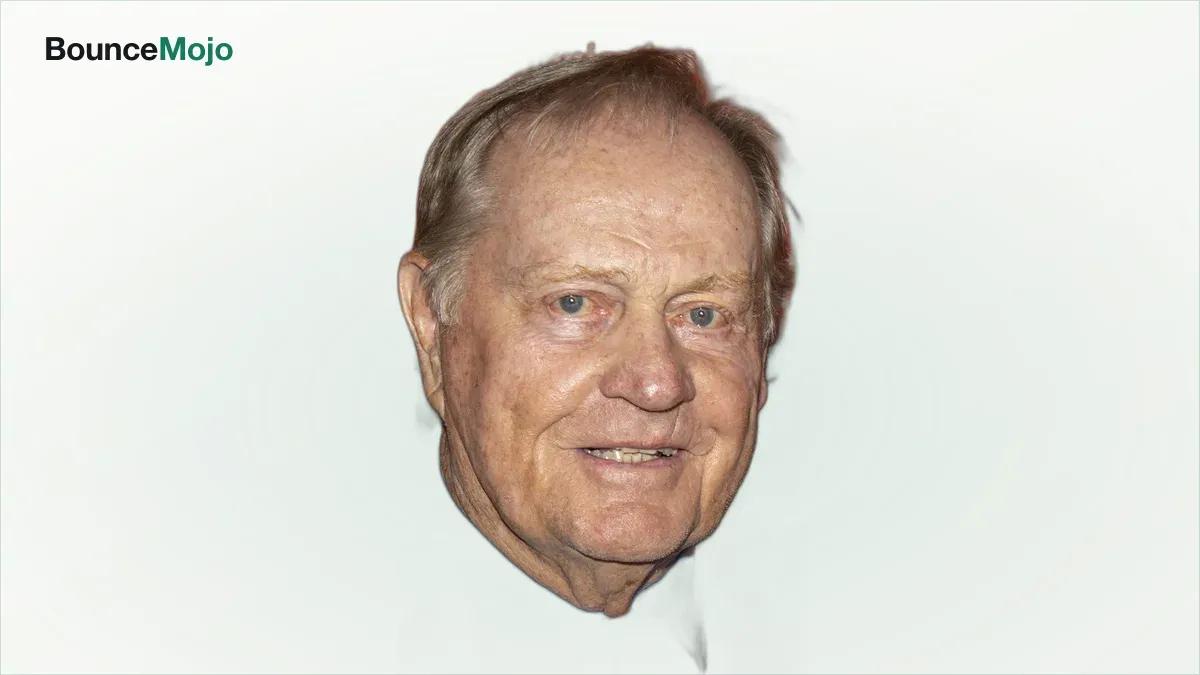
Jack Nicklaus is remembered as the standard against which every golfer since has been measured. He was also, for years, booed.
That is the part the record book cannot hold, and it is the part that explains him. The most respected figure in golf history began his career as the sport’s villain, and the way he answered that is the actual story.
Oakmont, 1962: The Rookie Who Beat Everyone’s Hero
At the 1962 U.S. Open at Oakmont, a 22-year-old rookie named Nicklaus defeated Arnold Palmer in a playoff, in Palmer’s home state of Pennsylvania.
The golf world was stunned and not entirely pleased. Palmer was the sport’s charismatic king, the man who had turned golf into a television spectacle, and his devoted “Army” openly rooted against the burly young Midwesterner who dared beat him, sometimes cruelly. Nicklaus spent his early years cast as the unwelcome usurper.
The contrast did the damage. Palmer was charisma and risk, all rolled-up sleeves and daring charges. Nicklaus was power and precision, a methodical strategist who dismantled courses with calculation rather than flair. Fans who had fallen for Palmer’s romance struggled to warm to the cooler young man who kept beating their hero. Even his stocky build drew unkind nicknames from the galleries, and some found his clinical style effective but joyless to watch.
It took a decade to shed that image, and an eventual genuine friendship between the two rivals, before the golf world learned to love Nicklaus for exactly the qualities that once made him hard to embrace.
A Pharmacist’s Son, Scioto Country Club, and Jack Grout
There was no hardship in the origin story, and Nicklaus has never pretended otherwise.
He was born in 1940 in Columbus, Ohio, the son of Charlie Nicklaus, a respected local pharmacist who owned several drugstores. The family was comfortable and stable. Charlie was an avid golfer and introduced Jack to the game at Scioto Country Club, where the boy came under the noted teaching professional Jack Grout, who would coach him from boyhood through his entire career.
Under Grout he built a powerful, technically sound game early: a 69 by 13, the Ohio State Open at 16, the U.S. Amateur in 1959 and 1961. He was a strong all-around athlete who chose to focus on golf, and he briefly considered a career in pharmacy or insurance before turning professional in late 1961.
This was not rebellion or escape. It was disciplined, well-supported development toward greatness, and the edge it produced was mental as much as physical. Nicklaus plotted his way around a course with a patience and course-management intelligence few could match. That same intelligence would later build a business.
Two other people belong here. Barbara Nicklaus, his wife of more than six decades, was the steady center of his life and family and is widely credited as essential to his stability and success. And Charlie’s early death in 1970 reportedly refocused his son, who rededicated himself and entered one of the most dominant stretches of his career.
18 Majors, 73 Wins, and the Design Firm Built on Them
The numbers settle the argument. A record 18 professional major championships, 19 runner-up finishes in majors, and 73 PGA Tour titles. From the early 1960s into the 1970s he was the game’s dominant force, methodically assembling the resume that still defines greatness.
He did not do it alone or in a vacuum. Arnold Palmer, the great rival turned great friend, and Gary Player, the globe-trotting South African whose worldwide travels and relentless fitness pushed everyone around him, completed the “Big Three.” Together the three men grew golf enormously and turned it into a genuinely international, genuinely commercial sport. Their fortunes are intertwined, as his net worth breakdown explains.
That unmatched playing record became the foundation for a course-design and licensing empire. Nicklaus Design grew into a global firm, and the same strategic patience that won majors was applied to building it, which is why he ranks among the wealthiest on our richest golfers list.
The business drew its own criticism. As the firm expanded, some questioned the environmental footprint and cost of high-end course construction, criticisms that apply broadly to the luxury golf-development industry rather than to him alone. In later years his public comments on politics and the state of the modern game have drawn both praise and criticism, as is common for elder statesmen who speak their minds.
The Conceded Putt: Why Character Is Part of the Record
By the standards of sporting legends, Nicklaus’ flaws are remarkably minor. He was intensely competitive and at times single-minded in pursuit of victory, qualities every champion shares. History records almost no scandal, no dramatic fall, no dark secret.
What it does record is the 1969 Ryder Cup, where Nicklaus conceded a short putt to Tony Jacklin to ensure a tie. That gesture defined him as much as any trophy, and it is the mechanism by which the booing stopped. He answered early rejection not with resentment but with excellence and grace, winning respect the slow way, victory by victory, until the villain became the legend.
Dominance brought its own burden in the other direction. Having spent years carrying the crowd’s preference for Palmer, he later bore the opposite weight: being the standard, the man whose 18 majors became the number every rising star, most famously Tiger Woods, was expected to chase.
Augusta at 46
His most beloved moment arrived long after anyone expected it. Nicklaus won the 1986 Masters at age 46, the oldest champion in the tournament’s history, in a scene of pure joy that reduced fans and commentators to tears.
It is the right ending because it inverts everything that came before. The player once dismissed as clinical won the crowd’s heart with the most emotional victory in the sport. The man booed for beating a hero became the figure the game reveres most.
Eighteen majors, 19 runner-ups, 73 PGA Tour wins: he is the benchmark, full stop. The full story of the fortune built on that record lives in his net worth breakdown, and the lesson underneath it is the same one Augusta delivered in 1986. Greatness handled with dignity only deepens with age.
Shop Jack Nicklaus on Amazon
Books, audiobooks, merch and more, handpicked for fans.
As an Amazon Associate we earn from qualifying purchases.
Frequently Asked Questions
How many majors did Jack Nicklaus win?+
Nicklaus won a record 18 professional major championships, the most in the history of golf, along with 19 runner-up finishes and 73 PGA Tour victories.
Why is Jack Nicklaus called the Golden Bear?+
The nickname came from his blond hair and stocky, powerful build as a young player. He later adopted a golden bear as his personal logo and the name of his business empire.
What was the Nicklaus and Palmer rivalry?+
Nicklaus and Arnold Palmer were the two defining stars of 1960s golf. The younger Nicklaus overtook the beloved Palmer, and their rivalry, along with Gary Player, formed the 'Big Three' that grew the sport.
How old was Jack Nicklaus at his last major win?+
Nicklaus won the 1986 Masters at age 46, becoming the oldest Masters champion in history in one of the most celebrated moments in the sport.
Is Jack Nicklaus still involved in golf?+
Yes. Nicklaus remains active through Nicklaus Design and the Golden Bear brand, and he is a revered elder statesman of the game, honored regularly at major championships.
Want the money side of the story?
Read Jack Nicklaus's Full Net Worth Breakdown →Shop Jack Nicklaus on Amazon
Books, audiobooks, merch and more, handpicked for fans.
As an Amazon Associate we earn from qualifying purchases.