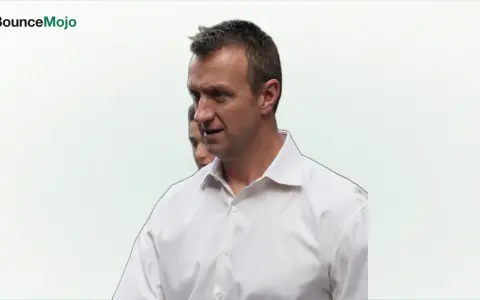
Ivan Lendl Biography: The Machine Who Rebuilt Tennis From Scratch

Most people remember Ivan Lendl as the cold, robotic baseliner who ground opponents into dust. That reputation is real, and it hides the more interesting man underneath.
Here’s what most people miss: the player fans found charmless was quietly the most revolutionary figure in tennis, the man who dragged the entire sport into the modern age by treating it as a science nobody else had bothered to study.
The Myth vs. The Reality
The myth is cold. Ivan Lendl: the emotionless machine, the boring baseliner, the guy who never smiled and never won Wimbledon. A champion nobody quite loved.
The reality is far more consequential.
Here’s the deal: Lendl was not boring. He was ahead of his time. While rivals partied and trusted their talent, Lendl studied nutrition, built brutal fitness regimens, analyzed opponents like a scientist, and treated every detail of his career as an engineering problem to solve. What looked like coldness was really total professionalism in an era that had not seen it yet.
Think about it: the traits fans mocked in the 1980s became the blueprint every champion followed afterward. Diet, fitness, preparation, mental discipline. Lendl didn’t just win. He changed what winning required.
You might be wondering: how does a kid from a mid-sized Czech city become the man who rebuilt tennis? To understand that, you have to understand the world that shaped him.
The World That Made Ivan Lendl
Lendl was born in 1960 into communist Czechoslovakia, a place where sporting talent was an asset of the state.
Behind the Iron Curtain, athletes were watched, controlled, and rarely free to profit from their gifts. Travel was restricted. Money earned abroad was complicated. For a young tennis prodigy with global ambitions, the system was a cage as much as a launchpad.
Now: this backdrop matters, because it explains the single most important decision of Lendl’s life. He didn’t just want to win tennis matches. He wanted out, out of the control, out of the restrictions, out of a system that owned his success.
Tennis, in other words, was his escape hatch as much as his passion. That tension, between a talent nurtured by the state and a man determined to be free of it, is the backdrop for everything Lendl became.
But before the defection, there was a small boy hitting balls against a wall, born into a family that had already made tennis a religion.
The Crucible: Early Life and the Climb
The Environment That Shaped Him
Lendl was the only child of two serious tennis players. His father Jiri was a ranked player and a junior chess champion. His mother Olga was the No. 2 ranked woman in the country.
Here’s the truth: Lendl was engineered for this. He started hitting a ball against a wall with a paddle at age three. By fourteen, he could beat his own mother, one of the best women in Czechoslovakia. Discipline and precision were the family language, and Lendl absorbed both.
By 1978 he was the world’s top junior, sweeping the boys’ titles at the Italian Open, French Open, and Wimbledon. He turned pro that same year.
The Catalyst
Then came the leap that defined his life.
In 1981, Lendl relocated permanently to the United States, effectively defecting from communist Czechoslovakia. It was a bold, risky move, cutting ties with the system that raised him. The Czechoslovak Tennis Association branded him an “illegal defector,” and he stopped playing Davis Cup for his home country.
The reward was freedom, and a fortune he could actually keep, the beginnings of which you can trace in his net worth story.
It gets better: freed from the Iron Curtain, Lendl unleashed a training revolution that no rival could match. But the people around him, both allies and enemies, shaped the champion he became.
The Key Players
No champion rises in a vacuum, and Lendl’s story is crowded with rivals and mentors.
Jiri and Olga Lendl. His parents built the foundation, a chess-sharp father and a champion mother who turned their only child into a prodigy through relentless standards.
Wojtek Fibak. The Polish player and mentor helped guide the young Lendl’s transition into the professional and American tennis worlds, offering advice and structure as Lendl found his footing.
John McEnroe, Jimmy Connors, and Bjorn Borg. The trio of titans who defined Lendl’s era and pushed him to be great. His rivalry with John McEnroe was especially fierce, a clash of styles and temperaments, fire against ice. His battles with Jimmy Connors were equally combative.
Andy Murray. Decades later, the relationship that redefined Lendl’s legacy. When Lendl took over coaching the talented but tortured Scot, he unlocked the confidence Murray needed to finally win majors, cementing Lendl as one of the great coaching minds too.
Think about it: every one of these relationships tested the same question, could Lendl’s cold precision win the biggest prizes? At his peak, he answered emphatically, with one glaring exception.
The Turning Point
The Pinnacle
Lendl’s dominance in the mid-1980s is staggering.
He won eight Grand Slam singles titles, three French Opens, three US Opens, and two Australian Opens, and spent 270 weeks at world No. 1. He reached 19 Grand Slam finals, a record that stood for years, and turned consistency into an art form. Opponents didn’t just lose to Lendl. They got worn down, out-prepared, and out-fitnessed.
For a stretch, he was the most reliable winning machine in the sport, the standard everyone else was measured against.
The Price
Here’s the kicker: for all that dominance, one prize refused to fall.
Wimbledon. Lendl reached the final twice, in 1986 and 1987, and built entire seasons around finally conquering the grass. He skipped tournaments to prepare, changed his game, and gave everything. He never won it. The one gap in his resume became the defining frustration of his career, and the fuel for endless “greatest player without Wimbledon” debates.
That is the price of near-perfection. Lendl mastered almost everything, and the sport still found the one thing he couldn’t hold. Which brings us to the parts of the man the trophies hide.
The Unvarnished Truth
Lendl was not built to be adored, and he knew it.
He was aloof with the press, uninterested in charming crowds, and openly focused on winning rather than entertaining. Fans of the more flamboyant McEnroe and Connors found him cold. He rarely played to the gallery, and he made little effort to soften his image.
Now: none of that makes him a villain. It made him misunderstood. Lendl’s “coldness” was focus. He was a private, dry-humored man who saved his energy for the work, not the performance. Teammates and later his players saw a generous, sharp, deeply committed person the public never met.
The honest read on Lendl is this: he refused to perform likability, and he paid for it in popularity while he was playing. History has been kinder. The traits that made him unloved in the 1980s are exactly the ones the sport now demands of every champion.
Controversies and Criticisms
Lendl’s career was more admired than scandalous, but criticism found him.
The “boring” label. Critics attacked his methodical baseline style as dull to watch, a war of attrition rather than artistry. Purists who loved serve-and-volley flair found his game clinical.
The defection. His 1981 relocation and later US citizenship made him a divisive figure back home for years, viewed by the communist authorities as a defector who had abandoned his country.
Coldness with fans and media. His unwillingness to play the charm game drew constant criticism during his career and kept him from the affection showered on flashier rivals.
The Wimbledon obsession. Some felt his single-minded pursuit of the one title he lacked distorted his scheduling and even his health late in his career, chasing a prize that was never meant to be his.
What We Can Learn From Ivan Lendl
Navigating Hard Times
The first lesson is about control. Lendl couldn’t control the communist system he was born into, so he made a hard, decisive move to change his circumstances entirely. He didn’t complain about the cage. He left it.
Here’s the truth: when the environment limits you, sometimes the answer isn’t to fight it, but to change the environment. Lendl’s defection was the boldest bet of his life, and it set up everything that followed.
The Success Blueprint
If you want the replicable part, it is this: Lendl won by out-preparing everyone. He wasn’t the most naturally gifted or the most charismatic. He simply worked smarter and harder on the details nobody else studied, fitness, diet, opponent analysis.
That is transferable. The lesson isn’t “have a great forehand.” It’s “master the boring fundamentals your rivals ignore.” Lendl’s relentless preparation put him among the sport’s immortals on our richest tennis players ranking, and it made him a coaching legend too.
Becoming Better
The deepest lesson is about reinvention. When Lendl’s playing days ended, he didn’t cling to the past. He built a second career coaching, taking his hard-won knowledge and multiplying its value by pouring it into Andy Murray.
In other words, your expertise is an asset you can reinvest for decades. The full story of how Lendl turned tennis knowledge into a lasting fortune lives in his net worth breakdown.
Final Verdict
Ivan Lendl is one of the most important figures in tennis history, and “important” matters more here than “beloved.” He didn’t just win eight majors. He rewrote the rules of what a professional athlete had to do to compete, and the entire modern sport runs on the template he built.
And here’s the twist that reframes his whole story: the champion fans found cold became the warmest kind of mentor. The man who never won Wimbledon coached Andy Murray to two of them, finding in the twilight of his career the affection and legacy that eluded him in his prime. The machine, it turned out, had been building something human all along.
If you love tennis, remember Lendl not as the guy who couldn’t win Wimbledon, but as the visionary who made everyone who came after him train like a professional. He was ahead of his time, misunderstood in his era, and vindicated by every disciplined champion who followed. Sometimes the person the crowd underrates is the one who quietly changes the whole game.
Shop Ivan Lendl on Amazon
Books, audiobooks, merch and more, handpicked for fans.
As an Amazon Associate we earn from qualifying purchases.
Frequently Asked Questions
Where was Ivan Lendl born?+
Ivan Lendl was born in Ostrava, Czechoslovakia (now the Czech Republic), in 1960, to two nationally ranked tennis-playing parents. He defected to the United States in 1981 and became a US citizen in 1992.
Why did Ivan Lendl never win Wimbledon?+
Despite reaching two Wimbledon finals (1986 and 1987) and building his year around the grass, Lendl never won the title. His baseline game and movement were less suited to grass, and it became the one glaring gap in an otherwise complete resume.
How many Grand Slams did Ivan Lendl win?+
Lendl won eight Grand Slam singles titles: three French Opens, three US Opens, and two Australian Opens. He spent 270 weeks ranked world No. 1.
Who did Ivan Lendl coach?+
Lendl coached Andy Murray to his first Grand Slam titles, two Wimbledon crowns, a US Open, and two Olympic golds. He later coached Alexander Zverev and Hubert Hurkacz.
Why is Ivan Lendl called the father of modern tennis?+
Lendl revolutionized fitness, diet, and preparation, treating tennis as a science years before it was common. His relentless, methodical baseline game influenced generations and helped define the modern power era.
Want the money side of the story?
Read Ivan Lendl's Full Net Worth Breakdown →Shop Ivan Lendl on Amazon
Books, audiobooks, merch and more, handpicked for fans.
As an Amazon Associate we earn from qualifying purchases.