Israel Adesanya Biography: The Nigerian Kid Who Fought to the Top
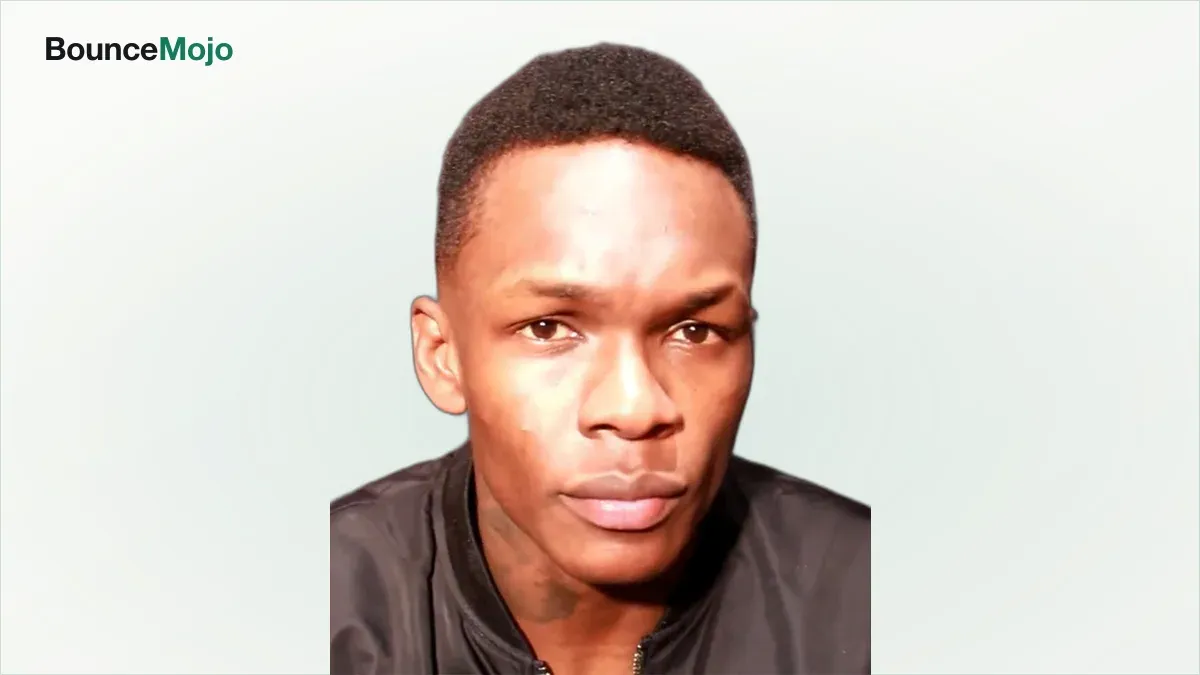
Israel Adesanya is one of the most recognizable faces in fighting. Fluid, theatrical, impossible to look away from.
Here’s what most people miss: the showman was once a bullied immigrant kid who hated the way he stood out. The confidence you see now was manufactured, rep by rep, out of years of not belonging.
The Myth vs. The Reality
The myth is that Israel Adesanya is a natural performer, a born entertainer who strutted into the UFC and made stardom look easy.
Here’s the truth: almost none of that came easily.
The reality is a shy, awkward kid who grew up feeling like he was on the outside of every room he entered. The swagger, the walkouts, the willingness to talk trash in front of millions, none of it was default wiring. It was armor he built on purpose. He has spoken openly about being bullied, about feeling invisible, about using video games and anime as an escape from a world that made him feel small.
What made Adesanya different was not raw talent. It was the decision to become the person who could not be ignored. He turned insecurity into a stage act, and the stage act into a career. Most fighters chase belts. Adesanya chased a version of himself that the frightened boy could never have imagined.
And to understand that boy, you have to go back to a city he barely remembers.
The World That Made Israel Adesanya
Israel Mobolaji Temitayo Odunayo Oluwafemi Owolabi Adesanya was born on July 22, 1989, in Lagos, Nigeria. His family was middle class and ambitious. His father worked in accounting and logistics, his mother in nursing, and they wanted more opportunity for their children than Nigeria could offer at the time.
So they left. The family moved abroad, spending time in Ghana before settling in New Zealand when Israel was around ten. Picture it: a Nigerian kid dropped into Rotorua, a small New Zealand city, where almost nobody looked like him or sounded like him.
Here’s the deal: he did not fit in, and he knew it.
He was teased for his accent, his name, his appearance. He retreated into anime and combat sports films, worlds where outsiders became heroes and where a skinny kid could imagine himself powerful. Those years of not belonging planted something. He learned to observe, to study movement, to build an inner life richer than his outer one. It was lonely. It was also, in a strange way, the training ground for everything that came later.
But an escape into fantasy only takes you so far. Something had to give.
The Crucible: Early Life and the Climb
The Environment That Shaped Them
Adesanya’s parents pushed education hard. They wanted a doctor, an accountant, a professional, anything but a fighter. He tried to comply, studying design and technology, but the pull toward combat sports would not quit.
The catalyst was cinema. Watching a Muay Thai film as a teenager lit something in him, and he begged his father to let him take up kickboxing. What started as a hobby became an obsession. He trained obsessively, chasing the feeling of finally being good at something that made him visible for the right reasons.
Now: kickboxing rewarded exactly the traits his childhood had forced on him. Patience. Study. The willingness to be different. He was awkward everywhere except inside the ropes.
The Catalyst for Breakout
Adesanya went pro in kickboxing and racked up a long record, fighting across New Zealand, Australia, China, and beyond. He spent a stretch living and fighting in China, grinding through a hard, unglamorous circuit that toughened him.
Here’s the truth: this period nearly ate him alive. The pay was thin, the travel brutal, the loneliness heavy. He has described low points where the dream felt like a delusion.
Then he pivoted to mixed martial arts. His striking gave him a huge edge, and he tore through regional promotions before the UFC came calling in 2018. The awkward kid from Rotorua was about to meet the biggest stage in the sport.
That stage would give him everything, and cost him more than he expected.
The Key Players
No fighter rises alone, and Adesanya’s rise ran through a small, fierce circle.
The most important was Eugene Bareman, his head coach at City Kickboxing in Auckland. Bareman built the gym into one of the best fight teams on earth and turned Adesanya’s raw flair into a disciplined, championship-level game. Their partnership is the spine of his career.
Then there is the villain of the story: Alex Pereira. Before either man reached the UFC, Pereira beat Adesanya twice in kickboxing, once by knockout. That loss lodged deep. Years later, when Pereira followed him to the UFC and took his belt, it became one of the most personal rivalries in the sport.
You might be wondering: what about home?
Adesanya carried Nigeria and New Zealand with him everywhere, becoming a hero to both. He also drew strength from fellow Nigerian champion Kamaru Usman, a friend and training partner whose parallel rise made their shared moment at the top feel bigger than either man alone.
Those relationships set the stage for the summit. And the summit had a price.
The Turning Point
The Pinnacle of Achievement
The turning point came in 2019. Adesanya won the undisputed UFC middleweight championship, capping a meteoric run through the division. The bullied immigrant kid was now a world champion, and he defended that belt again and again against elite challengers.
It gets better: he became a genuine crossover star. His anime-inspired walkouts, his showmanship, his willingness to be theatrical made him a draw far beyond hardcore MMA fans. He was the first fighter his sport’s biggest apparel deals came looking for, and his pay-per-view numbers gave him real power.
For a while, he looked untouchable.
The Price of Admission
But the climb cost him. A move up to light heavyweight ended in a knockout loss, a humbling reminder that the game is unforgiving. And the rivalry with Pereira reached its cruelest point when Pereira knocked him out to take the middleweight crown, reviving the old kickboxing ghost on the biggest stage of all.
Here’s the kicker: Adesanya answered. He reclaimed the belt in a stunning knockout of his own, one of the most emotional moments of his career.
Yet the pressure of staying on top, the scrutiny, the losses that followed, all of it wore on him. Being the man everyone wants to beat is its own kind of loneliness.
And behind the champion’s mask, there were flaws he never hid.
The Unvarnished Truth
Adesanya has never pretended to be perfect, and that honesty is part of why fans connect with him.
He can be brash. His trash talk has crossed lines, and he has apologized for comments that went too far. He carries the chip of a man who was overlooked for years, and sometimes that chip shows up as arrogance rather than confidence.
He has also been candid about his struggles: the loneliness of his kickboxing years, the weight of expectation, the private doubts behind the public bravado. He is a fighter who reads as fearless but has admitted to plenty of fear.
Think about it: that contradiction, the showman who was once terrified of being seen, is the most human thing about him. He is not a machine. He is a formerly invisible kid still processing what it means to be watched by millions.
That complexity spilled into controversy more than once.
Controversies and Criticisms
Adesanya’s outspokenness has landed him in hot water. He has faced criticism for crude or insensitive remarks during trash talk, and he has had to walk back comments that drew backlash.
His personal life has drawn scrutiny too, from legal headlines to relationship drama that played out in public. Critics argue that his persona sometimes tips from confident into needlessly provocative.
Here’s the deal: he rarely runs from it. He tends to own his mistakes, publicly and quickly, rather than hide behind a publicist. Fans forgive him partly because he does not pretend to be a saint. He presents himself as a flawed, striving human, and that transparency has been a strange kind of shield.
Which brings us to the words themselves.
Quote Analysis and Literary Breakdown
Adesanya talks like a man who spent years alone with his thoughts, and his best lines reveal the person under the persona.
“I’m the best in the world at what I do.” Said plainly, it sounds arrogant. In context, it is the mantra of a kid who was told for years he was nothing special, willing himself into belief.
“I do this for the little boy who got picked on.” That line explains everything. The showman is a message to his younger self, proof that the outsider could win.
On his losses, he has been strikingly grounded: “I’ve lost before. I’ll bounce back.” No excuses, no spin. For a fighter built on bravado, his relationship with defeat is unusually mature.
Read together, the quotes show a man who uses confidence as a tool, not a birthright. He talks himself into greatness because for most of his life, nobody else would.
There is a real blueprint buried in all of it.
What We Can Learn From Israel Adesanya
Navigating Hard Times
Adesanya’s early life is a lesson in turning exclusion into fuel. He did not belong, so he built a world where being different was the point. When you feel like an outsider, that difference can become your edge rather than your wound.
His kickboxing grind teaches patience. Years of thin pay and hard travel came before a single UFC dollar. Overnight success is almost always a decade in the making.
The Success Blueprint
The professional lesson is about becoming an attraction, not just a competitor. Adesanya understood that in modern sport, being watchable is a skill worth as much as winning. He built an identity, controlled his image, and made brands come to him. That is why his story runs alongside the sport’s smartest earners on our richest MMA fighters list.
The deeper lesson is honesty. He wins loyalty by owning his flaws, not by faking perfection. In a world of manufactured images, radical transparency turned out to be a competitive advantage.
Becoming Better
The final lesson is that the wound can become the work. Adesanya took the exact things that made him miserable as a child, his difference, his sensitivity, his obsession with fantasy worlds, and turned them into the foundation of a global career. He did not bury the bullied kid. He built a life that vindicated him. That is a template anyone can borrow: the parts of yourself you were once mocked for may be the very parts that set you apart, once you stop apologizing and start leaning in.
That combination points to the final verdict.
Final Verdict
Israel Adesanya’s story is not really about belts. It is about a frightened, bullied immigrant kid who decided the only way to survive was to become impossible to overlook.
He did exactly that. He turned an accent he was mocked for into a global brand, an escape into anime into a fighting identity, and years of loneliness into the fuel for a championship career. He has lost and reclaimed titles, feuded and reconciled, embarrassed himself and owned it.
What lingers is the arc from invisible to unmissable. Adesanya proved that the traits that make you an outsider, the sensitivity, the difference, the obsession, can be the exact traits that set you apart when you stop apologizing for them. He is one of the wealthiest and most watched fighters of his era, and the reason is simple: he made the world look at the kid it once ignored.
Shop Israel Adesanya on Amazon
Books, audiobooks, merch and more, handpicked for fans.
As an Amazon Associate we earn from qualifying purchases.
Frequently Asked Questions
Where is Israel Adesanya from?+
Israel Adesanya was born in Lagos, Nigeria, on July 22, 1989. His family emigrated when he was a child, and he grew up largely in Rotorua and Auckland, New Zealand, which he still calls home.
How did Israel Adesanya start fighting?+
He came to combat sports through kickboxing after being inspired by martial arts films and anime. He built a strong professional kickboxing record before switching to mixed martial arts and joining the UFC in 2018.
How many times was Israel Adesanya UFC champion?+
Adesanya was a two-time UFC middleweight champion. He first won the undisputed title in 2019 and defended it several times, lost it, then reclaimed it before losing it again in a career defined by elite title fights.
What is Israel Adesanya's nickname?+
His nickname is 'The Last Stylebender', a reference to the animated series Avatar: The Last Airbender and a nod to his fluid, unpredictable striking style.
Who is Israel Adesanya's biggest rival?+
His defining rivalry is with Alex Pereira, who beat him in kickboxing before their series continued in the UFC. The two share one of modern MMA's most personal storylines.
Want the money side of the story?
Read Israel Adesanya's Full Net Worth Breakdown →Shop Israel Adesanya on Amazon
Books, audiobooks, merch and more, handpicked for fans.
As an Amazon Associate we earn from qualifying purchases.