Ichiro Suzuki Biography: The Perfectionist Who Won Two Countries
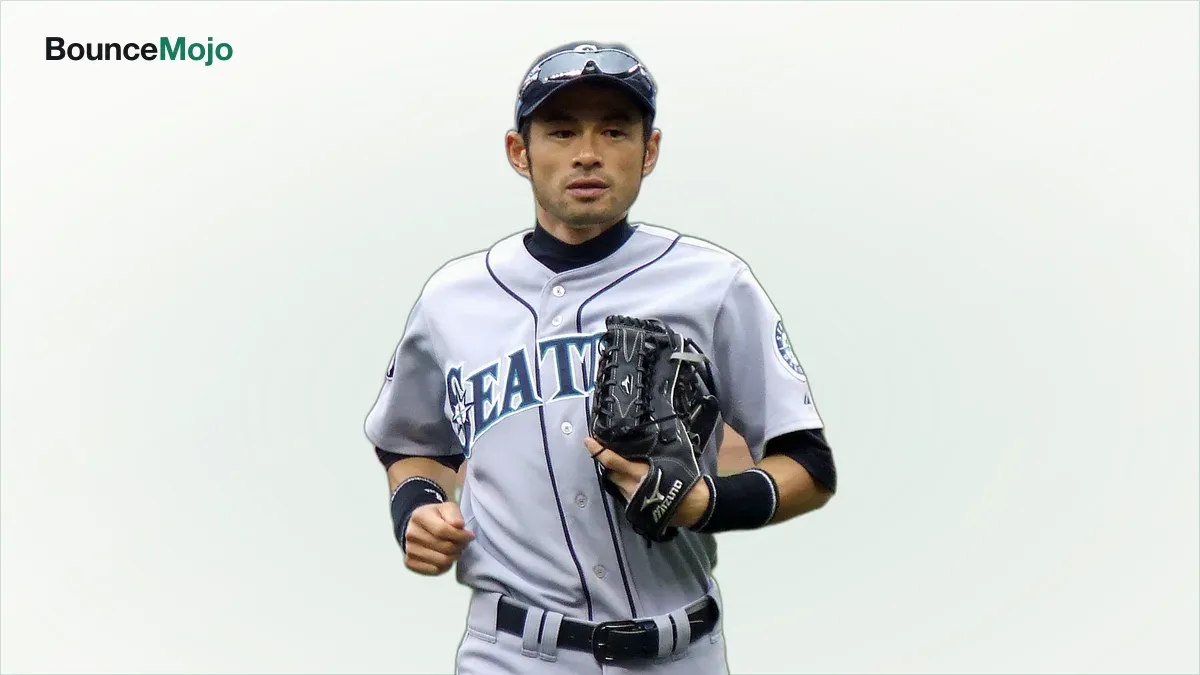
Most people picture Ichiro Suzuki as the effortless, artistic hitter who made baseball look like calligraphy. The truth is that nothing about him was effortless.
Here’s what most people miss: the grace the world admired was the product of a childhood so disciplined it bordered on obsession, drills that started before dawn and never really stopped.
The Myth vs. The Reality
The myth is elegant. Ichiro: the natural artist, a hitting savant who slapped singles and stole bases with impossible ease.
The reality is far more demanding.
Here’s the deal: Ichiro’s grace was manufactured through staggering repetition and control. He was famous for the same routines every single day, the same stretches, the same swing preparation, the same care for his equipment. The “effortless” look was the surface of an iceberg of discipline.
And the calm exterior? It hid a fierce competitor and a perfectionist who trained relentlessly well into his 40s.
You might be wondering: how does a slight kid from a Japanese suburb become a legend in two of the world’s biggest baseball nations? To understand that, you have to start with his father.
The World That Made Ichiro Suzuki
Ichiro was born in 1973 and raised in Kasugai, in Japan’s Aichi Prefecture.
His father, Nobuyuki, took charge of his baseball development with extraordinary intensity, running the young Ichiro through daily training sessions at a local batting center for hours, year after year. It was rigorous, and Ichiro has hinted the relationship carried real complexity beneath the results it produced.
Now: Japan in that era revered baseball with an almost spiritual devotion, and its youth system prized discipline, repetition, and respect. Ichiro was a perfect product of that culture, then he transcended it.
Ichiro has recounted that from around age seven, he practiced at a batting center nearly every day, year-round, often after school and into the evening. His father framed it as devotion. Ichiro, looking back as an adult, has acknowledged it sometimes felt closer to hardship than joy. That tension, love of the craft braided with the weight of relentless expectation, sits quietly beneath his whole story.
Think about it: a boy trained with military consistency in a nation obsessed with the game, absorbing a work ethic that would one day astonish even Major League professionals. That foundation is the root of everything.
The Crucible: Early Life and the Climb
The Environment That Shaped Him
The daily drills forged a hitter of uncanny precision. Ichiro developed a swing and an approach built on contact, speed, and control rather than power, ideas drilled into him from childhood.
Let that land. Before he was a star, he was a project his father pursued with relentless focus.
He signed with the Orix BlueWave in Japan’s NPB and quickly became a phenomenon. Promoted under the single name “Ichiro” to stand out, he won batting titles and MVP awards, becoming one of the most famous athletes in Japan. In 1994 he collected 210 hits in a single Japanese season, shattering the record and turning himself into a national sensation almost overnight.
His unusual batting stance, a smooth, pendulum-like leg lift, was once questioned by a coach who wanted him to change it. Ichiro refused, trusting the method he’d built through thousands of hours of practice. That quiet stubbornness, the confidence to defend his own craft against authority, became a defining trait.
Here’s the truth: he had already conquered his home country. The question that would define his legacy was whether he could do it somewhere no Japanese position player ever had.
The Catalyst
The catalyst was a leap of faith. In 2001, Ichiro left Japanese superstardom to join the Seattle Mariners, betting his legacy on an unproven idea: that a Japanese hitter could star in MLB.
Then he detonated the doubts. In his very first MLB season he won both AL Rookie of the Year and AL MVP, led the league in hits and steals, and helped Seattle to a record-tying 116 wins.
It gets better, because three years later he would shatter one of baseball’s oldest records, and prove his arrival was no fluke.
The Key Players
No legend stands alone, and Ichiro’s story is full of shaping figures.
Nobuyuki Suzuki. His father and first coach, the architect of the discipline that made Ichiro. The intense training built the player, even as the bond behind it carried real complexity.
The Orix BlueWave. The Japanese club that developed him, promoted the “Ichiro” brand, and gave him the stage to become a national icon before MLB.
Ken Griffey Jr. In Seattle, Ichiro joined a franchise shaped by stars like Griffey, learning the American game alongside established greats and easing his transition, a connection reflected in his net worth story and standing in the game.
Shohei Ohtani. Not a contemporary teammate, but the successor who inherited the mantle Ichiro created: the Japanese superstar who redefines what’s possible in MLB.
By the way, every one of these relationships points at the same theme: a pioneer who built a bridge between two baseball worlds. Crossing that bridge came at a cost.
The Turning Point
The Pinnacle
Ichiro’s peak was historic on two continents.
In MLB, he set the single-season hits record with 262 in 2004, won ten Gold Gloves, made ten All-Star teams, and reached 3,089 MLB hits. Combined with his Japanese career, he tallied more than 4,300 professional hits, a number that transcends any single league. In 2025, he was elected to the Hall of Fame in his first year of eligibility. The fame from that career built the fortune his net worth breakdown details.
Sit with the scale of that for a moment. He arrived in MLB at 27, an age when many players are already past their prime, and still amassed more than 3,000 hits in the American major leagues alone. Had he started his MLB career at a normal age instead of spending his early prime in Japan, his big-league totals might stand alongside the all-time greats. Instead, he split his greatness across two continents, and the combined record he built may never be matched. The single-season hits mark from 2004 has stood for two decades, a monument to a hitter who turned contact into an art form.
The Price
Here’s the kicker: the price of that greatness was a life of total sacrifice to routine.
Ichiro’s discipline left little room for anything else. His days were governed by rituals, his diet controlled, his focus absolute. The perfectionism that made him legendary also meant a career, and a life, defined by relentless self-control. There was little rest, and little deviation, for decades.
And beneath the composed exterior, he carried the pressure of representing an entire nation’s hopes every time he stepped in the box.
The Unvarnished Truth
Ichiro’s “flaws” are really the shadow side of his virtues.
His perfectionism could make him seem distant and rigid. Teammates admired him, but his intense routines and reserved nature set him apart. He was a man apart, by design and by temperament.
Now: the complexity of his relationship with his father, the man who drilled him relentlessly as a child, is a quiet undercurrent of his story. The training produced a genius. It also produced a childhood organized entirely around a single pursuit.
The most honest thing about Ichiro is that he never softened his standards for anyone. He demanded of himself a level of discipline few humans could sustain, and he sustained it for nearly three decades. That intensity was the whole point.
Here’s the deal: even his humor was precise. Teammates have shared that behind closed doors, Ichiro was funnier and more playful than his stoic public image suggested, dropping perfectly timed jokes in the clubhouse. He kept that side hidden from cameras on purpose, guarding his mystique as carefully as his swing. The reserved icon the public saw was itself a kind of performance, controlled down to the last detail.
Controversies and Criticisms
For a player so respected, Ichiro’s criticisms were mostly about style.
The singles-hitter debate. Critics sometimes argued Ichiro prioritized his personal hit totals and batting average over power, questioning whether a slap hitter could be a true superstar. His records and impact ended that debate.
The reserved persona. His guarded, ritualistic nature led some to see him as aloof, a private man who kept teammates and media at arm’s length.
The longevity questions. Late in his career, as his production dipped, some questioned how long he should keep playing, though his desire to compete into his mid-40s reflected his love of the game.
The cultural framing. Early in his MLB career, he faced skepticism and stereotyping about whether a Japanese position player could truly succeed, doubt he answered emphatically.
The late-career playing time. In his final MLB seasons, Ichiro’s production fell off sharply, and some argued he was hanging on past his usefulness, kept around more for his legend than his bat. He clearly loved the game too much to walk away easily, and that devotion cut both ways in the eyes of critics.
What We Can Learn From Ichiro Suzuki
Navigating Hard Times
The first lesson is about pressure: you can carry a nation’s expectations and still perform. Ichiro crossed an ocean as the symbol of an entire country’s baseball hopes and delivered from day one.
But here’s the truth his career makes plain: consistency beats intensity that burns out. Ichiro’s genius was doing the same excellent things every day for decades, not spectacular flashes.
The Success Blueprint
If you want the replicable part, it’s this: master your fundamentals through relentless repetition, then trust them. Ichiro’s routines weren’t superstition, they were a system that produced excellence on demand.
That’s transferable. The lesson isn’t “get 262 hits.” It’s “build a disciplined system and run it every single day.” That discipline made him one of the wealthiest and most respected names on our richest baseball players list and the broader richest athletes ranking.
Becoming Better
The deepest lesson is about pioneering. Ichiro proved something the baseball world doubted, that a Japanese position player could dominate MLB, and opened the door for everyone who followed.
In other words, he didn’t just succeed, he expanded what was possible for an entire category of player. That trailblazing legacy is the most enduring part of his whole story.
Here’s the truth: every Japanese star who has since crossed over to MLB owes a debt to the door Ichiro opened. He carried the risk and the pressure of being first, absorbing the doubt so those who followed wouldn’t have to. When a young phenom from Japan now signs a massive MLB contract, it’s partly because Ichiro proved, decade after decade, that greatness translates. Being a pioneer means the people who come after you never fully realize how hard the trail was to cut. That is Ichiro’s quiet, lasting gift to the sport.
Final Verdict
Ichiro Suzuki is one of the most singular figures baseball has ever produced. More than 4,300 professional hits, a single-season record, ten Gold Gloves, and a first-ballot Hall of Fame induction that crowned a career spanning two countries.
And here’s the twist that reframes everything: the “natural” whose swing looked like art was really the most disciplined perfectionist the game has known, a man who turned a childhood of relentless drills into a legacy no one had achieved before. The full picture of the fortune that global stardom built lives in his net worth breakdown, and it’s a fitting ending: the boy trained before dawn grew into a legend who conquered two nations and left the door open behind him.
Shop Ichiro Suzuki on Amazon
Books, audiobooks, merch and more, handpicked for fans.
As an Amazon Associate we earn from qualifying purchases.
Frequently Asked Questions
Where did Ichiro Suzuki grow up?+
Ichiro grew up in Kasugai, in Aichi Prefecture, Japan, where his father put him through intense daily baseball training from a very young age.
What records does Ichiro hold?+
Ichiro set the MLB single-season hits record with 262 in 2004 and recorded more than 4,300 hits across his professional careers in Japan and the United States.
Why did Ichiro use his first name?+
In Japan, his team promoted him using 'Ichiro' to stand out, and the single name became his global brand, appearing on the back of his jersey.
Is Ichiro in the Hall of Fame?+
Yes. Ichiro was elected to the Baseball Hall of Fame in 2025 in his first year of eligibility, a milestone for international players.
How long did Ichiro play professional baseball?+
Ichiro played professionally for nearly three decades combined in Japan and MLB, competing at a high level into his mid-40s.
Want the money side of the story?
Read Ichiro Suzuki's Full Net Worth Breakdown →Shop Ichiro Suzuki on Amazon
Books, audiobooks, merch and more, handpicked for fans.
As an Amazon Associate we earn from qualifying purchases.