Ian Poulter Biography: The Assistant Pro Turned Ryder Cup King
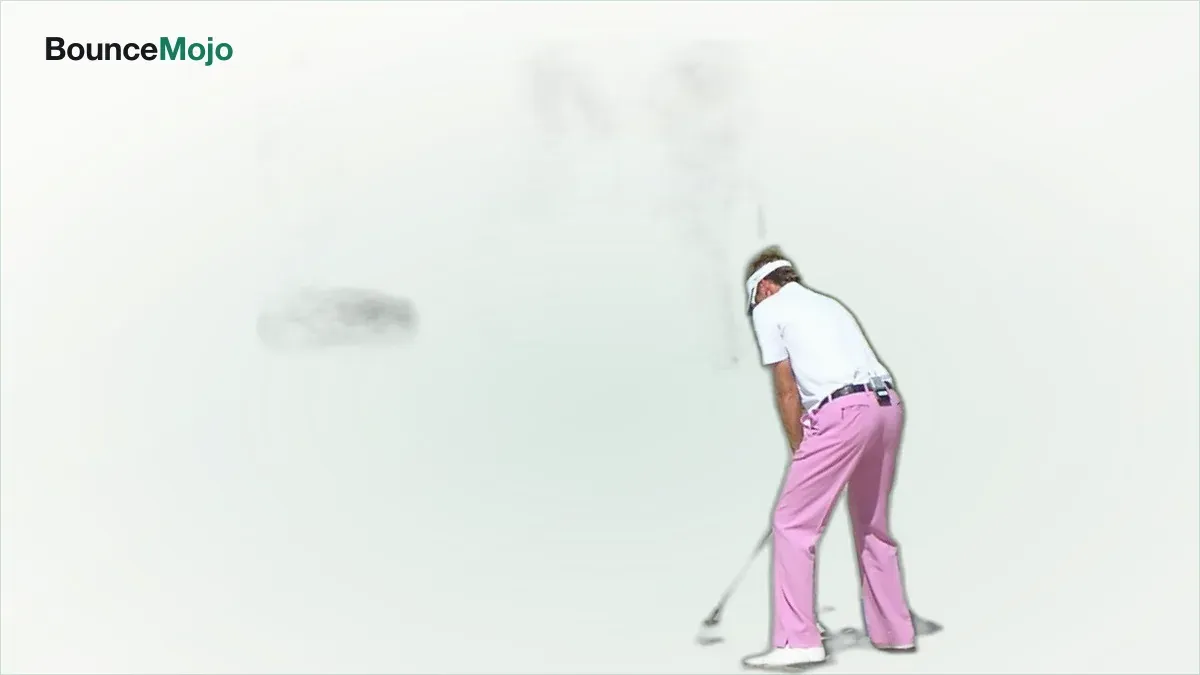
Ian Poulter never won a major. He might be one of the most beloved golfers of his generation anyway.
Here’s what most people miss: the loud trousers and the fist-pumps weren’t a gimmick. They were the armor of a kid who was told he’d never make it, and spent a career proving everyone wrong.
The Myth vs. The Reality
The myth of Ian Poulter is that he was all flash and no substance. Loud clothes, big mouth, a personality bigger than his trophy cabinet.
Here’s the truth: the personality was the substance.
Poulter had no business becoming a world-class golfer. He wasn’t a junior phenom. He didn’t come from money or a country-club pedigree. He started off a mediocre amateur handicap, working behind a counter. Everything he achieved came from a self-belief so fierce it bordered on delusion, until he made it real.
The public saw a showman. The reality was one of the most mentally tough competitors in the sport, a man who performed best when the pressure was highest and the crowd was against him.
You might be wondering: how does a pro-shop assistant become a Ryder Cup legend? Start with where he came from.
The World That Made Ian Poulter
To understand Poulter, you have to understand English golf’s class barrier, and a kid on the wrong side of it.
Golf in England has long carried an air of privilege, private clubs, expensive memberships, a game for people with means. Poulter came from Stevenage, a working-class town, without the resources or connections that smooth the path for so many prospects.
He was born in 1976 in Hitchin, Hertfordshire. He loved football and golf, but golf didn’t love him back at first. As a teenager his talent was ordinary. The traditional route to the professional ranks, elite amateur success, national teams, was closed to him.
Now: that could have been the end. For most kids off a high handicap, it would have been.
Think about it. The people who make it in golf are usually identified as special at 12. Poulter was still a long-shot assistant pro in his early twenties.
And that outsider status became the engine of everything he did next.
The Crucible: Early Life and the Climb
The environment that shaped him
Poulter’s classroom was a pro shop. He worked as an assistant club professional, selling equipment, giving lessons, doing the unglamorous jobs, while chipping away at his own game on the side.
He was, by his own telling, driven by proving people wrong. He’d been overlooked, underestimated, and left off every list of prospects. That chip on his shoulder never left him, and he turned it into fuel.
But here’s the kicker: he genuinely believed he belonged, long before any evidence said he did. That self-belief, almost irrational, was the thing that separated him from thousands of other decent club pros who never dreamed bigger.
The catalyst
Poulter earned his European Tour card and, against the odds, started winning. His first tour victory came in 2000, and he steadily climbed the rankings through the 2000s, eventually breaking into the world’s top 10. Along the way he captured big titles, including a World Golf Championship event, proving he could beat elite fields head-to-head, not just excite crowds.
He built his brand as deliberately as his game. The bold outfits, the spiked hair, the confident quotes, all of it set him apart in a sport that prized conformity. Where others blended in, Poulter made sure you remembered him. That instinct would prove as valuable as any swing change.
The message was undeniable: the kid nobody rated had willed himself into golf’s elite. But his defining stage wasn’t stroke play. It was the arena where personality and pressure collide.
The Key Players
No one climbs alone, and Poulter’s story runs on relationships and rivalries.
His wife, Katie, was his constant support through the long climb, the partner who believed in the dream alongside him and raised their family across two continents as his career took off.
His European Ryder Cup teammates and captains became his brothers-in-arms. The Ryder Cup team room was where Poulter found his truest identity, feeding off the collective energy, lifting teammates like Rory McIlroy and Sergio Garcia, and turning himself into the emotional heartbeat of the European side.
Here’s the deal: Poulter needed a cause bigger than himself to become his best self. Individual golf gave him a good career. The team gave him greatness.
And then there were the American crowds, his unlikeliest key players. Their hostility didn’t shrink him. It supercharged him. The louder they booed, the better he played.
Now the underdog had found his stage. What happened on it made him a legend.
The Turning Point
The pinnacle
The moment that defined Ian Poulter came at Medinah, near Chicago, in 2012.
Europe was being crushed. Heading into Saturday’s final match, the team was staring at almost certain defeat. Then Poulter, eyes wild, veins bulging, birdied the last five holes in a row to steal a point that should never have been theirs. That surge lit the fuse for the “Miracle at Medinah,” Europe’s staggering Sunday comeback to win the cup.
That was Poulter distilled: no major, no world number one, but in the biggest team moment in golf, he delivered when it looked impossible. It’s why they call him “The Postman.” He always delivers.
The images from that Saturday night became iconic: Poulter roaring, wide-eyed, feeding off the crowd, dragging his teammates and an entire continent’s hopes along with him. Teammates and captains have credited that single stretch of golf as the spark that made the impossible comeback believable. In a career without a major, it was the moment that guaranteed he’d never be forgotten.
Across his Ryder Cup career, his record for Europe became one of the finest the event has ever seen, a run of clutch performances that cemented his place in the sport’s folklore.
The price
But here’s what that identity cost him.
Poulter’s greatness was tied to a team event held every two years. In the individual game, the majors that define golf’s all-time greats, he never broke through. He contended, he had chances, but he never won one. For a man of his talent and competitive fire, that absence stung.
He paid in the “no major” asterisk that follows him. He paid in the exhausting emotional intensity that made him brilliant in bursts but couldn’t be sustained every week. And he paid in the years of doubters who dismissed him as more noise than results, right up until the next Ryder Cup, when he’d silence them all over again.
Which brings up the friction his personality created.
The Unvarnished Truth
Let’s be honest about the complicated side of Poulter.
His confidence could read as arrogance. He was outspoken on social media, unafraid of feuds, and happy to play the pantomime villain. That made him magnetic to some and grating to others. He courted attention, and attention cuts both ways.
Here’s the vulnerable truth: the same ego that powered his self-belief sometimes got ahead of his results. He talked a big game, and in the individual events, the game didn’t always back it up. Critics were quick to point out the gap between his profile and his stroke-play record.
He was, in short, a self-made man who never fully outran the question of whether his fame matched his achievements. That tension is real, and Poulter never pretended otherwise.
Still, no career this public avoids genuine controversy.
Controversies and Criticisms
The biggest storm came with LIV Golf.
When Poulter joined the Saudi-backed breakaway league in 2022, he became a target of intense criticism. Given how much of his identity was tied to the Ryder Cup and European golf, his defection felt, to many fans, like a betrayal of the very team spirit that made him famous. He faced hostile questioning and a fierce public debate about money versus loyalty.
He also drew criticism over the years for his brash on-course demeanor, his social-media clashes, and a personality some found grating. His willingness to embrace the villain role in America meant he was as often booed as cheered.
But Poulter never apologized for being himself. He argued, forcefully, that he’d earned the right to secure his family’s future. Whether you agreed or not, the consistency of his self-belief was undeniable.
So what does an underdog like this actually teach?
What We Can Learn From Ian Poulter
Navigating hard times
When the golf world overlooked him, Poulter refused to accept its verdict. That’s the whole lesson.
Off a modest handicap, stuck behind a pro-shop counter, he decided he belonged among the best before anyone agreed. He used doubt as fuel rather than letting it define him. Every “you’ll never make it” became a reason to work harder.
Here’s the truth: most people accept the ceiling others set for them. Poulter’s rarest quality was refusing to. He treated other people’s low expectations as a challenge, not a fact.
The success blueprint
Want to know the best part? His blueprint isn’t about raw talent, which he’d be the first to admit he lacked in abundance.
Believe in yourself before the evidence exists. Build a brand around who you genuinely are. Find the arena where your strengths shine, for him, the team cauldron of the Ryder Cup. Turn your personality into a business, as he did with IJP Design. Poulter converted self-belief and showmanship into a real fortune, which you can trace in his full net worth breakdown.
The philosophical takeaway is simple. You don’t need permission to chase something bigger than your résumé suggests. You need the nerve to bet on yourself when no one else will.
Final Verdict
Ian Poulter’s story rewards a second look.
Strip away the loud trousers and the “no major” line, and you find a working-class kid who started off an ordinary handicap, sold clubs behind a counter, and willed himself into golf’s elite, then became the most fearless Ryder Cup performer of his era. He turned personality into a clothing empire, self-belief into millions, and hostility into rocket fuel.
He is proof that you don’t need to be a prodigy to become a legend, that branding yourself is a skill worth as much as ball-striking, and that sometimes the loudest man in the room is also the toughest.
No published memoir tells the whole arc yet. Until one does, the record stands: an underdog who always delivered, a Ryder Cup king without a major, and one of the most unlikely, self-made success stories golf has ever produced.
Shop Ian Poulter on Amazon
Books, audiobooks, merch and more, handpicked for fans.
As an Amazon Associate we earn from qualifying purchases.
Frequently Asked Questions
Where was Ian Poulter born and raised?+
Ian was born in Hitchin, Hertfordshire, England, on January 10, 1976, and grew up in nearby Stevenage, a working-class background far from golf's traditional elite.
How did Ian Poulter start in golf?+
He began as an assistant club professional off a modest amateur handicap, working in a pro shop before grinding his way onto the European Tour, one of the sport's great self-made stories.
Why is Ian Poulter called 'The Postman'?+
Because he 'always delivers' in the Ryder Cup, where his record for the European team is one of the best in the event's history.
What was Ian Poulter's most famous moment?+
His five straight birdies to close out Saturday at the 2012 Ryder Cup at Medinah helped spark Europe's legendary 'Miracle at Medinah' comeback.
Who is Ian Poulter married to?+
He is married to Katie Poulter, his longtime partner, with whom he has four children. The family has lived between England and Florida.
Want the money side of the story?
Read Ian Poulter's Full Net Worth Breakdown →Shop Ian Poulter on Amazon
Books, audiobooks, merch and more, handpicked for fans.
As an Amazon Associate we earn from qualifying purchases.