Hunter Mahan Biography: The Star Who Chose Family Over the Trophy
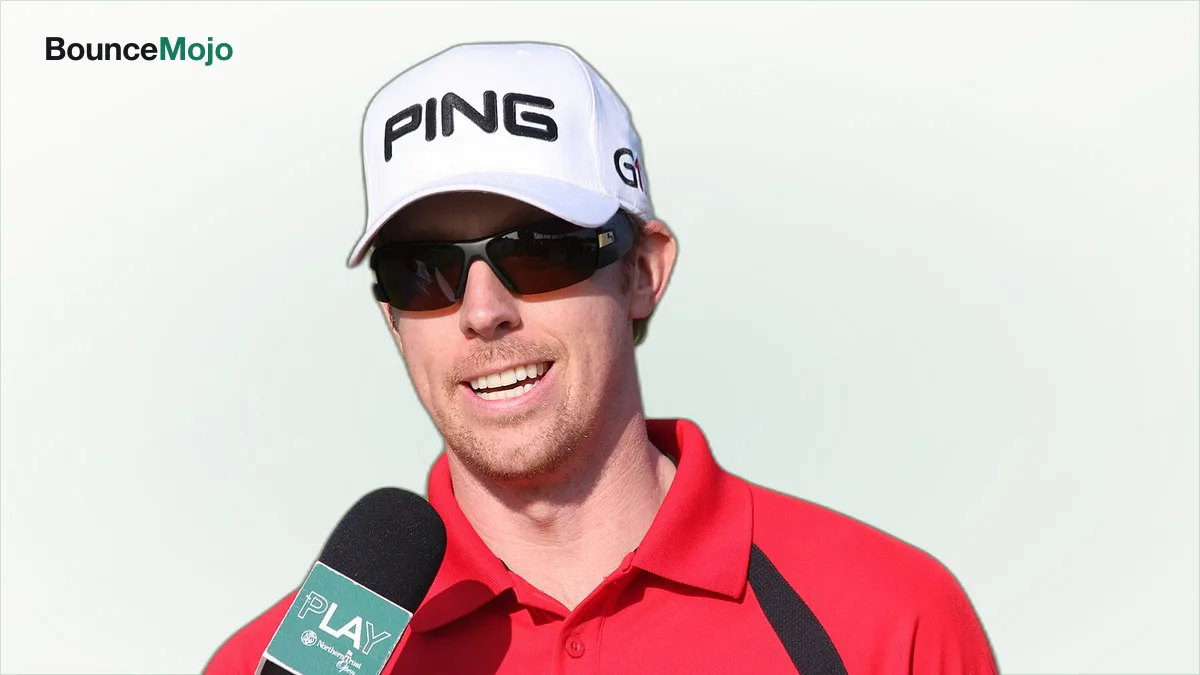
Hunter Mahan had a two-shot lead and a tournament in his grip. Then he put down his clubs and walked away.
Here’s what most people miss: the moment that defined Hunter Mahan wasn’t a putt or a trophy. It was a decision to lose on purpose, and to win something bigger.
The Myth vs. The Reality
The myth of Hunter Mahan is that he was the great American hope who somehow never delivered, a top-five player forever missing the major that would have crowned him.
Here’s the truth: that framing sells the man short.
Mahan won six times on the PGA Tour, including two of the biggest events outside the majors. He reached world No. 4 and, for a stretch, was the highest-ranked American in the game. The “underachiever” label ignores just how good he actually was, and how rich the trophies he did win really were.
The public remembers the majors he didn’t win. The reality is a player who beat the best in the world head to head, on the biggest non-major stages, again and again.
You might be wondering: where does a game like that come from? Start with a kid who was winning before most players even turn pro.
The World That Made Hunter Mahan
To understand Mahan, you have to understand the American junior golf machine that produced him.
He came up in an era when the best young players were identified early, funneled through elite junior circuits, and expected to turn pro as finished products. Tiger Woods had rewritten what a phenom looked like, and every talented teenager was measured against that standard.
Mahan was born in Orange, California, in 1982, and later moved to Texas. He fit the phenom mold perfectly. In 1999 he won both the 5A Texas state high school championship and the U.S. Junior Amateur, marking him as one of the top prospects in the country before he’d played a single college round.
Now: that kind of early spotlight is a gift and a burden. It opens doors, and it sets expectations that follow you for life.
Think about it. He was already a “can’t-miss” name as a teenager. Everything he did afterward would be measured against that early promise.
And that pressure would shape both his triumphs and the gap that haunted him.
The Crucible: Early Life and the Climb
The environment that shaped him
Mahan’s talent was obvious from the start, but his path had a twist. He enrolled at USC, where he was named Pac-10 Freshman of the Year, then transferred to Oklahoma State, one of college golf’s great powerhouses.
At Oklahoma State he became a two-time Big 12 Player of the Year and a two-time first-team All-American. He wasn’t a raw project. He was a polished, decorated amateur who had already proven he could win at every level he tried.
But here’s the kicker: dominating as an amateur is no guarantee on tour. The pro game is littered with junior stars who never made the leap. Mahan had to prove the promise was real against the best players on earth.
He turned professional in 2003 and set about doing exactly that.
The catalyst
The breakthrough came in 2007, when Mahan won the Travelers Championship for his first PGA Tour title. It confirmed what the amateur record had suggested: this was a player built to win at the top.
The message was clear. The phenom had arrived, and the biggest weeks of his career were still ahead.
The Key Players
No one climbs alone, and Mahan’s story runs through a handful of key figures.
His rivals defined some of his greatest moments. In 2012 he faced a young Rory McIlroy in the final of the WGC Match Play and beat him 2 and 1 to claim one of the biggest titles of his life. Head to head, at match play, he got the better of the man who would become the era’s dominant force.
Then there was Graeme McDowell, whose name is tied to Mahan’s darkest day. At the 2010 Ryder Cup, in the final singles match with the trophy on the line, McDowell beat Mahan, and the loss broke him publicly.
Here’s the deal: Mahan’s biggest moments came against elite opponents, and he didn’t shrink from any of them, win or lose.
Above all, there was his wife, Kandi. A former Dallas Cowboys cheerleader, she became the center of the decision that would define his public image more than any tournament ever could.
Now the wins were piling up, the rivalries were set, and the two moments that shaped his legacy were coming.
The Turning Point
The pinnacle
Mahan’s competitive peak came in a dazzling stretch from 2010 to 2014.
He won the 2010 WGC-Bridgestone Invitational, one of the strongest fields in golf. He beat McIlroy for the 2012 WGC Match Play title and climbed to world No. 4, briefly the top American in the game. He capped it with a FedEx Cup playoff win at the 2014 Barclays, his sixth tour title. For a player without a major, those were about as big as wins get.
But the moment people remember most had nothing to do with a leaderboard.
In 2013, Mahan held a two-stroke lead through 36 holes at the RBC Canadian Open. Then he learned Kandi had gone into labor. He withdrew on the spot, drove to be at her side, and their daughter was born early the next morning. He walked away from a probable win, and almost nobody criticized him for it.
Sit with that for a second. A professional athlete, in the middle of a career-defining chase for titles, gave up a lead worth a fortune to be a father. It became the single most-told story of his career, and it reframed how the golf world saw him.
The price
But here’s what that brilliant career also carried.
Mahan paid in the one number he could never fix: zero majors. He contended in the biggest events, held real chances, and never broke through. For a player once tipped as a future major champion, that gap became the recurring knock against him.
He also paid in public vulnerability. His prime coincided with the rise of a new generation, and as younger stars surged, his own peak years faded before a major ever came.
Which raises the fairest questions about a career this good and this incomplete.
The Unvarnished Truth
Let’s be honest about the limits of the Mahan story.
He was elite, but he wasn’t quite dominant. He gathered big titles without ever becoming the best player in the world for long. And in the majors, the events that anchor a golfer’s legacy, he never got over the line.
Here’s the vulnerable truth: for all his talent, Mahan’s career is remembered as much for what he didn’t win as for what he did. The 2010 Ryder Cup singles loss, where he broke down in tears at the press conference, became a symbol of the near-misses that trailed him.
He wore that disappointment openly, and there’s no shame in it. But it’s the honest asterisk on an otherwise outstanding record.
Still, even in his lowest moments, Mahan rarely drew real criticism off the course.
Controversies and Criticisms
This is where Mahan’s story stays refreshingly clean.
He was, throughout his career, one of golf’s least controversial figures. No scandals, no feuds, no ugly headlines. The 2013 decision to leave a tournament for his wife’s labor drew nothing but praise. His public image was that of a decent, grounded family man.
The criticism he faced was purely competitive: that he underachieved relative to his talent, that he couldn’t close a major, that the Celtic Manor loss exposed a fragility under the ultimate pressure.
But those are golf debates, not character flaws. The larger truth is that Mahan built a highly successful career and a real fortune while behaving, by all accounts, like a genuinely good guy.
So what does a career like this actually teach?
What We Can Learn From Hunter Mahan
Navigating hard times
When Mahan lost at Celtic Manor and wept in public, he didn’t hide from it. That’s part of the lesson.
He owned the disappointment, kept competing, and bounced back to win two more big titles in the years that followed. He proved that a devastating loss doesn’t have to define the rest of a career, unless you let it.
Here’s the truth: everyone remembers a public failure more vividly than the person who lived it. Mahan carried his most painful moment with dignity and kept moving forward.
The success blueprint
Want to know the best part? Mahan’s real lesson isn’t about golf at all.
The day he walked off a lead for his family, he made a statement about priorities that outlived any trophy. He also built lasting wealth by being elite when the purses were biggest, a reminder that timing and consistency compound, which you can trace in his full net worth breakdown.
The philosophical takeaway is simple. A win isn’t always a trophy. Sometimes the most important thing you do is know when to walk away.
Final Verdict
Hunter Mahan’s story rewards a second look.
Strip away the majors he never won, and you find a two-time World Golf Championship winner, a former world No. 4, a six-time tour champion, and a man who beat the best players of his generation head to head.
He is proof that a career can be both elite and incomplete, and that the choices you make away from the leaderboard can matter more than the ones you make on it.
No published memoir tells the full story yet. Until one does, the record speaks plainly: two of golf’s biggest non-major titles, one unforgettable act of fatherhood, and a legacy defined by more than the trophies he chased.
Shop Hunter Mahan on Amazon
Books, audiobooks, merch and more, handpicked for fans.
As an Amazon Associate we earn from qualifying purchases.
Frequently Asked Questions
Where was Hunter Mahan born and raised?+
Mahan was born in Orange, California, on May 17, 1982, and later moved to Texas, where he won the 1999 5A state high school title and starred as a junior.
Where did Hunter Mahan play college golf?+
He started at USC, where he was Pac-10 Freshman of the Year, then transferred to Oklahoma State and became a two-time Big 12 Player of the Year and two-time All-American.
What is Hunter Mahan best known for?+
For his two World Golf Championship titles, his emotional 2010 Ryder Cup loss to Graeme McDowell, and for withdrawing from the 2013 Canadian Open to be with his wife in labor.
Did Hunter Mahan ever win a major?+
No. Despite reaching world No. 4 and winning six PGA Tour titles, Mahan never captured a major championship, the one gap in an otherwise elite career.
Who is Hunter Mahan married to?+
He is married to Kandi Harris Mahan, a former Dallas Cowboys cheerleader and Mavericks dancer. They wed in 2011 and have children together.
Want the money side of the story?
Read Hunter Mahan's Full Net Worth Breakdown →Shop Hunter Mahan on Amazon
Books, audiobooks, merch and more, handpicked for fans.
As an Amazon Associate we earn from qualifying purchases.