Hulk Hogan Biography: The Man Who Made Wrestling Mainstream
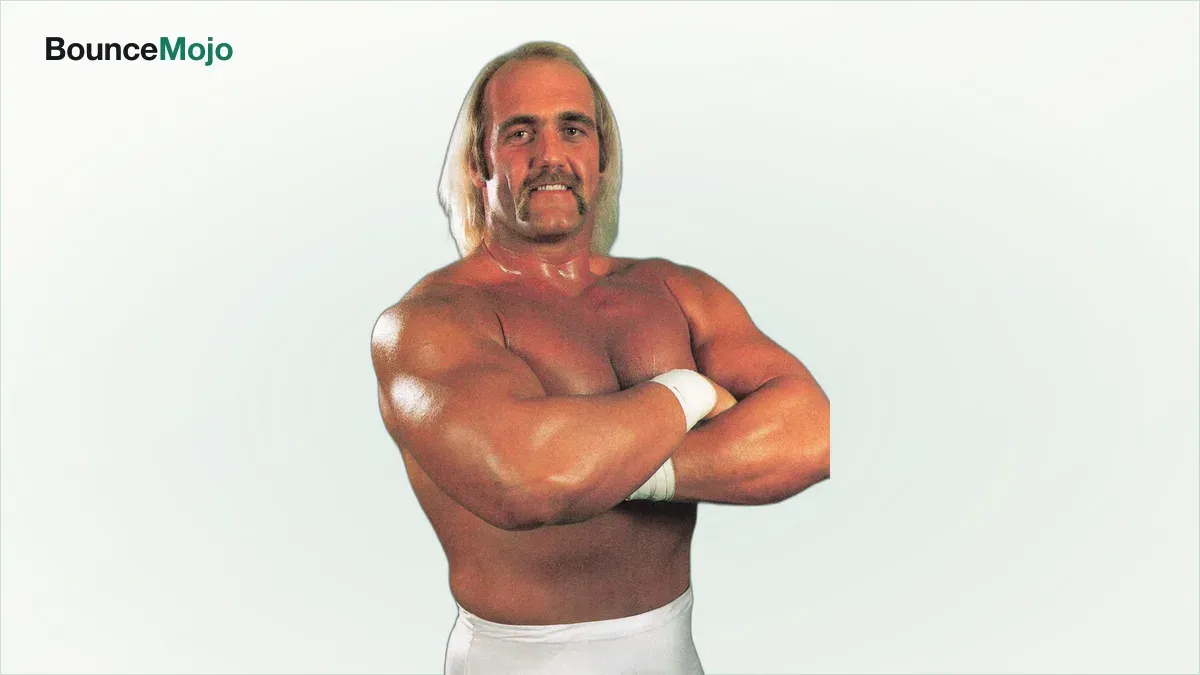
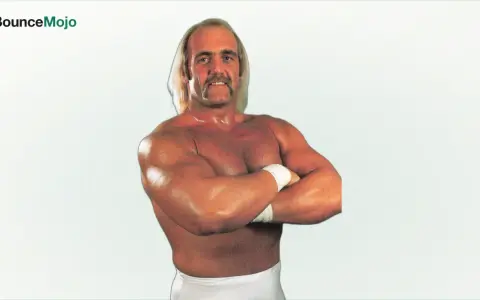
Most people know Hulk Hogan as the yellow-and-red superhero who told kids to say their prayers and eat their vitamins. That image is only half the man.
Here’s what most people miss: the biggest babyface in wrestling history spent the back half of his career, and his life, being the villain, on screen and off.
The Myth vs. The Reality
The myth is simple and heroic. Hulk Hogan: the mustachioed good guy, arms raised, tearing his shirt, telling a generation of kids to train, say their prayers and eat their vitamins. The all-American hero who slammed giants.
The reality is far more tangled.
Here’s the deal: Terry Bollea, the man behind the character, was a savvy, ambitious performer who understood fame better than almost anyone in his industry, and who was willing to become the bad guy the moment it served him. The same instinct that made Hulkamania a phenomenon in 1984 made him betray it in 1996 to form the nWo. Hero and villain were both tools in his kit.
And his life off camera carried real contradiction: enormous generosity toward fans, alongside controversies that badly damaged his legacy in his final decade. The cartoon hero was a complicated, flawed, deeply human figure.
You might be wondering: how did a Florida kid with a busted baseball arm end up as the most famous wrestler who ever lived? It started nowhere near a wrestling ring.
The World That Made Hulk Hogan
Bollea was born in 1953 and came up in a wrestling business that was still regional, gritty and far from respectable.
In the 1970s, professional wrestling was a patchwork of territories, each with its own local promotion, stars and TV deal. It was carnival entertainment, looked down on by the mainstream and invisible to most of America. There was no single national brand and no crossover celebrity. A wrestler was a local attraction, not a household name.
Now: everything was about to change, and Hogan would be the change. Cable television was arriving, and a young promoter named Vince McMahon had a plan to take one company national and blow the territory system apart. He needed a face. Someone huge, charismatic and telegenic enough to carry wrestling into living rooms that had never taken it seriously.
That collision, an old regional business meeting a national TV ambition, is the backdrop for Hogan’s rise. But before McMahon found him, Bollea was a kid chasing a completely different dream.
The Crucible: Early Life and the Climb
The Environment That Shaped Him
Terry Bollea grew up in Tampa, Florida, and his first love was baseball.
He was a talented pitcher, good enough to draw scout attention, until an arm injury at 16 ended that path. Here’s the truth: the man who became a physical icon started as a kid whose athletic dream was taken away young. He turned to music next, playing bass in Florida bar bands, including a group called Ruckus, grinding through late nights in local clubs.
That’s the unglamorous origin: a failed pitcher and a working musician, physically imposing, looking for a place to put his size and drive.
The Catalyst
Wrestling found him in those Tampa bars, where his sheer physical presence caught the eye of local wrestlers who encouraged him to train. He debuted in the late 1970s under various names before McMahon reshaped him into Hulk Hogan, complete with an invented Irish surname and, briefly, dyed red hair.
Then came the twist that could have ended it. In 1982, Hogan took a role in Rocky III as the wrestler Thunderlips. Wrestlers weren’t supposed to freelance in Hollywood, and he was fired for it. But the film exposed him to millions. When McMahon brought him back to build his new national company, Hogan was already a face people recognized.
That recognition set up a question every empire needs answered: who would he beat to prove the whole thing was real?
The Key Players
Hogan’s career was defined by the giants he stood beside and against.
Vince McMahon was the architect. He didn’t just book Hogan, he built an entire national company with Hogan as the centerpiece, gambling everything on his charisma. Their partnership made both men rich and reshaped the business forever.
Andre the Giant was the mountain Hogan had to climb, literally. Their rivalry gave Hogan the defining image of his career.
Here’s the kicker: the most important “player” in Hogan’s late career was Hogan himself, reinvented. When he formed the nWo alongside Scott Hall and Kevin Nash in WCW in 1996, he betrayed everything the Hulkamania character stood for, and it worked spectacularly. The villain turn revitalized a fading star and helped WCW briefly overtake WWF. His debut opponent in that WCW run, years earlier, had even included a young giant who would become Big Show.
Which brings us to the peak, and the toll it quietly took.
The Turning Point
The Pinnacle
Hogan’s summit came at WrestleMania III in 1987.
In front of a record indoor crowd reported near 93,000, Hogan body-slammed the roughly 500-pound Andre the Giant and pinned him. It was the single most iconic moment of the 1980s wrestling boom, and it cemented Hogan as a genuine mainstream celebrity. Cartoons, movies, action figures, magazine covers, Hulkamania was everywhere. For a decade, he was the most recognizable athlete-entertainer in America who didn’t play a traditional sport.
The Price
But the character became a cage.
Hogan had spent so long as the wholesome hero that the role limited him creatively and, eventually, financially. Fans grew tired of the same act. His body absorbed years of punishment. And the pressure to maintain the superhuman Hulkamania image, on and off screen, was relentless. The reinvention into a villain wasn’t just a creative choice, it was a survival move against a persona that had started to trap him.
That need to keep evolving points to the flaws underneath the flexing.
The Unvarnished Truth
Hogan was, by many accounts, a masterful self-promoter, and that gift had a shadow.
He was known within the business for protecting his own position, for backstage politics, and for telling a version of history that flattered him. Stories and statistics sometimes grew in the retelling. That’s not unusual for a larger-than-life performer, but it was real, and peers noted it.
In other words, the relentless drive that built Hulkamania also made Hogan a complicated figure to work with. The confidence that sold millions of tickets could tip into self-mythology. He was a human being with a very human hunger to be the biggest star in every room, and he usually was.
That hunger, and the choices around it, led to controversies that reshaped how he’s remembered.
Controversies and Criticisms
Hogan’s final decade carried serious controversy that can’t be glossed over.
In 2015, leaked audio surfaced in which Hogan used racist language, leading WWE to sever ties with him for a period and remove him from its Hall of Fame before a later, disputed reinstatement. The episode did lasting damage to his standing with many fans and colleagues, and Hogan publicly apologized.
His legal battles were their own saga. The lawsuit against Gawker Media over an invasion of privacy ended in a $31 million settlement, but the case also exposed uncomfortable details about his private life. And his 2009 divorce from Linda Hogan was bitter and financially devastating.
The Gawker case deserves its own note, because it became a landmark far beyond wrestling. Hogan sued the media company after it published a private recording, and a Florida jury sided with him to the tune of a $140 million verdict before the eventual settlement. The lawsuit was quietly funded by a Silicon Valley billionaire with his own grievance against Gawker, and it ultimately drove the outlet into bankruptcy. The episode sparked a national debate about press freedom, privacy, and the power of wealthy backers to bankroll litigation. Hogan won his money and his privacy back, but the victory came wrapped in controversy about what the case meant for journalism. It was, in a strange way, the most consequential thing he ever did outside a wrestling ring, and it had nothing to do with wrestling at all.
Here’s the truth: Hogan’s legacy is genuinely split. Cultural pioneer who made wrestling mainstream, and flawed figure whose late-career conduct alienated many. Both are real. A fair account holds them together rather than choosing one.
Quote Analysis and Literary Breakdown
Hogan’s catchphrases were marketing genius disguised as motivation.
“Say your prayers and eat your vitamins” wasn’t just a slogan, it was a merchandising engine aimed straight at children and their parents. The subtext was commercial as much as inspirational, and it worked brilliantly.
“Whatcha gonna do when Hulkamania runs wild on you?” turned a wrestler into a movement. The genius was framing his fans as “Hulkamaniacs,” making them participants in a brand rather than mere spectators.
And his nWo-era shift to a sneering villain showed a performer who understood that reinvention beats repetition. The willingness to torch his own beloved image, when it served the story and his career, revealed the calculating showman under the superhero.
What We Can Learn From Hulk Hogan
Navigating Hard Times
The lesson in Hogan’s early life is adaptability. A failed baseball career and a bar-band grind didn’t stop him, they redirected him. When one door shut, he kept moving until he found the one built for him.
The Success Blueprint
Here’s the blueprint: understand that fame itself is the asset, and build a brand bigger than any single performance. Hogan turned a character into an empire of merchandise, film and TV. But the cautionary half matters just as much. He earned like a legend and lost fortunes to divorce and mismanagement, a warning that keeping wealth is its own discipline. Compare his volatile finances to steadier peers like Booker T and Chris Jericho across our richest wrestlers ranking, and the difference between earning and keeping becomes obvious.
Becoming Better
The hardest lesson from Hogan’s story is about legacy. A lifetime of goodwill can be damaged by a few choices, and no amount of fame insulates a person from the consequences of their conduct. His story is a reminder that character, in the moral sense, outlasts any character you play. Fame is loud but not protective. The public that lifts you up can turn just as fast, and the record of how you treated people tends to outlast the highlight reel.
There’s a quieter lesson too, about knowing when an act has run its course. Hogan’s greatest professional insight was recognizing that the beloved hero had become a stale one, and reinventing himself rather than clinging to nostalgia. That willingness to evolve, uncomfortable as it was, kept him relevant for another decade. The trick, of course, is doing it in your work without losing yourself in the process, a balance Hogan managed better on screen than off.
Final Verdict
Hulk Hogan was the most important wrestler who ever lived, and one of the most complicated.
He dragged an entire industry out of the carnival tent and into the mainstream, made himself a global icon, and reinvented his act when the original wore thin. He also left a legacy tangled by controversy and a fortune that rose and fell like few others in sports entertainment. When he died in July 2025 at 71, the tributes and the criticisms arrived together, which is the truest measure of the man.
For the full picture of the money behind the myth, read Hulk Hogan’s net worth breakdown and how a fortune that big proved so hard to hold onto. Love him or not, wrestling as a mainstream phenomenon simply doesn’t exist without him.
Shop Hulk Hogan on Amazon
Books, audiobooks, merch and more, handpicked for fans.
As an Amazon Associate we earn from qualifying purchases.
Frequently Asked Questions
What was Hulk Hogan's real name?+
His real name was Terry Gene Bollea. Vince McMahon gave him the surname 'Hogan' to fit an Irish-American gimmick and even had him dye his hair red early on.
How did Hulk Hogan get famous?+
Hogan became a national star after winning the WWF Championship in 1984 and headlining the first WrestleMania. His Hulkamania persona crossed into movies, cartoons and toys, making him a mainstream celebrity.
What was Hulk Hogan's most famous match?+
Body-slamming Andre the Giant at WrestleMania III in 1987, in front of a record crowd, is widely considered the defining moment of his career and of 1980s wrestling.
Why was the nWo turn so significant?+
In 1996 Hogan shocked fans by turning heel and forming the New World Order in WCW. The reinvention revitalized his career and helped WCW briefly beat WWF in the ratings.
When did Hulk Hogan die?+
Hulk Hogan died on July 24, 2025, at age 71, of natural causes in Clearwater, Florida, following a period of declining health.
Want the money side of the story?
Read Hulk Hogan's Full Net Worth Breakdown →Shop Hulk Hogan on Amazon
Books, audiobooks, merch and more, handpicked for fans.
As an Amazon Associate we earn from qualifying purchases.