Hideki Matsui Biography: The Raw Truth Behind Godzilla
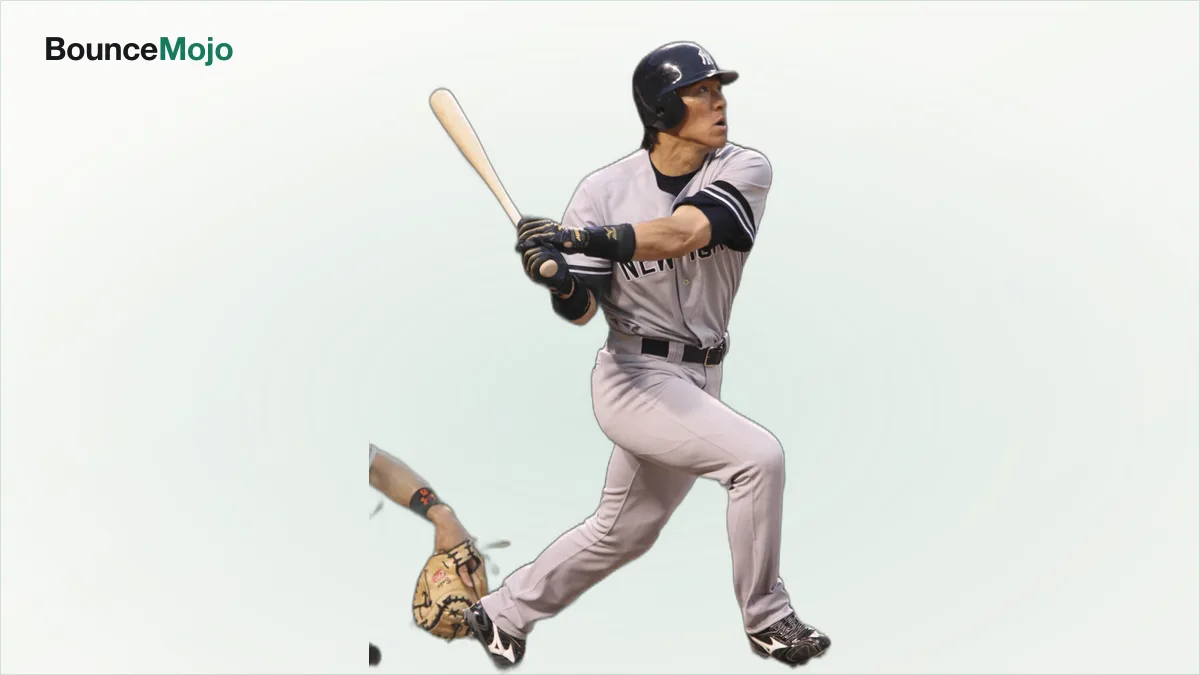
The quiet bow, the towering swing, the nickname borrowed from a movie monster. That’s the Hideki Matsui most fans picture: Godzilla, the biggest star in Japanese baseball.
Here’s what most people miss: behind the fearsome nickname was one of the most humble, disciplined, and privately driven athletes the sport has ever produced.
The Myth vs. The Reality
The myth is that Godzilla was a fearsome, larger-than-life slugger, all power and spectacle.
The reality is almost the opposite in temperament.
Here’s the truth: Matsui was famously shy, disciplined, and self-effacing, a superstar who bowed to fans and deflected praise. The monster nickname belonged to his bat, not his personality, and the gap between the two is part of what made him beloved.
Now think about how rare it is for the biggest star in a baseball-mad country to be so genuinely humble.
That contrast is the real Matsui story. And it begins in a small town in Ishikawa.
The World That Made Hideki Matsui
Hideki Matsui was born on June 12, 1974, in Neagari, a town in Ishikawa Prefecture on Japan’s western coast.
Baseball is a national passion in Japan, woven into the school system and celebrated through the fiercely popular high school tournaments at Koshien. Matsui grew up inside that culture, a big, gifted kid who quickly stood out.
This was Japan in the 1980s and early 1990s, where high school baseball stars became national celebrities and the professional game, led by the storied Yomiuri Giants, commanded enormous attention. For a young slugger with rare power, the path to fame ran straight through that world.
But here’s the kicker: Matsui became a legend before he ever turned professional, thanks to one unforgettable game.
The Crucible: Early Life and the Climb
The environment that shaped him
Matsui was raised with discipline and humility, values that stayed with him for life. He was physically imposing but temperamentally reserved, a quiet boy who let his bat do the talking.
At Seiryo High School, his power became the stuff of national conversation. He was simply too dangerous, and rival teams knew it.
The catalyst
In a 1992 national tournament game, the opposing team intentionally walked Matsui five times rather than risk pitching to him.
Think about that. Five straight refusals to even compete against a teenager.
Here’s the deal: the moment was controversial and unforgettable, and it turned Matsui into a household name across Japan overnight. The Yomiuri Giants drafted him, and he grew into the biggest star in Japanese baseball, earning the “Godzilla” nickname for his prodigious home runs.
Want to know what he did with that fame? He took it across an ocean.
The Key Players
You cannot tell the Matsui story without a few names.
The Yomiuri Giants are the first. Japan’s most storied franchise gave Matsui his platform, and his years there made him a national icon and set up everything that followed.
Joe Torre and the New York Yankees are the second thread. When Matsui signed with the Yankees in 2003, Torre and a championship-caliber clubhouse welcomed him, and he became a steady, respected run producer in the heart of the order.
Derek Jeter and the Yankees core are the third. Alongside Jeter, Mariano Rivera, and the rest, Matsui became part of a team that chased and won a title, earning the trust of teammates and the adoration of two fanbases.
Here’s the truth: everything built to one October night that would define his legacy forever.
The Turning Point
The pinnacle
Start with the crowning moment, because it was perfect.
In the 2009 World Series, Matsui was extraordinary. In the deciding game he drove in six runs, delivering one of the great individual performances in Series history, and he was named World Series MVP as the Yankees won the championship. For a Japanese player on the sport’s biggest American stage, it was a storybook peak.
He finished with more than 500 home runs across his Japanese and American careers combined, a two-nation slugger of the highest order.
The price
Now the cost, which was physical.
Matsui’s later years were hampered by knee injuries that sapped the mobility that had once made him a complete player. He shifted increasingly to a designated-hitter role and bounced to a few teams at the end, a proud star adjusting to a fading body.
You might be wondering how a private, disciplined man handles the slow decline. The answer is grace, and it defined him.
The Unvarnished Truth
Let’s not pretend there were no struggles.
Matsui’s transition to the major leagues was not effortless. He had to adjust to a new country, a new language, and a different style of play, all under the constant gaze of the Japanese media that followed his every at-bat across the Pacific.
His body eventually betrayed him too. Knee problems robbed him of his defense and shortened his effective career, forcing an early acceptance of limits.
Here’s the truth: Matsui’s vulnerabilities were quiet ones. No scandal, no controversy, just the ordinary human toll of injury and the pressure of carrying a nation’s expectations. He met all of it with the same understated dignity.
Even so, his freedom from controversy is itself remarkable in a career this scrutinized.
Controversies and Criticisms
For a superstar of his magnitude, Matsui is almost startlingly free of scandal.
The closest thing to controversy came early, and it was not even his doing: the ethics of those five intentional walks in high school sparked national debate, but that was about his opponents, not him.
Some critics questioned whether his MLB numbers fully matched his Japanese legend, given the injuries that clipped his prime. It is a fair statistical point, but it says nothing about his character.
Beyond that, the record is clean. Matsui was a model professional in two countries, respected by teammates and opponents alike.
Here’s the thing though: that spotless reputation is part of why both nations still claim him with pride.
What We Can Learn From Hideki Matsui
Navigating the darkness
When your body fails and the spotlight burns hottest, humility is a shield.
Matsui carried the weight of an entire country’s expectations without losing himself. He stayed disciplined, deflected praise, and accepted his physical decline with grace. The lesson is that character, not just talent, is what carries you through the hard stretches.
The success blueprint
Now the part that built the career and the fortune.
Matsui maximized his value across two continents, banking star salaries and endorsement income in both Japan and the United States. That two-market strategy is why he ranks among the richest baseball players worldwide. The money breakdown lives in our Hideki Matsui net worth analysis, and you can see where he sits among the richest athletes overall. The blueprint: build value in more than one market, and let excellence travel.
Becoming better
The deepest lesson is about humility. Matsui was the biggest star in a baseball-obsessed nation, yet he stayed grounded, gracious, and private. He proved that greatness and modesty are not opposites, and that how you carry fame matters as much as how you earn it.
So what’s the final word on Godzilla?
Final Verdict
Hideki Matsui is one of the most beloved and unifying figures in the history of the sport, a player who belongs to two countries at once.
On the field, he was a Japanese legend, a Yankees run producer, and a 2009 World Series MVP with more than 500 home runs across both leagues. Off it, he was humble, disciplined, and free of scandal, a superstar who never let the spotlight change who he was.
Here’s the bottom line: the monster nickname was never the whole story. Behind Godzilla was a quiet, gracious man who conquered baseball on two continents without ever losing his humility.
Anyone who remembers only the power has missed the character, and the character is the best part.
Shop Hideki Matsui on Amazon
Books, audiobooks, merch and more, handpicked for fans.
As an Amazon Associate we earn from qualifying purchases.
Frequently Asked Questions
Where did Hideki Matsui grow up?+
Matsui was born on June 12, 1974, in Neagari, Ishikawa Prefecture, Japan, and became a schoolboy baseball phenomenon before joining the Yomiuri Giants.
Why was Hideki Matsui called Godzilla?+
The nickname 'Godzilla' came from his enormous power hitting, and Japanese fans embraced it as he became the country's premier slugger.
What is Hideki Matsui best known for?+
Matsui is best known for bridging Japanese and American baseball and for winning the 2009 World Series MVP with the New York Yankees.
How many home runs did Hideki Matsui hit?+
Matsui hit 175 home runs in MLB and 332 in Japan's NPB, giving him more than 500 combined across his professional career.
What was the famous high school intentional walk?+
In a national high school tournament, opponents intentionally walked Matsui five times in one game rather than pitch to him, a moment that made him a household name in Japan.
Want the money side of the story?
Read Hideki Matsui's Full Net Worth Breakdown →Shop Hideki Matsui on Amazon
Books, audiobooks, merch and more, handpicked for fans.
As an Amazon Associate we earn from qualifying purchases.