Hélio Castroneves Biography: The Brazilian Who Conquered Indy
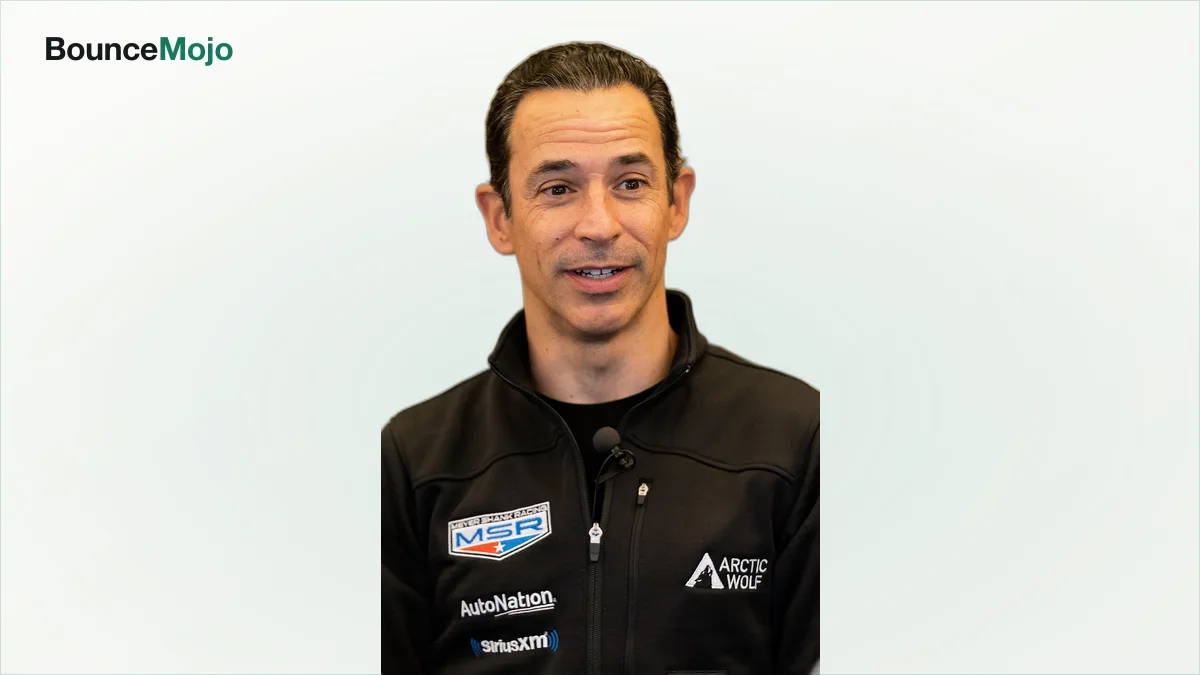
Everybody remembers the fence climbs and the four Indy 500 trophies. Almost nobody remembers the São Paulo kid who had to leave his own country to chase the dream.
Here’s what most people miss: the relentless optimism that makes Hélio Castroneves so easy to root for is the exact thing that carried him through decades of a brutally hard sport.
The Myth vs. The Reality
The myth is pure joy. Hélio Castroneves, “Spider-Man,” scrambling up the fence after another win, all smiles and charm, a four-time Indy 500 champion who seems to have won the racing lottery. Four wins at the greatest race on earth. A Dancing with the Stars crown. A career that looks like one long celebration.
That version is real. It’s also wildly incomplete.
Here’s the truth: the effortless-charmer story erases the most important part. Castroneves was a kid from São Paulo who had to leave Brazil, grind through the junior ranks in a foreign country, and prove himself over and over before he ever got near Indianapolis. The joy is real, but so was the long, uncertain climb underneath it.
Think about it. We love a story of a natural-born winner because it’s simple. But that’s not what happened. Castroneves was a talented outsider who spent years earning a shot at the top, then made the absolute most of it when it finally came.
Now, that climb didn’t happen in a vacuum. It came out of a country obsessed with racing and a family that believed in him. Which raises the question: what world produces a driver this driven and this joyful at once?
The World That Made Hélio Castroneves
To understand Castroneves, you have to understand the Brazil he came up in.
He was born on May 10, 1975, in São Paulo, into a nation with one of the deepest motor-racing cultures on the planet. This was the Brazil that had already given the world Emerson Fittipaldi and Ayrton Senna, where Formula 1 drivers were national heroes and a racing-mad kid could dream realistically of the top.
The era mattered too. Castroneves came of age when Brazilian drivers were a dominant force in global open-wheel racing, an inspiration and a benchmark. For a young talent, the path was visible: master karting at home, prove yourself in the junior formulae, and try to break through to the sport’s biggest stages, whether in Europe or America.
Here’s the deal: Castroneves had the racing bug early and the family support to chase it. But talent alone was never going to be enough. He’d have to leave home, compete in unfamiliar countries, and out-work a field full of prodigies to make it.
But wanting it and reaching it are very different things. And the distance between the two is where the real story lives.
The Crucible: Early Life and the Climb
The environment that shaped him
Two things defined the young Hélio Castroneves: talent and the willingness to leave home to use it.
He rose through karting and junior open-wheel racing in Brazil, then pushed into the international junior formulae, competing where the best young drivers gathered. It meant travel, pressure and the constant challenge of proving himself far from home, the unglamorous apprenticeship every great driver has to survive.
For years, that climb offered no guarantees. Castroneves raced and learned and kept advancing, banking on the belief that his speed and relentless work would eventually earn him a top-level seat.
You might be wondering: how does a Brazilian junior driver become a four-time Indy 500 champion? The answer is that Castroneves treated every rung of the ladder as preparation. He absorbed the craft, adapted to new cars and new countries, and kept his trademark optimism through the grind. The long climb wasn’t a delay. It was the making of him.
By the late 1990s, Castroneves had moved to American open-wheel racing, and the breakthrough was coming.
The catalyst
The catalyst had a name: Team Penske.
Joining Roger Penske’s legendary operation gave Castroneves the equipment and the platform to match his talent. Penske’s team is one of the most successful in motorsport history, and driving for it put Castroneves in genuine championship and Indy 500 contention. The outsider from São Paulo suddenly had the machinery to win the biggest races in America.
Here’s the kicker: Castroneves didn’t just get to a top team. He delivered immediately, winning the Indianapolis 500 in his breakthrough years and announcing himself with the fence climbs that became his signature.
The kid from Brazil was about to become an Indianapolis legend. And he was going to do it more than once.
The Key Players
No career this big is a solo act, and Castroneves was surrounded by people who shaped his path.
Start with Roger Penske, the team owner whose organization gave Castroneves the platform for his first Indy 500 wins. Driving for Penske is a career-defining opportunity, and Castroneves seized it.
Then there’s Michael Shank, the team owner and later business partner at Meyer Shank Racing, where Castroneves won his historic fourth Indy 500 and eventually took on an ownership role. That partnership extended his career and deepened his stake in the sport.
And there’s Julianne Hough, his professional partner on Dancing with the Stars, with whom he won the show’s fifth season in 2007, a crossover triumph that made him a household name far beyond racing.
There’s also the wider Brazilian racing legacy, the Fittipaldis and Sennas whose example lit the path Castroneves followed to the top of the sport.
Now: surround yourself with the right teams and seize the right chances, and you can turn talent into history. Castroneves did exactly that. But a career this long came with real risk and hard seasons too.
The Turning Point
The pinnacle
The pinnacle came at Indianapolis, four separate times.
Castroneves won the Indy 500 in 2001 and 2002 with Team Penske, then again in 2009, and finally, in one of the most emotional wins in recent memory, a fourth time in 2021 with Meyer Shank Racing. That fourth victory placed him alongside A.J. Foyt, Al Unser and Rick Mears as the only four-time winners in the race’s history, an elite club few ever imagined joining.
Across his career, the fence climbs, the wins and the joy became his trademark. Castroneves wasn’t just a great driver. He was one of the most beloved figures in American motorsport, a champion fans everywhere wanted to see win.
Here’s the truth: he reached the absolute summit of his sport, four times over, and did it with a warmth that made even rivals smile.
The price
Because a racing career this long comes with lean years and near-misses too.
Despite all the Indy 500 glory, a full-season IndyCar championship famously eluded Castroneves, a gap that stung a driver of his caliber. There were seasons of frustration, of coming close and falling short, the ordinary hardship of a long career at the top level of a demanding sport.
He also faced serious challenges away from the track, including a well-documented legal battle over tax matters in the United States, from which he was ultimately acquitted. It was a difficult, public chapter that tested him off the racetrack.
He’d spent decades chasing perfection at 230 miles an hour and navigating the pressures that come with fame and fortune. The joy was real, but so was the weight behind it.
The Unvarnished Truth
Castroneves is beloved, but a full picture means acknowledging the harder parts too.
For all his Indy 500 success, the elusive season championship remains the one gap in an otherwise glittering résumé, a reminder that even the greatest careers have unfinished business. Some observers have pointed to it as the asterisk on an all-time-great career.
There was also the tax case that briefly clouded his reputation before his acquittal, a stressful and public ordeal that showed the pressures fame can bring.
Here’s what’s easy to miss: Castroneves’ greatest strength, his unshakable optimism, is also what carried him through those setbacks. The same buoyancy that makes him climb fences in celebration is what let him bounce back from disappointment and controversy. The joy isn’t a mask. It’s the engine.
None of that diminishes the achievement. But it does explain why Castroneves’ story is more resilient than the highlight reel suggests.
Controversies and Criticisms
Castroneves’ long career hasn’t been entirely without friction, and it’s worth being honest about it.
The most serious chapter was the U.S. tax case he faced, which drew significant attention before he was acquitted of the charges. It was a difficult, high-profile episode that he ultimately put behind him.
On the track, some critics point to the missing full-season championship as the one hole in his record, arguing that a driver with four Indy 500 wins should have added a title. Castroneves has always let his marquee wins speak for themselves.
There’s also the occasional debate about his longevity, with some questioning how long a driver should keep competing at the top. Castroneves, characteristically, answered by winning a fourth Indy 500 later in his career than almost anyone expected.
So what does a life like this actually teach the rest of us? Quite a lot, and not only about racing.
What We Can Learn From Hélio Castroneves
Navigating hard times
Castroneves’ real lesson isn’t about winning. It’s about how you carry the losses.
He endured near-misses, a missing championship, and a serious legal ordeal, and he came through all of it with his optimism intact. He didn’t let disappointment define him. He kept showing up, kept believing, and kept finding new ways to win.
In other words: the fourth Indy 500 win late in his career was possible only because he never let the hard years break his spirit. Resilience was the real trophy.
The success blueprint
The blueprint here is about broadening beyond your specialty.
Castroneves didn’t just race. He crossed over into mainstream fame by winning Dancing with the Stars, and he moved from driver to part-owner with Meyer Shank Racing. He turned athletic success into a wider brand and a lasting stake in his sport.
Want the fuller picture of how that translated into wealth? The full net worth breakdown shows how four Indy 500 wins and a crossover career built a multimillion-dollar fortune. And to see how he ranks among motorsport’s biggest earners, the richest race car drivers list puts it in context.
The deeper takeaway is about attitude. Castroneves proved that charisma and resilience aren’t soft skills. They’re the traits that turn a great driver into a beloved, bankable champion who lasts.
Which brings us to the final reckoning on the man.
Final Verdict
Hélio Castroneves is going to be remembered for the fence climbs. That’s only the surface.
Most people will file him under “four Indy 500 wins,” one of only four drivers ever to do it, the smiling Spider-Man of American racing. A smaller, smarter group will remember something harder-won: a São Paulo kid who left home, ground through the junior ranks, earned his shot with Penske, and then delivered at the biggest race on earth again and again, across two decades, through setbacks that would have soured anyone else.
Here’s the bottom line: the wins made him famous. The way he carried himself made him beloved. Through near-misses, a public legal battle and the long grind of a top-level career, Castroneves kept his joy, and that joy became his defining trait.
He is one of only four four-time Indy 500 winners in history. He is also living proof that resilience and warmth, not just raw speed, are what make a champion last. And in the long run, that is the version worth remembering.
Shop Hélio Castroneves on Amazon
Books, audiobooks, merch and more, handpicked for fans.
As an Amazon Associate we earn from qualifying purchases.
Frequently Asked Questions
Where did Hélio Castroneves grow up?+
Castroneves was born and raised in São Paulo, Brazil, on May 10, 1975, into a country with a deep motor-racing culture that had already produced legends like Emerson Fittipaldi and Ayrton Senna.
How did Hélio Castroneves get to America?+
Castroneves worked his way up through karting and junior formulae in Brazil and Europe before moving to American open-wheel racing in the late 1990s, where he became a star with Team Penske.
How many Indy 500s has Hélio Castroneves won?+
Castroneves has won the Indianapolis 500 four times, in 2001, 2002, 2009 and 2021, joining A.J. Foyt, Al Unser and Rick Mears as the only four-time winners in the race's history.
Why does Hélio Castroneves climb the fence?+
Castroneves celebrates big wins by climbing the catch fencing, a signature move that earned him the nickname 'Spider-Man' and became one of the most recognizable celebrations in motorsport.
Did Hélio Castroneves win Dancing with the Stars?+
Yes. Castroneves won Season 5 of Dancing with the Stars in 2007 with partner Julianne Hough, a crossover success that made him famous well beyond the racing world.
Want the money side of the story?
Read Hélio Castroneves's Full Net Worth Breakdown →Shop Hélio Castroneves on Amazon
Books, audiobooks, merch and more, handpicked for fans.
As an Amazon Associate we earn from qualifying purchases.