Graeme McDowell Biography: The Portrush Kid Who Won Pebble Beach
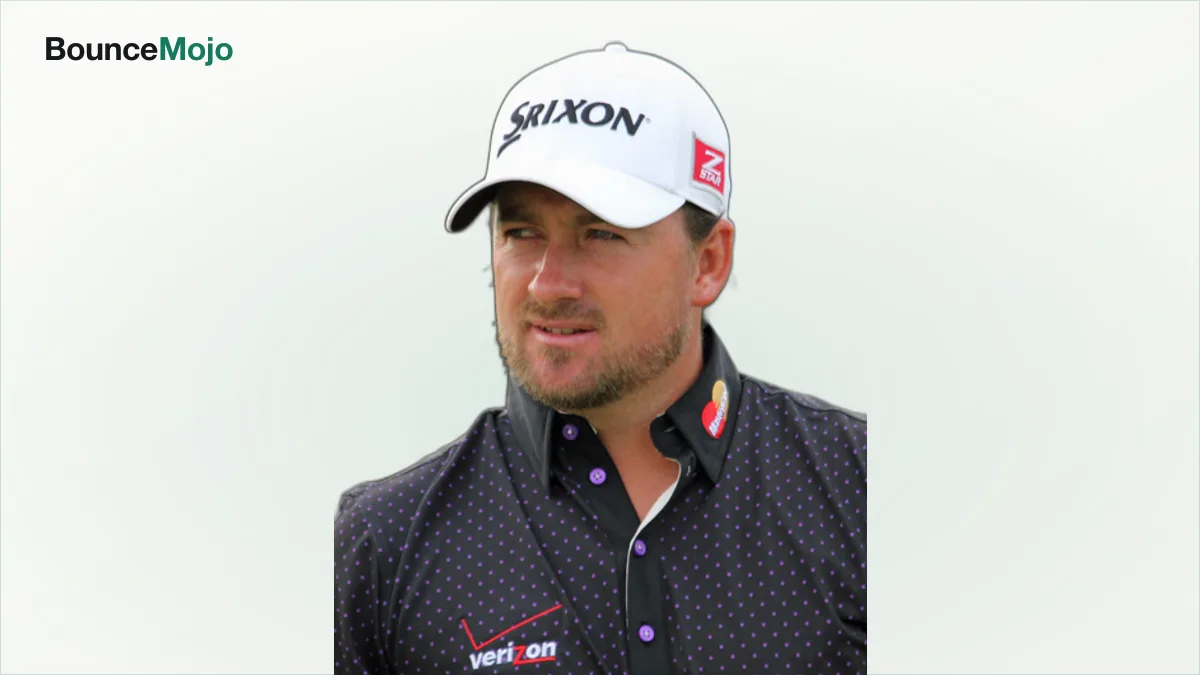
Most people remember Graeme McDowell as a U.S. Open champion. The truth is that his 2010 was one of the most remarkable years any European golfer has ever had.
Here’s what most people miss: McDowell didn’t just win a major that summer. He also holed the putt that won Europe the Ryder Cup, on the same American soil, turning one great season into a legend.
The Myth vs. The Reality
The myth is neat: Graeme McDowell, the U.S. Open champion, one great win and a comfortable career.
The reality is bigger than a single trophy.
Here’s the deal: McDowell’s 2010 was a once-in-a-lifetime year. He ended a 40-year European drought at the U.S. Open, then delivered the decisive moment in one of the most dramatic Ryder Cups ever played. Two of the most pressure-packed shots in the sport, in the same year, both delivered.
That’s not the story of a one-hit wonder. It’s the story of a man who showed up when the stakes were highest.
You might be wondering: how does a kid from a small town on the Northern Irish coast end up conquering Pebble Beach? To understand that, you have to start in Portrush.
The World That Made Graeme McDowell
McDowell was born in 1979 in Portrush, Northern Ireland, a windswept seaside town famous for its links golf and little else on the world stage.
This wasn’t a place that produced global sports stars. Portrush was small, tight-knit, and battered by the same politics that shaped Northern Ireland during the Troubles. But it had one thing in abundance: great golf, on the rugged links of the Antrim coast.
Now: growing up on links land in constant wind teaches a golfer to control the ball, improvise, and grind. McDowell absorbed all of it, developing the gritty, resourceful game that would later serve him in major championships.
There was another layer to the Portrush upbringing. Royal Portrush, the town’s championship links, is one of the finest and most demanding courses in the world, and having it on his doorstep gave McDowell a world-class education in shot-making before he ever left home. The Antrim coast is unforgiving, cold, blustery, and punishing of any loose swing, and it forged a player who never expected conditions to be easy. When he later faced brutal U.S. Open setups, the discomfort felt familiar.
Think about it: a boy from a tiny coastal town, shaped by hard weather and harder golf, would one day tame one of America’s most iconic courses. That contrast is the heart of his story.
The Crucible: Early Life and the Climb
The Environment That Shaped Him
McDowell learned the game on the links of Portrush, where the conditions demanded creativity and toughness. He wasn’t a physical marvel or a bomber. He was a shot-maker, a grinder, a competitor.
Let that land. His game was built by the environment, low, controlled ball flight and a stubborn refusal to be beaten by the wind.
The turning point in his development came in America. McDowell attended the University of Alabama at Birmingham, where he starred in college golf and set records, sharpening his talent against the best amateurs in the United States.
Here’s the truth: those college years turned a promising links kid into a pro ready for the world stage.
The Catalyst
McDowell turned pro in 2002 and built a solid career in Europe through the 2000s, winning tournaments and climbing the rankings without quite reaching stardom.
Then came 2010, and everything changed.
At Pebble Beach, McDowell won the U.S. Open, becoming the first European to take the title in 40 years. It was a seismic result, and it transformed him from respected pro to major champion.
It gets better, though, because the biggest moment of his year was still to come, a putt that would make him a hero to an entire continent.
The Key Players
No golfer’s story is a solo act, and McDowell’s runs through several key figures.
His family and Portrush roots. McDowell’s tight connection to his hometown grounded him throughout his career and gave his success a hometown-hero quality that Northern Ireland embraced.
Rory McIlroy. McDowell was an early mentor and Ryder Cup partner to the younger Northern Irishman, helping guide McIlroy as he rose to become one of the biggest names in golf. Their bond linked McDowell to the sport’s future and is part of the wider richest golfers story of Northern Irish talent.
His European teammates. Players like Lee Westwood, Luke Donald, and Justin Rose shared his Ryder Cup teams and his era, a golden generation of European golf.
Colin Montgomerie. As Ryder Cup captain in 2010, Montgomerie put McDowell in the position to deliver the winning point, trusting the major champion in the cauldron of the final singles.
By the way, every one of these relationships fed into the same defining stage: the Ryder Cup, where McDowell’s 2010 reached its unforgettable climax.
The Turning Point
The Pinnacle
McDowell’s peak was that miraculous 2010. The U.S. Open at Pebble Beach made him a major champion and ended a 40-year European drought.
Then came the Ryder Cup at Celtic Manor in Wales. In a tense, weather-delayed match, McDowell won the decisive singles point, holing a clutch putt that clinched victory for Europe. As his own net worth breakdown shows, that golden year transformed his earning power for a decade.
The Price
Here’s the kicker: nothing McDowell did afterward could quite match 2010.
That single year set a bar so high that the rest of his career, solid and lucrative as it was, would always be measured against it. He continued to win and compete, but the major-and-Ryder-Cup double of 2010 remained his defining, unrepeatable peak.
There was a personal weight to it, too. The 2010 Ryder Cup at Celtic Manor came just weeks after McDowell’s father had been unwell, and he later spoke about the emotion of delivering on the biggest stage while carrying family concerns. The image of him composing himself over that final putt, with a continent watching, captured a man channeling pressure most players never face.
That’s the price of a perfect season: everything after it lives in its shadow. And it left McDowell searching for ways to stay relevant and rewarded as a new generation, including the protégé he helped raise, took over the game.
The Unvarnished Truth
McDowell’s flaws are the honest, human kind.
After 2010, he never again reached those heights in the majors. His form fluctuated, and he faced the challenge every golfer does of sustaining excellence past his peak years. He was candid about the difficulty of following up a career-defining season.
Now: McDowell also had to make hard business decisions as his competitive window narrowed, choices that would later draw criticism. He approached his career pragmatically, aware that a golfer’s earning years are finite.
He also wrestled with the mental side of the game as he aged. McDowell spoke candidly about losing confidence, about the struggle to trust his swing under pressure once the automatic brilliance of his peak years faded. For a player whose whole game was built on grit and self-belief, that erosion of certainty was a quiet, grinding battle, one that many golfers face but few discuss so openly. He kept fighting through slumps that would have sent others into early retirement.
The most honest thing about McDowell is that he never pretended to be more than he was. He owned his 2010 as the summit, kept competing with grit, and made clear-eyed decisions about his future when the wins slowed.
Controversies and Criticisms
McDowell’s later career put him in the middle of golf’s biggest fight.
The LIV Golf move. In 2022, McDowell joined the Saudi-backed LIV Golf league and later captained a team. The decision drew heavy criticism tied to the source of the money and the fracturing of the sport. McDowell faced pointed questions and defended his choice as a business decision late in his career.
The “one great year” framing. Some critics reduced McDowell’s career to his 2010, arguing he underdelivered afterward. Others saw that as unfair to a player who delivered under the highest pressure the game offers.
The post-2010 decline. As his form dipped through the 2010s, McDowell faced the standard scrutiny of a former champion struggling to recapture his best, a pressure he handled with characteristic honesty.
The world ranking slide. Like other players who joined LIV Golf, McDowell saw his official world ranking collapse because the breakaway league’s events awarded no ranking points, cutting off his access to major championships. Critics framed it as the competitive cost of chasing guaranteed money, while McDowell argued the ranking system had failed to adapt to a changed sport.
The identity question. For a golfer so tied to Ryder Cup heroics and European golf, the move to a Saudi-backed circuit struck some fans as a jarring shift for a beloved team-golf hero. McDowell addressed the tension directly, framing the decision as a pragmatic choice about his family’s future late in a hard-earned career.
What We Can Learn From Graeme McDowell
Navigating Hard Times
The first lesson is about environment: hard conditions can build champions. McDowell learned to control the ball on the wind-lashed links of Portrush, and that toughness carried him to a U.S. Open title. Adversity can be a training ground.
But here’s the truth his career makes plain: you don’t need a long peak to build a lasting fortune. McDowell maximized one golden year into decades of value, which put him among the wealthier names on our richest golfers list.
The Success Blueprint
If you want the replicable part, it’s this: show up when it matters most. McDowell’s defining moments were the highest-pressure shots in golf, a U.S. Open and a Ryder Cup clincher, and he delivered both.
That’s transferable. The lesson isn’t “win a major.” It’s “when the biggest moment of your life arrives, be the person who steps up.” Clutch performance built McDowell’s brand and his wealth.
Becoming Better
The deepest lesson is about lifting others. McDowell mentored a young Rory McIlroy and stayed connected to the game’s future rather than clinging only to his own glory.
In other words, he made himself part of something bigger than a single career. The Portrush kid who conquered Pebble Beach helped raise the next great champion, which may be the most generous thread in his whole story.
Final Verdict
Graeme McDowell is one of the most beloved golfers Northern Ireland has ever produced, and “beloved” fits the hometown hero perfectly. A U.S. Open champion and a Ryder Cup icon, built from the links of a small seaside town and forged in the pressure of golf’s biggest stages.
And here’s the twist that reframes everything: the whole world remembers 2010, but McDowell’s quieter achievement was turning one perfect year into a durable fortune and a lasting place in the game, while helping raise its next superstar. The full picture of that fortune lives in his net worth breakdown, and it tells a simple truth: the kid from Portrush made his golden moment last a lifetime.
Shop Graeme McDowell on Amazon
Books, audiobooks, merch and more, handpicked for fans.
As an Amazon Associate we earn from qualifying purchases.
Frequently Asked Questions
Why is Graeme McDowell famous?+
McDowell is famous for winning the 2010 U.S. Open at Pebble Beach and, months later, holing the clinching putt to win the Ryder Cup for Europe, a golden year that made him a national hero.
Where is Graeme McDowell from?+
McDowell is from Portrush, Northern Ireland, a small seaside town famous for its links golf, where he learned the game as a boy.
What college did Graeme McDowell attend?+
McDowell attended the University of Alabama at Birmingham, where he set records and starred in American college golf before turning professional in 2002.
Did Graeme McDowell mentor Rory McIlroy?+
Yes. McDowell was an early mentor and Ryder Cup partner to fellow Northern Irishman Rory McIlroy, helping guide the younger star as he rose to the top of the game.
Did Graeme McDowell join LIV Golf?+
Yes. McDowell joined LIV Golf in 2022 and later captained a team, drawing criticism but banking significant money late in his career.
Want the money side of the story?
Read Graeme McDowell's Full Net Worth Breakdown →Shop Graeme McDowell on Amazon
Books, audiobooks, merch and more, handpicked for fans.
As an Amazon Associate we earn from qualifying purchases.