Georges St-Pierre Biography: The Bullied Kid Who Became MMA's GOAT
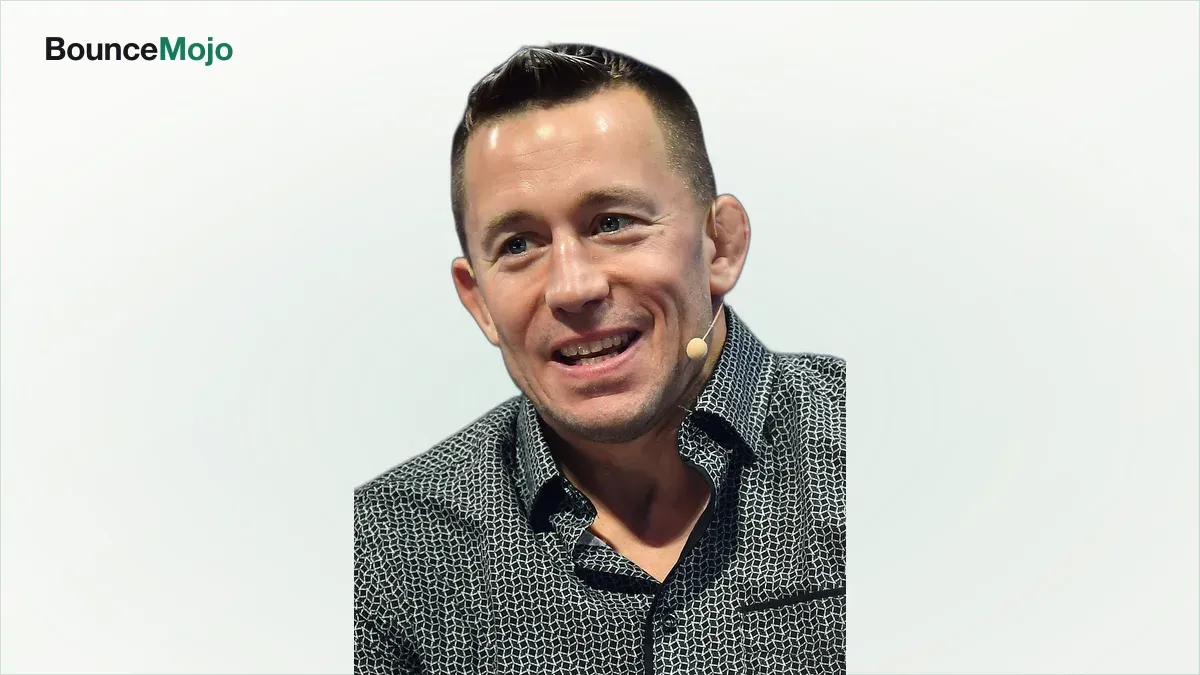
Most people know Georges St-Pierre as the polished, unbeatable champion, the safe-driving, science-loving nice guy of MMA. That image hides how much fear he had to conquer to get there.
Here’s what most people miss: the most disciplined fighter in the sport’s history was, by his own admission, driven by anxiety and haunted by the bullying he survived as a boy.
The Myth vs. The Reality
The myth is control. Georges St-Pierre: the calm, calculating champion who solved every opponent like an equation, never rattled, never in danger. Mr. Perfect.
The reality has a lot more fear in it.
Here’s the deal: GSP has been strikingly open about his anxiety. He described crippling pre-fight nerves, self-doubt, and the constant pressure of being the man everyone expected to win. The “unshakable” champion was often shaking on the inside, and his discipline was the tool he built to manage it.
And the “born great” framing misses the origin entirely. GSP wasn’t a natural-born alpha. He was a bullied, shy kid who took up karate to survive the schoolyard, then built himself into a champion through obsessive work.
You might be wondering: how does an anxious, bullied boy from rural Quebec become the greatest fighter of his generation? To understand that, you have to understand where he came from.
The World That Made Georges St-Pierre
GSP was born in 1981 in Saint-Isidore, a small town near Montreal, Quebec.
This was not a place that produced world champions in a sport that barely existed. Mixed martial arts in the 1980s and ’90s was a fringe, often-banned spectacle, and Canada was far from its center. A working-class Quebec kid dreaming of a fighting career had almost no path, no local stars to follow, no infrastructure, no money in it.
Now: GSP grew up in a modest household and faced real bullying as a boy. His father introduced him to karate early, and the martial art became both a shield and an obsession. It gave a fearful kid a way to feel safe and a discipline to pour himself into.
That environment forged him. He didn’t inherit confidence. He built it, one training session at a time, in a place and a sport where almost no one expected greatness to emerge.
But before the titles, there was a young man working ordinary jobs, chasing an extraordinary dream few took seriously.
The Crucible: Early Life and the Climb
The Environment That Shaped Him
GSP was bullied at school, and karate became his refuge. He earned his skills the hard way, training relentlessly and adding disciplines as mixed martial arts took shape as a real sport.
To fund his dream, he worked ordinary jobs, as a garbageman and as a bouncer at a Montreal nightclub. These weren’t glamorous years. They were the grind of a young man betting on a career that barely paid and offered no guarantees.
Here’s the truth: that grind built the discipline that defined him. GSP approached fighting like a scientist, studying opponents, refining technique, treating his body and mind as a project to be perfected. The obsessive preparation that later looked effortless was forged in these lean, anonymous years.
He linked up with coach Firas Zahabi and the Tristar Gym in Montreal, building the team that would carry him to the top.
The Catalyst
GSP’s rise through the UFC’s welterweight division was swift and impressive, but his defining moment came through failure.
Early in his championship story, he suffered a shocking upset loss, a defeat that humbled him and, by his own account, transformed him. Instead of breaking him, it sharpened his focus. He rebuilt, avenged the loss, and reclaimed the title.
It gets better, and stranger. That comeback launched one of the most dominant title reigns the sport has ever seen. But the people around GSP, his coach, his rivals, and his own mind, are the reason the story reads the way it does.
The Key Players
No champion rises alone, and GSP’s story is full of people who shaped him.
Firas Zahabi. His longtime head coach at Tristar Gym in Montreal became the strategic brain behind GSP’s dominance. Their partnership turned raw ability into the most complete fighter of his era.
His father. The man who first put young Georges into karate, giving a bullied boy a shield and a passion that became a life.
His rivals. GSP faced a murderer’s row of welterweight contenders and turned each into a puzzle to solve. The one man who beat him early became the catalyst for his transformation, proof that his greatest lessons came from his hardest nights.
The next generation. Fighters like Khabib Nurmagomedov and Conor McGregor would later dominate the headlines and, in McGregor’s case, the earnings, but GSP helped build the mainstream platform they inherited. As his own net worth story shows, his marketability set a standard others followed.
Think about it: every one of these relationships fed the same machine, GSP’s relentless self-improvement. That machine reached its peak in a run few have matched.
The Turning Point
The Pinnacle
GSP’s mountaintop was a welterweight reign of near-total dominance.
He claimed the title and then defended it again and again, dismantling the division’s best with a blend of world-class wrestling, sharp striking and unmatched fight IQ. For years he was the UFC’s most bankable pay-per-view star and the model of a professional champion.
Then he did something almost no one does. He stepped away at the height of his powers, then returned in 2017 after a long layoff to win a second title at middleweight, moving up a weight class to beat Michael Bisping. Two-division champion, one of the most dominant welterweight runs ever, and a comeback for the ages. Many call him the greatest of all time, and the case is strong.
The Price
Here’s the kicker: the anxiety never fully left.
GSP has spoken about the mental toll of carrying championship expectations, the pressure that gnawed at him before every fight. The discipline that made him great was also a coping mechanism for a mind that never stopped worrying. And the physical grind of an elite career, the training, the weight cuts, the wars, took its toll on his body. The pinnacle brought glory and a fortune, but also the quiet cost of a man perpetually managing his own fear. Which brings us to the more human truths.
The Unvarnished Truth
GSP is one of the sport’s most respected figures, but he’s more complicated than the polished image.
By his own admission, he battled anxiety and self-doubt throughout his career. He has spoken about the loneliness of the top, the fear of losing, and the pressure that made even his biggest wins feel fraught. The calm exterior was a performance of control over an inner storm.
Now: none of this diminishes him. The sensitivity and self-awareness that made him anxious are the same traits that made him such a meticulous, intelligent fighter.
But there were trade-offs. His caution, both in the cage and with money, drew occasional criticism from fans who wanted more risk, more spectacle. GSP played the long game, in his career and his finances, and that patience sometimes read as safety.
The most honest thing you can say is this: his greatest strength and his hidden struggle came from the same place. A deeply thoughtful, anxious mind. It made him careful, disciplined and complete, and it made the winning heavier than it looked.
Controversies and Criticisms
GSP’s career was cleaner than most, but not without debate.
The “too safe” criticism. Some fans faulted GSP for grinding out decision wins rather than seeking finishes, arguing his cautious, control-heavy style was effective but not always thrilling. He prioritized winning over highlights, and not everyone loved it.
Fighter pay advocacy. GSP became an outspoken voice for better fighter compensation and pushed the UFC on business terms. His stance put him at odds, at times, with the promotion, though it earned him respect among peers.
The layoff and comeback. His long break and return at a heavier weight drew questions about competitive fairness and whether he was cherry-picking a favorable matchup, even as the comeback succeeded.
Doping-era scrutiny. Like many fighters of his era, GSP competed in a period of intense scrutiny over performance-enhancing drugs. He was a vocal advocate for stricter, more comprehensive testing, positioning himself firmly on the clean-sport side of the debate.
What We Can Learn From Georges St-Pierre
Navigating Hard Times
The first lesson is about turning fear into fuel. GSP didn’t conquer his anxiety by pretending it wasn’t there. He built systems, discipline, preparation, routine, that let him perform in spite of it. The bullied kid didn’t become fearless. He became functional under fear.
But here’s the truth his career makes plain: managing your weaknesses beats denying them. GSP’s honesty about his anxiety, rare for a champion, is part of why his greatness holds up. He won by understanding himself, not by faking invincibility.
The Success Blueprint
If you want the replicable part, it’s this: GSP became the most complete fighter, not the flashiest. He identified every weakness in his game and drilled it away, treating improvement as a science. He out-prepared everyone.
That’s transferable. The lesson is “obsess over completeness, not highlights.” He then extended that discipline to his finances and brand, staying marketable and solvent long after retirement. The full mechanics of that live in his net worth breakdown.
Becoming Better
The deepest lesson is about patience. GSP played the long game everywhere, in his training, his career decisions, and his money. He retired healthy, on top, and financially secure, avoiding the collapses that ruin so many athletes.
In other words, the disciplined, unglamorous path often wins in the end. GSP proved that a thoughtful, anxious, careful man could become the greatest in a sport built on aggression, precisely because he refused to be reckless.
Final Verdict
Georges St-Pierre is, for many, the greatest mixed martial artist who ever lived, and the case rests on more than titles. He was a two-division champion with a welterweight reign of rare dominance, a fighter who solved every problem the sport threw at him. But what makes his story resonate is how ordinary, and how anxious, the man behind the legend really was.
And here’s the twist that reframes everything: the most controlled champion in MMA history was driven by fear, not fearlessness. A bullied kid from Quebec who worked as a garbageman turned anxiety into obsessive discipline, and discipline into greatness, then walked away at the top and stayed both rich and relevant through smart, patient choices. The full financial story lives in his net worth breakdown, and it’s the most human ending imaginable: the nervous kid who became the GOAT by out-preparing, and out-lasting, everyone.
GSP’s legacy isn’t just the perfect résumé. It’s the proof that self-awareness, discipline and patience can beat raw ferocity, in the cage and long after the final bell.
Here’s the deeper takeaway worth sitting with: GSP redefined what a champion could be. In a sport built on intimidation and bravado, he won by being the most prepared, the most complete, and the most honest about his own fears. He didn’t pretend to be fearless. He showed that fear, faced and managed, could be turned into an edge. Younger fighters study his tape not just for technique but for the mindset, the idea that greatness is a project of relentless self-improvement rather than a gift you’re born with. And off the canvas, his careful, patient approach to money and marketability became a model for how a fighter can build a life that outlasts the fighting. GSP proved you don’t have to be the loudest man in the room to be the greatest. Sometimes the quiet, disciplined one wins everything, and keeps it.
Shop Georges St-Pierre on Amazon
Books, audiobooks, merch and more, handpicked for fans.
As an Amazon Associate we earn from qualifying purchases.
Frequently Asked Questions
Where did Georges St-Pierre grow up?+
Georges St-Pierre grew up in Saint-Isidore, Quebec, Canada, in a working-class family. He took up karate as a child, partly to defend himself against bullies, and later worked as a garbageman and bouncer while building his fighting career.
Why is Georges St-Pierre called the GOAT?+
Many fans and analysts call GSP the greatest of all time because he was a two-division UFC champion with one of the most dominant welterweight title reigns in history, combining elite skill with rare consistency and discipline.
Did Georges St-Pierre retire and come back?+
Yes. GSP stepped away from the sport at the peak of his welterweight reign, then returned in 2017 after a long layoff to win the middleweight title, before retiring again as a champion.
What has Georges St-Pierre done since retiring?+
GSP has pursued acting, including a role in Marvel's Captain America: The Winter Soldier, along with business ventures, seminars, books and advocacy for fighter pay.
What made Georges St-Pierre so dominant?+
GSP was the most complete and disciplined fighter of his era, blending world-class wrestling, striking and fight IQ with an obsessive training regimen and mental preparation that few could match.
Want the money side of the story?
Read Georges St-Pierre's Full Net Worth Breakdown →Shop Georges St-Pierre on Amazon
Books, audiobooks, merch and more, handpicked for fans.
As an Amazon Associate we earn from qualifying purchases.