George Weah Biography: Monrovia Slum to Ballon d'Or and President
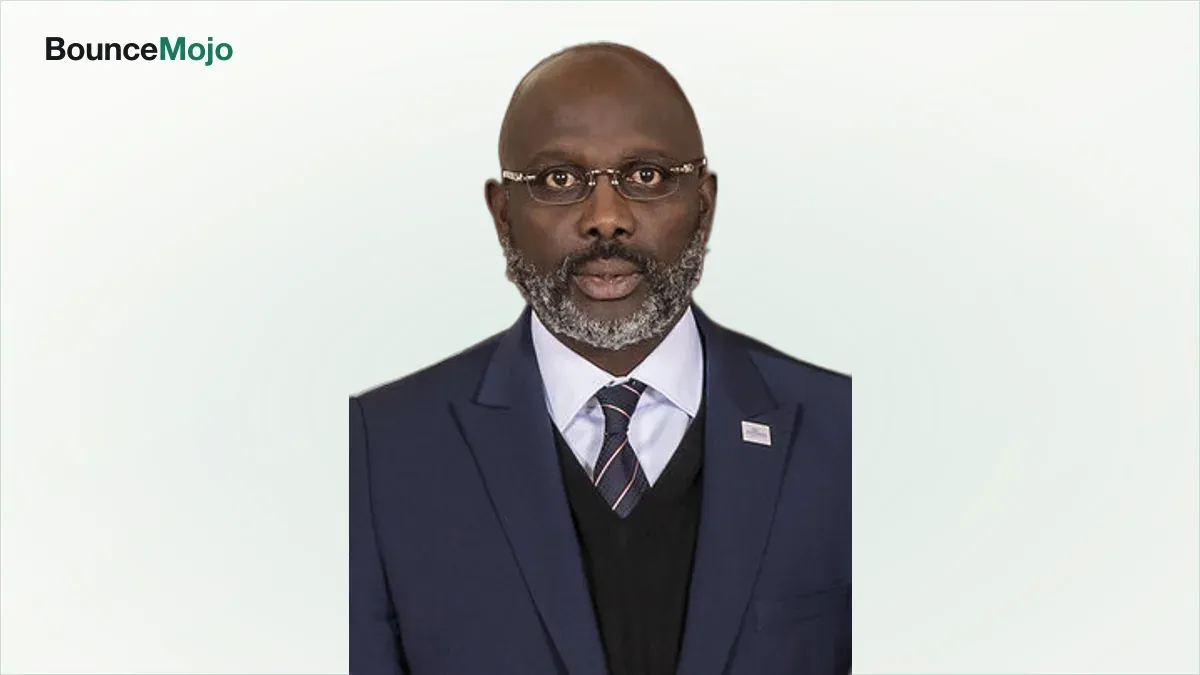
Most people know George Weah as the only African to win the Ballon d’Or. That single fact hides the most extraordinary life story in football.
Here’s what most people miss: the same man who lit up the great stadiums of Europe grew up in a Monrovia slum and would one day govern an entire nation.
The Myth vs. The Reality
The myth is the fairy tale. George Weah: the slum kid who became a global icon, the smiling striker who conquered Europe and then his own country’s highest office.
The reality is even more remarkable, and far harder than the fairy tale suggests.
Here’s the deal: Weah’s rise happened against a backdrop of civil war, poverty, and instability that most sports heroes never face. While he was scoring goals in Milan and Paris, his homeland was being torn apart by conflict. He carried the weight of a suffering nation even at the peak of his fame, funding the national team, pleading for peace, and refusing to abandon Liberia when it would have been easy to.
And the “footballer turned politician” framing undersells his motivation. Weah didn’t drift into politics for vanity. He entered it because he watched his country bleed and decided that fame and money were not enough. That resolve is the real heart of his story.
You might be wondering: how does a boy from a Monrovia slum end up holding the Ballon d’Or and, later, a presidency? Start with where he came from.
The World That Made George Weah
Weah was born in 1966 in Monrovia, the capital of Liberia, and raised in Clara Town, one of its poorest districts.
His childhood was defined by hardship. Raised largely by his grandmother in a crowded, impoverished neighborhood, Weah knew scarcity from the start. Football was his escape and his hope, played on rough ground with everything to prove and nothing to fall back on. Liberia was a struggling nation, and opportunities for a poor young man were painfully few.
Now: that background forged an extraordinary drive. Weah understood, more deeply than almost any peer, what he was playing for. Every step up the football ladder was a step away from poverty, not just for him but for a family and a community that pinned their hopes on him.
This was also a turbulent time for Liberia, heading toward the civil wars that would devastate the country in the 1990s. Weah’s rise and his homeland’s collapse ran side by side, an agonizing contrast that defined his life.
But before any of that, a talented boy needed someone to see him.
The Crucible: Early Life and the Climb
The Environment That Shaped Him
Weah’s talent carried him through clubs in Liberia, Cameroon, and beyond, but Africa’s leagues could only take him so far.
He needed a break, a door into Europe, where the money, the stages, and the glory were. Without it, even the most gifted African players of his era often went unseen. Weah had the ability. What he lacked was the platform, and the platform came from an unlikely source.
Here’s the truth: Weah’s story could have ended in obscurity like so many others. What changed it was one man’s eye for talent, and one continent-crossing leap of faith.
The Catalyst
The turning point came when Arsene Wenger, then managing Monaco, spotted Weah and brought him to Europe in 1988.
It was a transformative moment. Under Wenger’s guidance, Weah blossomed into a world-class striker, powerful, quick, and clinical. From Monaco he moved to Paris Saint-Germain and then to AC Milan, becoming one of the finest forwards on the planet.
It gets better, and it stunned the football world: in 1995, Weah won both the Ballon d’Or and the FIFA World Player of the Year award, the first and still only African player to claim the sport’s top individual honor. The slum kid was now the best player in the world.
The Key Players
No rise like Weah’s happens alone, and his story is full of pivotal people.
Arsene Wenger. The manager who discovered him and brought him to Europe, the mentor without whom the whole story might never have happened.
Paolo Maldini. His AC Milan teammate and captain, part of one of the greatest club sides of the era.
Clar Weah. His wife and, later, First Lady of Liberia, a steady presence through his football and political lives.
Timothy Weah. His son, who became a professional footballer in his own right, extending the family’s legacy into a new generation.
Think about it: a mentor, a family, and a homeland all shaped him. But Weah’s greatest turning point wasn’t a trophy. It was a decision to serve.
The Turning Point
The Pinnacle
Weah had two summits, one in sport and one in life.
The first was the 1995 Ballon d’Or, the crowning glory of a football career that took him from a Monrovia slum to the top of the world game. The second, and arguably greater, came in 2017, when Weah was elected President of Liberia, taking office in 2018. He had turned his fame into a mandate to lead his country, an achievement no footballer had ever matched. The wealth he built along the way is traced in his net worth breakdown.
The Price
Here’s the kicker: both summits came with heavy costs.
During his football peak, Weah watched his homeland torn apart by civil war. He funded the Liberian national team out of his own pocket, spoke out for peace, and carried the anguish of a nation while starring abroad. Later, the presidency brought the brutal weight of governing one of the world’s poorest countries, with all the criticism, compromise, and disappointment that public office involves. The glory was real, and so was the burden.
The pinnacle brought him honor and power. It also demanded he shoulder a suffering nation’s hopes, twice. Which leads to the harder truths of his political years.
The Unvarnished Truth
Weah’s story on the pitch is heroic. His story in office is more complicated, and honesty requires acknowledging both.
As President, Weah faced fierce criticism. Liberia’s deep poverty and economic troubles proved far harder to fix than many hoped, and his administration was accused of failing to deliver on its promises and of governance shortcomings. In 2023 he lost his bid for re-election, a peaceful transfer of power that itself did him credit, but also a clear verdict from voters.
Now: none of this erases what he achieved. It humanizes it. A brilliant footballer is not automatically a brilliant statesman, and governing a war-scarred nation is one of the hardest jobs on earth. Weah’s presidency had real flaws, and he deserves to be judged on them honestly.
The honest read is that Weah’s greatest strength, his heroic status and his heart for Liberia, could not by itself solve the country’s structural problems. Fame won him office. Governing well required different skills, and the results were mixed. His courage in trying, and in accepting defeat gracefully, remains admirable.
Controversies and Criticisms
Weah’s public life drew criticism alongside adulation.
Governance record. His presidency was criticized for slow progress on poverty, corruption, and the economy, with opponents arguing he lacked the political experience to deliver real change.
Absences and priorities. Critics questioned some of his foreign trips and priorities while Liberians struggled at home.
The football-to-politics leap. Skeptics argued that fame alone was not a qualification to run a country, a debate his mixed record fueled.
The election loss. His 2023 defeat was seen by critics as a rejection of his record, though his peaceful concession earned wide respect.
What We Can Learn From George Weah
Navigating Hard Times
The first lesson is about rising from nothing. Weah came from a Monrovia slum and reached the very top of world football through sheer talent and will. He proved that where you start does not have to define where you finish.
But here’s the truth his story makes plain: hardship can forge an unbreakable drive. Weah’s poverty gave him a hunger and purpose that carried him past every obstacle. What looked like a disadvantage became the engine of an extraordinary life.
The Success Blueprint
If you want the replicable part, it’s this: use your success to lift others, not just yourself. Weah could have simply enjoyed his football fortune, the one detailed among the names on our richest soccer players list. Instead he poured his fame into serving his country.
That’s transferable. The most meaningful use of success isn’t accumulation, it’s impact. Weah turned personal triumph into a platform for something bigger than himself.
Becoming Better
The deepest lesson is about loyalty to your roots. Through every level of fame and power, Weah never forgot Liberia. He funded its team, fought for its peace, and ultimately tried to lead it.
In other words, remember where you came from and give back to it. Weah’s whole life was an act of returning, again and again, to the country that raised him. That devotion is his true greatness, deeper than any goal or trophy.
Final Verdict
George Weah is one of the greatest African footballers of all time, the only African to win the Ballon d’Or, and the only footballer ever to become the president of his country. His life is a bridge between a Monrovia slum and the highest offices of sport and state.
And here’s the twist that reframes everything: the goals and the Ballon d’Or, dazzling as they were, may not be the most important thing Weah ever did. The most important thing was refusing to forget Liberia, funding its team through civil war, pleading for peace, and finally trying to govern it himself. His football made him famous. His loyalty to his homeland made him a legend.
Weah’s fortune, detailed in his net worth breakdown, is modest next to modern stars, and that is exactly the point. He chose meaning over money, service over accumulation, and a suffering nation over a comfortable retirement. Few athletes in history have used their gifts for anything half as consequential.
Shop George Weah on Amazon
Books, audiobooks, merch and more, handpicked for fans.
As an Amazon Associate we earn from qualifying purchases.
Frequently Asked Questions
Where did George Weah grow up?+
Weah grew up in Clara Town, a poor neighborhood of Monrovia, the capital of Liberia, raised largely by his grandmother in tough conditions.
How was George Weah discovered?+
Weah was spotted playing in Africa and brought to Europe by Arsene Wenger, then manager of Monaco, who became his mentor and launched his career.
Did George Weah become president?+
Yes. Weah was elected President of Liberia in 2017 and served from 2018 to 2024, after a career in football and years as a senator.
What did George Weah do during Liberia's civil war?+
Weah used his fame and money to support Liberia's national team and speak out for peace during the country's brutal civil wars, at times funding the team himself.
Who is Timothy Weah?+
Timothy Weah is George Weah's son and a professional footballer, who has played for clubs in Europe and for the United States national team.
Want the money side of the story?
Read George Weah's Full Net Worth Breakdown →Shop George Weah on Amazon
Books, audiobooks, merch and more, handpicked for fans.
As an Amazon Associate we earn from qualifying purchases.