Gary Sheffield Biography: The Feared Bat and the Family Behind It
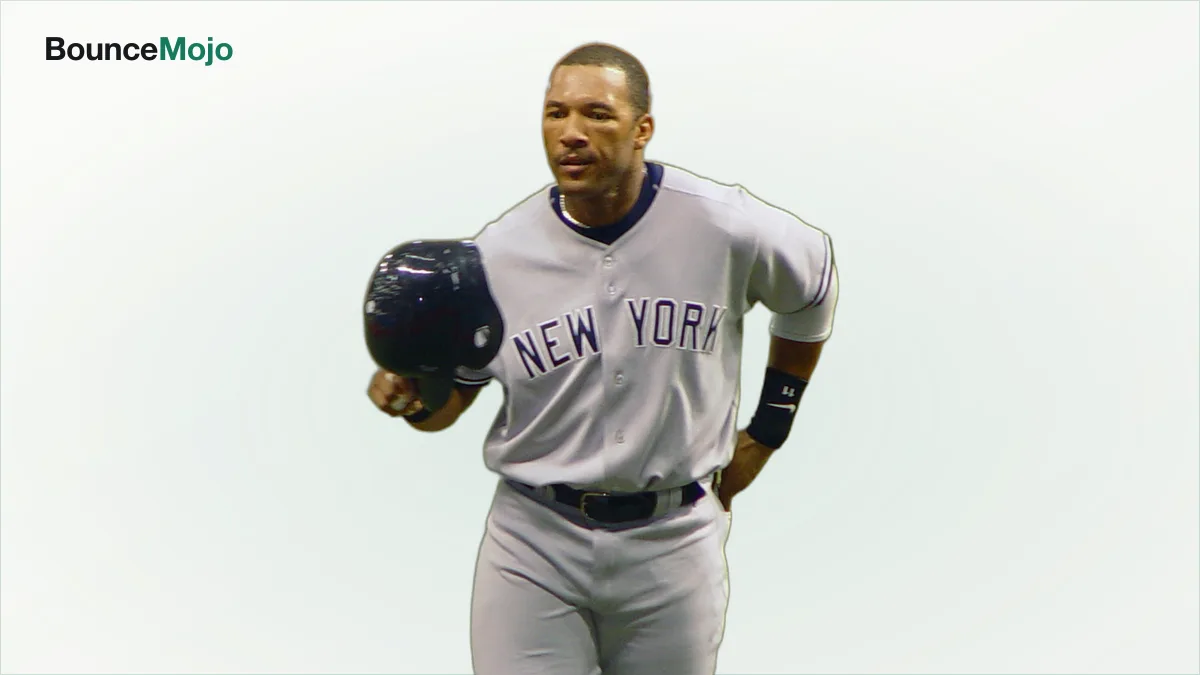
Everybody remembers the bat wag. Almost nobody remembers where that ferocity actually came from.
Here’s what most people miss: the most intimidating swing of a generation was forged in a tough Tampa neighborhood, in a family where baseball was both an escape and an inheritance.
The Myth vs. The Reality
The myth is pure menace. Gary Sheffield, standing in the box, bat cocked and wagging like a rattlesnake’s tail, one of the scariest at-bats a pitcher could face.
That image is real. It just skips the why.
Here’s the truth: the fury in that swing wasn’t an act. It came from a hard upbringing, a chip on the shoulder, and a family full of ballplayers who taught him the game was a way out. Sheffield didn’t just hit angry. He hit like a man who understood exactly what he was fighting for.
Think about it: the player fans remember as combustible and controversial was also fiercely intelligent about his own value, moving from team to team, speaking his mind, and refusing to be underpaid or overlooked. The bat wag was the visible part. The mind behind it was just as sharp.
Now, none of that comes from nowhere. It comes from a specific place, at a specific time. So where did Gary Sheffield come from?
The World That Made Gary Sheffield
To understand Sheffield, you have to picture Belmont Heights in Tampa, Florida.
He was born on November 18, 1968, and grew up in one of Tampa’s tougher neighborhoods, a community that, remarkably, produced a stream of baseball talent. This wasn’t a manicured suburb. It was a place where the sport was both a passion and a genuine escape route, and where competition was fierce from the start.
Sheffield had a built-in advantage: his uncle was Dwight Gooden, who would become “Doc,” the electric Mets ace and one of the defining pitchers of the 1980s. Growing up around Gooden gave young Sheffield a real-life model of what escape through baseball looked like, and a standard to chase.
The game he entered was also changing. The late 1980s and 1990s brought bigger money, free agency, and a new era of player empowerment. For a talented, self-aware kid from a hard place, that shifting landscape was an opportunity.
But here’s the kicker: the same fire that made Sheffield great would also make him one of the most polarizing stars of his time. First, though, he had to climb out.
The Crucible: Early Life and the Climb
The environment that shaped him
Sheffield’s environment demanded toughness, and he had it in abundance.
He starred at Hillsborough High School in Tampa, the same program that produced other big leaguers, and dominated as an amateur. Watching his uncle Gooden rise to stardom with the Mets showed him the path was real, not a fantasy. Baseball wasn’t a dream in his family. It was a business the Gooden-Sheffield line already knew.
That upbringing bred a competitor with an edge. Sheffield played with a visible intensity and carried a sense that nothing would be handed to him. He’d have to take it.
You might be wondering: did that edge help or hurt? Both. It made him relentless. It also made him prickly, a player who clashed with authority and spoke uncomfortable truths.
The catalyst
The catalyst was the 1986 MLB Draft, when the Milwaukee Brewers took him sixth overall.
He reached the majors as a teenager, a raw shortstop with a devastating bat. Early on, the relationship with Milwaukee soured, and Sheffield made no secret of his unhappiness. Here’s the deal: rather than let it define him, he forced changes, eventually landing in situations where his bat could truly play.
By the early 1990s, with the San Diego Padres, he nearly won a Triple Crown and announced himself as a superstar. And that was only the beginning of a long, winding road.
The Key Players
No story this big is a solo act, and Sheffield’s is built around family and rivals.
Start with Dwight Gooden, the uncle who lit the path. Gooden’s rise proved to a young Sheffield that a kid from their Tampa neighborhood could reach the very top. The bond between them ran deep, and Gooden’s own struggles later in life added a complicated, human backdrop to the family’s baseball story.
Then there are the many managers and front offices Sheffield crossed paths with across eight franchises. Some clashed with him. Some got the best years of his career. His relationship with authority was a running theme, part of what made him move so often.
And there were the contemporaries, the era of sluggers he was measured against, including the biggest names of the steroid era. Sheffield competed with and against the best power hitters of his generation, a peer group whose legacies remain tangled together.
Now: with a life this combustible, the peak was bound to be dramatic. And it came with a title, and a shadow.
The Turning Point
The pinnacle
The pinnacle arrived in the 1990s and 2000s, a long prime spread across the map.
Sheffield won a World Series with the Florida Marlins in 1997, becoming a champion in his home state. He made nine All-Star teams, won multiple Silver Sluggers, and finished his career with 509 home runs, a number that puts him in rarefied company. For a stretch with teams like the Dodgers and Yankees, he was one of the most productive and feared hitters alive.
Here’s the truth: at his best, Sheffield was as dangerous a hitter as anyone in baseball, a middle-of-the-order force who could carry a lineup.
The price
But the price of that career was a reputation that cut both ways.
Sheffield’s outspokenness and frequent moves meant he was never fully embraced as a franchise icon the way quieter stars were. He earned a fortune, over $160 million, but he also earned a label as difficult, a player teams both wanted and worried about.
The heaviest price came with the steroid era. Sheffield was named in the Mitchell Report, the investigation into performance-enhancing drugs in baseball. He has disputed the framing, but the cloud lingered over his Hall of Fame candidacy for years, keeping one of the game’s great bats waiting far longer than his numbers alone might suggest.
It gets more human, though. Because behind the controversy was a man who was, above all, honest to a fault.
The Unvarnished Truth
Sheffield’s flaws were never hidden, which is part of what made him such a lightning rod.
He said what he thought, about teammates, teams, race, and the business of baseball, in an era when most stars kept quiet. That honesty made him enemies and made him fascinating. He was rarely comfortable, and he rarely made others comfortable either.
The steroid-era association is the hardest part of his ledger. Whatever the full truth, the shadow shaped how his greatness was received. It’s a reminder that legacy in baseball is rarely just about the numbers.
Here’s what’s easy to miss: that same refusal to play the game politely is what let him maximize his career on his own terms. He was blunt, mobile, and unafraid, and it built him a fortune and a second career.
None of that spared him criticism, though.
Controversies and Criticisms
Sheffield’s career is defined almost as much by controversy as by production.
The Mitchell Report naming is the biggest. It complicated his Hall of Fame case and remains the central debate around his legacy. Fair or not, it’s inseparable from how his career is remembered.
Then there were the many clubhouse and front-office clashes. From Milwaukee onward, Sheffield feuded, demanded trades, and spoke out, a pattern that made him one of the sport’s most quotable and most divisive figures.
And there were his blunt public comments on race and the treatment of players, remarks that sparked heated debate. Some praised his candor. Others found it inflammatory. Either way, he refused to soften himself for public consumption.
So what does a career like this actually teach? More than the controversy suggests.
What We Can Learn From Gary Sheffield
Navigating hard times
Sheffield’s life is a lesson in using an edge instead of being crushed by one.
He came from a hard place, carried a chip on his shoulder, and channeled it into relentless excellence. The lesson isn’t to be angry. It’s that the fire that makes life hard can also be the fuel that gets you out, if you aim it.
In other words: your background doesn’t have to be a cage. Sheffield turned his into rocket fuel.
The success blueprint
The blueprint here is about knowing and defending your own value.
Sheffield understood the business of baseball as well as anyone, using free agency and honest self-assessment to bank over $160 million and then build an agency to keep earning. Want the fuller money picture? The full net worth breakdown shows how a feared bat became a two-act fortune. And to see where he ranks, the richest baseball players list puts it in context.
The deeper takeaway is about authenticity. Sheffield was never anyone but himself, for better and worse, and it built him a career and a fortune on his own terms.
Which brings us to the final word.
Final Verdict
Gary Sheffield will be remembered as one of the most feared and most controversial hitters of his time, and both halves of that are true.
Most people will file him under “scary bat, steroid-era question mark” and move on. The fuller story is a kid from a tough Tampa neighborhood, shaped by a famous uncle and a family that treated baseball as a way out, who became one of the great sluggers of his generation and refused, at every turn, to be anything but himself.
Here’s the bottom line: the 509 home runs and the nine All-Star nods are enormous, and they still don’t capture him. The point is the edge. Sheffield hit with a fury that came from somewhere real, spoke truths others wouldn’t, and built a fortune and a second career on his own uncompromising terms.
He didn’t just swing a bat. He made pitchers afraid of it. And that’s the version worth remembering.
Shop Gary Sheffield on Amazon
Books, audiobooks, merch and more, handpicked for fans.
As an Amazon Associate we earn from qualifying purchases.
Frequently Asked Questions
Where did Gary Sheffield grow up?+
Sheffield grew up in the tough Belmont Heights area of Tampa, Florida, in a baseball-rich family. He starred at Hillsborough High School before being drafted in 1986.
Who is Gary Sheffield's uncle?+
Sheffield's uncle is Dwight 'Doc' Gooden, the flame-throwing Mets ace who was one of the biggest pitching stars of the 1980s. The two grew up close in Tampa.
How many teams did Gary Sheffield play for?+
Sheffield played for eight MLB franchises over 22 seasons, a nomadic career that reflected both his talent and his willingness to speak his mind.
Why was Gary Sheffield controversial?+
Sheffield was famously outspoken, clashed with teams and managers, and was named in the Mitchell Report on performance-enhancing drugs, which complicated his Hall of Fame case.
What does Gary Sheffield do now?+
After retiring, Sheffield became a licensed sports agent, representing Major League Baseball players and staying active as a blunt, opinionated voice in the sport.
Want the money side of the story?
Read Gary Sheffield's Full Net Worth Breakdown →Shop Gary Sheffield on Amazon
Books, audiobooks, merch and more, handpicked for fans.
As an Amazon Associate we earn from qualifying purchases.