Gabby Douglas Biography: The Flying Squirrel Who Made History at 16
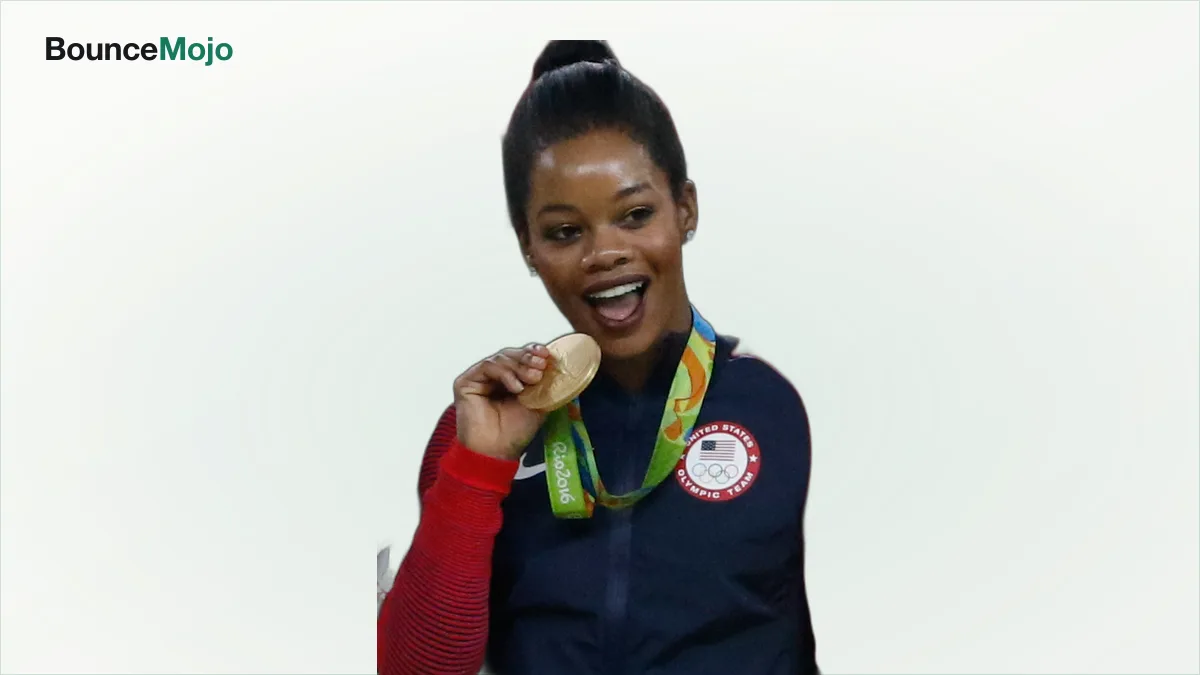
Most people know Gabby Douglas as the smiling 16-year-old who made history in London. That image is real, and it hides a childhood far harder than the highlight reel suggests.
Here’s what most people miss: before she was the first Black gymnast to win Olympic all-around gold, Douglas had lived through homelessness, a cross-country move away from her family, and doubts that she’d ever make it at all.
The Myth vs. The Reality
The myth is sunny. Gabby Douglas: the cheerful teenager, the “Flying Squirrel,” the golden girl who charmed America on her way to the top of the podium. Feel-good. Wholesome. Roll credits.
The reality is grittier, and more admirable.
Here’s the deal: Douglas didn’t float to gold on natural charm. She fought her way there through real hardship, a family that struggled financially, a period of housing instability, and a lonely sacrifice that took her hundreds of miles from everyone she loved. The smile was real. So was the struggle behind it.
And the “golden girl” framing skips the ugliness she endured at her peak. At the very moment she was making history, Douglas faced a wave of unfair, often racially charged criticism, about her hair, her expression, her patriotism. She won gold and got picked apart for it.
You might be wondering: how does a girl from a struggling family end up rewriting Olympic history and then absorbing a nation’s cruelty for it? To understand that, you have to understand where she came from.
The World That Made Gabby Douglas
Douglas was born on the last day of 1995 and grew up in Virginia Beach, raised largely by her mother alongside her siblings.
Money was scarce. Douglas has spoken about a period when her family experienced homelessness, a childhood shaped by instability and the constant pressure of getting by. This was not the world of country-club gymnastics academies and endless resources. It was a world where pursuing an elite, expensive sport was almost impossibly ambitious.
Now: American gymnastics in that era was a demanding, largely white, and financially exclusive world. Elite training cost fortunes. The path to the Olympics ran through pricey clubs and private coaches. For a Black girl from a struggling family, the odds were stacked in almost every direction.
That gap, between where Douglas came from and what her sport demanded, is the backdrop for everything she achieved. She wasn’t just chasing gold. She was breaking into a world that hadn’t been built for her.
But before the history, there was a little girl teaching herself cartwheels.
The Crucible: Early Life and the Climb
The Environment That Shaped Her
Douglas showed gymnastics talent almost from the start, reportedly teaching herself cartwheels as a small child before her family enrolled her in classes. She was a natural, fearless and explosive, with a gift for the uneven bars that would define her.
Her family sacrificed to keep her in the sport despite their financial struggles. Her mother and siblings supported her ambition even when resources were thin, and coaches quickly recognised that Douglas had rare, Olympic-level potential.
This is crazy: a child who experienced homelessness was, within a few years, on a track toward the Olympic Games, powered by raw talent and a family that refused to let hardship end the dream.
Here’s the truth: the talent was undeniable, but talent alone wasn’t going to be enough. To reach the top, Douglas would have to make a sacrifice most teenagers, and most parents, could never stomach.
The Catalyst
The turning point was a move that broke her heart to make.
As a young teenager, Douglas left Virginia and moved to West Des Moines, Iowa, to train with renowned coach Liang Chow, who had guided another gymnast to Olympic glory. She lived with a host family, thousands of miles from her mother and siblings, homesick and lonely, betting her childhood on a shot at the Games.
It was a wrenching decision. Douglas has spoken about how hard the separation was, how close she came to giving up and going home. But she stayed, and Chow’s coaching transformed her into a genuine Olympic contender.
It gets better, and stranger. That painful gamble was about to pay off on the biggest stage in sports, in a way that would make history. But she didn’t get there alone.
The Key Players
No one reaches the Olympic podium alone, and Douglas’ story is full of people who carried her there.
Her mother. The emotional and financial anchor of the story, Douglas’ mother sacrificed enormously and supported the dream through the family’s hardest years, and through the pain of sending her daughter across the country.
Liang Chow. The coach who took Douglas in and transformed her. Chow’s technical brilliance and belief refined her raw talent into Olympic-championship form, and he became a central figure in her rise.
Her host family. The Iowa family who took Douglas in gave her stability, love and a home base far from her own, making the sacrifice bearable and the training possible.
Her teammates. The 2012 “Fierce Five” and the 2016 “Final Five” were more than colleagues, they were the group Douglas made history alongside, including gymnasts who would become icons in their own right.
Think about it: every one of these people filled a gap created by Douglas’ circumstances, resources, coaching, stability, belonging. Their combined support set up the golden moment.
The Turning Point
The Pinnacle
The 2012 London Olympics is Douglas’ mountaintop, and it’s a moment of genuine history.
At just 16, Douglas won the individual all-around gold medal, becoming the first Black gymnast ever to win the sport’s biggest individual title, and the first American to win both team and individual all-around gold at the same Games. Her performance on the uneven bars, the apparatus that earned her the “Flying Squirrel” nickname, was breathtaking.
She returned in 2016 to win another team gold with the “Final Five,” adding to a haul of three Olympic gold medals. As her own net worth story explains, that historic 2012 win made her a household name and one of the most marketable Olympians in America overnight.
The image endured: a beaming 16-year-old atop the podium, a barrier-breaking champion who had traveled an impossibly hard road to get there.
The Price
Here’s the kicker: the same fame that crowned her also exposed her to cruelty.
At the height of her success, Douglas became a target of harsh public scrutiny. Critics attacked her hair. In 2016, she was pilloried on social media over her expression and posture during medal ceremonies, criticism widely condemned as unfair and racially charged. A teenage champion who had made history was picked apart for how she looked and stood.
The pinnacle brought fame and fortune, and a spotlight that magnified every unfair judgment. Which brings us to the harder truths.
The Unvarnished Truth
Douglas is a human being, not a symbol, and treating her only as an inspirational headline erases her real struggles.
She has spoken candidly about the loneliness of leaving home so young, about the pressure of carrying historic expectations as a teenager, and about the emotional toll of the public criticism she endured. She has also spoken about her faith as a source of strength through the hardest stretches.
Now: none of this is weakness. It’s the honest cost of doing something historic while still a child. A teenager asked to break barriers, win gold, and absorb a nation’s scrutiny all at once is carrying a weight adults would struggle with.
But the honest version matters. The cheerful public image sometimes obscured how much Douglas was going through, the homesickness, the pressure, the cruelty. Her greatness wasn’t the absence of pain. It was performing at the highest level in spite of it, at an age when most kids are worrying about high school.
The most honest thing anyone can say about Douglas is this: she made history young, and paid a price for it that few teenagers should ever have to bear.
Controversies and Criticisms
Douglas’ career, especially at its peak, was marked by controversies that said more about the public than about her.
The hair criticism. In 2012, at the moment of her historic win, Douglas faced widespread social-media criticism about her hair. The scrutiny was widely denounced as petty and racially charged, a distraction from a genuinely historic achievement.
The 2016 backlash. During the Rio Games, Douglas was criticised for her demeanor during team medal ceremonies and for not placing her hand over her heart during an anthem, a moment blown wildly out of proportion. Much of the reaction was condemned as unfair pile-on.
The team dynamics chatter. As with many high-profile teams, there was media speculation about tensions among teammates. Douglas and others largely pushed back on the narratives, and the group’s shared golds spoke for themselves.
The through-line is uncomfortable: much of the “controversy” around Douglas wasn’t about her conduct at all. It was about a public, and a media culture, that scrutinised a young Black champion far more harshly than her achievements deserved.
What We Can Learn From Gabby Douglas
Navigating Hard Times
The first lesson is about sacrifice: greatness often demands a price paid long before the reward. Douglas left her family as a young teenager, endured homesickness and hardship, and bet everything on a distant dream. She teaches that the hardest sacrifices often come years before any medal.
But here’s the truth her story makes plain: enduring hardship on the way up is only half the battle. Douglas also had to withstand cruelty at the top, and holding onto your sense of self under a hostile spotlight is its own kind of survival.
The Success Blueprint
If you want the replicable part, it’s this: Douglas made a bold, uncomfortable bet, moving across the country to get the coaching she needed, and committed fully. She went where the opportunity was, even when it hurt.
That’s transferable. The lesson isn’t “leave home at 14.” It’s “chase the environment that will make you great, even when it costs you comfort.” That commitment made her a historic champion and, as our richest Olympians ranking shows, a lasting and marketable figure in her sport.
Becoming Better
The deepest lesson is about representation and resilience. Douglas didn’t just win, she opened a door. Countless young Black girls saw themselves on that podium for the first time, and that impact outlasts any medal.
In other words, she became better by turning her win into meaning for others, and by refusing to let unfair criticism define her. Carrying that weight with grace is its own quiet triumph.
Final Verdict
Gabby Douglas is a genuinely historic figure in American sports, and the word “historic” is doing heavier lifting than “champion,” though she was that too. She didn’t just win gold. She became the first Black gymnast to stand atop the sport’s biggest individual podium, and she did it at 16, after a childhood most people couldn’t imagine.
And here’s the twist that reframes everything: the golden girl the public celebrated had already survived homelessness, a lonely cross-country sacrifice, and, at her peak, a wave of cruelty aimed at a teenager. Her smile wasn’t naivety. It was resilience.
If Douglas’ story teaches anything, it’s that the road to a historic moment is often paved with sacrifices no one sees, and that breaking a barrier can cost you more than the people cheering will ever know. The full picture of how her golden career translated into a lasting fortune lives in her net worth breakdown, and it’s the rare champion’s ending where what she overcame matters as much as what she won.
Shop Gabby Douglas on Amazon
Books, audiobooks, merch and more, handpicked for fans.
As an Amazon Associate we earn from qualifying purchases.
Frequently Asked Questions
Where did Gabby Douglas grow up?+
Gabby Douglas grew up in Virginia Beach, Virginia, raised largely by her mother. The family faced serious financial hardship, and Douglas has spoken about a period when they experienced homelessness.
What is Gabby Douglas famous for?+
Douglas became the first Black gymnast to win the Olympic individual all-around title, at the 2012 London Games, and won three Olympic gold medals across 2012 and 2016.
Why is Gabby Douglas called the 'Flying Squirrel'?+
Douglas earned the nickname 'Flying Squirrel' for the extraordinary height and air she achieved on the uneven bars, her signature apparatus.
What sacrifice did Gabby Douglas make to train?+
As a young teenager, Douglas moved from Virginia to Iowa to train with coach Liang Chow, living with a host family far from her mother and siblings to pursue her Olympic dream.
Did Gabby Douglas face criticism during the Olympics?+
Yes. Douglas faced unfair public scrutiny, including criticism of her hair and, in 2016, of her demeanor during medal ceremonies, much of which was widely condemned as harsh and racially charged.
Want the money side of the story?
Read Gabby Douglas's Full Net Worth Breakdown →Shop Gabby Douglas on Amazon
Books, audiobooks, merch and more, handpicked for fans.
As an Amazon Associate we earn from qualifying purchases.