Freddie Freeman Biography: The Boy Who Played for His Mother
Everybody sees the smile, the two rings, the walk-off grand slam. Almost nobody sees the 10-year-old who decided he had to become great to honor a mother he’d just lost.
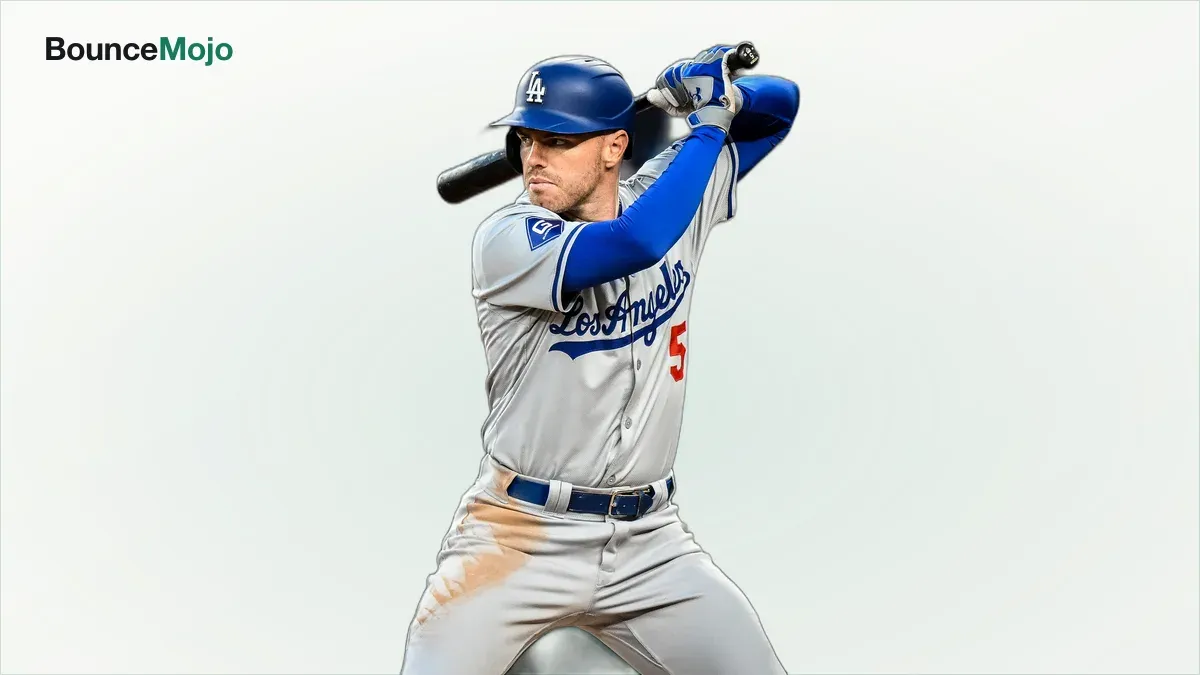
Here’s what most people miss: the long sleeves Freddie Freeman wears every single game aren’t a fashion choice. They’re a promise.
The Myth vs. The Reality
The myth is that Freddie Freeman is baseball’s nice guy, a smiling, durable, dependable star who hits line drives and hugs everybody.
That version is entirely real. It’s just not the whole truth.
Here’s the truth: underneath the warmth is a man forged by grief. Freeman lost his mother to cancer when he was a child, and the decision he made in that moment, to become excellent as a way of honoring her, is the engine behind everything you see. The steadiness people admire isn’t just a personality trait. It’s a discipline built in the worst year of his life.
Think about it: the calmest player in baseball is calm for a reason most fans never learn.
And to understand it, you have to go back to a house in Orange County where a family was suddenly missing its center.
The World That Made Freddie Freeman
Freeman arrived on September 12, 1989, in Fountain Valley, California, into a family with deep Canadian roots. Both of his parents came from Ontario before settling in Southern California for his father’s work.
He was raised in Orange County, a region that produces serious baseball talent without the win-or-vanish intensity of some hotbeds. Freeman was a prodigy almost from the start. At age six he practiced with older Little Leaguers. At seven, he was placed on a team of nine-year-olds. At nine, he was competing against 12-year-olds. The kid was simply operating on a different clock than everyone around him.
This was the tail end of an era when American baseball still ran on youth travel ball and hard-nosed family investment. Freeman’s talent was obvious, but talent alone doesn’t explain him.
But here’s the kicker: the defining event of his childhood had nothing to do with baseball. It was a hospital room.
Which is where the story turns.
The Crucible: Early Life and the Climb
The environment that shaped him
In 2000, when Freeman was 10, his mother Rosemary died of melanoma.
That loss reshaped the entire family. His father, Fred, made a choice that would define his son’s life: he stepped back from his career to be present, coaching Freddie and pouring himself into raising his kids through the grief. Baseball became the language the family used to stay connected.
You might be wondering how a child processes that kind of loss. Freeman’s answer, as his father later described it, was to decide that honoring his mom meant being a great kid and a great player. He channeled the pain into the sport. To this day, he wears a long-sleeved shirt during games in her memory, a private tribute worn in front of millions.
By the time he reached El Modena High School in Orange, Freeman was a standout. He played first base for most of his career there, then took the mound and third base as a senior, showing the kind of all-around ability that made scouts take notice.
The catalyst
In 2007, the Atlanta Braves drafted Freeman in the second round. He was still 17 years old, so his father had to sign the contract, which came with a $409,500 bonus.
That was the moment the grieving kid from Orange County became a professional.
Here’s the deal: Freeman wasn’t a flashy, hyped first-round phenom. He was a young man with an advanced approach, a sweet swing, and a maturity forged by hardship. The Braves saw a cornerstone. And as he climbed the minor leagues, that projection started to look conservative.
Because the player Atlanta developed wasn’t just good. He became the heart of the franchise.
The Key Players
No career is a solo act, and Freeman’s is built on the people who steadied him.
Start with his father, Fred, the man who sacrificed his own career to guide a motherless boy through baseball and grief. Everything about Freeman’s temperament, the patience, the work ethic, the calm, traces back to that relationship.
Then there’s the Atlanta Braves organization, which drafted him, developed him, and made him the face of the team for over a decade. In Atlanta, Freeman grew alongside a young core that included the electric Ronald Acuña Jr., and together they built the roster that finally broke through.
And there’s his wife, Chelsea, and their children, the family that became his anchor and his motivation as his career and fortune grew. Freeman has always framed his success in terms of the people around him, which is exactly why the full net worth breakdown reads less like a highlight reel and more like a family plan.
Now: surrounding yourself with the right people is one thing. Winning it all, then losing the home that raised you, is another. And Freeman’s peak came wrapped in heartbreak.
The Turning Point
The pinnacle
The pinnacle, at first, was Atlanta.
In 2020, Freeman won the National League MVP award. A year later, in 2021, he led the Braves to a World Series title, the crowning achievement of his long climb with the only organization he’d ever known. He had done it. Face of the franchise, MVP, champion.
Then came the twist.
After the 2021 title, Freeman hit free agency, and in a stunning turn, the Braves let him walk. He signed a six-year, $162 million deal with the Los Angeles Dodgers. The man who’d bled for Atlanta was suddenly wearing a different uniform, and he was visibly emotional about it.
It gets better, though. In Los Angeles, Freeman found a second act. And in 2024, he authored one of the greatest moments in World Series history: a walk-off grand slam in Game 1 against the Yankees, hobbled and injured, that swung the entire series. The Dodgers won it all, and Freeman was named World Series MVP.
Two rings. Two franchises. One unforgettable swing.
The price
But every triumph has a cost, and Freeman’s was the wound of leaving home.
The departure from Atlanta genuinely hurt him. He’d spent his entire professional life there, become a legend there, and the separation played out publicly and painfully. For a man built on loyalty and steadiness, being cut loose by the team he loved was a deep blow.
Here’s the truth: even the redemption in Los Angeles carried a shadow. His 2024 World Series heroics came while he was playing hurt, and his family had endured a frightening health scare with his young son earlier that year. Freeman’s greatness has almost always been shadowed by adversity. The joy and the pain are never far apart.
Which brings up the parts of Freeman most fans never think to question.
The Unvarnished Truth
Freeman’s reputation is nearly spotless, which is rare and worth examining honestly.
He is, by all accounts, exactly what he appears to be: a devoted family man, a beloved teammate, and a relentless worker. There’s no dark secret lurking here. But that squeaky-clean image can flatten him into a cardboard cutout, and the real man is more complex.
You might be wondering whether anyone that steady is hiding something. In Freeman’s case, what he hides is the weight he carries. The loss of his mother, the pressure of expectation, the emotional toll of leaving Atlanta, the fear during his son’s illness. He processes all of it privately and channels it into the game.
His durability, one of his defining traits, has occasionally come at a cost too. He’s played through injuries that would sideline others, sometimes to his own detriment. That toughness is admirable, but it’s also a reminder that his calm exterior sits on top of a lot of grit and pain.
None of that has made him controversial, but he hasn’t been immune to criticism either.
Controversies and Criticisms
Freeman’s career is remarkably free of scandal, which makes the criticisms that do exist fairly mild.
The loudest one isn’t about him at all. It’s about the Braves letting him leave. Fans and analysts debated for years whether Atlanta made a historic mistake or a savvy financial call, and Freeman was caught in the middle of a fight he didn’t start. Some questioned his own role in the negotiations, whether he pushed too hard or the team lowballed him, though the details stayed largely private.
There’s also the occasional knock that Freeman, for all his consistency, wasn’t the singular, era-defining superstar of his generation, more elite and dependable than transcendent. That’s a fair debate, but it undersells just how valuable steady excellence is over 15 years.
And his deferred-money Dodgers contract drew scrutiny as part of a broader debate about the Dodgers’ aggressive spending, though that criticism lands more on the franchise than on Freeman himself.
So what does a player like this actually teach the rest of us? More than the highlight reel suggests.
What We Can Learn From Freddie Freeman
Navigating hard times
Freeman’s life is a masterclass in turning grief into purpose.
He lost his mother young and made a choice that most kids couldn’t: to honor her by becoming excellent. He didn’t let the pain sink him. He gave it a direction. The lesson isn’t that loss makes you strong. It’s that what you do with loss is up to you.
In other words: the long sleeves aren’t about hiding the pain. They’re about carrying it forward, every single day, as fuel.
The success blueprint
The blueprint here is consistency, and the patience to let it compound.
Freeman was never the flashiest player. He was the most dependable, and that reliability is exactly what earned him two nine-figure contracts and a place among the sport’s wealthiest names. Want the fuller financial picture? The net worth breakdown shows how steady greatness banked a quarter-billion dollars. And to see where he ranks, the richest baseball players list puts it in context.
The deeper takeaway is about grace under pressure. Freeman won a title, lost his home, and won again somewhere new. He proved you can survive a painful ending and write an even better next chapter. That resilience is worth studying.
Which brings us to the final word on the man.
Final Verdict
Freddie Freeman will be remembered as one of the best first basemen of his generation, and that’s true, but it misses the heart of it.
The real story is a boy who lost his mother and spent the next 25 years playing for her. The MVP, the two rings, the walk-off grand slam that will live forever, all of it grew out of a promise a grieving 10-year-old made to himself.
Here’s the bottom line: the myth is baseball’s dependable nice guy. The reality is a man who turned the deepest loss of his life into a career of quiet, relentless excellence.
He wears the long sleeves for her. And every time he steps to the plate, he’s keeping the promise. Freddie Freeman didn’t just become a champion. He became proof that grief, handled right, can build something beautiful.
Shop Freddie Freeman on Amazon
Books, audiobooks, merch and more, handpicked for fans.
As an Amazon Associate we earn from qualifying purchases.
Frequently Asked Questions
Where did Freddie Freeman grow up?+
Freeman grew up in Orange County, California, in the city of Orange, after being born in Fountain Valley. He starred at El Modena High School before the Braves drafted him in 2007.
Why does Freddie Freeman wear long sleeves?+
Freeman wears a long-sleeved shirt during games to honor his late mother, Rosemary, who died of melanoma when he was 10 years old.
How many World Series has Freddie Freeman won?+
Freeman has won two World Series, one with the Atlanta Braves in 2021 and one with the Los Angeles Dodgers in 2024, where he was named World Series MVP.
Is Freddie Freeman Canadian?+
Freeman was born in California, but both of his parents are Canadian, from Ontario, and he has represented Canada in international competition.
What is Freddie Freeman's most famous moment?+
His walk-off grand slam in Game 1 of the 2024 World Series against the Yankees is one of the most dramatic moments in modern postseason history.
Want the money side of the story?
Read Freddie Freeman's Full Net Worth Breakdown →Shop Freddie Freeman on Amazon
Books, audiobooks, merch and more, handpicked for fans.
As an Amazon Associate we earn from qualifying purchases.