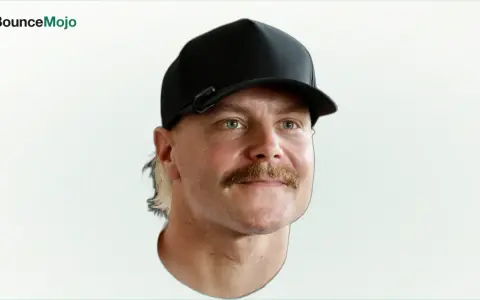
Fred VanVleet Biography: The Undrafted Kid Who Bet on Himself

Everybody knows the hoodie. “Bet on Yourself” is Fred VanVleet’s whole brand, the undrafted underdog who made good.
Here’s what most people miss: the slogan lands so hard because the bet was never safe, and the belief behind it was forged in a loss most kids couldn’t survive.
The Myth vs. The Reality
The myth is tidy and comfortable. Fred VanVleet is the plucky undrafted underdog, the little guard with the big heart who worked harder than everyone else and got his reward. Cue the inspirational music. Roll the “Bet on Yourself” hoodie.
Here’s the truth: that version is real, but it’s about a tenth of the story.
The reality is harder and far more interesting. VanVleet didn’t just overcome a draft snub. He overcame a murdered father, a hometown that buries young men for a living, and a scouting report that told every general manager in the league he was too short, too slow, and too ordinary to matter. The “Bet on Yourself” line lands so hard because the bet was never safe. When he first said it, the smart money was against him.
Now: strip away the merch and the marketing and you find a kid from Rockford who learned early that nothing was coming to save him. That belief, forged in loss, is the actual engine here. Not talent. Not luck.
You might be wondering where a five-year-old learns to carry that kind of weight. The answer starts with a city most people couldn’t find on a map.
The World That Made Fred VanVleet
Rockford, Illinois. Population around 145,000. For years it landed on those grim “most dangerous mid-sized cities in America” lists, the ones local chambers of commerce hate. Factories that closed. Blocks where a wrong turn changed a life. This is the world Fred VanVleet was born into on February 25, 1994.
Think about it: the same rust-belt collapse that hollowed out a lot of the Midwest hit Rockford hard, and the kids growing up there in the 1990s inherited the fallout. Fewer jobs. Fewer exits. More funerals than a child should ever see.
VanVleet has never romanticized it. He’s called Rockford dangerous, plainly, and he’s said the kind of loss he suffered as a boy wasn’t rare there. It was the water everybody swam in. That context matters, because it explains why he plays with a chip that never quite comes off. He isn’t performing toughness. He learned it the way other kids learn to ride a bike.
And here’s the deal: basketball in a place like that isn’t just a game. It’s a lottery ticket, a therapist, and a passport all at once. For a kid with a good handle and a nose for the moment, the gym was the one place the odds could be beaten.
But before he could beat any odds, the odds came for his family first. And they came fast.
The Crucible: Early Life and the Climb
The environment that shaped him
The defining event of Fred VanVleet’s childhood is also the hardest to write about. In 1999, when he was five years old, his biological father, Fred Manning, was murdered.
Sit with that for a second. Five years old.
VanVleet has described the memory in the flattest, most gutting terms imaginable. He recalled his mother and family coming to tell him, saying simply that dad wasn’t coming home. No dramatic speech. Just a door that never opened again. A child that young doesn’t process it as grief so much as a permanent hole where a person used to be.
Here’s the truth: that kind of loss either breaks a kid or forges him into something unusually hard to rattle. VanVleet went the second way, but he didn’t do it alone.
The catalyst
The man who filled that hole was Joe Danforth. His mother eventually married Danforth, a U.S. Army veteran and a retired police officer with the Rockford Police Department. A cop. In a city where police and young Black men are too often on opposite sides of a tense line, VanVleet’s stepfather was the stability that changed everything.
It wasn’t instant. VanVleet has admitted the relationship was tough at first, the way it usually is when a boy who lost his father is asked to accept a new man in the house. But Danforth brought structure, discipline, and a steadiness the family had been missing. He showed up. Day after ordinary day, he showed up.
You might be wondering how much of the disciplined, unflappable VanVleet you see on the court traces back to that household. The honest answer is: most of it. The kid who never rushes a big possession learned patience from a soldier and a cop who understood that the boring, repeated work is what actually holds a life together.
From that foundation, the basketball took off. VanVleet became a star at Auburn High School, then chose Wichita State, a mid-major that most blue-blood programs had barely glanced at him for. As a freshman in 2013, he was already a key piece of the Shockers team that stunned everyone and reached the Final Four. Over four years he became the school’s career assists leader and a two-time Missouri Valley Conference Player of the Year.
By any reasonable measure, he had proven he belonged. So why did the NBA still say no?
The Key Players
Every underdog story has a supporting cast, and VanVleet’s is unusually load-bearing.
Start with Joe Danforth, the stepfather, the quiet architect. Then his mother, who held the family together through the worst and remarried into stability. These two are the reason there was a foundation to build on at all.
At Wichita State, head coach Gregg Marshall handed VanVleet the keys to a program that was punching miles above its weight, trusting a undersized guard to run a Final Four offense. That trust taught VanVleet that his size mattered less than his mind.
Then came Toronto, and the two names that would define his pro peak. One was Kyle Lowry, the bulldog All-Star point guard whose game VanVleet studied like a textbook and whose backcourt he eventually shared. The other was Pascal Siakam, a fellow late-blooming Raptor who climbed the same improbable ladder at the same time. Lowry was the mentor. Siakam was the running mate. Both were proof that Toronto’s front office could see what the draft had missed.
Here’s the kicker: the most important player in VanVleet’s early pro life wasn’t a teammate at all. It was 60 draft picks’ worth of scouts and executives who told him no. That collective rejection became the fuel. He didn’t need a villain. The whole league volunteered for the role.
Which brings us to the moment he made every one of them regret it.
The Turning Point
The pinnacle
In the summer of 2016, all 60 picks of the NBA Draft came and went, and Fred VanVleet’s name was never called. Undrafted. A decorated four-year college guard, a Final Four veteran, a two-time conference Player of the Year, and not one of 30 franchises spent even a second-round flier on him. The verdict was brutal: 6-foot-1, unspectacular athletically, nothing special.
So he signed a non-guaranteed deal with the Raptors and set out to prove the verdict wrong one practice at a time.
It gets better: he didn’t just make the team. He clawed his way from the end of the bench into the rotation, then into the closing lineup. And in the 2019 playoffs, on Toronto’s run to the franchise’s first championship, VanVleet went from useful role player to genuine folk hero. After the birth of his son during the playoffs, his shooting caught fire, and he drilled backbreaking threes in the NBA Finals against a Golden State dynasty. The undrafted kid was hitting the biggest shots on the biggest stage in the sport.
Toronto won the title. VanVleet had a ring. A few years later, in 2022, he made his first NBA All-Star team, an honor that almost never finds an undrafted player.
The price
Now: none of this was free.
The price of the VanVleet story is the years of grinding for money that was never promised, of playing every night like the roster spot could vanish because, for a long time, it actually could. There’s a specific kind of exhaustion in never being able to relax, in earning your job over and over while lottery picks coast on guaranteed deals. He paid that tax for years before the security arrived.
And the security, when it came, was enormous. He re-signed with Toronto on a deal worth roughly $85 million, then hit free agency at his peak and signed with the Houston Rockets on a contract reported near $130 million. Career earnings north of $200 million. A net worth estimated at $70 million.
Here’s the truth: the money is the receipt, not the reward. The reward was proving that the verdict was wrong. You can see exactly how those contracts stack up in his full Fred VanVleet net worth breakdown.
But a story this clean has shadows too. And it’s worth looking at them honestly.
The Unvarnished Truth
VanVleet is not a flawless basketball player, and pretending otherwise does him no favors.
The same size and athleticism questions that scared off the draft never fully disappeared. On some nights, against bigger, faster guards, his shot goes cold and his defense gets hunted. When he became the highest-paid player on a rebuilding Rockets roster, the expectations outran what a 6-foot-1 combo guard can realistically carry as a number-one option. There were stretches where the contract looked like a lot of money for a very good complementary piece rather than a star.
Here’s the deal: that’s the tension at the heart of his career. He is elite for who he is and where he came from, and merely very good in the absolute pecking order of NBA guards. Both things are true at once.
There’s also the human cost of a personality built on control. The traits that make him unflappable, the discipline, the refusal to show weakness, can read as cold or stubborn. A man who taught himself at five years old that no one is coming to save him doesn’t easily hand over the reins, on the court or off it.
You might be wondering whether any of this ever spilled into real controversy. Mostly, it hasn’t. And that itself tells you something.
Controversies and Criticisms
Let’s be honest about the elephant in the room: Fred VanVleet is one of the least controversial stars in the league, and that’s precisely why some critics have used it against him.
The loudest knock is financial, not personal. When the Rockets made him the centerpiece of their payroll, plenty of analysts questioned whether an undersized, mid-career guard deserved that kind of money over a younger core. The criticism wasn’t that VanVleet did anything wrong. It was that he cashed a check the market maybe shouldn’t have written. Fair or not, that debate followed him to Houston.
On the floor, he’s occasionally clashed with officials, most notably a stretch where he publicly ripped the quality of the refereeing after a loss, drawing a fine. It was a rare crack in the calm. And it was, tellingly, a complaint about fairness, the one thing a man who was overlooked his whole career cares about most.
Beyond that, the record is remarkably clean. No off-court scandals. No locker-room drama that stuck. In an era where controversy is currency, VanVleet chose to be boring in the best possible way. His critics call it a lack of star wattage. His defenders call it professionalism.
Here’s the truth: the absence of scandal is a choice, and it comes straight from the household Joe Danforth built. So what can the rest of us actually take from a life like this?
What We Can Learn From Fred VanVleet
Navigating hard times
The first lesson is about surviving loss. VanVleet lost his father at five and grew up in a city that made loss feel routine, yet he refused to let that define his ceiling. He didn’t pretend the pain wasn’t there. He built a structure around it, leaning on the people who showed up, especially a stepfather who chose him.
In other words, resilience isn’t about being untouched by tragedy. It’s about what you build on top of the wreckage.
The success blueprint
The second lesson is the practical one, and it’s the reason “Bet on Yourself” resonates far beyond basketball. VanVleet had no leverage, no guarantees, and no reputation to trade on. So he earned everything the only way available to him: by outperforming his last contract, then negotiating the next one from proof instead of promise.
Here’s the deal: that’s a blueprint anyone can steal. Don’t wait to be picked. Make yourself so undeniable that the people who passed on you have to pay a premium to get you back.
He turned that mindset into an actual brand, converting his story into merchandise, endorsements, and even an And1 signature sneaker, a nearly unheard-of honor for an undrafted player. Betting on yourself, it turns out, can be its own business plan.
To see how far that self-belief carried him financially, put his climb next to the game’s biggest bankrolls on our richest NBA players ranking. The undrafted arc stands out even more in that company.
So what’s the final word on Fred VanVleet?
Final Verdict
Fred VanVleet will never be the best player in any Hall of Fame conversation, and that’s fine, because his story was never really about being the best. It was about being counted out and refusing to stay down.
Here’s the truth: measure him against the game’s superstars and he’s a very good guard with an oversized contract. Measure him against where he started, a five-year-old who lost his father in a hard city, a decorated college player nobody would draft, and he’s one of the most remarkable success stories the modern NBA has produced. Both takes are honest. Only one of them matters to the kids in Rockford who see themselves in him.
He won a championship. He made an All-Star team. He turned a snub into a slogan and a slogan into a fortune. And he did it all while carrying a loss most people couldn’t imagine, raised by a soldier and a cop who taught him that showing up, over and over, is its own kind of talent.
Bet on yourself. He did, when nobody else would, and it paid off in ways the 2016 draft board could never have predicted. For the money side of that bet, the salaries, the endorsements, and the exact number, read the full Fred VanVleet net worth breakdown.
Shop Fred VanVleet on Amazon
Books, audiobooks, merch and more, handpicked for fans.
As an Amazon Associate we earn from qualifying purchases.
Frequently Asked Questions
Where did Fred VanVleet grow up?+
VanVleet grew up in Rockford, Illinois, one of the roughest mid-sized cities in the Midwest. He was born there on February 25, 1994.
What happened to Fred VanVleet's father?+
His biological father, Fred Manning, was murdered in 1999 when VanVleet was just five years old. He was later raised by his stepfather, Joe Danforth, a U.S. Army veteran and retired Rockford police officer.
Did Fred VanVleet go to college?+
Yes. He played four years at Wichita State, where he was a freshman on the 2013 Final Four team and a two-time Missouri Valley Conference Player of the Year.
Why was Fred VanVleet undrafted?+
At 6-foot-1 with modest athletic testing numbers, VanVleet slipped through all 60 picks of the 2016 NBA Draft despite a decorated college career. He signed with Toronto as a free agent and turned the snub into his 'Bet on Yourself' identity.
What is Fred VanVleet best known for?+
He is best known as the undrafted guard who won an NBA title with the 2019 Toronto Raptors, made an All-Star team, and later signed a roughly $130 million contract with the Houston Rockets.
Want the money side of the story?
Read Fred VanVleet's Full Net Worth Breakdown →Shop Fred VanVleet on Amazon
Books, audiobooks, merch and more, handpicked for fans.
As an Amazon Associate we earn from qualifying purchases.