Frank Lampard Biography: The Midfielder Wrongly Called a Nepo Kid
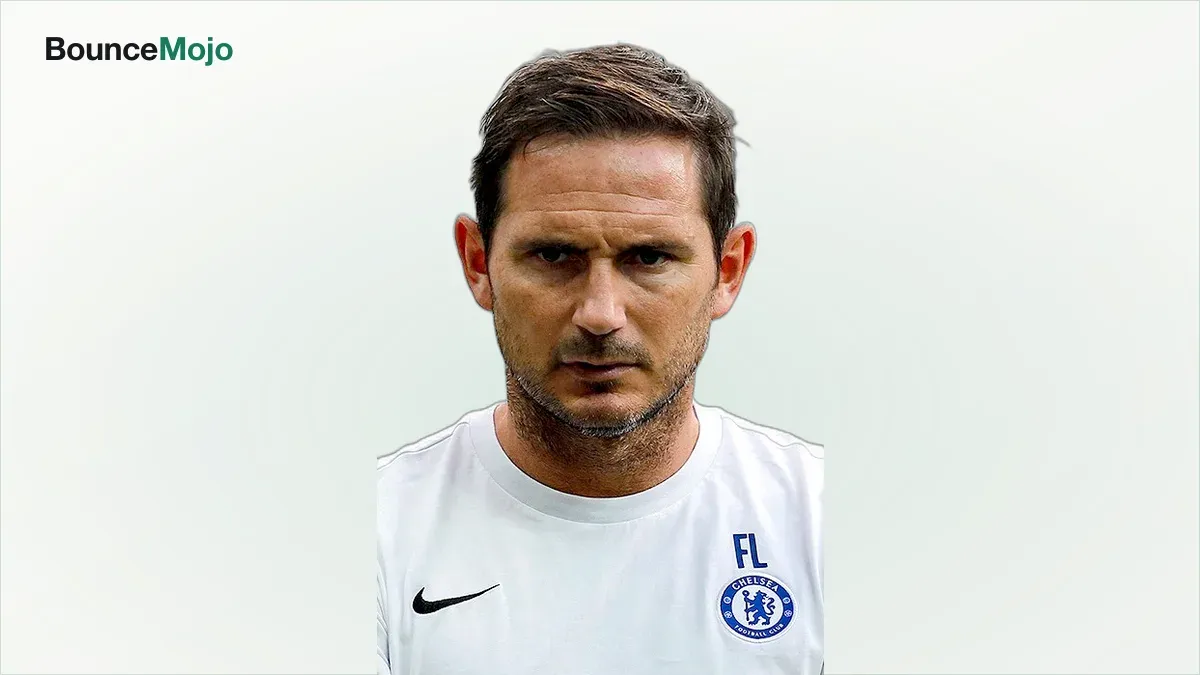
Most people know Frank Lampard as Chelsea’s record goalscorer. Fewer remember that his own club’s fans once booed him as a spoiled kid who only played because of his family.
Here’s what most people miss: the midfielder mocked as a lucky nepotism case outworked almost everyone in football to become one of the most productive players England ever produced.
The Myth vs. The Reality
The myth cuts two ways. To his admirers, Frank Lampard: the intelligent, tireless goal machine, Chelsea’s greatest scorer, a model professional. To his early doubters, a privileged kid who got a head start because of his famous surname.
The reality demolishes the second myth and enriches the first.
Here’s the deal: Lampard did come from football royalty. His father was a West Ham legend, his uncle a famous manager. That’s real. But the idea that he coasted on it is nonsense. He was booed at his own club, doubted repeatedly, and responded by becoming one of the hardest-working, most consistent players of his generation, a midfielder who scored more goals for Chelsea than any striker in its history.
And the “cool professional” story hides a sharper mind than people credit. Lampard was academically gifted, famously scoring top marks in Latin, and that intelligence ran through his game and his life after it.
You might be wondering: how does a kid weighed down by his own famous name turn the doubt into a record-breaking career? To understand that, you have to understand the world he came from.
The World That Made Frank Lampard
Lampard was born in 1978 in Romford, East London, into a family where football wasn’t a career choice but a birthright.
His father, Frank Lampard Sr., was a beloved West Ham defender. His uncle, Harry Redknapp, was a well-known manager. Frank Jr. grew up around training grounds and dressing rooms, absorbing the game from the inside. That was a privilege. It was also a burden, because everything he did would be measured against a family name.
Now: the England of his youth was football-mad and increasingly commercial, with the Premier League about to explode into the richest competition on earth. Lampard came of age just as the money and the scrutiny both went stratospheric.
He entered a golden era of English central midfielders, alongside his lifelong rival Steven Gerrard, in a period when England expected, and repeatedly failed, to conquer the world. The pressure on that generation was immense, and Lampard carried an extra layer of it: the assumption that he hadn’t earned his place.
That backdrop, a famous name and a sport under a microscope, is the key to everything he became. But first he had to survive being doubted by his own supporters.
The Crucible: Early Life and the Climb
The Environment That Shaped Him
Lampard began his career at West Ham, where his father was assistant manager and his uncle Harry Redknapp was in charge. It was the perfect setup for suspicion. Sections of the West Ham crowd booed him, convinced he was in the team because of family, not merit.
Here’s the truth: that early hostility could have broken a softer player. Instead it hardened him. Lampard trained obsessively, staying behind for extra work, drilling the late runs into the box that would define his game.
He wasn’t the most naturally gifted athlete. He made himself great through repetition, intelligence and relentless effort.
The Catalyst
The turning point came in 2001, when Lampard left the shadow of his family and signed for Chelsea. Away from the West Ham baggage, he flourished.
It gets better. When Roman Abramovich’s money arrived in 2003, Lampard became the heartbeat of a Chelsea side that would dominate English football, winning Premier League titles and, eventually, the Champions League.
That’s where the legend truly began. But the men who shaped him, and the rival who defined him, are the next part of the story.
The Key Players
No footballer succeeds alone, and Lampard’s story is full of figures who pushed and partnered him.
Frank Lampard Sr. His father was his first coach, his fiercest critic, and the source of the work ethic that defined his career. The relationship gave Frank Jr. both his education and his burden.
Jose Mourinho. The manager who arrived at Chelsea in 2004 and got the best out of Lampard, building title-winning teams around his goals from midfield. The two shared a deep mutual respect.
Didier Drogba and John Terry. At Chelsea, Lampard formed a legendary spine with Didier Drogba and John Terry, a core that won everything English football had to offer and, finally, the Champions League in 2012.
Steven Gerrard. His great rival for England’s midfield. The Steven Gerrard debate, two brilliant midfielders who somehow never thrived together for their country, followed both men for a generation and shaped how each is remembered.
Think about it: every one of these relationships circles the same theme, a gifted player forever proving he belonged. That drive powered his peak.
The Turning Point
The Pinnacle
The mid-2000s to 2012 is Lampard’s mountaintop.
He won multiple Premier League titles, FA Cups and, in 2012, the Champions League with Chelsea. In the 2009-10 season he scored 22 league goals, an absurd total for a midfielder, and he retired as Chelsea’s all-time top scorer with 211 goals. He was, by output, one of the most productive midfielders the game has ever seen.
That body of work made him a legend. As his net worth story explains, it also built a brand that keeps earning through media and management.
The Price
Here’s the kicker: the peak came alongside England’s heartbreak.
For all his club success, Lampard, like his whole golden generation, never won a major trophy with England. The team repeatedly flattered to deceive, and the Gerrard-Lampard midfield puzzle became a symbol of that failure. The pinnacle at Chelsea was glorious. The price was a lifetime of England what-ifs, and one particularly cruel injustice.
Which brings us to the moment that haunted him, and changed the sport.
The Unvarnished Truth
Lampard was a model professional, but he wasn’t beyond struggle or scrutiny.
His management career, launched with promise, has been uneven. He had a strong start at Derby, an emotional but ultimately unsuccessful return to Chelsea as manager, and difficult spells at Everton and Coventry. The transition from great player to great manager, one of sport’s hardest, has tested him publicly.
Now: none of this diminishes the player. It humanizes the man. Being a brilliant footballer does not guarantee a brilliant coaching career, and Lampard has had to learn that in full view.
His most painful on-field moment came in the 2010 World Cup, when his shot against Germany clearly crossed the line and was not given. England were already struggling, and the ghost goal became a symbol of the team’s misfortune. The injustice helped force football to finally adopt goal-line technology, a change that came too late for him.
The most honest thing to say about him is this: his greatest strength, relentless self-improvement, is exactly what he’s leaning on now as he fights to master management as thoroughly as he mastered scoring goals.
Controversies and Criticisms
Lampard’s career was cleaner than most, but not without friction.
The nepotism accusations. The early booing at West Ham and the “he only plays because of his dad” narrative dogged his youth. He answered it with performance, but it shaped his fierce need to prove himself.
The England failure. Critics blamed Lampard and Gerrard for England’s tournament disappointments, arguing the two couldn’t function together. It’s a debate that still divides fans.
The management struggles. His mixed record as a manager, especially the difficult second Chelsea spell and the Everton relegation battle, has drawn criticism from those who expected his football brain to translate instantly to the dugout.
The privilege debate. More broadly, Lampard was sometimes cast as a symbol of football’s establishment, a comfortable insider. It was an unfair frame for a man who outworked almost everyone, but it lingered.
What We Can Learn From Frank Lampard
Navigating Hard Times
The first lesson is answering doubt with work. Booed by his own fans and dismissed as a nepotism case, Lampard didn’t complain. He trained harder, scored more, and let the numbers silence the noise.
But here’s the truth his management career makes plain: proving yourself is never finished. The kid who beat the doubters as a player is now beating new doubts as a coach. The lesson isn’t that hard work guarantees success. It’s that hard work is how you keep giving yourself a chance when the doubts return, and they always return.
The Success Blueprint
If you want the replicable part, it’s this: Lampard maximized what he had. He wasn’t the fastest or the most gifted. He was the smartest and the most consistent, arriving in the box at the perfect moment, year after year, until the goals piled into a record.
That’s transferable. You don’t need to be the most talented person in the room. You need to be the most reliable, the one who does the unglamorous work until it compounds into something undeniable. His placement among the wealthiest names on our richest soccer players ranking rewards exactly that consistency.
Becoming Better
The deepest lesson is about using your whole mind. Lampard was academically sharp and refused to let football flatten him into a one-dimensional pro. He wrote a bestselling children’s book series, moved into management, and built a media profile, using the intelligence critics once mocked as his edge.
In other words, don’t let anyone reduce you to one skill. Lampard turned his brain into a second and third career, and that breadth is why his story keeps growing long after his last goal.
There’s a final lesson worth naming, and it’s about the arithmetic of consistency. Lampard’s genius wasn’t a single unforgettable moment. It was 211 goals scored a few at a time, season after season, until the total became historic. Nobody plans to become a record breaker in one afternoon. You get there by refusing to have an off year, by making the same intelligent run into the same space thousands of times until the numbers pile up. That is a lesson that transfers to any field: greatness is usually just consistency that lasted longer than everyone else’s. Lampard understood that better than the flashier talents around him, and it made him immortal at his club.
Final Verdict
Frank Lampard is one of the greatest midfielders England ever produced, and Chelsea’s record goalscorer, and the fact that he was ever doubted at all is the strangest part of his story. He answered the booing, the nepotism jibes and the England heartbreak with a mountain of goals and a professionalism few could match.
And here’s the twist that reframes everything: the kid dismissed as the boss’s son, booed before he’d proved a thing, worked himself into a record no striker at his club has ever beaten, and did it with the intelligence people wrongly assumed he lacked. The full picture of how he turned that career into a lasting $90 million fortune and a diversified life after football lives in his net worth breakdown. If you want the story in his own words, his autobiography Totally Frank captures the drive that turned a doubted young player into a Chelsea great.
Shop Frank Lampard on Amazon
Books, audiobooks, merch and more, handpicked for fans.
As an Amazon Associate we earn from qualifying purchases.
Frequently Asked Questions
Where did Frank Lampard grow up?+
Frank Lampard grew up in Romford, East London, in a football family. His father, Frank Lampard Sr., was a West Ham legend, and his uncle Harry Redknapp was a well-known manager, giving him a football education from birth.
Why was Lampard accused of nepotism?+
Lampard started his career at West Ham, where his father was assistant manager and his uncle Harry Redknapp was manager. Some fans accused him of getting favored treatment, and he was booed by sections of the crowd before proving himself on merit.
Is Lampard academically gifted?+
Yes. Lampard reportedly achieved very high marks in his school Latin exam and was known for his intelligence, a trait that shaped his reading of the game and his later media and writing work.
What was the 'ghost goal' against Germany?+
In the 2010 World Cup, Lampard's shot for England clearly crossed the line against Germany but was not given. The controversy helped push football toward goal-line technology.
What has Lampard done since retiring?+
Lampard moved into management, taking charge of Derby County, Chelsea, Everton and Coventry City, and also works as a pundit and author of a children's book series.
Want the money side of the story?
Read Frank Lampard's Full Net Worth Breakdown →Shop Frank Lampard on Amazon
Books, audiobooks, merch and more, handpicked for fans.
As an Amazon Associate we earn from qualifying purchases.