Francis Ngannou Biography: Cameroon Sand Mine to Heavyweight King
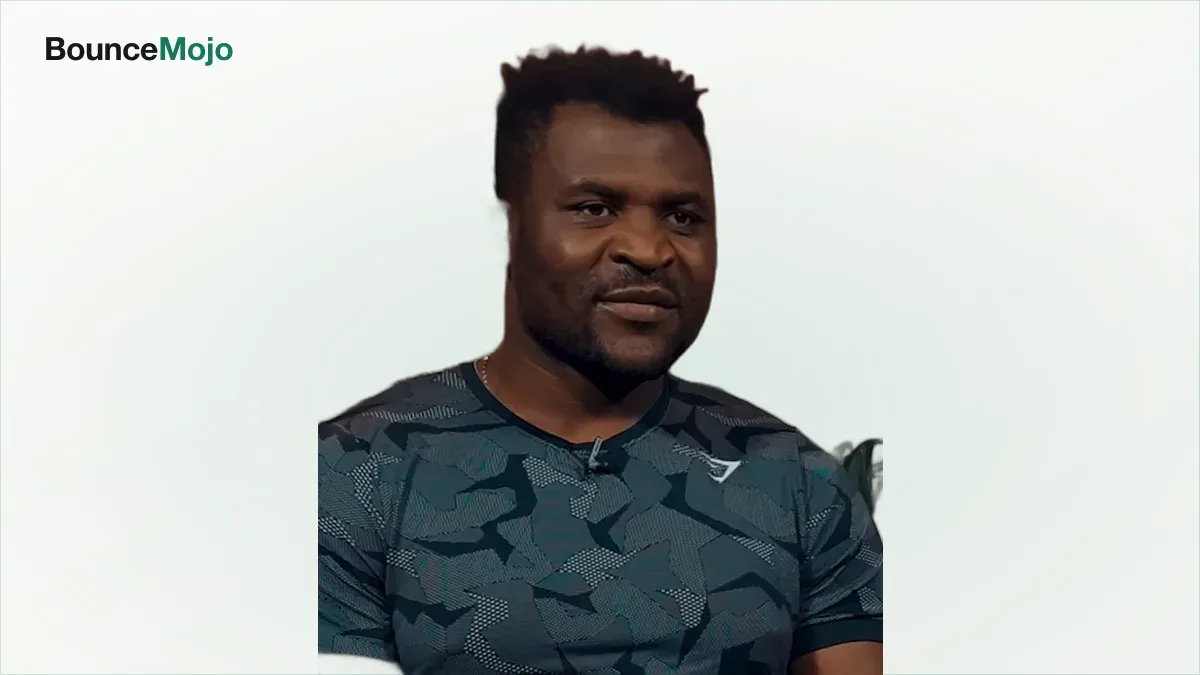
Most people see Francis Ngannou as the scariest puncher in combat sports. That’s true. It’s also the least interesting thing about him.
Here’s what most people miss: the man with the most feared right hand on the planet spent his childhood shoveling sand for pennies, and slept homeless on the streets of Paris before he ever put on an MMA glove.
The Myth vs. The Reality
The myth is thrilling. Francis Ngannou: the destroyer, the man with a punch measured as one of the hardest ever recorded, a knockout artist who ends fights in seconds. Terrifying. Unstoppable. A natural-born wrecking machine.
The reality is a story about survival, not violence.
Here’s the deal: Ngannou’s power is real, but the defining trait of his life isn’t his fists. It’s his refusal to accept the future poverty tried to assign him. The knockouts are the easy part of the story. The hard part happened long before, in a sand mine and on a cold Paris sidewalk.
And the “natural” framing is almost insulting. Ngannou didn’t start boxing until adulthood. He arrived at fighting late, broke, and undocumented, and built himself into a world champion through sheer will. Nothing about it was handed to him.
You might be wondering: how does a homeless immigrant with no fight background become the heavyweight king? To understand that, you have to understand where he started.
The World That Made Francis Ngannou
Ngannou was born in 1986 in Batié, a village in Cameroon, into a poverty most people reading this can’t imagine.
His family had almost nothing. His father had a local reputation as a street fighter, a legacy Ngannou wanted no part of, choosing instead to channel his energy somewhere positive. Formal education was a luxury the family couldn’t afford, and by around 12, Ngannou was working in a sand quarry, hauling and digging to help the family survive.
Now: Cameroon offered few paths out for a boy like him. Gangs recruited hard, and many of his peers took that road. Ngannou refused. He held onto an idea that seemed absurd for a kid from Batié, that he could become a boxer, that he could be something the world had never let anyone from his village become.
He arrived in the story of combat sports as the ultimate outsider, from a place with no MMA scene, no infrastructure, no obvious route to greatness. That impossible starting point is the whole point. Everything he built, he built from zero.
But before the arenas, there was a young man deciding to risk everything on a dream nobody believed in.
The Crucible: Early Life and the Climb
The Environment That Shaped Him
Ngannou’s childhood was defined by labor and scarcity. The sand quarry taught him a brutal lesson early: hard work alone doesn’t guarantee escape. You need a door, and Batié had none.
He idolized Mike Tyson and dreamed of boxing, but he didn’t seriously start training until he was in his early twenties, ancient by combat-sports standards. Illness interrupted even that. Still, the dream wouldn’t die. At around 26, he made a decision that would either change his life or end it: he would leave Cameroon and head for Europe to chase boxing.
Here’s the truth: the journey nearly broke him. Ngannou traveled across Africa under harrowing conditions and was jailed for roughly two months in Spain for crossing the border illegally. When he finally reached Paris, he had no money, no friends, and nowhere to live. He was homeless in a foreign city, chasing a sport he’d barely begun.
The Catalyst
The turning point came from an act of kindness in Paris.
Cold and broke, Ngannou found his way to a boxing club and met coach Didier Carmont, who understood his situation and helped him. He volunteered at a Paris nonprofit, and through that network he was introduced to Fernand Lopez at the MMA Factory. Ngannou wanted to box. Lopez saw something bigger.
Lopez believed Ngannou’s raw power and frame were built for MMA. He gave him gear, let him train for free, and even let him sleep at the gym. What happened next was one of the fastest rises the heavyweight division has ever seen.
It gets better, and almost unbelievable. Within a few years, the homeless immigrant who’d never planned to do MMA would be fighting for a UFC title. The people who lifted him along the way are where the story tightens.
The Key Players
No one climbs from a sand mine to a championship alone, and Ngannou’s ascent was powered by a handful of crucial figures.
Fernand Lopez. The MMA Factory coach who took Ngannou in, trained him for free, and pushed him toward MMA changed the entire course of his life. Their relationship later fractured publicly, a painful and complicated chapter, but Lopez’s early belief was foundational.
Didier Carmont. The Paris boxing coach who first extended a hand to a homeless newcomer, one of the small kindnesses that kept Ngannou’s dream alive.
Mike Tyson. Ngannou’s childhood idol, whose name first drew him toward boxing, later came full circle by advising and cornering him during his boxing crossover. For a kid who dreamed of Tyson in a Cameroonian village, few things could mean more.
Tyson Fury and Anthony Joshua. His boxing crossover opponents didn’t shape his character, but they delivered the paydays and the validation that rewrote his financial story. Fury in particular got the shock of his career when Ngannou dropped him.
Think about it: every one of these figures reflects the same theme, a man from nowhere lifted by those who saw what he could become, then proving them all right. That belief reached its payoff at the very top.
The Turning Point
The Pinnacle
Ngannou’s rise through the UFC was meteoric.
He carved through the heavyweight division with knockout after knockout, ending seven of his fourteen UFC fights by stoppage before the two-minute mark of the first round. In 2021 he captured the UFC heavyweight championship, completing an impossible arc: sand mine to homeless immigrant to king of the sport’s biggest promotion. As his own net worth story lays out, that crown was only the beginning of the money.
For a moment, he stood at the summit of MMA, the most feared man in the toughest division, a champion whose story inspired millions.
The Price
Here’s the kicker: Ngannou did something almost no champion ever does. He walked away from the belt.
In 2023, at the peak of his powers, Ngannou left the UFC over contract terms rather than re-sign. It was a staggering gamble, giving up the sport’s biggest stage and the security of a champion’s contract to bet on his own free-agent value. Critics called it reckless. Fans held their breath.
The price was uncertainty, and the risk of squandering everything he’d built. But the gamble reshaped his career and his fortune, and it opened a door no one saw coming. Which brings us to the harder, more human parts of the story.
The Unvarnished Truth
Ngannou’s story is inspiring, but it isn’t without pain and complication.
His falling-out with Fernand Lopez, the coach who took him in, became a bitter and public dispute, a reminder that the relationships that build us can also break. The two traded harsh words, and the rupture cast a shadow over the fairy-tale beginning.
Now: none of that erases what Ngannou overcame, and passing judgment misses the point. A man who survived a sand mine, a border prison, and homelessness carries scars and a hard-earned distrust that don’t simply vanish with success. The instinct to fight for every dollar and every ounce of control, the instinct that drove his UFC exit, was forged in a life where nothing was ever guaranteed.
The most honest thing you can say about Ngannou is this: the same relentless self-belief that carried him out of poverty also made him uncompromising, in ways that cost him relationships even as it made him rich and free.
Controversies and Criticisms
For an inspiring figure, Ngannou has been at the center of real debate.
The UFC departure. His decision to leave the UFC as champion split fans and pundits. Some called it a masterstroke of leverage; others accused him of abandoning the sport’s best competition for easier money.
The feud with Fernand Lopez. His public break with his former coach turned ugly, with accusations flying on both sides, complicating the clean narrative of a mentor and his protégé.
Boxing over MMA. Critics questioned whether chasing boxing paydays against Fury and Joshua meant walking away from proving himself as the best mixed martial artist in the world.
Tragedy and resilience. Ngannou also endured profound personal loss, and he spoke openly about grief while continuing to compete, a reminder that behind the fortune was a man carrying real weight.
What We Can Learn From Francis Ngannou
Navigating Hard Times
The first lesson is about refusing your assigned future. Ngannou was born into circumstances that offered almost no way out, and he simply declined to accept them. A sand mine, a jail cell, and a Paris sidewalk didn’t stop him.
Here’s the truth his journey makes plain: the distance between where you start and where you end is not fixed. Ngannou traveled one of the longest roads in sports history, and he did it by treating every “impossible” as a challenge rather than a verdict.
The Success Blueprint
If you want the replicable part, it’s this: Ngannou understood leverage better than almost any fighter. He realized his real value wasn’t a single fight. It was his freedom to choose his fights, his sponsors, and his terms.
That’s transferable far beyond a cage. The lesson is to build enough value that you can dictate your own conditions, then have the courage to use it. His bet on himself, walking from the UFC, turned into the biggest paydays of his life, and as our richest MMA fighters ranking shows, it launched him up the earnings charts almost overnight.
Becoming Better
The deepest lesson is about remembering where you came from. Ngannou built the Ngannou Foundation to fund gyms and opportunity for children in Cameroon and across Africa, kids starting exactly where he did.
In other words, real success isn’t only escaping your past. It’s reaching back to build the door you never had. Ngannou’s greatest legacy may not be a belt or a paycheck. It may be the young fighters from Batié and beyond who now have a chance because he made it out first.
Final Verdict
Francis Ngannou is one of the most remarkable stories in modern sports, and “remarkable” is doing real work here, though he was a genuinely great fighter too. He didn’t just win a heavyweight title. He turned the most unlikely starting point imaginable into a career that reshaped how fighters think about power, leverage, and freedom.
And here’s the twist that reframes everything: the hardest puncher in combat sports won his most important fights outside the cage, in negotiations, at borders, and in the sheer refusal to quit. He walked away from the biggest promotion in the world and came out richer and freer for it. The full picture of what that journey was worth lives in his net worth breakdown, but the number was never the real story. Ngannou’s true achievement was proving that a kid from a Cameroonian sand mine could take on the world on his own terms, and win.
Shop Francis Ngannou on Amazon
Books, audiobooks, merch and more, handpicked for fans.
As an Amazon Associate we earn from qualifying purchases.
Frequently Asked Questions
Where did Francis Ngannou grow up?+
Francis Ngannou grew up in the village of Batié, Cameroon, in deep poverty. At around 12 years old he began working in a sand quarry to help support his family, with little formal education.
How did Francis Ngannou get to Europe?+
In his mid-twenties, Ngannou left Cameroon to pursue boxing, traveling through Africa and enduring a harrowing journey. He was jailed for about two months in Spain for crossing the border illegally before eventually reaching Paris, where he was homeless.
Who discovered Francis Ngannou?+
In Paris, Ngannou found a boxing gym and coach Didier Carmont, then was introduced to Fernand Lopez at the MMA Factory. Lopez saw his potential in MMA, gave him gear, and let him train and sleep at the gym for free.
Why did Francis Ngannou leave the UFC?+
Ngannou left the UFC as reigning heavyweight champion in 2023 over contract terms, seeking better pay, the freedom to secure his own sponsors, and the right to box. He then signed with the PFL and pursued boxing superfights.
Did Francis Ngannou fight Tyson Fury?+
Yes. In a 2023 boxing crossover, Ngannou faced world heavyweight champion Tyson Fury and stunned observers by dropping Fury and pushing him to a narrow decision, earning huge respect and an even bigger payday to face Anthony Joshua.
Want the money side of the story?
Read Francis Ngannou's Full Net Worth Breakdown →Shop Francis Ngannou on Amazon
Books, audiobooks, merch and more, handpicked for fans.
As an Amazon Associate we earn from qualifying purchases.