Francesco Totti Biography: The Boy Who Never Left Rome
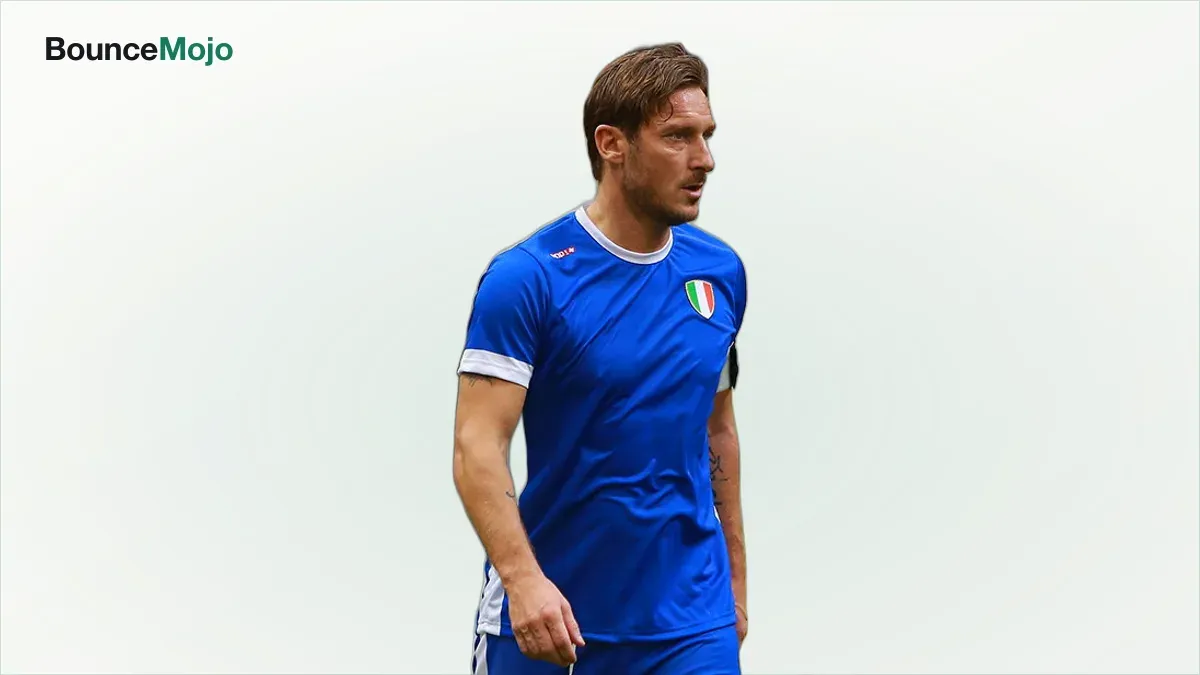
Most people know Francesco Totti as the eternal captain, the one-club man who gave 25 years to Roma. That loyalty hides a stranger, more human story.
Here’s what most people miss: the same boy who turned down Real Madrid and worldwide riches to stay home would later live one of Italian football’s most public and painful private breakdowns.
The Myth vs. The Reality
The myth is simple and beautiful. Francesco Totti: the loyal prince of Rome, the boy who loved one club and stayed forever, the smiling face of a whole city.
The reality is richer and harder.
Here’s the deal: Totti’s loyalty was real, but it came with pressure most fans never saw. Carrying an entire city on your back for 25 years is not pure joy. It’s a weight. He was Roma’s savior and its prisoner at once, expected to deliver every season, to stay when leaving might have brought more trophies, to be perfect for a fan base that treated him like a saint.
And the fairy-tale image skips the mess. His final years at Roma were tense, marked by public clashes with the club over playing time and his role. His retirement was emotional and bitter in equal measure. Later, his marriage collapsed in one of the ugliest celebrity splits Italy had seen.
You might be wondering: how does a working-class Roman kid become a god in his own city, and pay for it? Start with where he came from.
The World That Made Francesco Totti
Totti was born in 1976 in Rome, in the Porta Metronia neighborhood.
This was ordinary, working-class Rome, far from glamour. His family was close and modest, and young Francesco was Roma-mad from the start, a boy who dreamed only of playing for the club he already loved. Talent scouts noticed him early, and at 13 he joined the Roma youth setup, the club he would never leave.
Now: that rootedness shaped everything. In an era when top players increasingly chased the biggest wages across Europe, Totti’s identity was fused to one city. His loyalty wasn’t a marketing line. It came from a genuine, almost stubborn bond with home.
This was also a changing time in Italian football. Serie A was the richest league on earth in the 1990s and 2000s, packed with global stars. To become the symbol of one of its historic clubs was to become a national figure.
But before the fame, a teenager had to prove he belonged.
The Crucible: Early Life and the Climb
The Environment That Shaped Him
Totti made his Roma debut at just 16, in 1993.
He grew up fast in a demanding league and an even more demanding city. Roma’s fans are among the most passionate and volatile in the world, and their expectations sat squarely on the shoulders of the local boy made good. Every match was judged. Every slump was a crisis.
Here’s the truth: that pressure forged him. Totti learned to carry the hopes of a city while still a teenager, and it built both his greatness and his guardedness. He became fiercely protective of his private life and deeply attached to the people he trusted, wary of a spotlight that never dimmed.
The Catalyst
The defining choice came at his peak. Reportedly, Real Madrid and other giants wanted him, offering more money and more chances at European glory.
He said no. Totti chose to stay, becoming captain and, in 2001, leading Roma to a rare Serie A title, one of the great days in the club’s history. That decision made him immortal in Rome and set the course for his entire career and fortune.
It gets better, and bigger. Five years later, the loyal club man would step onto the world stage and help win the biggest prize in football. That’s where the local hero became a national one.
The Key Players
No one carries a city alone, and Totti’s story is full of the people who shaped him.
Ilary Blasi. The TV presenter he married in 2005, mother of his three children, and, later, his very public ex-wife. For years they were one of Italy’s golden couples.
Fabio Capello. The demanding coach who led Roma to the 2001 title and pushed Totti to a new level of consistency and professionalism.
Daniele De Rossi. His long-time Roma teammate and fellow one-club loyalist, a brother-in-arms in the fight to keep the club competitive.
Marcello Lippi. The Italy manager who guided the national team, and Totti, to World Cup glory in 2006.
Think about it: family, mentors, and teammates all orbit the same theme, loyalty and pressure. That combination reached its peak on a summer night in Germany.
The Turning Point
The Pinnacle
Totti’s mountaintop came at the 2006 World Cup.
Playing through recovery from a serious leg break earlier that season, Totti was a key figure as Italy won the tournament in Germany. It was the crowning international achievement of a career already loaded with Roma records: all-time top scorer, all-time appearance leader, a one-man history of the club. He would go on to play until 2017, retiring at 40 as one of the last great one-club legends.
That loyalty and longevity built a fortune too, one his own net worth breakdown traces alongside the trophies.
The Price
Here’s the kicker: the loyalty everyone praised came at a real cost.
Staying at Roma for 25 years meant fewer trophies than a move to a superclub might have brought. His final seasons were sour, marked by disputes with the club over his role and a farewell that felt forced rather than chosen. Being the eternal symbol meant he was never allowed to simply fade. He had to be perfect, or be criticized, until the very end.
The pinnacle brought immortality. It also brought a weight he carried alone. Which leads to the flaws beneath the crown.
The Unvarnished Truth
Totti’s story isn’t about a fall from grace. It’s about a proud man who struggled to let go, and whose private life turned painfully public.
His retirement was messy. The tension with Roma’s management in his final years showed a competitor who couldn’t accept a diminished role, understandable, but not always graceful. He wanted to keep playing when the club wanted to move on, and the standoff left scars.
Now: none of this makes him a villain. It makes him human. A man who gave everything to one club naturally found it agonizing to be pushed aside by it. His stubbornness was the same trait that kept him loyal for a quarter-century.
The honest read is that Totti’s greatest strength, his fierce attachment, was also his greatest vulnerability. It kept him home when leaving might have brought more glory, and it made every ending, on the pitch and later in his marriage, harder than it needed to be.
Controversies and Criticisms
Totti’s career drew its share of heat, on and off the field.
On-field flashpoints. Totti was sent off in high-profile matches and served suspensions, including a notorious incident at the 2004 European Championship. His fiery temperament occasionally boiled over.
The stay-or-go debate. Critics argued that his loyalty cost him a bigger trophy haul, and that a move abroad could have made him an even greater champion. Fans counter that his loyalty is exactly what made him a legend.
The bitter Roma exit. His feud with the club’s management over his final role and retirement divided opinion and dented the fairy-tale ending.
The public divorce. His 2022 split from Ilary Blasi became a media circus, with claims, counterclaims, and headlines about designer bags and Rolex watches dominating Italian tabloids for months. It was as painful a public episode as any of his on-field controversies.
What We Can Learn From Francesco Totti
Navigating Hard Times
The first lesson is about loyalty and its price. Totti chose home over riches and glory elsewhere, and it made him immortal, but it also cost him trophies and a clean ending. Loyalty is noble, and it isn’t free.
But here’s the truth his story makes plain: staying true to who you are has real value, even when it costs you. Totti will be remembered forever in Rome precisely because he refused to leave. Some things matter more than the biggest paycheck or the most medals.
The Success Blueprint
If you want the replicable part, it’s this: become irreplaceable where you are. Totti made himself the single most important figure at his club, not by chasing bigger stages, but by being so essential to one place that his value became untouchable. That deep, specific mastery built both his legend and the fortune that ranks him among the names on our richest soccer players list.
That’s transferable. You don’t always have to move to grow. Sometimes the smartest play is to make yourself the heart of one thing.
Becoming Better
The deepest lesson is about identity. Totti always knew who he was: a Roman, a Roma man, a boy who loved his city. Through fame, money, and heartbreak, that never changed.
In other words, know what you stand for and hold onto it. Totti’s private life brought pain, and his final years brought friction, but his core identity kept him whole. Fame is loud. Knowing yourself is what lasts.
Final Verdict
Francesco Totti is one of the greatest players Italy ever produced, and one of football’s last true one-club legends. He won a Serie A title, a World Cup, and the permanent love of a city, all in a single shirt.
And here’s the twist that reframes everything: the loyalty that made him a saint in Rome was also the source of his heaviest burdens. It kept him from greater glory elsewhere, made his exit bitter, and set the stage for a private life lived painfully in public. The same stubborn heart that made him refuse Real Madrid is the one that made every ending hurt.
Totti’s fortune, detailed in his net worth breakdown, rewards a brilliant career and a smart second act. But his story rewards something rarer: a man who decided that home was worth more than everything the wider game could offer, and who paid the price, and reaped the love, that came with it.
Shop Francesco Totti on Amazon
Books, audiobooks, merch and more, handpicked for fans.
As an Amazon Associate we earn from qualifying purchases.
Frequently Asked Questions
Where did Francesco Totti grow up?+
Totti grew up in the Porta Metronia area of Rome, a working-class kid who supported Roma and joined the club's youth academy at 13.
Why did Totti never leave AS Roma?+
Totti reportedly turned down bigger clubs, including Real Madrid, out of loyalty to Roma and his home city. He spent his entire career, 1993 to 2017, at one club.
What was Totti's greatest achievement?+
Totti won the 2001 Serie A title with Roma and the 2006 World Cup with Italy, and he remains Roma's all-time top scorer.
Did Francesco Totti get divorced?+
Yes. Totti and TV presenter Ilary Blasi separated in 2022 after nearly two decades together, in a highly public and bitter split covered across Italian media.
What does Totti do after football?+
Totti runs the CT10 Management football agency, appears in Italian media, and manages his endorsements and investments.
Want the money side of the story?
Read Francesco Totti's Full Net Worth Breakdown →Shop Francesco Totti on Amazon
Books, audiobooks, merch and more, handpicked for fans.
As an Amazon Associate we earn from qualifying purchases.