Emerson Fittipaldi Biography: The Brazilian Who Won in F1 and Indy
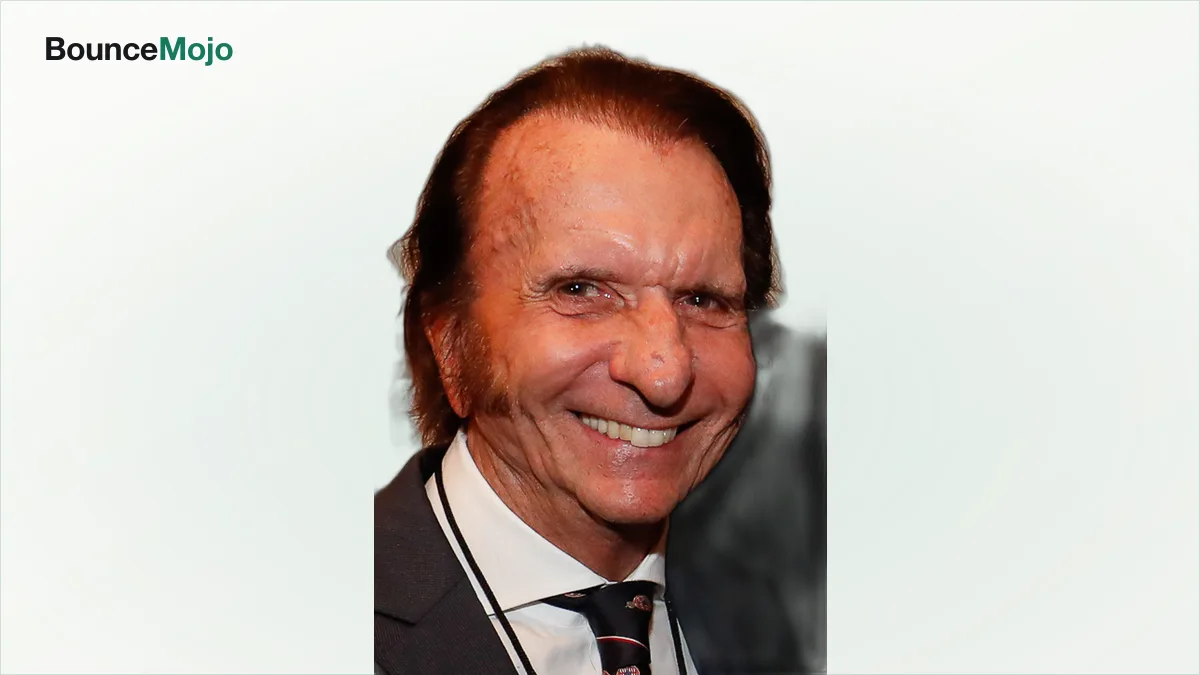
Everybody remembers Emerson Fittipaldi lifting two Formula 1 crowns and drinking the milk in Victory Lane at Indianapolis. Almost nobody remembers that decades later, a Brazilian court would order his trophies seized to pay his debts.
Here’s what most people miss: the same fearless ambition that made Fittipaldi a champion on two continents is the exact trait that later drove him into financial crisis.
The World That Made Emerson Fittipaldi
To understand Fittipaldi, you have to understand the racing-obsessed family he was born into.
He arrived on December 12, 1946, in Sao Paulo, Brazil. His father, Wilson Fittipaldi Sr., was a prominent motorsport journalist and broadcaster, so cars and racing weren’t a hobby in the Fittipaldi home, they were the family business. His mother even raced herself. Young Emerson and his older brother Wilson grew up steeped in the sport, and both would go on to race in Formula 1.
Brazil in that era had no grand F1 tradition yet, but it had passion, and it had a generation of young drivers hungry to prove themselves on the world stage. The Fittipaldi brothers started close to home, building and racing karts and small cars, running a shop, and learning the mechanical side of the sport as much as the driving.
The pieces were all there: a racing bloodline, a mechanical education, and a nation ready to fall in love with a homegrown champion. Emerson was about to become that champion.
Early Life and the Climb into Racing
Two things defined the young Emerson Fittipaldi: raw speed and relentless drive.
He cut his teeth in Brazilian karting and Formula Vee, quickly establishing himself as one of the country’s brightest talents. Rather than wait for opportunity to come to him, he made the bold move that ambitious drivers of his era had to make, he left Brazil for Europe, chasing the ladder that led to Formula 1.
In Britain, he tore through the junior formulae. His speed in Formula Ford and Formula 3 was so obvious that it fast-tracked him toward the top. Within a remarkably short time of arriving in Europe, Fittipaldi had earned a seat in Formula 1 with Lotus, one of the sport’s premier teams, run by the legendary Colin Chapman.
You might be wondering how a driver rises that fast. The answer is that Fittipaldi combined natural car control with a mechanical mind and an unshakable belief in himself. He wasn’t just quick, he understood the machine, and that made him the kind of complete driver top teams wanted.
The Breakthrough into Grand Prix Glory
The breakthrough came faster than anyone expected, and it came with tragedy woven into it.
Fittipaldi won his first Grand Prix in only his fourth start. Then, after Lotus lost its star driver Jochen Rindt in a fatal accident, the young Brazilian was thrust into a leadership role at the team. He responded not by shrinking but by rising.
In 1972, Fittipaldi delivered a championship season for Lotus, becoming the youngest Formula 1 World Champion in history at that time, a record that would stand for decades. He had gone from a Sao Paulo kart shop to the pinnacle of world motorsport in just a few short years.
He wasn’t done. After a title fight in 1973, Fittipaldi moved to McLaren and won the World Championship again in 1974, proving the first title was no fluke. He was now a two-time world champion and Brazil’s first great motorsport hero, opening the door for the Senna and Piquet generations who followed.
The Bold Gamble and American Reinvention
Here’s where Fittipaldi’s story turns from conventional greatness to something far riskier.
At the height of his powers, he made a stunning decision: he left McLaren to drive for and help run Fittipaldi Automotive, the Formula 1 team founded by his brother Wilson. It was a patriotic, entrepreneurial gamble, a Brazilian team for a Brazilian star. But the team was underfunded and rarely competitive, and the years he gave it coincided with the decline of his F1 results. The venture eventually folded.
Then came the reinvention few athletes ever pull off. In the 1980s, Fittipaldi rebuilt his career in the United States in CART IndyCar racing. He didn’t just show up, he won. He captured the 1989 CART championship and the 1989 Indianapolis 500, then won the Indy 500 again in 1993, driving for Roger Penske. A retired F1 champion had become an American oval-racing star, a feat almost unheard of.
That dual legacy, the full net worth breakdown of which you can read in his net worth profile, is what makes Fittipaldi one of the most complete drivers in history.
Personal Life and the Financial Fall
For all his triumphs, Fittipaldi’s later life carried a hard chapter that’s impossible to ignore.
After retiring from full-time racing, he leaned into business back home in Brazil, investing heavily in orange groves and the ethanol industry, betting on his country’s agricultural and biofuel future. For a time, his fortune grew. But the economics turned against him. By his own account, government-set ethanol pricing made the refineries hard to sustain, and the agricultural ventures buckled.
The result, reported widely across motorsport media in the mid-2010s, was staggering: debts running into the tens of millions and dozens of lawsuits from creditors. Brazilian courts ordered the seizure of cars and even championship trophies, including memorabilia from a personal museum. Fittipaldi disputed the “bankruptcy” label, insisting his assets outweighed his debts and that he was working through the crisis amid Brazil’s recession.
He handled it, at least publicly, with characteristic directness, addressing the reports rather than hiding, and continued to trade on the enduring value of his name.
Legacy and What Endures
So what does a life this large actually leave behind?
Fittipaldi’s legacy is secure in a way no court order can touch. He is a two-time Formula 1 World Champion and a two-time Indianapolis 500 winner, one of a tiny group of drivers to conquer both the European and American pinnacles of the sport. He was the pioneer who made Brazil a motorsport superpower, paving the way for Nelson Piquet and Ayrton Senna to become national icons.
His family name lives on in racing through his brother Wilson and nephew Christian, and the Fittipaldi brand continues to appear on watches, wine and wheels, keeping his name commercially alive.
Here’s the bottom line: Fittipaldi’s story is not a simple fairy tale. It’s the fuller, more human version, a boy from a Sao Paulo racing family who reached the very top of two racing worlds, then learned the hardest lesson in finance. To see exactly how the wins and the losses shaped his fortune, the full net worth breakdown puts the numbers in context, and the richest race car drivers list shows where he ranks among the sport’s greats.
The championships made him a legend. The way he weathered the fall is what makes his story worth telling honestly.
Shop Emerson Fittipaldi on Amazon
Books, audiobooks, merch and more, handpicked for fans.
As an Amazon Associate we earn from qualifying purchases.
Frequently Asked Questions
Where did Emerson Fittipaldi grow up?+
Fittipaldi grew up in Sao Paulo, Brazil, born December 12, 1946 into a motorsport-loving family. His father, Wilson Sr., was a well-known Brazilian racing journalist and broadcaster, and the household revolved around cars.
When did Emerson Fittipaldi win his F1 titles?+
Fittipaldi won the Formula 1 World Championship in 1972 with Lotus, becoming the sport's youngest champion at the time, and again in 1974 with McLaren.
Did Emerson Fittipaldi win the Indianapolis 500?+
Yes, twice. He won the Indianapolis 500 in 1989 and 1993, and also took the 1989 CART IndyCar championship, cementing a rare dual legacy across F1 and American open-wheel racing.
What business troubles did Emerson Fittipaldi have?+
In the 2010s, Fittipaldi faced serious debt tied to failed orange-farming and ethanol ventures in Brazil, with numerous lawsuits and court-ordered seizures of cars and trophies. He publicly contested the 'bankruptcy' framing.
Is Emerson Fittipaldi related to other racing drivers?+
Yes. His older brother Wilson Fittipaldi also raced in Formula 1, and his nephew Christian Fittipaldi competed in IndyCar and sports cars, making the Fittipaldis one of racing's notable families.
Want the money side of the story?
Read Emerson Fittipaldi's Full Net Worth Breakdown →Shop Emerson Fittipaldi on Amazon
Books, audiobooks, merch and more, handpicked for fans.
As an Amazon Associate we earn from qualifying purchases.