Didier Drogba Biography: The Striker Who Helped Stop a War
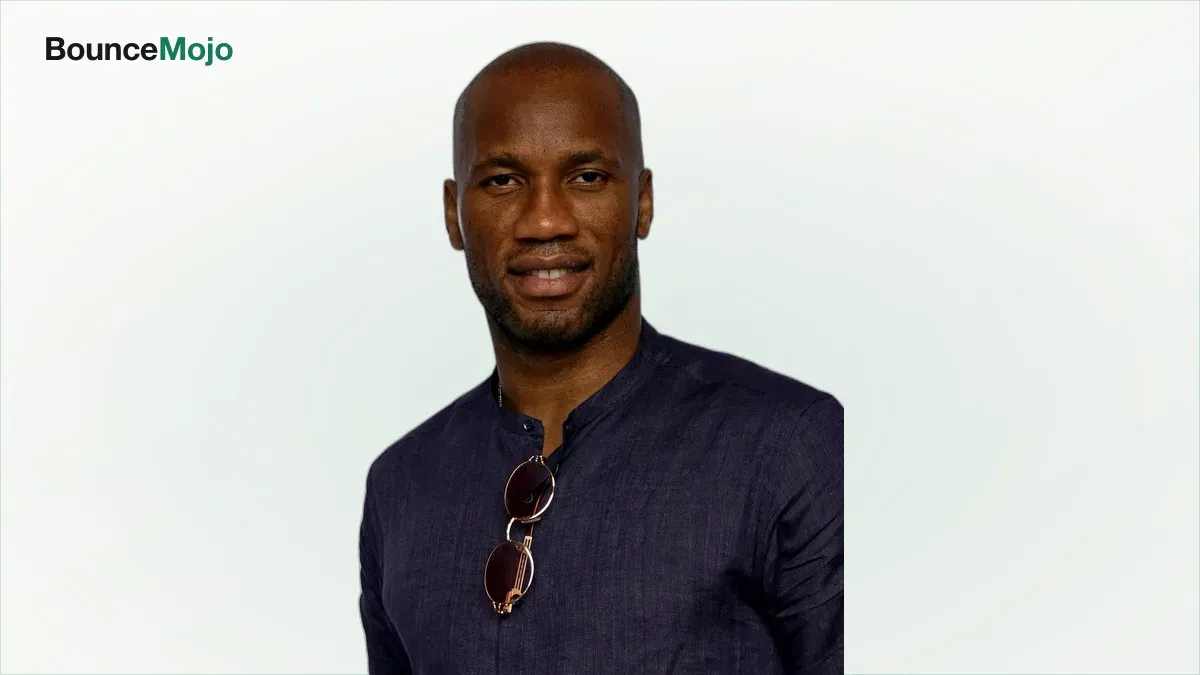
Most people know Didier Drogba as the striker who broke Chelsea’s Champions League curse. That version leaves out the five-year-old boy put on a plane alone.
Here’s what most people miss: the man who conquered European football didn’t turn professional until an age when many players are already stars, and once did more for his country with a microphone than any goal ever could.
The Myth vs. The Reality
The myth is simple. Didier Drogba: the unstoppable Chelsea battering ram, the big-game killer who scored in final after final and delivered the club’s first Champions League on a Munich night that felt scripted.
The reality took a lot longer to write.
Here’s the deal: Drogba was not a prodigy. For most of his teens and early 20s he was a project, an athletic forward with promise but no clear path to the top. He turned professional embarrassingly late by superstar standards, and he spent years grinding through the lower reaches of French football while players who would never match him were already famous.
And the “conquering hero” story misses the deeper truth: Drogba’s biggest impact wasn’t a goal at all. It was a moment when he knelt in front of a camera and asked his divided country to stop killing each other.
You might be wondering: how does a kid shipped across the world at five become both a European champion and a national peacemaker? To understand that, you have to understand the world he came from.
The World That Made Didier Drogba
Drogba was born in 1978 in Abidjan, the largest city in the Ivory Coast, a country that would spend much of his life fractured by political and ethnic conflict.
His early years were defined by movement and separation. At five, he was sent to live with an uncle, a professional footballer, in France. Homesick, he returned to the Ivory Coast, then went back to France again as economic hardship hit his family. He grew up straddling two worlds, an African boy in French suburbs, never quite settled in either.
Now: that instability shaped him. He learned resilience early, and he learned that home was something you carried, not somewhere you simply lived. It also gave him a foot in two cultures, French football’s structure and the Ivory Coast’s fierce national pride.
His country, meanwhile, was sliding toward crisis. By the early 2000s the Ivory Coast was split by civil war, north against south. Football became one of the few things that could still unite it, and Drogba, rising to global fame at exactly that moment, would become the unlikely figure at the center of that unity.
That backdrop, a divided nation and a boy raised between continents, is the key to everything he became. But first he had to survive years of being overlooked.
The Crucible: Early Life and the Climb
The Environment That Shaped Him
Drogba’s football education was slow and unglamorous. He didn’t join a professional academy as a boy. He played youth and amateur football in France, then signed his first professional contract with Le Mans only in his early 20s, a stage at which future greats are usually established.
Here’s the truth: he was nearly written off. Injuries and inconsistency dogged his early years, and there was little to suggest a superstar in the making.
But he kept working. He held down the grind of lower-league football into his early adult years, a world away from the pampered academy prospects who would later be his rivals. A move to Guingamp in his mid-20s finally unlocked his scoring, and suddenly the raw athletic forward became a genuine goal threat. It is worth pausing on how unusual that is. Most future superstars are marked out as teenagers, showered with attention long before they can drive. Drogba earned everything the slow way, and that hunger never left him.
The Catalyst
The breakthrough came at Marseille in the 2003-04 season. Drogba exploded, dragging the club to a European final and scoring goals that made the whole continent notice.
It gets better. In 2004, Jose Mourinho’s newly rich Chelsea paid a club-record fee to sign him. The late bloomer had arrived at one of the biggest clubs in the world, and this time he would not be overlooked.
That’s where the legend truly began. But the men and the moments that made him, and the war back home that would define him, are the next part of the story.
The Key Players
No footballer rises alone, and Drogba’s story is crowded with people and one nation that shaped him.
Jose Mourinho. The manager who signed him and believed in him. Mourinho built Chelsea’s attack around Drogba’s power and clutch instinct, and the two shared a bond that lasted long after Mourinho left. Drogba often played his best football under him.
Frank Lampard and John Terry. At Chelsea, Drogba formed part of a legendary spine alongside Frank Lampard and John Terry. Together they won Premier League titles, FA Cups and, finally, the Champions League. That core defined an era.
Roman Abramovich. The Chelsea owner whose fortune funded the club’s rise. Drogba became one of the emblematic figures of the Abramovich project, delivering the European trophy the owner had spent a fortune chasing.
The Ivory Coast. And then there was his country, both his greatest cause and his greatest audience. His teammates and his nation looked to him as a leader far beyond football.
Think about it: every one of these relationships pointed the same way, toward big moments and bigger responsibility. That responsibility peaked in the most dramatic way imaginable.
The Turning Point
The Pinnacle
The 2012 Champions League final is Drogba’s mountaintop.
Chelsea, underdogs, faced Bayern Munich in Bayern’s own stadium. With the clock almost gone and the final slipping away, Drogba rose to head home the equalizer. Then, in the shootout, he stepped up and buried the winning penalty. Chelsea’s first-ever European Cup. Drogba’s final act as a Chelsea player before leaving that summer.
You could not script a more perfect ending. As his net worth story explains, that moment cemented a global brand that kept earning for years.
The Price
Here’s the kicker: the glory came after years of doubt and criticism.
Before Munich, Drogba had been mocked for missing big chances, for theatrical falls, for failing in earlier finals. The 2008 final, where he was sent off in extra time, haunted him. The 2012 triumph was redemption, but it was earned through public failure first. The pinnacle was real, and it cost him years of criticism to reach it.
Which brings us to the flaws the highlight reels tend to skip.
The Unvarnished Truth
Drogba was a warrior, and warriors are not always easy.
He had a temper. He clashed with referees and opponents, and his emotional intensity sometimes spilled over into red cards and outbursts, most infamously an on-camera rant after a controversial Champions League exit. He was accused, at times, of diving and gamesmanship, the darker side of his physical, streetwise style.
Now: none of this makes him a villain. Much of it came from the same fire that made him great. A late bloomer who fought for everything he had was never going to be a passive, easygoing star. He played angry because he had spent years being told he wasn’t good enough.
His most human vulnerability was simpler: the weight of representing a whole nation. When your country treats you as a symbol of peace, every misstep carries impossible weight. Drogba carried that pressure for a decade, and it was heavier than any defender he outmuscled.
The most honest thing to say about him is this: his intensity was his engine. It made him a champion, and occasionally it made him a handful. You don’t get one without the other.
Controversies and Criticisms
Drogba’s career had its share of storms, on and off the pitch.
The diving accusations. Like many powerful strikers, Drogba was regularly accused of going down too easily. Critics saw it as cynical; defenders saw it as the survival tactics of a marked man. Either way, it dented his reputation among neutral fans.
The 2009 tunnel rant. After a bitter Champions League exit to Barcelona, an enraged Drogba shouted into a camera about the officiating. It earned him a ban and became a symbol of his volcanic temper.
The 2008 final red card. In Chelsea’s first Champions League final, Drogba was sent off in extra time for a moment of madness, a mistake that could have cost the club everything. It shadowed him until Munich rewrote the story.
The gamesmanship label. More broadly, Drogba’s physical, provocative style drew criticism from those who felt he crossed lines. Compared with a cooler operator like Frank Lampard, his emotional edge was both his strength and a lightning rod.
What We Can Learn From Didier Drogba
Navigating Hard Times
The first lesson is patience under doubt. Drogba spent his teens and early 20s being overlooked, and he refused to quit. He turned professional late, broke through late, and became a legend anyway.
But here’s the truth his story makes plain: the slow path can be the strong path. The years of grinding built a resilience that prodigies rarely develop. When the big moments came, Drogba had already survived a decade of being underestimated. Late doesn’t mean never.
The Success Blueprint
If you want the replicable part, it’s this: Drogba mastered the moments that mattered most. He wasn’t the most technically gifted forward of his era, but nobody was more reliable when a trophy was on the line.
That’s transferable. You don’t have to be the best on paper. You have to show up when the stakes are highest, and make the decisive play. His placement among the wealthiest names on our richest soccer players ranking rewards exactly that big-game reliability.
Becoming Better
The deepest lesson has nothing to do with football. In 2005, at the height of his fame, Drogba used a single televised moment to plead for peace in his country, and it helped move a nation toward a ceasefire. He understood that influence is a tool, and he chose to spend it on something larger than himself.
In other words, the point of getting to the top is what you do once you’re there. Drogba built a hospital, funded schools, and used his voice for peace. That choice, more than any goal, is why he matters.
There’s a third lesson hiding in his late career, and it’s about money. Drogba refused to accept that a striker’s earning days end at 30. When European clubs stopped chasing him, he took his brand to China and Turkey and got paid handsomely for it, extending his prime by years. The takeaway is simple and useful: your value isn’t only where you first found it. Markets differ, and a name that no longer commands a premium in one place can be worth a fortune in another. Drogba read that better than almost any player of his era.
Final Verdict
Didier Drogba is one of the greatest strikers of his generation, and one of the most influential African athletes who ever lived, and the second half of that sentence matters at least as much as the first. He conquered England and Europe with Chelsea, but he changed lives and helped calm a war back home.
And here’s the twist that reframes everything: the five-year-old boy sent alone across the world, the late bloomer nobody rated, grew into a man whose single plea for peace may have saved more lives than a hundred trophies ever could. The full picture of how he turned that global standing into a lasting $90 million fortune lives in his net worth breakdown, and it’s the rare sports story where the legacy off the pitch outshines even the legend on it.
Shop Didier Drogba on Amazon
Books, audiobooks, merch and more, handpicked for fans.
As an Amazon Associate we earn from qualifying purchases.
Frequently Asked Questions
Where is Didier Drogba from?+
Didier Drogba was born in Abidjan, Ivory Coast, in 1978. He was sent to live with an uncle in France at age five, then bounced between the two countries during a difficult, unsettled childhood before settling in France as a teenager.
Why was Drogba a late bloomer?+
Drogba did not become a full professional until his early 20s, playing lower-level French football with clubs like Levallois and Le Mans before breaking through at Guingamp and Marseille in his mid-20s, unusually late for a future superstar.
How did Drogba help stop a war?+
In 2005, after the Ivory Coast qualified for its first World Cup, Drogba made an on-camera televised plea for peace, kneeling with teammates. The moment is widely credited with helping ease the country's civil conflict and encouraging a ceasefire.
What is Drogba's greatest football moment?+
In the 2012 Champions League final, Drogba headed a late equalizer and scored the winning penalty to give Chelsea its first European Cup, in what proved to be his final act before leaving the club.
What does Drogba do after retirement?+
Drogba runs the Didier Drogba Foundation, has taken football ownership and executive roles, works as an ambassador and pundit, and remains one of Africa's most influential sporting figures.
Want the money side of the story?
Read Didier Drogba's Full Net Worth Breakdown →Shop Didier Drogba on Amazon
Books, audiobooks, merch and more, handpicked for fans.
As an Amazon Associate we earn from qualifying purchases.