Davis Love III Biography: Golf's Gentleman, Told Raw
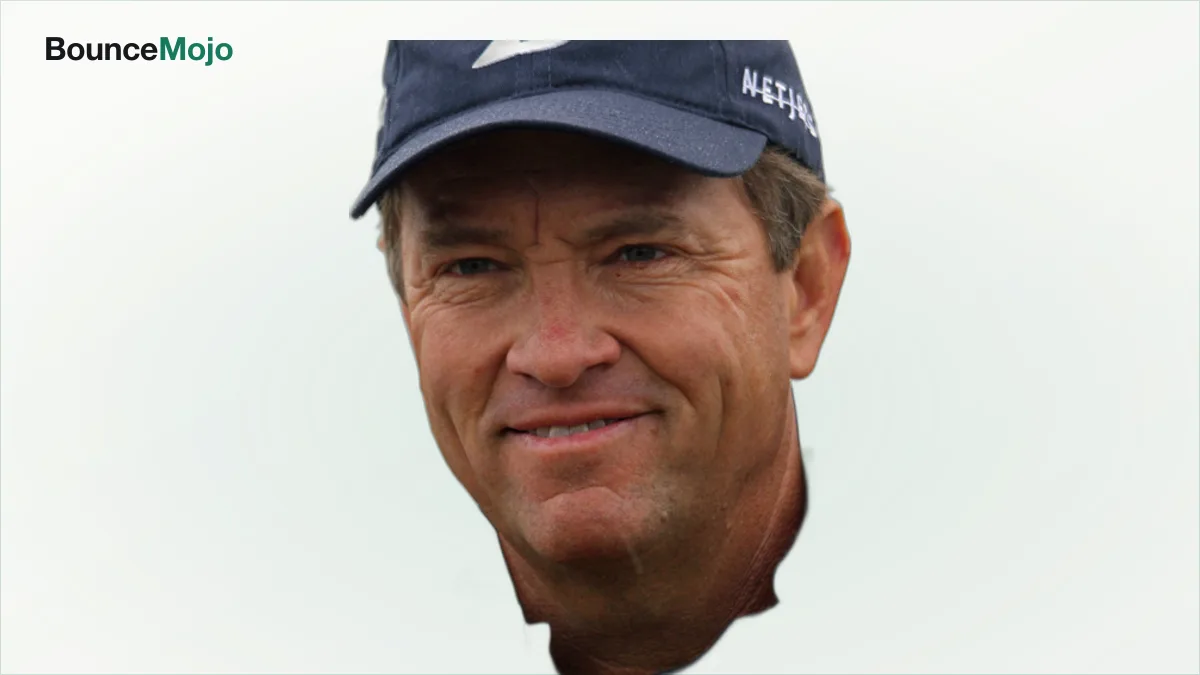
Davis Love III has spent thirty years being called golf’s Southern gentleman.
The calm everyone praises had to be rebuilt from nothing after a loss that arrived without warning.
The Myth vs. The Reality
The myth is tidy. Davis Love III is golf’s Southern gentleman, born with a gorgeous swing and a calm that never cracks.
The reality is heavier.
Here’s the truth: that swing was drilled into him by a father who lived and breathed teaching the game, and the calm was something Love had to rebuild from scratch after that father was killed in a plane crash. The gentleman you see on Sunday is a man who learned early that everything can be taken in an instant.
Now think about the moment fans remember most. Ask them and they’ll point to the rainbow over Winged Foot in 1997. What they may not know is why grown men in the gallery wept when they saw it.
It had almost nothing to do with the golf.
To understand that, you have to understand the family he came from.
The World That Made Davis Love III
Davis Milton Love III arrived on April 13, 1964, one day after his father finished the final round of the Masters. Golf wasn’t a hobby in the Love house. It was the family trade.
His father, Davis Love Jr., was a former tour player turned nationally known teaching professional. And the line went further back: Love Jr. had learned under Harvey Penick, the University of Texas coach whose Little Red Book became golf scripture. That made young Davis the third generation in a bloodline of American golf instruction.
This was the South of the 1960s and 1970s, where a good teaching pro was a respected figure at the local club and a swing was passed down like a family recipe. Love grew up inside that world, watching his father teach, absorbing a philosophy as much as a technique.
But here’s the kicker: the man who gave him everything would not live to see his greatest day. And the way that day arrived would haunt and heal his son at the same time.
The Crucible: Early Life and the Climb
The environment that shaped him
Love’s education in golf started before most kids can spell the word. His father didn’t just hand him clubs, he handed him a system, one built on fundamentals and patience rather than flash.
That upbringing produced a rare talent. Love starred in junior and college golf, playing at the University of North Carolina, and by 1985 he turned professional with one of the sweetest swings anyone had seen. He was long off the tee, smooth through the ball, and clearly built for the tour.
The wins started in 1987. He was young, gifted, and rising fast. His father, still teaching, still guiding, was there for it.
The catalyst
Then came November 1988.
Davis Love Jr. boarded a small private plane bound for Jacksonville, Florida. Fog rolled in near the airport. The Piper Cherokee crashed into a forest on approach. No one aboard survived. Davis Love III lost his father, his first coach, and his compass all at once. He was 24.
Here’s the deal: a lot of young athletes never recover from a blow like that. Love did the opposite. He carried his father’s lessons forward, kept the swing his father built, and let grief become fuel.
Want to know what happened when all that pain finally met a major championship Sunday? That’s where it gets emotional.
The Key Players
You cannot tell the Davis Love III story without three names.
His father, Davis Love Jr., is the first and the most important. Every shot Love took carried his father’s teaching, so much so that when Love wrote his memoir, he titled it after that exact idea. The book is a son’s tribute, published in the same year he finally broke through.
Harvey Penick is the second, a step removed but ever-present. Penick shaped Love Jr., who shaped Love III, meaning the third generation of this family was still playing golf the way a Texas sage taught it in the middle of the 20th century.
Robin Love is the third. He married her in 1986, before the wins and before the tragedy, and she was his anchor through the loss of his father and the long grind of a tour career. Their family, including their children Lexie and Dru, kept him grounded through decades on the road.
Here’s the truth: everything that made Love beloved was about to converge on one afternoon in New York.
The Turning Point: Triumph and Its Hidden Cost
The pinnacle
Start with the triumph, because it was extraordinary.
For years Love was labeled the best player without a major, a talent everyone respected but who kept falling just short. That narrative broke in August 1997 at the PGA Championship at Winged Foot.
Love played the final round in control, pulling away from the field. As he walked up the 18th fairway toward the win, a rainbow appeared over the clubhouse. Fans and commentators, knowing the story of his father, saw it as a sign that Davis Love Jr. was watching. Love won by five. He had his major, and he had it on a day the sky seemed to acknowledge his loss.
That was the peak, but it was hardly the whole career. Twenty-one PGA Tour titles. A run of Presidents Cup and Ryder Cup appearances. And later, a stretch as one of the most respected elder statesmen in American golf.
The price
Now the cost, and it was carried quietly.
Love won his major nine years after his father died. The one person who had built his swing, and who would have wanted that trophy most, never saw it. Every triumph after 1988 came shadowed by that absence.
There was also the grind. Love competed at the top for parts of five decades, fighting the injuries and swing changes that wear down every long career. He kept going long after peers retired, chasing the game his father gave him.
You might be wondering how a man channels that kind of loss without letting it turn bitter. The answer shows the part of Love the highlight reels never fully captured.
The Unvarnished Truth
Let’s not paint him as a saint who never struggled.
Love’s career had long fallow stretches, seasons where the putter went cold and the wins dried up. Being tagged for years as “the best player never to win a major” wore on him, and he has admitted the pressure of expectation weighed heavily. Golf is a lonely, unforgiving game, and Love felt that as much as anyone.
He also carried the complicated weight of legacy. Playing the game your father taught, while the world watches, means every slump feels like letting down a ghost. Love never dressed that up.
Here’s the truth: his greatest strength, the family devotion, was also a source of quiet pressure. He wasn’t just playing for himself. He was playing for a name and a memory, and that is a heavier bag than any caddie carries.
Even so, he kept his composure and his manners, which brings up the rare knock against him.
Controversies and Criticisms
For a man this respected, the criticisms are mild, which is itself notable.
Some critics argued Love underachieved given his talent, that a player with his ball-striking should have won more than one major. It’s a fair debate, and one Love has acknowledged.
His 2012 Ryder Cup captaincy drew heat after the U.S. blew a big final-day lead at Medinah in one of the most stunning collapses in the event’s history. Critics questioned his lineup decisions. Love answered the only way that matters: he was named captain again in 2016 and led the Americans to a commanding win at Hazeltine, quieting the doubters.
Beyond that, the harshest thing most people say about Davis Love III is that he was too nice for a cutthroat sport. In a game full of villains, that’s a rare kind of criticism to face.
Here’s the thing though: none of it dents the larger story. Because the legacy is about more than trophies.
What We Can Learn From Davis Love III
Navigating the darkness
When you lose the person who built you, you have two choices: collapse, or carry them forward.
Love carried his father forward. He kept the swing, kept the philosophy, and eventually put it all in a book so the lessons wouldn’t die with the man. He turned private grief into something useful and lasting.
The lesson isn’t “be strong.” It’s more specific. He honored the teacher by becoming one, through design work, captaincy, and mentoring younger players.
The success blueprint
Now the part that built the fortune and the reputation.
Love never bet everything on tournament wins. He co-founded a course design firm, embraced leadership roles, and stayed loyal to sponsors for decades. He treated a golf career as a platform, not a finish line. That patient, build-something approach is why he ranks among the richest golfers and why his name still carries weight across the sport. The full money breakdown lives in our Davis Love III net worth analysis, and you can see where he lands among the richest athletes overall.
In other words, the man who inherited a swing turned it into an entire second career.
Becoming better
The deepest lesson is about legacy. Davis Love III proved you can honor where you came from without being trapped by it. He carried his father’s teaching into a Hall of Fame career, then passed it on again as a captain and designer.
So what’s the final word on golf’s gentleman?
Final Verdict
Davis Love III is the rare champion whose character outshines even his considerable trophy case.
On the course, he was a 21-time winner and a major champion with one of the game’s prettiest swings. Off it, he became a course architect, a two-time Ryder Cup captain, and a respected elder of American golf. And through all of it, he carried the memory of the father who taught him every shot.
Here’s the bottom line: the easy smile was never the whole story. Behind it was a son honoring a promise he never had to make out loud.
If you want it in his own words, read Every Shot I Take, written with Michael Bamberger in 1997, the year of both his major and his grief. It’s a son’s love letter to his teacher, and anyone who thinks they know Davis Love III should read it and learn how much of him is really about his dad.
Shop Davis Love III on Amazon
Books, audiobooks, merch and more, handpicked for fans.
As an Amazon Associate we earn from qualifying purchases.
Frequently Asked Questions
Where did Davis Love III grow up?+
He was born on April 13, 1964, in Charlotte, North Carolina, the day after his father played the final round of the 1964 Masters, and was raised inside the game his father taught for a living.
How did Davis Love III's father die?+
Davis Love Jr., a respected teaching professional, was killed in a private plane crash in November 1988 near Jacksonville, Florida, a loss that reshaped his son's life and career.
What is Davis Love III's biggest win?+
His crowning achievement was the 1997 PGA Championship at Winged Foot, won under a rainbow that appeared as he walked up the 18th fairway, an image many linked to his late father.
Did Davis Love III captain the Ryder Cup?+
Yes. He captained the U.S. team twice, losing at Medinah in 2012 and winning at Hazeltine in 2016, one of the most decisive American victories in decades.
Did Davis Love III write a book?+
Yes. His memoir Every Shot I Take, written with Michael Bamberger in 1997, honors his father's teaching and won a USGA book award.
Want the money side of the story?
Read Davis Love III's Full Net Worth Breakdown →Shop Davis Love III on Amazon
Books, audiobooks, merch and more, handpicked for fans.
As an Amazon Associate we earn from qualifying purchases.