David Beckham Biography: The Leytonstone Boy Turned Global Brand
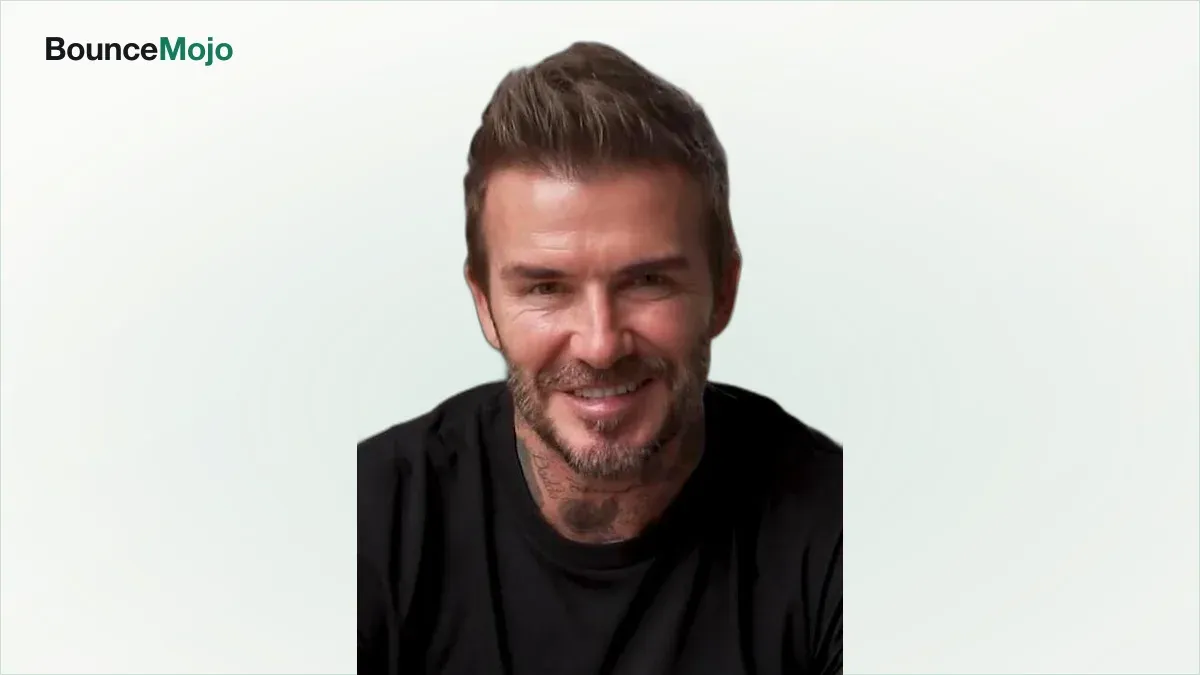
Every David Beckham story has a hinge, and it isn’t a trophy. It’s a red card in the summer of 1998, the moment an entire country decided to hate him. Everything he became afterwards is a response to it.
Everything Before the Red Card
Beckham was born in 1975 in Leytonstone, East London, into a working-class family obsessed with Manchester United.
His father, Ted, was a kitchen fitter and a devoted United supporter who drilled young David for hours in the local park. That fandom became David’s own, and his childhood revolved around a single obsession: playing for United. He spent countless hours practicing the free kicks and crosses that would define him.
He joined United’s academy and became part of the famous “Class of ‘92,” a golden generation that included Ryan Giggs, Paul Scholes and the Neville brothers. Under Sir Alex Ferguson these young players won everything, and Beckham announced himself to the world with an audacious goal from the halfway line in 1996.
He was never the most naturally gifted footballer in that dressing room, and he knew it. What he had was a fanatical work ethic and a right foot honed by thousands of repetitions after everyone else had gone home. The signature deliveries weren’t magic; the practice was the point.
English football then was raw and tribal, years before Premier League money and glamour transformed it. A boy from East London who wanted to play for United had to travel across the country and outwork hundreds of other hopefuls — and he arrived just as the sport was about to become a global entertainment business. His career sits exactly on the hinge between old football and the celebrity-brand era.
1998: The Year England Hated Him
At the 1998 World Cup, in a heated match against Argentina, Beckham petulantly kicked out at Diego Simeone and was sent off. England lost on penalties, and the country needed someone to blame.
They chose him. Effigies were hung outside pubs. He received death threats. Newspapers savaged him. For months, David Beckham was the most hated man in England.
It is the defining crisis of his career and, in hindsight, the making of him. He didn’t answer it with a statement. He answered it with the best football of his life, inspiring United to an unprecedented Treble in 1999 — the Premier League, FA Cup and Champions League in a single season. Redemption took years and results rather than words, which is the only part of the comeback that is genuinely transferable: public failure is survivable, but not quickly and not cheaply.
The same year, he married Victoria Beckham of the Spice Girls. “Posh and Becks” made him a household name far beyond football and laid the foundation for the family brand.
The Treble, Fergie’s Boot, and the Road Out of Old Trafford
Beckham won six Premier League titles and the Champions League with Manchester United. Ferguson had been a father figure who nurtured his talent, then clashed with him as his fame grew — the manager felt Beckham’s celebrity was becoming a distraction in his dressing room.
The relationship famously ended when Ferguson kicked a boot that cut Beckham above the eye, hastening his exit. In 2003 he moved to Real Madrid, where he won La Liga as one of the club’s “Galácticos.” He captained England, played in three World Cups, then moved to the LA Galaxy, helping raise the profile of football in the United States. He finished with stints at AC Milan and Paris Saint-Germain, where he donated his entire salary to charity.
He didn’t just win trophies. He became the most globally recognizable footballer of his generation, a bridge between the sport and mainstream celebrity — and living under a permanent spotlight, with every haircut and outfit dissected, cost him a private life few could imagine.
Brand Beckham: What He Understood Before Anyone Else
The lasting criticism of Beckham is that he was a good player elevated to greatness by marketing — style over substance, celebrity ahead of sporting authenticity. His trophy haul and free-kick record push back, but the debate followed him his whole career. Compare his path to the pure on-field dominance of former teammate Cristiano Ronaldo, and the “brand versus baller” argument comes into focus.
The sharper controversy is a more recent one. Beckham faced fierce criticism from human-rights campaigners over his reported multi-million-pound ambassadorship for the 2022 Qatar World Cup. Leaked emails once revealed his private frustration over an honors snub. His greatest strength, an instinct for image and brand, is also the thing his critics have consistently used against him.
But the instinct itself was right, and early. Simon Fuller, his longtime manager and the entertainment mogul behind the Spice Girls and Pop Idol, architected his transformation into a global commercial brand. Beckham saw before almost anyone that a footballer’s brand could outlast his career, and he built the businesses, the ownership stakes and the family empire while he was still famous. Decades later, Lionel Messi became the marquee signing that turned Beckham’s Inter Miami into a billion-dollar asset. The lesson isn’t “be handsome” — it’s own your name before the spotlight fades. See where that put him on our richest soccer players list.
So “consequential” fits him better than “greatest.” He wasn’t the most gifted player of his era, but he may have been the smartest at reading what the modern game was becoming. The boy who was hung in effigy and blamed for a World Cup turned that humiliation into fuel and built one of the most valuable personal brands in sports history. He rebuilt his identity twice — villain to hero, then player to mogul — and the full mechanics of the empire live in his net worth breakdown.
For the version in his own words, read David Beckham: My Side (2003). It captures the rise, the 1998 fallout and the strained United exit before the business empire took shape.
Shop David Beckham on Amazon
Books, audiobooks, merch and more, handpicked for fans.
As an Amazon Associate we earn from qualifying purchases.
Frequently Asked Questions
What happened with David Beckham's 1998 World Cup red card?+
In the 1998 World Cup, Beckham was sent off against Argentina for kicking out at Diego Simeone. England lost, and he was scapegoated for months, with effigies hung and abuse hurled at him before he redeemed himself over the following years.
Why did David Beckham leave Manchester United?+
Beckham left Manchester United for Real Madrid in 2003 after a deteriorating relationship with manager Sir Alex Ferguson, including a famous dressing-room incident where a kicked boot cut Beckham above the eye.
What does David Beckham do now?+
Beckham is a businessman and club owner. He co-owns Inter Miami CF and Salford City, runs the brand company DB Ventures, and works as a global ambassador for brands and causes including UNICEF.
Want the money side of the story?
Read David Beckham's Full Net Worth Breakdown →Shop David Beckham on Amazon
Books, audiobooks, merch and more, handpicked for fans.
As an Amazon Associate we earn from qualifying purchases.