Dara Torres Biography: The Swimmer Who Refused to Let Age Win
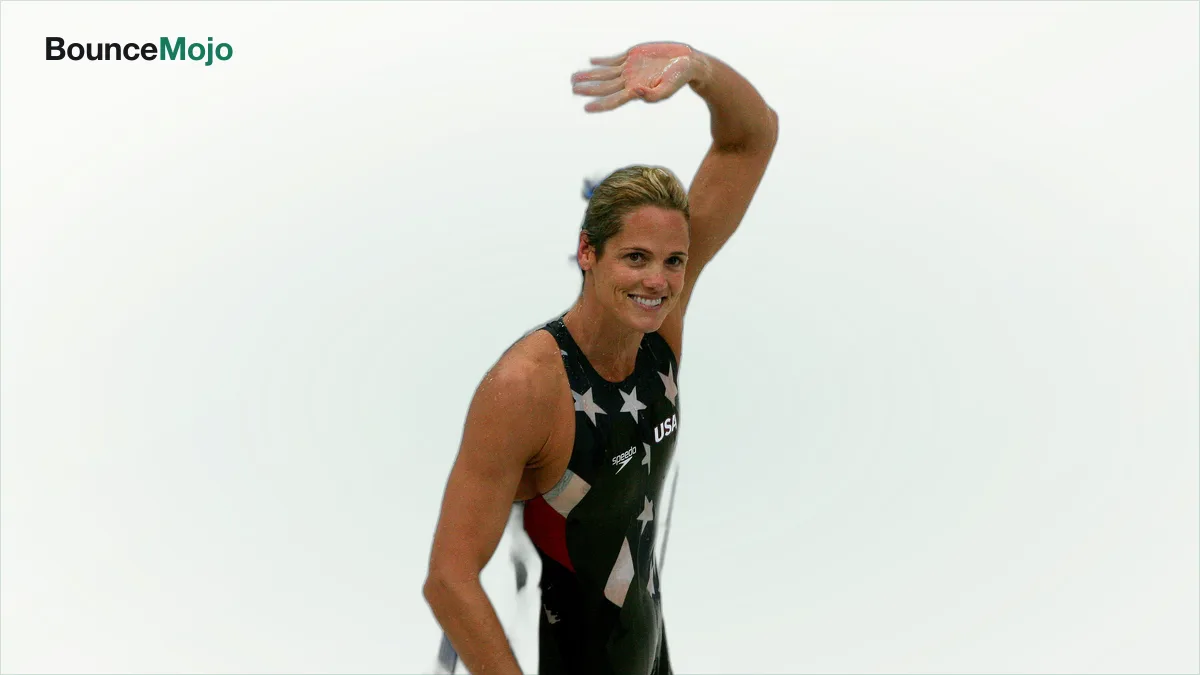
Most people know Dara Torres as the swimmer who raced at 41 and won. That headline is true, and it hides a much harder story underneath.
Here’s what most people miss: the woman who became a symbol of ageless strength spent years at war with her own body, long before she ever became an inspiration.
The Myth vs. The Reality
The myth is inspirational. Dara Torres: the ageless wonder, the mom who swam at 41 and won silver, proof that you’re never too old. Motivational-poster material. Roll credits.
The reality is more complicated, and more human.
Here’s the deal: Torres wasn’t a serene superwoman who effortlessly defied time. She was a fiercely competitive athlete who wrestled with the same insecurities, pressures and setbacks as everyone else, and in some cases far worse. Her comeback story is real, but the picture of untroubled invincibility around it isn’t.
And the “she just kept winning” framing skips the low points entirely. Torres battled an eating disorder. She retired multiple times, convinced she was done. She faced doubt, injury and the relentless suspicion that comes with excelling at an age when athletes are supposed to fade.
You might be wondering: how does someone come back not once but several times, across nearly a quarter-century of Olympics? To understand that, you have to understand where she started.
The World That Made Dara Torres
Torres was born in 1967 in California and grew up in Beverly Hills as one of six children in a blended family.
Hers was a world of privilege and competition. She was tall, athletic and driven, and she found swimming early. In the American swimming culture of the late 1970s and early 1980s, talented kids were funneled into intense club programs, and Torres thrived in that pressure-cooker environment, making the US national scene while still a teenager.
Now: this was an era when female athletes were celebrated for winning but scrutinised relentlessly for how they looked. Women’s sports were growing, but the culture around body image was punishing, especially in a sport contested in a swimsuit under bright arena lights.
That collision, elite athletic ambition meeting a toxic body-image culture, is the backdrop for one of the hardest chapters of Torres’ life. She wasn’t just racing rivals. She was racing an impossible standard.
But before that struggle surfaced, there was a teenage phenom announcing herself to the world.
The Crucible: Early Life and the Climb
The Environment That Shaped Her
Torres made her first US Olympic team in 1984, as a teenager, and won relay gold in Los Angeles. She was fast, powerful and instantly among America’s best sprinters in the pool.
She kept climbing, swimming at the 1988 Seoul and 1992 Barcelona Games and collecting more medals. On paper, it was a dream ascent. Underneath, the pressure was mounting.
This is crazy: at the peak of her early promise, Torres was privately battling bulimia. The demands of the sport, the body scrutiny, and her own perfectionism collided into an eating disorder she later spoke about openly, a courageous disclosure that helped countless other athletes name what they were going through.
Here’s the truth: the woman the public saw as unstoppable was, in her college years, fighting a private war she could easily have lost.
The Catalyst
The turning point was learning to walk away, and then choosing to come back.
Torres retired after the 1992 Games, seemingly done. She stepped into modeling and broadcasting. Then, in her thirties, she felt the pull again and returned for the 2000 Sydney Olympics, winning five medals and proving that a comeback wasn’t just possible, it could be spectacular.
She retired again. Married. Had a daughter. And then, in her forties, she decided to do the unthinkable one more time.
It gets better, and stranger. The comeback that would define her legacy was still ahead, and it would happen at an age when almost no elite swimmer even considers competing. But the people around her made that final ascent possible.
The Key Players
No one defies the clock alone, and Torres’ story is full of people who shaped her runs.
Her coaches. Across five Olympic cycles, Torres worked with a series of coaches who adapted training to an aging body, embracing strength work, recovery science and stretching regimens that let a 41-year-old race sprinters half her age.
Her family. Torres became a mother between her comebacks, and her daughter became part of the story, the image of a mom chasing Olympic medals reframed what motherhood and elite sport could look like together.
Her rivals. Racing younger swimmers year after year kept Torres sharp and gave the public its favorite storyline: the veteran versus the next generation. Those matchups were the marketing engine behind her fame.
The broadcast world. Between Olympics, Torres built relationships in television and media that would become her second career, and a key player in keeping her relevant and earning.
Think about it: every one of these forces fed the same improbable project, keeping a body competitive far beyond its expected shelf life. That project reached its summit in Beijing.
The Turning Point
The Pinnacle
The 2008 Beijing Olympics is Torres’ mountaintop, and it’s one of the most remarkable stories in Olympic history.
At 41, a mother, more than two decades after her first Games, Torres qualified for the US team and won three silver medals. In the 50m freestyle final, she missed gold by one hundredth of a second, a heartbreaking margin that somehow only added to the legend. She had become the oldest US swimmer ever to compete at the Olympics at that time.
The image endured: a 41-year-old on the medal stand, out-touching swimmers young enough to be her children. As her own net worth story explains, that single Games turned her into a global brand and the definitive voice on age, fitness and possibility.
Across her career she won 12 Olympic medals, including four golds, one of the deepest records in American swimming.
The Price
Here’s the kicker: defying age at that level demanded a punishing price.
Torres’ Beijing run required an almost obsessive training and recovery regimen, hours of stretching, strength work and treatment just to keep an aging body intact. And her success invited a suspicion that shadowed her triumph: how could a 41-year-old possibly be this fast?
Torres volunteered for extra drug testing to answer the doubters, never failed a test, and always maintained her results came from science and work, not shortcuts. But the questions were the tax on doing something no one had done before. Which brings us to the harder truths.
The Unvarnished Truth
Torres is not a flawless inspirational figure, and treating her as one erases the real courage in her story.
She has been candid about her eating disorder, about the insecurities that drove her, and about the competitive fire that sometimes made her difficult. She has admitted that the same drive that produced medals also pushed her to extremes in training and in her relationship with her body.
Now: none of this diminishes her. It humanises her. A woman who battled bulimia and still became a symbol of physical strength is telling a truth most inspirational stories hide, that resilience and struggle live in the same person.
But the honest version matters. Torres’ greatness wasn’t the absence of vulnerability. It was continuing to compete, and to be visible, despite it. Her willingness to talk openly about her struggles may have helped more people than any of her medals.
The most honest thing anyone can say about Torres is this: her greatest strength and her hardest battle were both rooted in the same relentless standard she set for herself.
Controversies and Criticisms
Torres’ late-career dominance made her a lightning rod for doubt.
The doping suspicion. Her success at 41 was so far outside the norm that some assumed it had to be chemically assisted. Torres proactively enrolled in enhanced testing programs to prove her clean status and never failed a test. The suspicion, though, followed her, an unavoidable cost of doing the improbable.
The body-image debate. Torres’ openness about her eating disorder drew both praise and uncomfortable scrutiny. Some critics questioned how a sport that celebrated her physique could also have contributed to her illness, a fair and difficult conversation she helped start.
The comeback fatigue. After multiple retirements and returns, a few observers questioned whether Torres was chasing relevance rather than results. Her Beijing medals silenced most of that, but the criticism reflected a broader unease with athletes who won’t leave the stage.
The quote she owned. Torres often summed up her philosophy with a line she made famous: “The water doesn’t know how old you are.” It became a rallying cry for masters athletes everywhere, but critics sometimes twisted it into a dare, as if she were taunting the doubters. In truth it was a simple statement of fact from a woman who had tested the limits herself and found them softer than everyone assumed.
The through-line is telling: Torres was doubted precisely because she kept doing things that hadn’t been done before. Excellence outside the expected pattern invites suspicion, and she absorbed plenty of it.
What We Can Learn From Dara Torres
Navigating Hard Times
The first lesson is about honesty: strength and struggle can coexist. Torres battled an eating disorder and still became a symbol of physical power. She teaches that admitting your hardest battles doesn’t undercut your achievements, it makes them real.
But here’s the truth her story makes plain: surviving your struggles isn’t a one-time event. Torres faced her body-image battles, her retirements, her self-doubt, more than once. Resilience wasn’t a single comeback. It was a habit she rebuilt again and again.
The Success Blueprint
If you want the replicable part, it’s this: Torres won by refusing to accept the expiration date everyone else assumed. She reinvented her training, embraced new science, and treated age as a variable to manage rather than a verdict to accept.
That’s transferable. The lesson isn’t “swim at 41.” It’s “question the limits other people take for granted and test them yourself.” Her longevity put her among the sport’s most decorated names and, as our richest Olympians ranking shows, made her a lasting commercial force in a way most swimmers never achieve.
Becoming Better
The deepest lesson is about using your platform. Torres didn’t just win, she talked openly about eating disorders, aging and women’s health, turning her fame into advocacy.
In other words, the medals were the beginning of her impact, not the end of it. She became better by making her struggles useful to others, which is a kind of victory no scoreboard measures.
There’s a final lesson buried in her timing. Torres didn’t just refuse to quit, she chose the right moments to return. Each comeback was deliberate, planned around her body’s readiness and her life’s circumstances, not driven by ego or nostalgia. That discipline is what separated her from athletes who cling to a sport past the point of relevance. She left when it made sense and came back when she genuinely believed she could contribute, and that judgment protected both her legacy and her health.
Final Verdict
Dara Torres is one of the most remarkable athletes the United States has ever produced, and the word “remarkable” is doing heavier lifting than “great,” though she was that too. She didn’t just win medals across five Olympics. She rewrote the assumptions about age, motherhood and what a body can do.
And here’s the twist that reframes everything: the woman the world celebrated as invincible was, in truth, someone who had battled her own body and mind for years. Her greatness wasn’t that she never struggled. It’s that she kept showing up, publicly and honestly, in spite of it.
If Torres’ story teaches anything, it’s that the limits we treat as fixed are often just untested assumptions, and that the bravest thing an athlete can do is tell the truth about the cost. The full picture of how that resilience translated into a lasting fortune lives in her net worth breakdown, and it’s the rare champion’s ending where the honesty behind the medals matters as much as the medals themselves.
Shop Dara Torres on Amazon
Books, audiobooks, merch and more, handpicked for fans.
As an Amazon Associate we earn from qualifying purchases.
Frequently Asked Questions
Where did Dara Torres grow up?+
Dara Torres grew up in Beverly Hills, California, in a large family. She started competitive swimming young and quickly showed the talent that would make her an Olympian by her teens.
How many Olympics did Dara Torres compete in?+
Torres competed in five Olympic Games, in 1984, 1988, 1992, 2000 and 2008, an almost unheard-of span for a swimmer, with multiple retirements and comebacks in between.
How old was Dara Torres at her last Olympics?+
Torres was 41 years old at the 2008 Beijing Olympics, where she won three silver medals and became one of the oldest swimmers ever to represent the United States at the Games.
Did Dara Torres struggle with an eating disorder?+
Yes. Torres has spoken openly about battling bulimia during her college years, part of her candid public account of the pressures female athletes face around body image.
What made Dara Torres' comeback so remarkable?+
She returned to elite competition as a mother in her forties, beating swimmers half her age and challenging assumptions about what an aging body can achieve, a story that made her a global symbol of perseverance.
Want the money side of the story?
Read Dara Torres's Full Net Worth Breakdown →Shop Dara Torres on Amazon
Books, audiobooks, merch and more, handpicked for fans.
As an Amazon Associate we earn from qualifying purchases.