Dan Henderson Biography: The Olympian With MMA's Most Feared Right
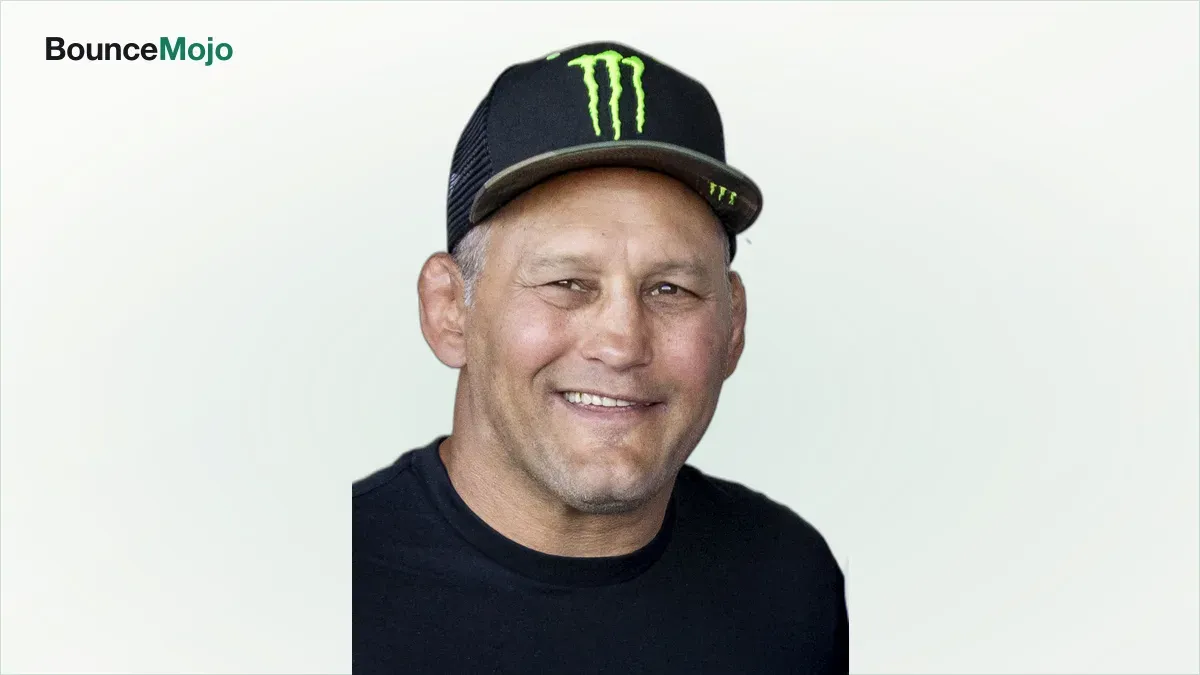
Most fight fans know Dan Henderson for one thing: the punch. That overhand right, the “H-Bomb,” that flattened opponents and defined a generation of highlight reels.
Here’s what most people miss: before he was a knockout artist, Henderson was an Olympic-caliber wrestler who out-worked, out-conditioned, and out-lasted nearly everyone who ever stood across from him.
The Myth vs. The Reality
The myth is simple. Dan Henderson: the guy with the nuclear right hand, a highlight-reel finisher who slept opponents with one punch and grinned about it.
The reality is deeper and harder.
Here’s the deal: Henderson wasn’t a lucky puncher. He was one of the most complete and durable fighters the sport ever produced, a technician whose knockout power was the loud part of a very quiet, very disciplined machine. The “H-Bomb” got the replays. The Olympic wrestling underneath it won the fights.
And the “American tough guy” framing misses the man’s range. He fought the best of three continents, in Japan, in the United States, in every weight class from welterweight up to heavyweight, and he did it for nearly two decades. That’s not a puncher. That’s a professional who understood his craft better than almost anyone alive.
You might be wondering: how does a kid from California end up as a two-time Olympian and a legend in Tokyo? To understand that, you have to understand where he started.
The World That Made Dan Henderson
Henderson came up in a very American athletic tradition: the wrestling room.
He was born in Downey, California, in 1970, and grew up inside a wrestling culture that prized toughness, weight-cutting, and a grinding, unglamorous work ethic. This wasn’t the flashy, sponsor-rich MMA world of today. Mixed martial arts didn’t even exist as a mainstream sport when Henderson was learning to compete. There were no giant paydays waiting, no reality shows, no streaming deals.
Now: what existed was amateur wrestling, one of the purest and most demanding sports on earth. Henderson poured himself into it, and it shaped everything, his conditioning, his mental toughness, his refusal to break.
That world of singlets and scales, of early-morning practices and brutal weight cuts, is the backdrop for everything he became. When MMA finally arrived as a viable career, Henderson was already forged. He just needed a cage to put it in.
But before the cage, there was the mat, and a young man chasing an Olympic dream.
The Crucible: Early Life and the Climb
The Environment That Shaped Him
Henderson found wrestling young and never let go. He committed to Greco-Roman wrestling, the upper-body-focused, throw-heavy discipline that rewards raw strength and relentless pressure.
He was good enough to make it all the way to the top. Henderson earned a spot on the United States Olympic team not once but twice, competing at the 1992 Barcelona Games and the 1996 Atlanta Games. To make one Olympic team is the achievement of a lifetime. To make two is the mark of someone who simply would not quit.
Here’s the truth: those years on the mat built a body and a mind that MMA could not break. While other fighters gassed out or crumbled under pressure, Henderson had already survived the crucible of Olympic wrestling. Everything after that felt like a bonus round.
The Catalyst
The turning point came when mixed martial arts started to look like a real sport with real money. Henderson made his pro MMA debut in 1997, and his wrestling base immediately set him apart.
But here’s the kicker: he didn’t just add power to his wrestling. He developed one of the most feared punches in the history of the sport, that overhand right, the “H-Bomb.” Suddenly a control-first wrestler became a finisher, a man who could take you down or put you to sleep. That combination made him a global attraction, and it carried him straight to Japan, where the biggest promotion in the world was waiting.
The Key Players
No fighter builds a legend alone, and Henderson’s story is full of the men who shaped it, both allies and enemies.
Team Quest. Henderson was a founding force behind Team Quest, the influential Oregon-based camp that produced a generation of elite wrestlers-turned-fighters. Training alongside other former amateur standouts, he helped build a system that turned wrestling pedigree into MMA success.
Fedor Emelianenko. The Russian heavyweight, long considered the greatest fighter alive, met Henderson in Strikeforce. Henderson dropped Fedor early before ultimately losing, a moment that showed even the sport’s most untouchable man could be hurt by the “H-Bomb.”
Anderson Silva. At UFC 82, Henderson challenged the great Silva for the middleweight title. He lost, but sharing a cage with one of the best strikers ever added to his legend as a man who never ducked a challenge.
Michael Bisping. And then there was the rivalry that defined the last chapter of his career, a decade-long grudge with the brash Brit that would end in the most controversial fight of Henderson’s life.
Think about it: every one of these names is a giant of the sport. Henderson didn’t build his legend against nobodies. He built it against the best, over and over. That refusal to take the easy road explains both his glory and its cost.
The Turning Point
The Pinnacle
Henderson’s mountaintop was in Japan, inside the PRIDE ring.
He accomplished something no fighter had ever done in a major promotion: he held two championship belts in two different weight classes at the same time. He won the PRIDE welterweight title and the PRIDE middleweight title, a double-champion feat that would take the UFC years to see replicated. In Japan, where MMA was treated like a spectacle and its stars like gods, Henderson was royalty.
His single most replayed moment came later, though, at UFC 100 in 2009, when he landed a devastating “H-Bomb” on Bisping, followed by a leaping punch to the already-unconscious fighter. The image, Henderson diving down onto a sleeping opponent, became one of the most iconic knockouts in the sport’s history. As his own net worth story lays out, moments like that turned into bonus checks and lasting marketability.
The Price
Here’s the kicker: a career that long, against opponents that dangerous, comes with a bill.
Henderson fought into his mid-40s, absorbing punishment year after year. He suffered brutal knockouts of his own, including a stretch of late-career losses that reminded fans the “H-Bomb” could be answered. His body carried the accumulated damage of nearly 20 years of professional fighting on top of a lifetime of Olympic wrestling.
The pinnacle brought fame and a fortune. It also brought wear that no amount of toughness could fully absorb. Which leads to the harder truths.
The Unvarnished Truth
Henderson was never a villain, but he was a fighter, and fighters live with hard realities.
He fought too long, by some measures. He took fights against much younger, faster men into his 40s, and paid for it with painful losses that could have tarnished a lesser legend. Critics argued he stayed past his prime, chasing one more war, one more payday, one more shot at a belt that kept slipping away.
Now: none of that diminishes him. It humanizes him. Henderson was a competitor to his core, a man built by wrestling to keep going long after his body sent warnings. When your entire identity is refusing to quit, knowing when to stop becomes the hardest fight of all.
The most honest thing you can say about him is this: his greatest strength, his relentlessness, was also the thing that kept him in the cage a few years too long.
Controversies and Criticisms
Henderson’s career had its share of arguments, most of them centered on that Bisping rivalry.
The UFC 100 knockout. His leaping follow-up punch on an unconscious Bisping in 2009 became legendary, but it also drew criticism from some who felt the extra shot was unnecessary. Henderson defended it as the instinct of a finisher making sure the fight was over.
The UFC 204 rematch. Seven years later, in 2016, Henderson got a title shot against Bisping, by then the champion. Their fight was razor-close, and many fans and pundits believed Henderson had done enough to win. He lost a decision in what became his final fight, a controversial ending to a storied career.
Testosterone-replacement therapy. Like several fighters of his era, Henderson used TRT under the rules of the time before it was banned in MMA. Critics questioned how much it extended his late-career competitiveness, a debate that followed a number of aging stars of his generation.
The late-career losses. In the final stretch of his career, Henderson suffered several knockout defeats against younger, faster opponents. Some observers felt those losses tarnished his highlight-reel image. Others saw them for what they were: the inevitable cost of a legend refusing to leave the sport quietly, still hunting one more knockout, one more title shot, deep into his 40s.
What We Can Learn From Dan Henderson
Navigating Hard Times
The first lesson is about durability. Henderson’s career is a study in showing up, again and again, through losses, injuries, and years most fighters can’t survive. He proved that toughness isn’t a single heroic moment. It’s a habit, built one hard practice at a time.
But here’s the truth the losses make plain: durability has a price, and part of wisdom is knowing when the fight you’re winning against everyone else has become a fight against yourself. Henderson kept going because quitting was never in his makeup, and that’s both his glory and his warning.
The Success Blueprint
If you want the replicable part, it’s this: master a foundational skill so completely that everything else builds on top of it. Henderson’s Olympic wrestling was the bedrock. It gave him control, conditioning, and confidence that let him add power on top.
That’s transferable to anything. Become undeniably good at one core thing, and the rest of your success has somewhere to stand. His approach put him on the same historical shelf as fellow wrestling-based legends like Randy Couture, and his placement among the sport’s earners on our richest MMA fighters ranking tells the financial half of the story.
Becoming Better
The deepest lesson is about respect earned the hard way. Henderson never sought the spotlight with trash talk or theatrics. He let his wrestling, his conditioning, and his “H-Bomb” do the talking, and the respect he earned outlasted every win and loss.
In other words, you don’t have to be the loudest to be the most respected. Sometimes the quiet, relentless professional writes the longest legacy of all.
Final Verdict
Dan Henderson is one of the most important figures in the history of mixed martial arts, and “important” is doing heavier work than “great,” though he was that too. He bridged the old wrestling world and the modern fight game. He carried the sport’s biggest moments in Japan and America. He gave MMA one of its most unforgettable images.
And here’s the truth that reframes everything: the man remembered for a single punch was, underneath it, one of the most complete and durable athletes the sport ever saw. The “H-Bomb” was never the whole story. It was just the loudest part of a career built on decades of quiet, brutal work. The full mechanics of the fortune he built are in his net worth breakdown, and where he ranks among the sport’s earners lives on our richest MMA fighters list.
If you want to understand the man MMA was built on, study Henderson. Not the knockout. The 20 years of work that made the knockout possible.
Shop Dan Henderson on Amazon
Books, audiobooks, merch and more, handpicked for fans.
As an Amazon Associate we earn from qualifying purchases.
Frequently Asked Questions
Where is Dan Henderson from?+
Dan Henderson was born in Downey, California, on August 24, 1970, and grew up in the state's wrestling culture before making his home in Temecula, California.
Did Dan Henderson wrestle in the Olympics?+
Yes. Henderson was a two-time Olympic Greco-Roman wrestler, competing for the United States at the 1992 Barcelona and 1996 Atlanta Summer Games before turning to mixed martial arts.
What is the 'H-Bomb'?+
The 'H-Bomb' is Henderson's nickname for his overhand right, one of the most feared single punches in MMA history, responsible for some of the sport's most replayed knockouts.
What made Dan Henderson a PRIDE legend?+
In PRIDE FC, Henderson became the first fighter in a major promotion to hold two titles in two weight classes at the same time, the welterweight and middleweight belts, cementing his legend in Japan.
When did Dan Henderson retire?+
Henderson retired in 2016 after a hard-fought loss to Michael Bisping for the UFC middleweight title, closing a career that spanned nearly 20 years.
Want the money side of the story?
Read Dan Henderson's Full Net Worth Breakdown →Shop Dan Henderson on Amazon
Books, audiobooks, merch and more, handpicked for fans.
As an Amazon Associate we earn from qualifying purchases.