Conor McGregor Biography: The Apprentice Plumber Who Ruled MMA
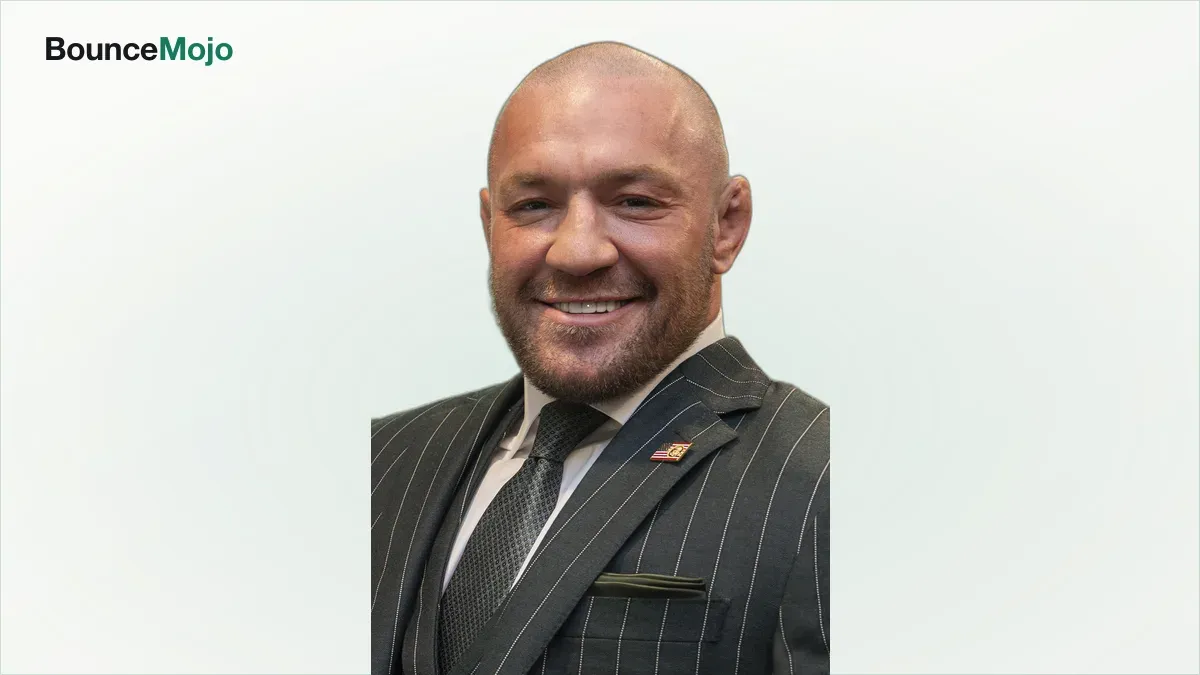
One trait explains almost everything about Conor McGregor, the belts and the courtrooms alike: he has never in his life been able to imagine losing.
That fearlessness is why a plumber’s apprentice on 188 euro a week told anyone who would listen that he’d be a two-weight world champion, and then became one. It is also why the same man kept ending up in headlines he’d rather not have earned. Read his story as one thing that cuts both ways and it stops being a contradiction.
Crumlin, 188 Euro a Week, and a Sport With No Career Path
McGregor was born in 1988 in Crumlin, a tough, working-class corner of Dublin, the only son among the children of Tony and Margaret McGregor. He boxed as a boy, played football, and carried the restless, scrappy energy of a kid who needed somewhere to put it.
This was Ireland before and after the Celtic Tiger boom, a place where a lad from the estates learned a trade, kept his head down, and hoped the economy held. The 2008 crash hit hard. Jobs vanished. A generation of young Irish men found themselves scrapping for work that wasn’t there.
Full-time mixed martial arts was not a way out of that. Ireland had boxing heroes, but MMA as a living was almost unheard of locally, with no blueprint and no money in it. A young man who told his family he was quitting his plumbing apprenticeship to fight sounded, to most ears, like a young man throwing his future away. The choice nearly tore the household apart; his father wanted him to keep the trade, and Conor walked away from it anyway.
So he lived on welfare, roughly 188 euro a week, training by day at Straight Blast Gym in Dublin under coach John Kavanagh and fighting for small purses across Europe. His partner Dee Devlin worked and supported him through those lean years. By every measure available at the time, it was reckless.
He didn’t climb a ladder that already existed. He built it as he went, and dragged Irish MMA into the global spotlight behind him.
Two Belts in Cage Warriors, Then the Last Dole Cheque
The proof arrived in Cage Warriors, the European promotion where McGregor did something almost nobody does: he held two titles in two weight classes at the same time.
That feat, plus a personality that lit up every camera pointed at it, caught the UFC’s attention. He signed with the sport’s biggest promotion in 2013. He has told the story many times since - he collected his final unemployment cheque days before his UFC debut, then knocked out his first opponent and never looked back.
The trash talk that followed was not noise bolted onto the talent. It was the strategy. Long before he could afford the suits, McGregor was telling people exactly what he would do and then doing it, which is a business plan delivered at full volume. The “overnight sensation” framing has the story backwards. He grafted for years in half-empty European arenas, driving to fights for a few hundred euro. The overnight part came after nearly a decade of unglamorous work.
Two men made the rise stick. Kavanagh, the founder of SBG Ireland, was the steady technical mind behind the noise, taking a raw, unemployed kid and helping forge a two-division champion. Dana White, the UFC president, saw the marketing gold immediately and pushed him to the front of the promotion, turning a European prospect into the biggest pay-per-view draw the sport had ever produced.
Thirteen Seconds Against Aldo, and the Mayweather Payday
The mountaintop came in a rush between 2015 and 2017.
In December 2015 he knocked out featherweight king Jose Aldo in 13 seconds, one of the fastest finishes in title-fight history. Eleven months later he beat Eddie Alvarez for the lightweight belt and became the first fighter ever to hold UFC titles in two weight classes simultaneously. He had already built one of the sport’s great rivalries with Nate Diaz across two brutal fights in 2016.
Then the biggest bet of all. In August 2017 he crossed into boxing to face Floyd Mayweather, an event that generated one of the largest gates in combat-sports history. He lost by TKO in the tenth round and walked away with a reported nine-figure payday and a level of global fame few athletes ever touch.
The following year brought the other kind of record. His 2018 clash with Khabib Nurmagomedov at UFC 229 was the most bought event in UFC history. It ended with McGregor tapping out and a brawl spilling out of the octagon. As his net worth story shows, even that loss made him richer than ever.
And then the audacity that built the empire made it hard to sustain. McGregor fought less and less as the money piled up. A broken leg in the 2021 rematch with Dustin Poirier kept him out for long stretches. The hunger that drove the plumber’s apprentice was harder to summon for a man worth nine figures.
The Bus, the Brawl, and the 2024 Dublin Verdict
McGregor’s life outside the cage has been as turbulent as anything inside it, and pretending otherwise does him no favours.
Ahead of UFC 223 in New York in 2018, McGregor and an entourage attacked a bus carrying rival fighters, throwing a dolly through a window. He pleaded guilty to disorderly conduct. The episode foreshadowed the UFC 229 chaos with Khabib months later.
Over the years he has faced multiple assault allegations and legal proceedings in Ireland and abroad, including a widely reported incident involving a phone and a fan, and a case tied to an alleged altercation in a Dublin pub. In late 2024, a Dublin civil jury found against McGregor in a high-profile case and awarded damages to the plaintiff. He announced he would appeal. The verdict damaged his reputation and cost him business relationships.
He has been open about his drinking and his volatile temper. The discipline that got him to the top has been inconsistent since he reached it, and critics note that for all the talk, McGregor has fought rarely in recent years, with promised returns and title runs repeatedly slipping.
The honest reading is that his greatest strength and his greatest weakness are the same trait. Fearlessness won him belts and a fortune. A young man who bet everything and won also learned, dangerously, that the rules seemed not to apply to him - and those instincts, scaled to global fame and a nine-figure bank account, are combustible. Talent and money bought him freedom. Freedom without restraint became his hardest opponent, and building guardrails, rather than another highlight-reel knockout, is the fight he still hasn’t clearly won.
Why the Whiskey Mattered More Than the Belts
McGregor is one of the most important figures in the history of mixed martial arts, and “important” carries weight that “great” alone can’t. He didn’t just win titles. He proved a fighter could be a global brand, dragged an entire sport into the mainstream, and rewrote what an MMA payday could look like. Every fighter chasing crossover fame today walks a path he cleared.
The replicable part is not the arrogance. It’s that McGregor understood attention is currency. He built a persona - the suits, the callouts, the self-mythologising - that made every fight an event and every event a business, then converted it into something he owned outright: Proper No. Twelve, sold for a fortune no purse could match. The full mechanics live in his net worth breakdown, and it is comfortably the smartest thing he ever did.
That’s the twist that reframes the whole career. The man defined by his fists made his real money with a bottle of whiskey. Whether his legacy settles as triumph or tragedy depends on chapters not yet written. What’s certain is that nobody else has talked their way from a Dublin welfare line to the top of an entire sport quite like he did.
Shop Conor McGregor on Amazon
Books, audiobooks, merch and more, handpicked for fans.
As an Amazon Associate we earn from qualifying purchases.
Frequently Asked Questions
Where did Conor McGregor grow up?+
Conor McGregor grew up in Crumlin, a working-class suburb of Dublin, Ireland, and later in nearby Lucan. He trained as a plumber's apprentice before committing fully to mixed martial arts.
How did Conor McGregor get into the UFC?+
After building a record in European promotions like Cage Warriors, where he held two belts at once, McGregor signed with the UFC in 2013. He said he collected his last welfare check just days before his UFC debut.
What made Conor McGregor famous?+
McGregor became a global star by winning UFC titles in two weight classes and backing it up with relentless trash talk and showmanship. His 2015 13-second knockout of Jose Aldo and his 2016 rivalry with Nate Diaz turned him into a pay-per-view phenomenon.
Did Conor McGregor really box Floyd Mayweather?+
Yes. In August 2017, McGregor crossed into boxing to face Floyd Mayweather in one of the biggest combat-sports events ever. He lost by TKO in the tenth round but earned a reported nine-figure payday.
Want the money side of the story?
Read Conor McGregor's Full Net Worth Breakdown →Shop Conor McGregor on Amazon
Books, audiobooks, merch and more, handpicked for fans.
As an Amazon Associate we earn from qualifying purchases.