Cody Rhodes Biography: The Son Who Had to Finish the Story
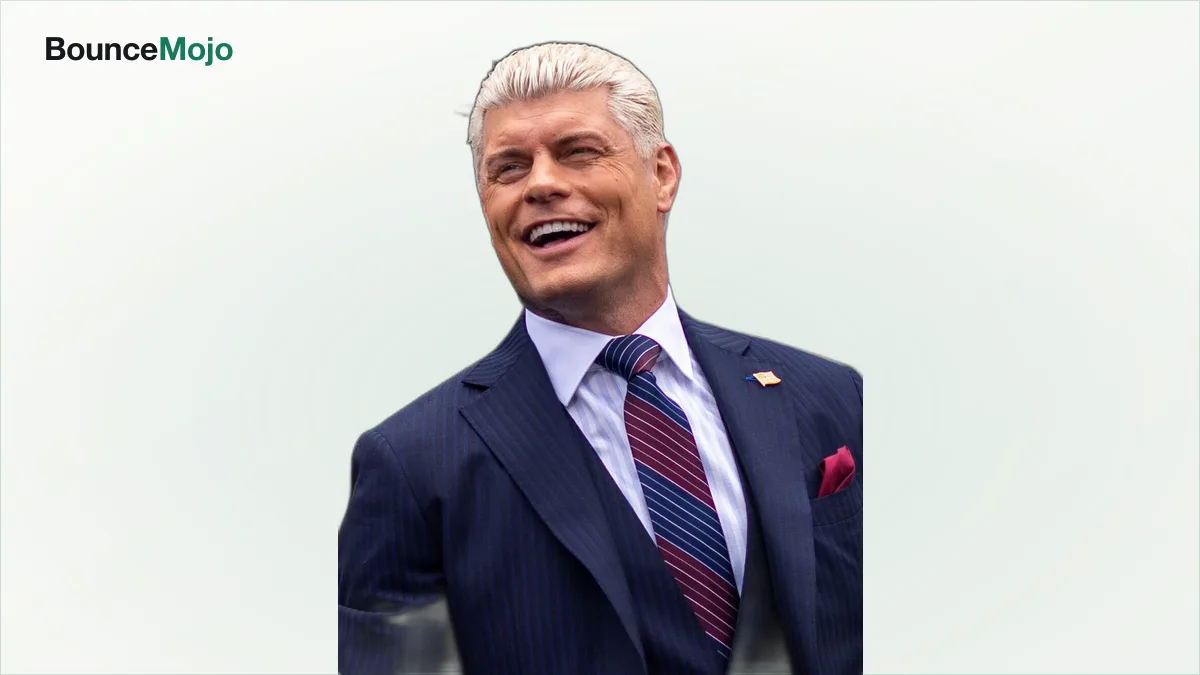
Most people know Cody Rhodes as the WWE Champion who beat Roman Reigns at WrestleMania. That ending only makes sense if you know the beginning.
Here’s what most people miss: the biggest comeback in modern wrestling started with a quit note. Rhodes walked away from the largest company in the industry with nothing lined up, and that leap is the whole story.
The Myth vs. The Reality
The myth is a fairy tale. Cody Rhodes: golden son of a beloved legend, born to be a champion, destined to win the big one. Roll credits.
The reality is grittier.
Here’s the deal: being Dusty Rhodes’ son was as much a weight as a gift. The name opened doors, but it also set an impossible bar and drew constant comparisons. And for years, Cody’s WWE career looked less like destiny and more like a talented performer stuck in neutral, buried under gimmicks that never let his real ability shine.
The comeback narrative also flattens something important: nobody handed Rhodes his triumph. He had to leave the biggest stage in wrestling, risk his entire livelihood, and rebuild his value from the ground up before WWE would ever treat him like the star he believed he was.
You might be wondering: why would a second-generation star with a guaranteed paycheck throw it all away? To understand that, you have to understand the world, and the shadow, he grew up in.
The World That Made Cody Rhodes
Rhodes was born in 1985 into wrestling royalty.
His father, Dusty Rhodes, was “The American Dream,” one of the most beloved and charismatic figures the business ever produced, a blue-collar hero who connected with fans like almost no one else. His half-brother Dustin became Goldust, a bold and enduring character in his own right. Cody grew up not watching wrestling from the outside but living inside it.
Now: that upbringing was a double-edged sword. He absorbed the business by osmosis, the psychology, the promos, the showmanship. But he also carried a surname that guaranteed every step he took would be measured against a legend. Fans didn’t just want him to be good. They wanted him to be a Rhodes.
He was raised in Marietta, Georgia, and became a genuine amateur talent, winning two Georgia state high-school wrestling championships before turning pro. The pedigree was real. The pressure was heavier.
Before the triumph, there was a young man trying to prove he was more than his father’s last name.
The Crucible: Early Life and the Climb
The Environment That Shaped Him
Cody grew up around the industry, which meant he understood it deeply but could never escape its expectations.
He signed with WWE in 2007 and quickly showed promise, winning multiple tag team championships with partners like Hardcore Holly and Ted DiBiase Jr., and later capturing the Intercontinental Championship twice. On paper, a solid career. In reality, he kept bumping against a ceiling.
Here’s the truth: talent wasn’t his problem. Positioning was. Rhodes had the tools of a main-eventer and kept being handed mid-card assignments and character detours that obscured them.
The lowest point of that frustration came with a costume and a name.
The Catalyst
Between his early success and his eventual exit, WWE repackaged Rhodes as Stardust, a face-painted, melodramatic spin on his brother’s Goldust gimmick.
For a man who wanted to be taken seriously as a top star, it felt like a dead end. The character was a costume he couldn’t grow out of, a signal that management didn’t see him the way he saw himself.
So in 2016, Rhodes did the thing almost no one with a guaranteed WWE contract does: he asked to be released. He walked away from security to bet on his own value, the same “own your worth” instinct that shows up in his net worth breakdown.
But leaving was only the gamble. Winning the bet required building something new, and that meant finding the right people.
The Key Players
No one rebuilds a career alone, and Rhodes’ story is full of the people who shaped it.
Dusty Rhodes. The father is the emotional core of everything. Dusty’s legacy was both the inspiration and the standard Cody spent his life chasing. Dusty passed away in 2015, and that loss reframed Cody’s entire mission. The championship his father never won became the goal that defined him.
Brandi Rhodes. His wife became a genuine business partner, taking an executive brand role in the company they’d help build and standing beside him through the highest-risk stretch of his career.
The AEW co-founders. When Rhodes left WWE, he joined a group of ambitious backers and performers to launch a rival promotion. As a founding member and Executive Vice President, he wasn’t just a wrestler in the new company. He was an architect of it.
Roman Reigns. The rivalry that would eventually define his comeback. Reigns, as the dominant champion, became the final obstacle standing between Rhodes and the title his father never held.
Think about it: every one of these relationships pointed toward the same destination. A son, a legacy, a company built to prove a point, all converging on one championship. That convergence is where the story turns.
The Turning Point
The Pinnacle
In 2022, six years after walking out, Rhodes returned to WWE, and the payoff came at WrestleMania.
His comeback was one of the most anticipated in years. He’d proven he could draw elsewhere, co-founded a company that challenged WWE, and returned with leverage no stalled mid-carder ever has. He adopted a rallying cry that fans latched onto instantly: “finish the story.” The story was his father’s, the WWE Championship Dusty never won.
The first attempt fell short. And then, on Night 2 of WrestleMania XL, Rhodes defeated Roman Reigns to win the Undisputed WWE Championship, closing a loop that stretched back through his entire family history. He had won the crown his father never wore.
He also became a two-time Royal Rumble winner, taking the match in both 2023 and 2024, the first man in 26 years to win back-to-back Rumbles. The kid buried under face paint had become the face of the company.
The Price
Here’s the kicker: the triumph only mattered because of everything it cost to get there.
Rhodes had to endure the Stardust years, the frustration of being undervalued, the grief of losing his father before the story was finished, and the terrifying uncertainty of walking away from WWE with no guarantee it would ever want him back. He gambled his career on a belief that most people around him couldn’t see.
The championship was the reward. The years in the wilderness were the price of admission. And that risk is exactly what separates his fortune, detailed in his net worth story, from the safe, salaried path he could have taken.
The Unvarnished Truth
Rhodes is not a flawless hero, and the honest version of his story admits it.
His early WWE run wasn’t derailed by bad luck alone. There were stretches where his in-ring identity was muddled and his promos hadn’t yet found the emotional weight they’d later carry. He was a good wrestler for years before he became a great one, and the growth was public and sometimes awkward.
Now: his AEW departure wasn’t tidy either. Leaving a company he’d co-founded, after failing to agree on a new contract, meant walking away from something he had literally helped build. That is a complicated, human decision, ambition and restlessness pulling against loyalty.
The most honest thing you can say about Rhodes is that his defining trait, an almost stubborn belief in his own destiny, is both what saved his career and what makes him occasionally hard to read. The same conviction that made him quit WWE made him leave AEW.
Controversies and Criticisms
Rhodes has drawn his share of criticism across a public career.
The AEW exit. Some fans felt Rhodes’ departure from the company he co-founded was a betrayal of the promotion and the movement it represented. Leaving to rejoin the very giant AEW was built to challenge struck some as opportunistic.
The “chosen one” narrative. As his WWE comeback rolled toward the title, critics argued the storytelling leaned too heavily on his lineage and the “finish the story” emotion, questioning whether the push was earned or handed to a legacy name.
Booking debates. His long chase for the championship, including the initial WrestleMania loss, sparked endless fan arguments about pacing and whether the payoff arrived at the right moment.
Here’s the truth: most of that criticism is the byproduct of ambition. Rhodes made bold, divisive choices, quitting, co-founding, leaving, returning, and bold choices always generate critics. The alternative was staying safe and forgettable, which he refused to do.
Quote and Character Analysis
Rhodes’ story is best understood through a single phrase.
“Finish the story” wasn’t just a catchphrase. It was a mission statement wrapped in grief. It told fans exactly what was at stake, his father’s unfinished legacy, and it turned a title chase into an emotional saga. As a promo, it did what the best wrestling storytelling does: it made the personal universal.
His decision to leave WWE spoke even louder than any promo. It said Rhodes believed his value was real even when the company that employed him didn’t. That self-belief, bordering on defiance, is the engine of everything he achieved.
And his AEW co-founder role revealed the entrepreneur beneath the performer. Rhodes didn’t just want to be a star. He wanted a stake in the business, an instinct that shaped both his career and his wealth.
What We Can Learn From Cody Rhodes
Navigating Hard Times
The first lesson is about the courage to leave. Rhodes’ career only took off after he abandoned the security that was quietly holding him back. He was willing to trade certainty for a shot at his real value.
But here’s the deeper takeaway: leaving is only step one. Rhodes didn’t just quit, he built. He co-founded a company, rebuilt his reputation, and created leverage. Walking away from what’s not working means nothing unless you have the discipline to construct something better in its place.
The Success Blueprint
If you want the replicable part, it’s this: Rhodes treated his own name like an asset to be developed, not a title to be handed. He invested in his value through independent work and ownership, then negotiated from strength.
That is transferable far beyond wrestling. The lesson is that your leverage grows the moment you prove you can succeed on your own terms, and that ownership beats a salary alone. It’s the same principle that lifts the biggest names on our richest wrestlers list, and it echoes across the richest athletes rankings: fame is only the raw material. Equity and self-belief are what compound it.
Becoming Better
The deepest lesson is about grief and purpose. Rhodes turned the pain of losing his father, and the sting of the championship Dusty never won, into fuel. He didn’t run from the pressure of his name. He ran straight at it.
In other words, the weight you’re carrying can become the reason you win, if you’re brave enough to make it the point instead of the excuse.
Final Verdict
Cody Rhodes is one of the most compelling comeback stories modern wrestling has produced, and “comeback” undersells it. He didn’t just return. He left the top, built a rival, and came back to conquer the very peak that once had no room for him.
Here’s the twist that reframes everything: the story he spent years trying to “finish” was never really his own. It was his father’s. Dusty Rhodes, “The American Dream,” beloved by millions, never captured the WWE Championship. His son did it for him at WrestleMania, and in that moment the arc of two careers became one. The financial rewards of that journey are laid out in his net worth breakdown, but the emotional payoff is simpler. A son picked up a story his father couldn’t finish, gambled everything to get the pen back, and wrote the ending himself.
Shop Cody Rhodes on Amazon
Books, audiobooks, merch and more, handpicked for fans.
As an Amazon Associate we earn from qualifying purchases.
Frequently Asked Questions
Who is Cody Rhodes' father?+
Cody Rhodes is the son of WWE Hall of Famer Dusty Rhodes, 'The American Dream,' one of the most beloved figures in wrestling history. His half-brother is veteran wrestler Dustin Rhodes, known as Goldust.
Why did Cody Rhodes leave WWE in 2016?+
Frustrated by a stalled role, most notably the 'Stardust' gimmick, Rhodes requested his release in 2016 to prove his value elsewhere. He rebuilt his reputation on the independent scene and then co-founded AEW.
Did Cody Rhodes co-found AEW?+
Yes. Rhodes was a founding member and Executive Vice President of All Elite Wrestling, helping launch the company in 2019 before parting ways and returning to WWE in 2022.
What is 'finishing the story'?+
'Finishing the story' became Rhodes' rallying phrase for his quest to win the WWE Championship his late father never did. He completed it by defeating Roman Reigns at WrestleMania XL to win the Undisputed WWE Championship.
Where did Cody Rhodes grow up?+
Cody Rhodes was born in Marietta, Georgia, on June 30, 1985, and grew up immersed in the wrestling business as the son of a legend. He was a two-time Georgia state high-school amateur wrestling champion.
Want the money side of the story?
Read Cody Rhodes's Full Net Worth Breakdown →Shop Cody Rhodes on Amazon
Books, audiobooks, merch and more, handpicked for fans.
As an Amazon Associate we earn from qualifying purchases.