CM Punk Biography: The Straight-Edge Outsider Who Wouldn't Conform
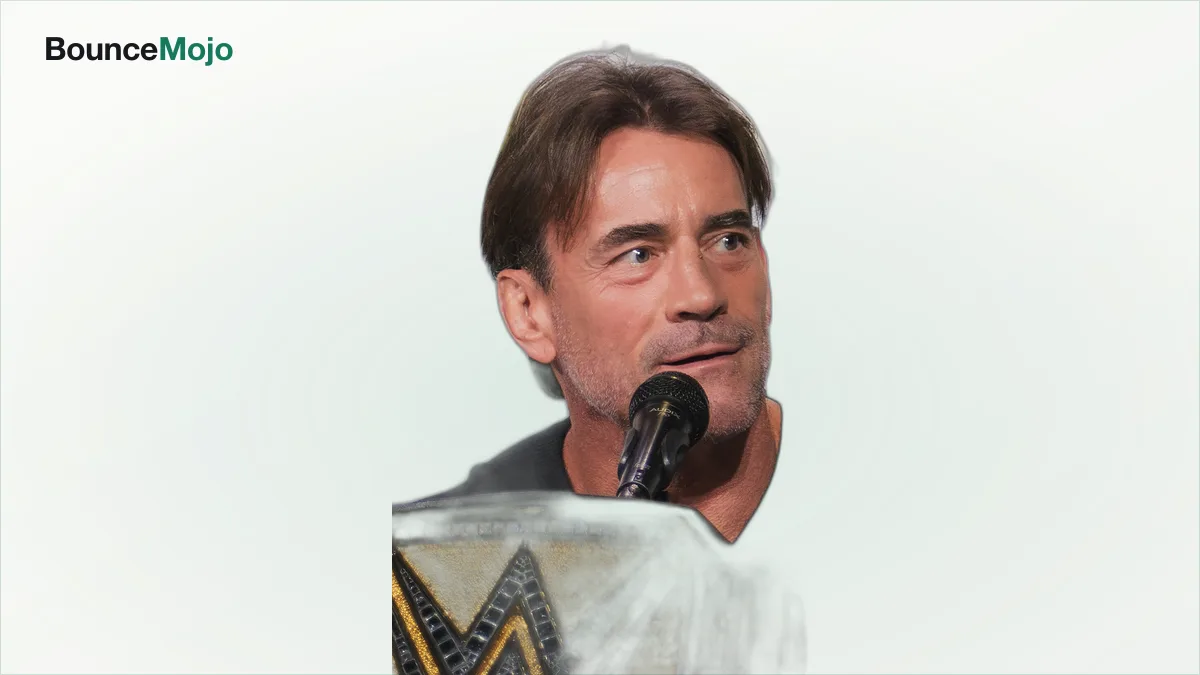
Most people know CM Punk as the guy who cut the greatest promo of the modern era. That moment only makes sense if you know how badly he wanted to burn it all down.
Here’s what most people miss: the most authentic superstar of his generation built his entire identity on refusing to fit in, in a business that demands everyone fall in line.
The Myth vs. The Reality
The myth is a highlight reel. CM Punk: the rebel who sat cross-legged on a stage and told the truth about wrestling, the “Best in the World,” the guy who did it his way. Cool, clean, cinematic.
The reality has sharper edges.
Here’s the deal: Punk’s defiance wasn’t a gimmick he switched on for the cameras. It was forged in a childhood he’s described as difficult, in a home shadowed by addiction, in the choice of a teenager to reject the alcohol, drugs and tobacco he saw doing damage around him. The straight-edge identity that became his persona started as a survival mechanism.
And the “authentic hero” framing misses the cost. The same refusal to play along that made him beloved also made him combustible, feuding with management, walking out, burning bridges he’d sometimes have to rebuild. His greatest strength and his greatest liability were the same trait.
You might be wondering: how does a kid from the Chicago suburbs turn stubbornness into stardom? To understand that, you have to understand where he came from.
The World That Made CM Punk
Punk was born Phillip Jack Brooks in Chicago in 1978 and raised in the nearby suburb of Lockport.
By his own accounts, home life was hard. He has spoken about a strained relationship with his family and about growing up around addiction, experiences that pushed him toward the straight-edge philosophy he’d carry for life. In a culture that often treats drinking and partying as rites of passage, a kid choosing to abstain was already an outsider.
Now: that outsider status became the foundation of everything. Punk didn’t just tolerate being different. He weaponized it. The clean-living, sharp-tongued loner wasn’t a character he invented for wrestling. It was who he already was.
His way into the business came from the ground up, literally. Punk and his friends started as untrained backyard wrestlers before he committed to the craft seriously. There was no pedigree, no famous father, no shortcut. Just a stubborn belief that he belonged.
Before the pipe bomb, there was a Chicago kid who decided the rules other people lived by didn’t apply to him.
The Crucible: Early Life and the Climb
The Environment That Shaped Him
Punk has described feeling like an outsider even inside his own family, so far removed that he has said he once wondered whether he was adopted.
He left home young and lived for a time with a friend’s family, who took him in. That early instability, the sense of not belonging anywhere, hardened into a self-reliance that defined his entire career. He learned not to wait for anyone’s permission.
Here’s the truth: that upbringing gave Punk a chip on his shoulder that never fully went away, and it made him magnetic. Audiences can feel authenticity, and Punk’s edge was real. When he told the world he didn’t need it, part of him meant it.
He trained seriously after high school and broke into the independent scene, grinding through small promotions and building a reputation as one of the sharpest talkers and workers on the circuit.
The Catalyst
The independent years, especially in Ring of Honor, were where Punk sharpened the blade.
He became known for cutting promos that felt more real than the scripted norm, and for a straight-edge heel persona that let him lecture crowds and make them hate him for it. He was doing character work miles ahead of the industry standard.
That reputation earned him a WWE contract. And once inside the biggest company in the business, Punk’s talent and his defiance were on a collision course, one that would detonate in 2011 in a way no one could have scripted. The financial rewards of that rise are traced in his net worth breakdown.
But an explosion needs a spark, and Punk’s came from the people around him.
The Key Players
No one climbs alone, and Punk’s story is full of allies and antagonists.
AJ Lee. April Mendez, who wrestled as AJ Lee and became a WWE Divas Champion, married Punk in 2014. A fellow comic-book lover and eventual author, she became his most important partner through the most turbulent stretch of his career.
Colt Cabana. Punk’s longtime friend and independent tag-team partner represents his roots, the pre-fame grind and the loyalty of the indie scene. Their friendship, and later a public falling-out and legal dispute, is a thread woven through Punk’s story.
Vince McMahon. The WWE chairman was the target of Punk’s most famous promo and the embodiment of the corporate machine Punk chafed against. Their relationship defined the tension of Punk’s WWE run.
Dana White. The UFC president took a chance on signing a pro wrestler to fight in the octagon, giving Punk the platform for the most surprising gamble of his career.
Think about it: every one of these relationships is a version of Punk’s central tension, the outsider pushing against the institution. That tension reached its peak, and its breaking point, at the height of his fame.
The Turning Point
The Pinnacle
On June 27, 2011, Punk sat down at the edge of the entrance stage and changed wrestling.
The “pipe bomb” promo was a worked-shoot, scripted in intent but delivered with such raw honesty that it blurred the line between character and reality. Punk criticized WWE, its owner, and the business itself, name-dropped other promotions, and announced his contract was expiring. Fans didn’t know what was real. Neither, for a moment, did the industry.
Weeks later at Money in the Bank, in his hometown of Chicago, Punk defeated John Cena and walked out of the arena as WWE Champion with the belt in his hands. It remains one of the most electric moments of the era. He went on to hold the WWE Championship for a marathon reign of more than 400 days, one of the longest of the modern age.
That stretch made Punk the “Best in the World,” a genuine main-event draw and one of the most popular wrestlers alive. His voice had made him a star.
The Price
Here’s the kicker: the same defiance that lifted him made staying impossible.
Punk grew increasingly frustrated with how WWE was run, with creative decisions, with his physical toll, with feeling undervalued despite his popularity. In early 2014, he simply left, walking out of the company at the height of his fame. It was a stunning, bitter departure.
The fame had brought him everything he wanted and a level of friction he couldn’t stomach. The pinnacle came with a price: burnout, resentment, and a very public exit that would take years to heal. And it set up the strangest chapter of all.
The Unvarnished Truth
Punk is not an easy hero, and the honest version of his story admits it.
He can be abrasive, combustible, and quick to burn a bridge. His 2014 WWE exit was messy. His later falling-out with old friend Colt Cabana turned into a lawsuit. Backstage reports across his career have painted him as brilliant but difficult, a man whose principles sometimes shade into stubbornness.
Now: none of that erases the authenticity that made him special. Much of Punk’s edge is the residue of a hard upbringing, a kid who learned early to trust himself over everyone else. That self-reliance made him a star and also made him hard to work with. You rarely get one without the other.
The most honest thing you can say about Punk is that he refuses to pretend. In a business built on illusion, that refusal is his defining trait, and his defining flaw.
Controversies and Criticisms
Punk’s career has been shadowed by conflict.
The UFC losses. After leaving WWE, Punk signed with the UFC and lost both of his fights by unanimous decision. Critics argued a pro wrestler had no business in real MMA. Punk countered that he’d chased a genuine dream, win or lose, and he still collected marquee purses for the attempt.
The Cabana lawsuit. His public and legal dispute with longtime friend Colt Cabana, tied to allegations Punk made about WWE, became a bitter and complicated saga that divided fans.
Backstage friction. Across multiple promotions, Punk has been at the center of locker-room and management tensions, reinforcing a reputation as an immense talent who is not always easy to manage.
Here’s the truth: most of Punk’s controversies flow from the same source as his greatness, an unwillingness to swallow his opinions or defer to authority. That trait made the pipe bomb possible. It also made peace difficult.
Quote and Character Analysis
Punk’s whole philosophy lives inside a single word: authenticity.
The pipe bomb worked because Punk meant enough of it. “I’m the best in the world,” he insisted, and the line landed because he clearly believed it. He built a persona not by pretending to be someone else, but by amplifying the most defiant parts of who he already was.
His straight-edge identity told the same story. In a business full of excess, Punk made abstinence a badge of honor and a source of heel heat, lecturing crowds who booed him for it. It was character work rooted in genuine conviction.
And his UFC gamble revealed the core of the man: Punk would rather try something real and lose than play it safe and stay comfortable. That willingness to fail publicly, on his own terms, is the through-line of his entire life.
What We Can Learn From CM Punk
Navigating Hard Times
The first lesson is about turning pain into identity. Punk took a difficult childhood and a life shadowed by addiction and built armor out of it, choosing a clean, defiant path and making that choice the center of his brand.
But here’s the deeper takeaway: self-reliance is a gift and a trap. The same independence that let Punk survive and succeed also isolated him and burned relationships. The skill isn’t just standing alone, it’s knowing when to let people in.
The Success Blueprint
If you want the replicable part, it’s this: Punk made his authentic voice his most valuable asset. He didn’t out-muscle the competition. He out-talked them, by being real when everyone else was polished.
That’s transferable far beyond wrestling. In a world of manufactured personas, genuine conviction cuts through. Punk also diversified relentlessly, fighting in the UFC, writing for Marvel, acting on television, so his value never depended on a single stage. It’s the same principle that lifts the biggest names on our richest wrestlers list, and echoes across the richest athletes rankings: build a brand people trust, then let it earn in more than one place.
Becoming Better
The deepest lesson is about the double edge of principle. Punk’s convictions made him a legend and cost him relationships. Standing on principle is powerful, but rigidity has a price.
In other words, know what you’ll fight for, and know when the fight isn’t worth what it takes from you. Punk spent a career learning that lesson the hard way, and in public.
Final Verdict
CM Punk is one of the most influential wrestlers of the 21st century, and “influential” fits him better than “dominant,” though he was a genuine main-event draw for years. He didn’t just win matches. He changed what a wrestling promo could be and proved that authenticity, delivered with enough nerve, is the most powerful tool in the business.
Here’s the twist that reframes everything: the man who built his fame on wanting to leave kept coming back. Punk walked out on WWE in a blaze of resentment, fought in a cage, wrote comics, acted, and then, years later, returned to the very business he’d raged against. The full financial arc of that journey is in his net worth breakdown, but the human story is simpler. An outsider who never fit in spent his whole life proving he didn’t have to, and became one of the most beloved figures in the sport precisely because he refused to play along.
Shop CM Punk on Amazon
Books, audiobooks, merch and more, handpicked for fans.
As an Amazon Associate we earn from qualifying purchases.
Frequently Asked Questions
What is CM Punk's real name?+
CM Punk's real name is Phillip Jack Brooks. He was born on October 26, 1978, in Chicago, Illinois, and raised in the suburb of Lockport.
What does 'straight edge' mean for CM Punk?+
Punk is famously straight edge, meaning he abstains from alcohol, drugs and tobacco. He grew up around addiction and made that clean lifestyle a core part of both his personal identity and his wrestling persona.
What was CM Punk's 'pipe bomb' promo?+
In June 2011, Punk delivered a scathing, worked-shoot promo sitting at the top of the entrance ramp, criticizing WWE and its owner. Known as the 'pipe bomb,' it became one of the most influential promos in wrestling history.
Did CM Punk really fight in the UFC?+
Yes. After leaving WWE in 2014, Punk signed with the UFC and fought twice, losing both bouts by unanimous decision. He later returned to pro wrestling with AEW and then WWE.
Is CM Punk married?+
Yes. Punk married former WWE Divas Champion AJ Lee (April Mendez) in 2014. Both share a love of comic books and have written professionally.
Want the money side of the story?
Read CM Punk's Full Net Worth Breakdown →Shop CM Punk on Amazon
Books, audiobooks, merch and more, handpicked for fans.
As an Amazon Associate we earn from qualifying purchases.