Clive Davis Biography: The Lawyer Who Learned to Hear Hits
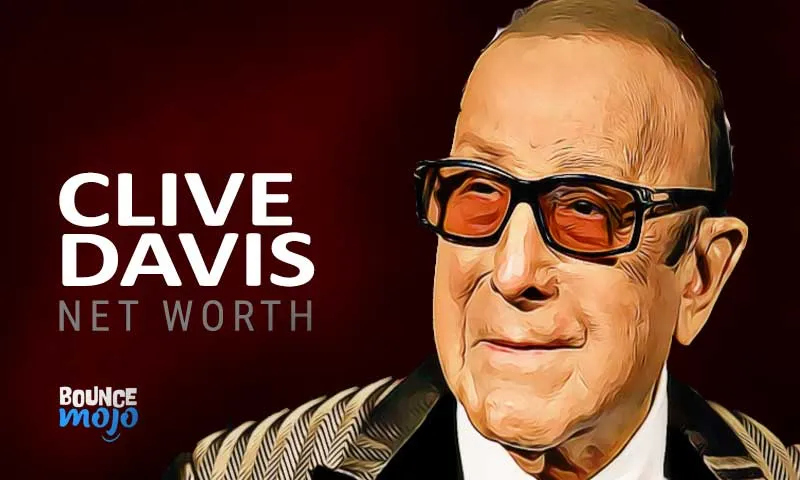
In June 1967 a 35-year-old corporate lawyer in a suit stood in a field in Monterey, California, watching Janis Joplin sing, and had the single most profitable realisation of his professional life: he could tell. Not analyse, not research — tell. He signed Big Brother and the Holding Company on the strength of one performance, and spent the next fifty-nine years doing versions of the same thing.
Clive Davis died on 22 June 2026 at his home in Manhattan, aged 94. The net worth breakdown covers what that instinct was worth in dollars. This is how a man with no musical background ended up with better ears than anyone in the building.
Crown Heights, and Losing Both Parents Before 20
He was born on 4 April 1932 in Brooklyn, to Herman Davis, an electrician and salesman, and Florence Davis. Crown Heights in the 1930s was solidly, unglamorously middle-class — no piano lessons, no industry connections, no money to spare.
Then both parents died while he was still a teenager, within a short span of each other, leaving him effectively on his own before he had finished a degree. He got through New York University on scholarship, graduated magna cum laude, and went on to Harvard Law School on another. Anybody looking for the engine behind a man who could not stop working into his nineties can stop here. Early orphanhood plus scholarship dependence produces a specific kind of adult: one who assumes the floor can vanish, and who therefore never quite stops earning.
Law came first. He drafted contracts in midtown Manhattan, dull work done well, and it was as a lawyer — not a talent scout — that he arrived at Columbia Records.
The Accident of 1967
Columbia was a prestige label with a problem: it was old. Its money came from Broadway cast albums, Andy Williams, Mitch Miller — and rock and roll was eating the industry alive while Columbia watched from the boardroom.
Davis, promoted from the legal department to run the label in 1967, was arguably the least qualified person in America to fix that. He knew nothing about music. What he had instead was an absence of prejudice. Executives twice as knowledgeable had a fixed sense of what a Columbia record sounded like; Davis had none, so when he heard Joplin he simply heard a hit.
Monterey Pop turned into a spree. Santana, Chicago, Blood Sweat & Tears, Bruce Springsteen, Billy Joel, Earth Wind & Fire, Aerosmith, Pink Floyd’s American deal — a company that had missed the sixties owned a large slice of the seventies within five years.
1973: The Firing
It ended abruptly. In 1973 Columbia dismissed him amid allegations involving the misuse of company funds, in a period when federal investigators were circling the record business generally. Davis contested the characterisation of his exit for the rest of his life, and the affair never produced the career-ending outcome his enemies expected.
What it did produce was the most instructive eighteen months of his life. He was 41, publicly humiliated, and unemployable at the level he had just occupied. So he stopped looking for that level.
Arista: Building the Second One Himself
In 1974 he took over Bell Records — a modest pop label owned by Columbia Pictures — and rebuilt it as Arista Records, named after the honour society from his New York school days. This time he owned the culture from the first day.
Arista’s roster reads like a stress test of one man’s range. Barry Manilow and Patti Smith on the same label. Aretha Franklin, mid-career, restored to the charts. Air Supply, Kenny G, Dionne Warwick, the Grateful Dead. Later, distribution deals that put Arista behind LaFace (TLC, Toni Braxton, Usher) and Bad Boy (the Notorious B.I.G.) — Davis, by then in his sixties, quietly financing the two most important Black music imprints of the 1990s.
The signing that defined him came in 1983, when he saw a teenage Whitney Houston in a New York club and built her career deliberately, choosing material himself. It made both of them enormously wealthy and became the central argument about him. Admirers call it the finest artist development job of the era. Detractors argue he over-managed her towards a pop-crossover sound and away from her instincts — and that when her life went wrong in public, the machinery he had built around her had no mechanism for stopping.
Houston died on 11 February 2012, at the Beverly Hilton, hours before Davis’s annual pre-Grammy gala was due to start in the same hotel. He went ahead with the party. The decision is still the most divisive thing he ever did; he maintained she would have wanted it.
Pushed Out at 67, Right Again by 69
In 2000, BMG removed him from Arista on age grounds. He was 67, and the industry treated it as a retirement.
He founded J Records instead, and within a year had signed a 20-year-old classically trained pianist from Hell’s Kitchen. Songs in A Minor sold in the millions and swept the 2002 Grammys, and Alicia Keys became the third generational artist Davis had launched from three different companies across four decades. He also built a late second act for Rod Stewart out of standards records that critics disliked and buyers bought by the truckload.
By 2002 he was running the RCA Music Group; from 2008 he served as Chief Creative Officer of Sony Music, a title he held until his death. He was inducted into the Rock and Roll Hall of Fame in 2000 in the non-performer category, and holds a permanent place on any credible list of the richest people in the music business.
Coming Out at 80
In The Soundtrack of My Life (2013), Davis wrote that he was bisexual, and had been in a relationship with a man for years. He was 80. He had been married twice, both marriages ending in divorce, and had four children, including the music attorney Doug Davis.
The disclosure said something about the industry as much as the man. Davis had spent his career signing artists whose whole appeal was that they said the thing out loud, and he had waited until his ninth decade to do it himself.
What He Was Actually Selling
The persistent myth is that Clive Davis had magic ears — some untrained supernatural sense for a hit. He encouraged the story, and it flattered him in a way that was commercially useful.
The less romantic version is more useful to anyone else. Davis was a lawyer who understood that a record company is a machine for taking risk, and that the risk is best taken by someone with no aesthetic loyalties to protect. He did not have taste in the way a critic does. He had an unusual tolerance for being unfashionable — he would sign Barry Manilow while Patti Smith was down the hall, and he would put out Rod Stewart singing Cole Porter while the critics laughed.
That is the transferable part, and it survives him: the person who cannot be embarrassed has a considerable advantage over the person who can.
Shop Clive Davis on Amazon
Books, audiobooks, merch and more, handpicked for fans.
As an Amazon Associate we earn from qualifying purchases.
Frequently Asked Questions
When did Clive Davis die?+
Davis died on 22 June 2026, at his home in Manhattan, aged 94. He had been born in Brooklyn on 4 April 1932.
Was Clive Davis a musician?+
No. He was a Harvard-trained lawyer who joined Columbia Records' legal department and took over the label in 1967 with, by his own account, no musical training whatsoever.
Why was Clive Davis fired from Columbia Records?+
He was dismissed in 1973 over allegations involving misuse of company funds. Davis disputed the framing of his exit and rebuilt within two years by founding Arista Records.
Which artists did Clive Davis sign?+
Across Columbia, Arista and J Records the list includes Janis Joplin, Bruce Springsteen, Santana, Aerosmith, Barry Manilow, Patti Smith, Whitney Houston, Alicia Keys and Rod Stewart, among many others.
Did Clive Davis write a memoir?+
Two. Clive: Inside the Record Business (1975) and The Soundtrack of My Life (2013), in which he publicly described himself as bisexual at the age of 80.
Want the money side of the story?
Read Clive Davis's Full Net Worth Breakdown →Shop Clive Davis on Amazon
Books, audiobooks, merch and more, handpicked for fans.
As an Amazon Associate we earn from qualifying purchases.