Clayton Kershaw Biography: The Story of Baseball's Best Pitcher
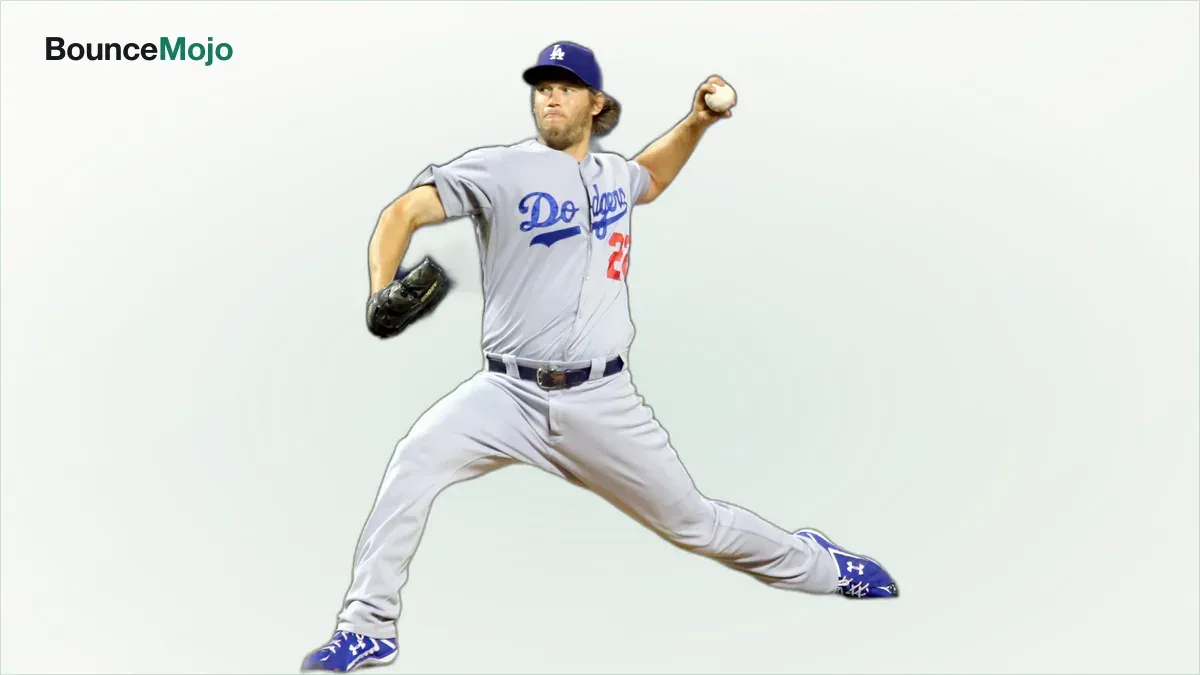
The devastating curveball, the intense stare, the Dodger blue he never took off. That’s the Clayton Kershaw most fans picture: the best pitcher of his generation.
Here’s what most people miss: the ferocity on the mound was forged by something quieter and harder off it. A childhood shaped by absence.
The Myth vs. The Reality
The myth is that Clayton Kershaw is baseball royalty, a golden-armed kid from a comfortable Texas suburb who was always destined for greatness.
The reality has more ache in it.
Here’s the truth: Kershaw’s parents divorced when he was young, and his father was largely absent from his life. He was raised primarily by his mother, and that early loss shaped the fierce, disciplined competitor the world would later see.
Now think about how the polished Dodgers ace was built on a foundation most fans never knew about.
Instead of letting the absence define him, he channeled it into a work ethic that made him nearly unhittable. And to understand how, you have to start in Dallas.
The World That Made Clayton Kershaw
Clayton Edward Kershaw was born on March 19, 1988, in Dallas, Texas. He grew up in the Highland Park area, a place that produced serious athletic talent.
Baseball came early, but so did difficulty. His parents split when he was around ten, and his father drifted out of his life. Kershaw’s mother raised him, working to give her son opportunities, and that bond became the emotional center of his world.
This was Texas high school sports, where football is king and baseball plays second fiddle. Yet Kershaw stood out in both worlds at Highland Park, where he happened to share a field with a young quarterback named Matthew Stafford.
But here’s the kicker: before Kershaw could become a legend, scouts had to see the one pitch that changed everything.
The Crucible: Early Life and the Climb
The environment that shaped him
Kershaw was a big, focused kid who took to pitching with unusual seriousness. His mother’s sacrifices and his own drive fused into a discipline that set him apart from teammates who had more natural ease and less hunger.
At Highland Park High School, he became a dominant pitcher, striking out hitters in bunches and drawing national attention. He was named a top high-school player in the country, and pro scouts began circling.
The talent was obvious. What made him special was the will behind it.
The catalyst
The moment scouts fell in love was the curveball, a pitch so sharp it earned its own nickname, “Public Enemy No. 1.”
Think about that. A teenager throwing a breaking ball good enough to intimidate professional evaluators.
Here’s the deal: in the 2006 draft, the Los Angeles Dodgers selected Kershaw seventh overall. He signed, climbed the minors fast, and reached the major leagues by 2008, a 20-year-old with the stuff of an ace.
Want to know what he did with that arm? He became the best pitcher in baseball.
The Key Players
You cannot tell the Kershaw story without a few names.
His mother, Marianne, is the first. She raised him largely alone after the divorce, and her sacrifices became the fuel behind his relentless work ethic and his devotion to family.
Ellen Kershaw is the second. His wife and high-school sweetheart, she partnered with him to build Kershaw’s Challenge, and together they turned his fame into organized charitable work in Los Angeles and Zambia.
Matthew Stafford is the third, more friend than mentor. The two were teammates at Highland Park before Stafford became an NFL star, and their friendship connected two of the most successful athletes to come out of the same Texas school.
Here’s the truth: everything Kershaw built was about to run into the one thing his brilliance couldn’t always conquer, the postseason.
The Turning Point
The pinnacle
Start with the dominance, because it was historic.
Kershaw won his first Cy Young Award in 2011, then added two more, in 2013 and 2014, plus the National League MVP in 2014. He led the league in ERA multiple times and became the most feared pitcher in the sport for the better part of a decade. In 2020, he finally won a World Series title with the Dodgers.
He did it all in one uniform, a rarity in an era defined by free-agent movement.
The price
Now the cost, which lived in October.
For years, Kershaw’s regular-season brilliance was shadowed by playoff struggles. Big postseason losses hardened into a narrative: unbeatable in summer, vulnerable in the fall. Fair or not, it followed him, and it stung a competitor who cared as much as he did.
Injuries also crept in as he aged, back trouble and arm wear that turned him from an every-fifth-day workhorse into a pitcher managing his body. The 2020 title eased the pressure, but the years of “can’t win the big one” left a mark.
You might be wondering how a pitcher this proud handled that kind of public doubt. The answer shows the character underneath the intensity.
The Unvarnished Truth
Let’s not pretend it was all glory.
The postseason failures were real, and for a stretch they defined his reputation as much as the Cy Youngs did. Kershaw wore that criticism, sometimes visibly, in a sport that remembers October above all else.
His body also betrayed him at times. The back injuries that piled up in his thirties robbed him of the durability that once defined him, forcing him to reinvent how he pitched.
Here’s the truth: Kershaw’s greatest strength, his all-consuming intensity, could also weigh on him. He set impossible standards for himself, and the gap between his regular-season peak and his playoff stumbles haunted him for years.
Even so, that same drive is what pushed him back to the mound after every injury and every heartbreak.
Controversies and Criticisms
For such a respected figure, Kershaw’s controversies are mostly about performance, not scandal.
The playoff narrative is the biggest. Critics spent years asking whether the best regular-season pitcher of his era could ever be trusted in the postseason, a question that only faded after the 2020 championship.
He also drew occasional criticism for his public expressions of faith and for the way he balanced a demanding career with family priorities, though most fans admired both.
Beyond that, the knocks are minor. In a sport with real villains, Kershaw’s biggest sins amount to losing a few big games and getting hurt.
Here’s the thing though: none of it dents the legacy. Because the body of work answered the only question that mattered.
What We Can Learn From Clayton Kershaw
Navigating the darkness
When you grow up with an absence at the center of your life, you can carry the wound or convert it into fuel.
Kershaw converted it. He turned a fractured childhood into a discipline that made him the best in the world, and he built the stable, devoted family life he never fully had. The lesson isn’t “get over it.” It’s that hardship can become the engine of both excellence and the determination to do better for the next generation.
The success blueprint
Now the part that built the career and the fortune.
Kershaw chose loyalty over restlessness. He stayed with one franchise, signed smart contracts, kept a low-key lifestyle, and let his money compound instead of chasing flash. That patient approach is why he ranks among the richest baseball players in the world. The full money breakdown lives in our Clayton Kershaw net worth analysis, and you can see where he sits among the richest athletes overall, alongside teammate Shohei Ohtani.
Becoming better
The deepest lesson is about consistency of character. Kershaw was the same person in triumph and in playoff heartbreak, anchored by faith, family, and work. He proved that steadiness, not drama, is what builds a lasting career.
So what’s the final word on baseball’s best pitcher?
Final Verdict
Clayton Kershaw is the rare superstar whose greatness is inseparable from the quiet hardship that forged it.
On the mound, he’s a three-time Cy Young winner, an MVP, a champion, and a certain Hall of Famer. Off it, he’s a devoted husband and father who built a foundation and gave back to communities on two continents.
Here’s the bottom line: the intensity was never the whole story. Behind the fearsome curveball was a Dallas kid who turned an absent father into a fierce work ethic and became one of the best pitchers the game has ever seen.
Anyone who remembers only the October losses has missed the point. Kershaw’s real story is the climb and the loyalty, and it’s better than the highlight reel.
Shop Clayton Kershaw on Amazon
Books, audiobooks, merch and more, handpicked for fans.
As an Amazon Associate we earn from qualifying purchases.
Frequently Asked Questions
Where did Clayton Kershaw grow up?+
Kershaw was born on March 19, 1988, in Dallas, Texas, and starred at Highland Park High School, where he was a dominant pitcher and a teammate of future NFL quarterback Matthew Stafford.
Did Clayton Kershaw have a difficult childhood?+
His parents divorced when he was young and his father was largely absent, so Kershaw was raised primarily by his mother, an experience that shaped his devotion to family.
What are Clayton Kershaw's biggest achievements?+
Kershaw won three Cy Young Awards, an NL MVP, multiple ERA titles, and a World Series with the Dodgers, cementing his case as an all-time great pitcher.
Is Clayton Kershaw religious?+
Yes. His Christian faith is central to his life and to Kershaw's Challenge, the foundation he runs with his wife Ellen.
How long did Clayton Kershaw play for the Dodgers?+
Kershaw spent essentially his entire career with the Los Angeles Dodgers, a rare loyalty in the modern free-agent era.
Want the money side of the story?
Read Clayton Kershaw's Full Net Worth Breakdown →Shop Clayton Kershaw on Amazon
Books, audiobooks, merch and more, handpicked for fans.
As an Amazon Associate we earn from qualifying purchases.