Chris Masters Biography: The Masterpiece Who Refused to Break
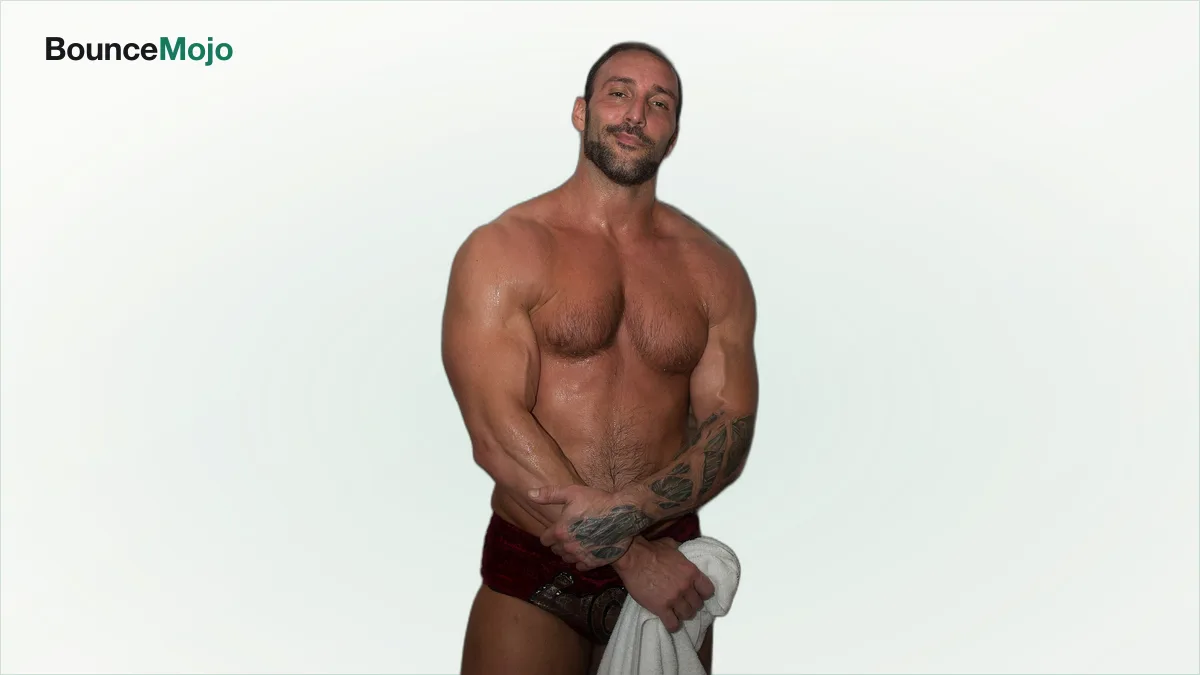
Chris Masters had the perfect wrestling body before he threw a single punch.
Here’s what most people miss: that gift almost became a curse. The young man WWE marketed as a flawless “Masterpiece” was fighting a private battle with addiction, and the story of his career is less about the physique than about the resilience it took to keep going after everything went wrong.
The Myth vs. The Reality
The myth is that Chris Masters was a genetic gift, a bodybuilder handed a wrestling career on a silver platter.
Here’s the truth: the platter cracked almost immediately.
The reality is that Masters was a young man thrust into the WWE spotlight before he was ready, given an enormous push, and then knocked flat by a painkiller addiction that forced him out of the company at the worst possible time. The “Masterpiece” persona sold perfection. The person living it was anything but perfect.
What makes Masters compelling is not the body. It is the comeback. He lost the physique to rehab, lost his momentum, and lost his WWE spot, then rebuilt a working career from the ground up.
And to understand that fall and rise, you have to start on the beaches of Southern California.
The World That Made Chris Masters
Christopher Todd Mordetzky was born on January 8, 1983, in Santa Monica, California. He grew up in the Southern California fitness culture, a world obsessed with the body, where a teenager could turn iron and discipline into an identity.
Picture it: a young man building a spectacular physique in a place where physique was currency.
Here’s the deal: that culture shaped him early. Masters competed in amateur bodybuilding, sculpting the frame that would later define his wrestling character. The gym was not a hobby. It was his first craft, and it gave him the look that opened every door that followed.
Southern California in the early 2000s was full of aspiring performers chasing entertainment careers. Masters had a rare advantage: a body that made scouts stop and stare. That advantage got him noticed fast, maybe too fast, before he had learned the wrestling business itself.
The shortcut to fame would come with a hidden cost.
The Crucible: Early Life and the Climb
The Environment That Shaped Him
Masters trained in the independents, then earned a WWE developmental contract in 2003 at just twenty years old. He was assigned to Ohio Valley Wrestling, WWE’s developmental territory, where he sharpened his skills and refined his character.
The environment was pressurized. WWE developmental is a gauntlet, and Masters was being fast-tracked on the strength of his look. He learned on the job, developing enough in-ring ability to justify the enormous push waiting for him on the main roster.
Now: that speed cut both ways. Masters got a huge opportunity young, but he arrived on the biggest stage in wrestling still raw, carrying pressures a more seasoned performer might have handled better.
The Catalyst for Breakout
In February 2005, Masters debuted on WWE Raw as “The Masterpiece,” and the company went all in.
His hook was the “Masterlock,” a full-nelson hold billed as unbreakable. WWE ran a long storyline, the Masterlock Challenge, offering cash prizes to anyone who could escape the hold. Wrestlers and audience plants tried and failed, week after week, building Masters into a memorable young heel.
But here’s the kicker: behind the muscle, Masters was slipping. A painkiller addiction pulled him out of action, and he left WWE for a period to enter drug rehabilitation. When he returned, he had lost much of his muscle mass, appearing noticeably slimmer, the very asset that made him a star diminished.
The Masterpiece had cracked. The question was whether he could put himself back together.
The Key Players
Masters’ career ran through several key figures.
The most memorable is Bobby Lashley, the powerhouse who finally broke the Masterlock on television in 2007, ending the signature storyline that had defined Masters’ early run. That moment marked a turning point in his WWE trajectory.
Then there is Vince McMahon and WWE’s creative machine, which pushed Masters hard as a young star, then cooled on him when his momentum and his physique faltered. The company’s shifting priorities shaped the arc of both his runs.
You might be wondering about his peers.
Masters came up alongside a class of young talents like Carlito, sharing screen time and storylines as WWE tried to build its next generation. Those relationships defined his place on a crowded roster.
Those players lifted him up and, at times, moved past him. The real test was what he did after WWE.
The Turning Point
The Pinnacle of Achievement
Masters’ WWE peak came fast. As “The Masterpiece” with the Masterlock Challenge, he was one of the most talked-about young heels on Raw, featured prominently and positioned as a future star.
It gets better: he returned. After his release in 2007, Masters worked the independents for two years, rebuilt his conditioning and his reputation, and earned a second WWE run in 2009. Coming back at all, after addiction and a release, was an achievement in itself.
For a stretch, it looked like the reinvented Masters might finally break through.
The Price of Admission
But the second run brought no title and no lasting main-event spot. WWE released him again in 2011, and Masters’ WWE story ended without the championship his early push had promised.
Here’s the truth: the price of his fast rise was a career that never quite matched its billing. The addiction, the lost muscle, the shifting creative winds, all of it kept him from the top tier despite obvious tools.
Yet the setback did not end him. Masters found new life on the independents and in Impact Wrestling, proving his value beyond WWE’s spotlight.
Behind the perfect physique was a fighter who kept getting up.
The Unvarnished Truth
Masters has been open about the painkiller addiction that nearly derailed him, and that honesty humanizes the “Masterpiece” character.
He left WWE early in his run to get clean, losing the muscle mass that made him famous in the process. Choosing recovery over image, in a business obsessed with looks, took real courage. He came back smaller but healthier, and he kept his career alive.
His WWE story is also a lesson in how the machine treats young talent. Masters was pushed hard, then cooled on, then released twice. He has spoken about the frustration of a stop-start push and the difficulty of living up to a “perfect” gimmick.
Think about it: the vulnerability is the point. Masters was sold as flawless and turned out to be deeply human, a young man who stumbled, recovered, and kept working. That honesty about his struggles is more compelling than any unbreakable hold.
His career also drew its share of criticism.
Controversies and Criticisms
Masters’ career has faced real criticism, much of it about unfulfilled potential.
Fans and analysts have long argued that WWE mishandled him, pushing a raw talent too fast, then abandoning him when his momentum slowed. The Bleacher Report framing of a “promising superstar chewed up and spat out” captures a common view of his run.
His addiction battle, while a story of recovery, also cost him at a crucial moment, contributing to the stop-start nature of his WWE tenure. Critics point to the lost muscle and lost momentum as a career that never recovered its ceiling.
Here’s the deal: Masters has largely let his continued work answer the critics. Rather than dwell on what WWE did or did not do, he kept wrestling, kept training, and kept building a living in the business. That persistence is its own rebuttal.
His own reflections reveal a grounded perspective.
Quote Analysis and Literary Breakdown
Masters has spoken candidly about his career and its lessons.
On his addiction and recovery, he has framed getting clean as the priority even though it cost him his signature physique. The choice reveals a man who valued his health over his image, a rare stance in a body-obsessed business.
On his WWE experience, he has expressed frustration with an inconsistent push while acknowledging the opportunity it gave him. He holds both truths: gratitude for the platform and honesty about its shortcomings.
On his post-WWE career, he has embraced the identity of a working wrestler who keeps going, valuing steady craft over past hype. The reinvention as Chris Adonis in Impact reflects a man defining success on his own terms.
Read together, the quotes show a performer who traded the myth of perfection for the reality of resilience.
There is a clear lesson in that.
What We Can Learn From Chris Masters
Navigating Hard Times
Masters’ battle with addiction teaches that recovery is worth the cost, even a steep one. He gave up the physique that made him famous to get healthy, and he built a longer career because of it. Health first, image second.
His WWE releases teach resilience. Being let go, twice, by the biggest company in wrestling could have ended him. Instead he treated each release as a new beginning, rebuilding on the independents and in Impact. Setbacks did not define him.
The Success Blueprint
The professional lesson is about diversification and persistence. Masters never relied on one promotion or one paycheck. He spread his income across WWE, the independents, Impact, and fitness work, keeping himself in demand for two decades. That steady approach is why he still appears among working names on our richest wrestlers list, and why his grind is worth comparing to a fellow persistent earner like Rob Terry, who also built a career around his physique.
The financial lesson is about turning a physical gift into a lasting asset. Masters made his body a brand, then kept monetizing it through fitness long after the WWE lights dimmed.
Becoming Better
The deepest lesson from Masters is about redefining success. He was billed as perfect and never won a title, which by one measure makes him a failure. By another, he is a survivor who beat addiction, outlasted two WWE runs, and built a durable career on his own terms. He stopped chasing the myth of the flawless “Masterpiece” and became something more valuable: a resilient professional who keeps showing up. There is real wisdom in accepting that a career without trophies can still be a life well built.
That resilience points to a clear final take.
Final Verdict
Chris Masters’ story is about the gap between how the world sees you and what you actually survive. He was sold as a flawless physique, a “Masterpiece” with an unbreakable hold, and he turned out to be a young man fighting addiction and inconsistent booking behind the scenes.
He fell early, got clean, and came back smaller but stronger in the ways that mattered. He never won the championship his push promised. He was released twice by WWE. And he kept wrestling anyway, across the independents and Impact, reinventing himself as Chris Adonis while building fitness income on the side.
What lingers is the resilience. Masters had every reason to disappear after his WWE story ended, and he refused. He treated a body as a brand, a setback as a start, and a career without titles as a life still worth building.
That is the quiet triumph of Chris Masters. The Masterlock was billed as unbreakable, and in the end the most unbreakable thing about him was not a hold at all. It was the willingness to get up, again and again, long after the spotlight moved on. The Masterpiece was never really about the muscle. It was about the man who kept going once the muscle was gone.
Shop Chris Masters on Amazon
Books, audiobooks, merch and more, handpicked for fans.
As an Amazon Associate we earn from qualifying purchases.
Frequently Asked Questions
Where did Chris Masters grow up?+
Chris Masters, born Christopher Todd Mordetzky on January 8, 1983, grew up in Santa Monica, California, where he competed in amateur bodybuilding before turning to wrestling.
What was the Masterlock?+
The Masterlock was Masters' finishing move, a full-nelson hold. WWE built a storyline around it, daring opponents to break it, until Bobby Lashley snapped the hold in 2007.
Did Chris Masters struggle with addiction?+
Yes. Early in his career, Masters left WWE for a period to enter drug rehabilitation for a painkiller addiction, then returned to the ring after treatment.
What is Chris Masters doing now?+
Masters has wrestled on the independent circuit and in Impact Wrestling as Chris Adonis, while building a career around fitness, training, and appearances.
Did Chris Masters win any WWE titles?+
No. Despite a strong early push as a young star, Masters never captured a championship during his two runs with WWE.
Want the money side of the story?
Read Chris Masters's Full Net Worth Breakdown →Shop Chris Masters on Amazon
Books, audiobooks, merch and more, handpicked for fans.
As an Amazon Associate we earn from qualifying purchases.