Chris Evert Biography: The Ice Maiden Who Made Cool a Weapon
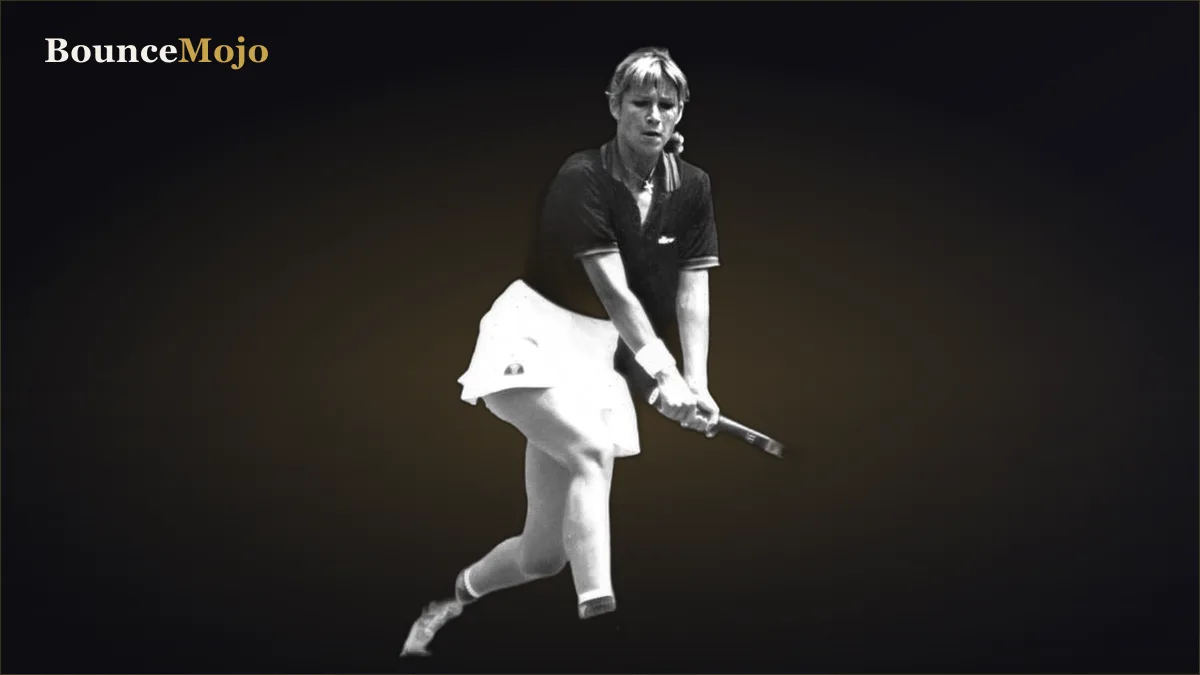
Most people know Chris Evert as the ice-cool queen of the baseline, the woman who never seemed to sweat under pressure. That calm mask hid a fierce competitor and a private woman navigating fame few teenagers ever face.
Here’s what most people miss: the composure that made her famous was itself a strategy, a shield she built as a shy girl thrown onto the world’s biggest stages before she could vote.
The Myth vs. The Reality
The myth is simple: Chris Evert was a machine. Cool, consistent, unbreakable. The press called her the Ice Maiden and Little Miss Icicle, and the image stuck for a lifetime.
Here’s the truth: that ice was armor. Off the court, Evert was warm, funny, and often nervous. The blank expression she wore during matches was a deliberate choice, a way to give opponents nothing and to keep her own nerves in check. She learned young that emotion was information, and she refused to hand it over.
Think about it: she turned pro as a teenager and became a household name before most kids finish high school. The calm was not the absence of feeling. It was the management of it.
But where does a fourteen-year-old learn that kind of control? The answer starts on a set of public courts in Florida.
The World That Made Chris Evert
Evert came of age at the exact moment women’s tennis was fighting for respect and money. In 1970, Billie Jean King and eight other players broke away to start their own tour, demanding equal pay. The battle for legitimacy was raw and public.
Here’s the deal: Evert arrived just as that fight was heating up, and she became one of its most marketable faces. Clean-cut, telegenic, and devastatingly good, she was exactly the star the young women’s game needed to sell tickets and win TV deals.
America was watching, too. Tennis was moving from country clubs to living rooms, and Evert’s rivalry-driven era helped drive that boom. She was not just playing matches. She was helping build the commercial foundation that later stars would stand on.
Now: none of that would have happened without the man who put a racket in her hand. And he was closer than any coach she would ever hire.
The Crucible: Early Life and the Climb
The Environment That Shaped Her
Christine Marie Evert was born on December 21, 1954, in Fort Lauderdale, Florida. Her father, Jimmy Evert, was a respected teaching pro who ran the public courts at Holiday Park. He started coaching Chris at age five, drilling the fundamentals that would define her game.
Here’s the truth: her famous two-handed backhand was almost an accident. As a small child, she was too weak to swing a heavy wooden racket with one hand, so she used two. Jimmy let her keep it. That grip became one of the most copied shots in tennis history.
The Evert home was disciplined and Catholic, with tennis woven into daily life. Chris and her siblings practiced constantly. There was no shortcut, no private academy, just a father, a public court, and hours of repetition.
The Catalyst
The breakout came fast. At just 16, Evert reached the semifinals of the 1971 US Open as an amateur, beating older, ranked players and charming a national audience. The kid from the public courts was suddenly a sensation.
You might be wondering: could a teenager handle that pressure? She could. Evert turned pro in 1972 and never looked back, and by 1974 she had won her first two Grand Slam titles at the French Open and Wimbledon.
That same year she captured something else that made headlines. And it had nothing to do with a trophy.
The Key Players
The two people who shaped Evert’s story most were a fiancé and a rival.
In 1974, Evert was engaged to Jimmy Connors, the brash American star. Both won Wimbledon that year, and the press crowned them tennis’s golden couple. The engagement ended before any wedding, but for a season they were the most famous couple in sport.
Then came the rival who would define her. Martina Navratilova, a Czech-born lefty with explosive power, became Evert’s greatest opponent. Where Evert was calm and precise, Navratilova was aggressive and athletic. They met 80 times over their careers, one of the deepest rivalries in any sport.
Here’s the kicker: they became best friends. The two pushed each other to new heights, forcing Evert to add fitness and net play to her baseline game just to keep up. Off the court, they supported each other through everything, including illness decades later.
Evert also had two marriages that shaped her life, first to British pro John Lloyd, later to Olympic skier Andy Mill, with whom she had three sons. Family always mattered as much as the game.
That family devotion set up the hardest chapters of her life. But first came the pinnacle.
The Turning Point
The Pinnacle
Evert’s peak was almost absurd. She won 18 Grand Slam singles titles, including a record seven French Opens and six US Opens. For 13 consecutive years, from 1974 to 1986, she won at least one major. On clay, she once won 125 straight matches, a record that still stands.
What’s the bottom line? She was the most consistent champion the women’s game had ever seen, and she reached the finals of an astonishing 34 Grand Slam singles events.
The Price
But dominance came with a cost. Evert has spoken about the loneliness of constant travel and the pressure of being a role model from her teens. She sacrificed a normal adolescence for greatness, and the calm exterior sometimes masked real exhaustion.
Here’s the truth: she retired in 1989 partly because the fire had cooled, and because a new generation and a changing game were arriving. She left on her own terms, ranked among the best in the world to the end.
Yet her hardest fights were still to come, and they had nothing to do with tennis.
The Unvarnished Truth
Evert has never pretended to be perfect. She married three times, and she has been candid about the mistakes and the toll her career took on her relationships. She admitted that her intense focus on tennis sometimes left little room for anything else.
It gets harder. In 2021, Evert was diagnosed with ovarian cancer after genetic testing revealed a mutation linked to her sister Jeanne, who had died of the same disease. She went public with the diagnosis, using her platform to urge women to get tested.
She fought it, recovered, and then faced a recurrence, which she also fought openly. Through it all, she credited her friend Martina Navratilova, herself a cancer survivor, for helping her stay strong. The Ice Maiden, it turned out, was human all along.
Controversies and Criticisms
Evert’s career was not free of debate. Some critics of her era called her baseline style too conservative, a game of patience rather than flair. She answered with results, not words.
Now: her fame also invited scrutiny of her personal life that no athlete today would tolerate. Her engagement to Connors and her marriages were tabloid fodder, and she has said the constant attention wore on her. She largely handled it with grace, but she has admitted the intrusion was real.
There was never scandal in the ugly sense. Evert’s controversies were the ordinary human kind: divorces, second-guessed decisions, and the challenge of living a private life in public. That relative cleanliness is part of why her legacy stayed intact.
What We Can Learn From Chris Evert
Navigating Hard Times
Evert’s life offers a blueprint for grace under pressure. She faced illness, divorce, and grief the same way she faced match point: calm, prepared, and unwilling to panic.
Here’s the lesson: composure is a skill you can build. Evert’s on-court calm was practiced, not born, and it carried her through crises far bigger than any tennis match.
The Success Blueprint
Her professional path is just as instructive. Evert won early, then refused to fade. She moved into broadcasting, built the Evert Tennis Academy, and kept her name alive for generations. She treated fame as something to invest, not spend.
That is why her fortune and her relevance both grew for decades after her final match. She played the long game off the court as well as on it, a model modern stars like Iga Swiatek and Simona Halep can study.
Final Verdict
Chris Evert changed tennis by proving that ruthless consistency and quiet dignity could beat almost anything. She won 18 majors, helped build the modern women’s tour, and then reinvented herself as one of the sport’s most respected voices.
The verdict is clear: her real greatness was durability, in her game, her income, and her spirit. She turned a nervous girl’s survival mask into an identity, and she carried it through fame, family, and cancer without losing herself.
The Ice Maiden was never cold. She was just steady, and steadiness, it turns out, is the rarest strength of all.
Shop Chris Evert on Amazon
Books, audiobooks, merch and more, handpicked for fans.
As an Amazon Associate we earn from qualifying purchases.
Frequently Asked Questions
Where did Chris Evert grow up?+
Evert grew up in Fort Lauderdale, Florida, the daughter of tennis coach Jimmy Evert, who ran the public courts at Holiday Park and trained her from age five.
Why was Chris Evert called the Ice Maiden?+
Her calm, expressionless focus under pressure earned her nicknames like the Ice Maiden and Little Miss Icicle, though friends knew a warmer person off court.
Who was Chris Evert's greatest rival?+
Her greatest rival was Martina Navratilova. The two met 80 times, one of the deepest rivalries in sports, and became lifelong friends afterward.
Was Chris Evert engaged to Jimmy Connors?+
Yes. In 1974 Evert and Jimmy Connors both won Wimbledon and were engaged, making them tennis's golden couple before the engagement ended.
Has Chris Evert had cancer?+
Yes. Evert was diagnosed with ovarian cancer in 2021 after genetic testing linked to her late sister, and she has spoken publicly to raise awareness.
Want the money side of the story?
Read Chris Evert's Full Net Worth Breakdown →Shop Chris Evert on Amazon
Books, audiobooks, merch and more, handpicked for fans.
As an Amazon Associate we earn from qualifying purchases.