Chris Drury Biography: Hockey's Ultimate Clutch Kid
The pitcher’s mound in Williamsport, the game-winning goal in overtime, the calm face under the brightest lights. That’s the Chris Drury American sports fans grew up watching.
Here’s what most people miss: the man they call the ultimate clutch performer built his life around being ready for the biggest moment, on the diamond, on the ice, and eventually in the boardroom.
The Myth vs. The Reality
The myth is destiny. Chris Drury is the born winner, the athlete who always came through when it mattered, first in baseball, then in hockey.
The reality took relentless work.
Here’s the truth: behind the clutch reputation was a player of modest size and average speed who had to grind for everything, out-thinking and out-competing more gifted opponents to earn his place. The big moments looked easy, but the preparation behind them was anything but.
Now think about that. Every legend of his clutch play was built on years of quiet effort.
Instead of relying on talent alone, Drury became a master of preparation and poise. And to understand how, you have to start in Trumbull.
The World That Made Chris Drury
Christopher Drury was born on August 20, 1976, in Trumbull, Connecticut, a suburban town that would soon become famous because of him. This was late-1980s America, a time when the Little League World Series was must-watch television and a single summer could make a boy a national name.
That environment shaped a fierce competitor. Young Drury grew up in a sports-loving family, alongside his older brother Ted, who would also reach the NHL.
The Drury household ran on competition. Both boys chased big-league dreams, and Chris announced himself to the country at age 12 as the star pitcher who led Trumbull to the 1989 Little League World Series championship. He was, for one unforgettable summer, one of the most famous young athletes in America.
Here’s the deal: that early fame could have defined him. Instead, Drury eventually chose hockey, walking away from the baseball spotlight to chase a different dream.
He starred at Fairfield Prep and then at Boston University, one of college hockey’s premier programs. But the road from Little League hero to NHL champion ran through years of proving he belonged.
But here’s the kicker: before Drury could become a Stanley Cup winner, he had to prove that a clutch kid could become a clutch pro.
The Crucible: Early Life and the Climb
The environment that shaped him
Drury dominated at Boston University, where he won the Hobey Baker Award as the nation’s top college player and helped lead the Terriers to an NCAA championship. He was a winner at every level, and his college resume marked him as a can’t-miss prospect with a champion’s pedigree.
The honors piled up fast. A Little League title, a college championship, and a Hobey Baker made Drury one of the most decorated amateur athletes of his time.
The talent had arrived. What no one knew was how quickly it would translate to the pros.
The catalyst
The catalyst was his NHL arrival with the Colorado Avalanche.
Drury broke in with a loaded Avalanche team, won the Calder Trophy as rookie of the year in 1999, and by 2001 had helped win a Stanley Cup alongside legends like Joe Sakic and Ray Bourque. He scored clutch goals throughout, and his reputation as a big-moment player took hold across the league.
That Avalanche team was one of the most talented rosters of its era, and slotting into it as a young player taught Drury how champions carried themselves. He watched Sakic lead with quiet authority and Bourque chase a lifelong dream, and he absorbed the standards of a winning culture. Those lessons stuck. Drury took the habits he learned in Colorado to every stop that followed, and years later he drew on them again when he moved into management and had to build a winning culture of his own.
Here’s the deal: that clutch reputation would become the most valuable asset of his entire career.
Want to know what turned it into a fortune? A free-agent bidding war a few years later.
The Key Players
You cannot tell the Chris Drury story without a few names.
His brother Ted Drury is the first, the older sibling and fellow NHL player who set the example. The Drury brothers pushed each other from childhood, and Ted’s path to the league showed Chris that the dream was possible.
Joe Sakic is the second, the Avalanche captain and Hall of Famer who led the team Drury joined as a young player. Learning from Sakic’s professionalism and quiet leadership shaped how Drury carried himself, and it later informed his own leadership style.
Ray Bourque is the third, the legendary defenseman who won his long-awaited Cup with that same 2001 Avalanche team. Being part of Bourque’s championship moment connected Drury to one of the most beloved stories in hockey history.
His coaches and executives across four franchises mattered too. Drury played for Colorado, Calgary, Buffalo, and the New York Rangers, absorbing lessons from every stop that would later fuel his front-office career. That wide experience gave him a deep understanding of how winning teams are built.
His years in Buffalo deserve their own mention. There, Drury served as co-captain and helped drive the Sabres to deep playoff runs, and his clutch reputation only grew with a string of huge goals. Buffalo fans still remember his late-game heroics, and that chapter cemented his standing as a leader who elevated whatever room he entered. The relationships he built there, with teammates and management alike, shaped the professional he became.
Here’s the truth: everything Drury learned was building toward a second career few players ever reach.
The Turning Point
The pinnacle
Start with the summer of 2007, because it reshaped his fortune.
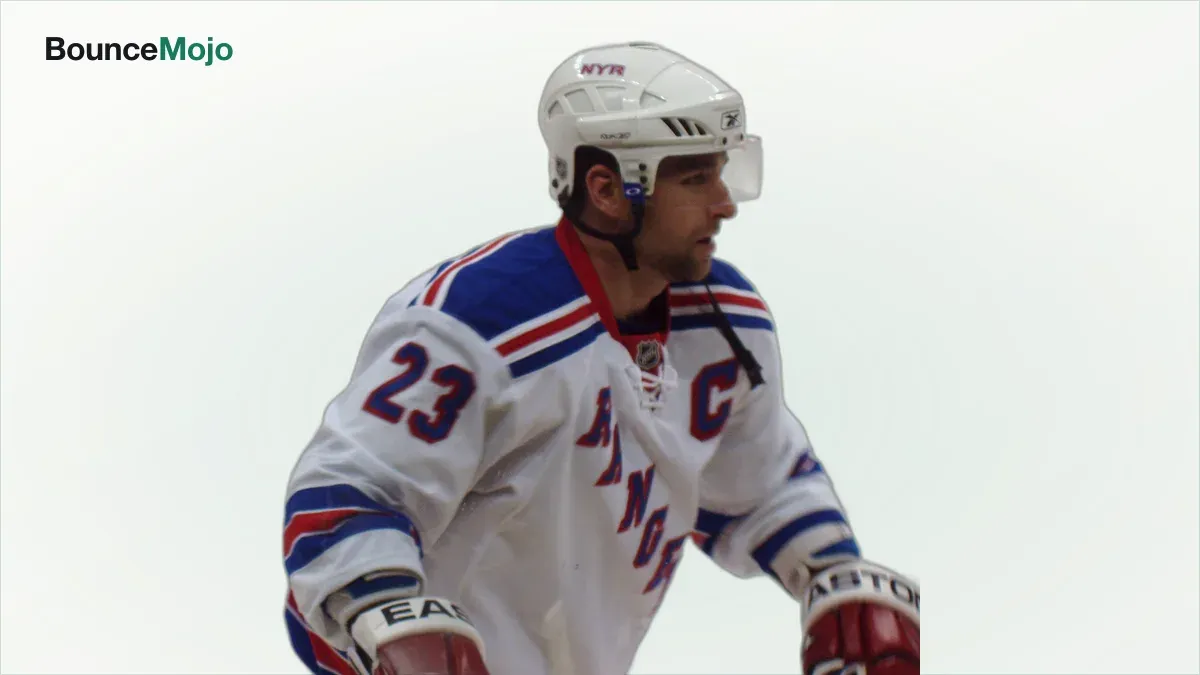
That offseason, Drury became one of the most coveted free agents in hockey, and the New York Rangers signed him to a five-year contract worth around $35 million. It was a massive payday that reflected his clutch reputation and made him a centerpiece of an Original Six franchise. He captained the Rangers and remained one of the most respected players in the league during his time in New York.
Beyond the money, Drury’s on-ice legacy was already secure. A Little League title, a college championship, a Calder Trophy, and a Stanley Cup made him one of the most complete winners American hockey has produced. His knack for scoring in overtime and in the playoffs became the stuff of legend, and teammates trusted him to be on the ice when a game hung in the balance.
That trust was earned, not given. Drury studied opponents, prepared obsessively, and carried himself with a seriousness that made coaches comfortable handing him the biggest moments. In an era of flashier stars, he built his brand on reliability, and reliability turned out to be worth a fortune at the negotiating table.
It gets better: his greatest act was still ahead. After retiring, Drury joined the Rangers front office and steadily climbed, eventually becoming the team’s general manager, one of the highest-profile jobs in the sport.
The price
Now the cost, which was measured in physical toll and constant scrutiny.
Drury was never a physical giant, and he had to grind through injuries and punishment to compete at the highest level. The clutch moments came at the price of a body that absorbed a decade of hard hockey.
There was also the pressure of expectation. Being labeled “clutch” meant every big moment carried the weight of a reputation, and the scrutiny only grew when he took over as a general manager of a passionate, demanding market like New York.
You might be wondering whether a player this respected has any real flaws. He does, and honesty demands we name them.
The Unvarnished Truth
Let’s not pretend the picture is perfect.
Drury was never a dominant offensive star. His point totals were solid but not elite, and his value came more from timing, leadership, and defense than from raw production. Some argued his big contract in New York exceeded his everyday output.
There was also the reality of his physical limits. As his career wore on, Drury’s modest size and declining speed caught up with him, and his final seasons were shortened by injury before he retired earlier than many expected.
And the front-office role brings its own scrutiny. Running the Rangers means every trade and signing is dissected in one of the toughest markets in sports, and Drury’s decisions as general manager draw intense debate, as they do for anyone in that chair.
Here’s the truth: Drury’s greatness was about intangibles as much as numbers, and a fair biography holds both.
Even so, the championships and the executive rise answered the biggest questions.
Controversies and Criticisms
For a player this respected, Drury’s controversies are minor and mostly about expectations.
The biggest on-ice critique was that his Rangers contract paid star money for two-way, secondary-scoring production. Fair or not, that debate followed his time in New York.
There was also the natural scrutiny of his executive decisions, the trades and signings that come with running a marquee franchise in an unforgiving market.
Off the ice, Drury kept a low profile and avoided scandal. He was known as a consummate professional, a family man who let his résumé speak for itself.
Here’s the thing though: none of it erases the achievement. Because a Cup, a Calder, a Hobey Baker, and a rise to general manager answered the hockey questions.
What We Can Learn From Chris Drury
Navigating hard times
When you lack the size and speed of your rivals, you can quit or you can out-prepare them.
Drury chose preparation. He turned modest physical gifts into a champion’s career through poise, intelligence, and relentless competitiveness. The lesson isn’t that talent doesn’t matter. It’s that readiness for the big moment, built through years of quiet work, can beat raw ability.
The success blueprint
Now the part that built the fortune.
Drury cashed his clutch reputation into a premium free-agent contract at his peak, then planned his second career early and rose to run an Original Six franchise. He treated his life after playing as seriously as his life on the ice. That approach is why he ranks among the richest hockey players in the world. The full money breakdown lives in our Chris Drury net worth analysis, and you can see where he sits among the richest athletes overall.
Becoming better
The deepest lesson is about reinvention. Drury moved from Little League hero to college champion to NHL winner to executive, adapting at every stage without losing his identity. He proved that a career can have many acts, and that the habits of preparation and professionalism carry across all of them.
So what’s the final word on hockey’s ultimate clutch kid?
Final Verdict
Chris Drury is the rare athlete whose reputation for the big moment defined every chapter of his life.
On the ice, he was a champion, a Calder winner, and one of the most respected clutch performers of his time. Off it, he became a top executive running one of the most storied franchises in the sport.
Here’s the bottom line: the clutch kid was never the whole story. Behind it was a competitor who out-worked and out-thought more gifted rivals, then built a second career that may outshine the first.
Anyone who remembers only the overtime goals has missed the planner underneath. Drury’s real story is preparation rewarded, and it carried him from a Little League diamond all the way to the Rangers’ front office.
Shop Chris Drury on Amazon
Books, audiobooks, merch and more, handpicked for fans.
As an Amazon Associate we earn from qualifying purchases.
Frequently Asked Questions
Where did Chris Drury grow up?+
Chris Drury was born on August 20, 1976, in Trumbull, Connecticut, where he first became famous as a Little League World Series star before turning to hockey.
Was Chris Drury really a Little League World Series star?+
Yes. Drury was the star pitcher who led Trumbull to the 1989 Little League World Series title, a national story years before his hockey fame.
Where did Chris Drury play college hockey?+
Drury starred at Boston University, where he won the Hobey Baker Award as the top college player and helped win an NCAA championship.
Did Chris Drury win a Stanley Cup?+
Yes. Drury won the Stanley Cup with the Colorado Avalanche in 2001 and earlier won the Calder Trophy as NHL rookie of the year in 1999.
What does Chris Drury do now?+
Drury became the general manager of the New York Rangers, one of the most prominent front-office roles in hockey, after his playing career ended.
Want the money side of the story?
Read Chris Drury's Full Net Worth Breakdown →Shop Chris Drury on Amazon
Books, audiobooks, merch and more, handpicked for fans.
As an Amazon Associate we earn from qualifying purchases.