CC Sabathia Biography: The Big Man Who Beat His Toughest Opponent
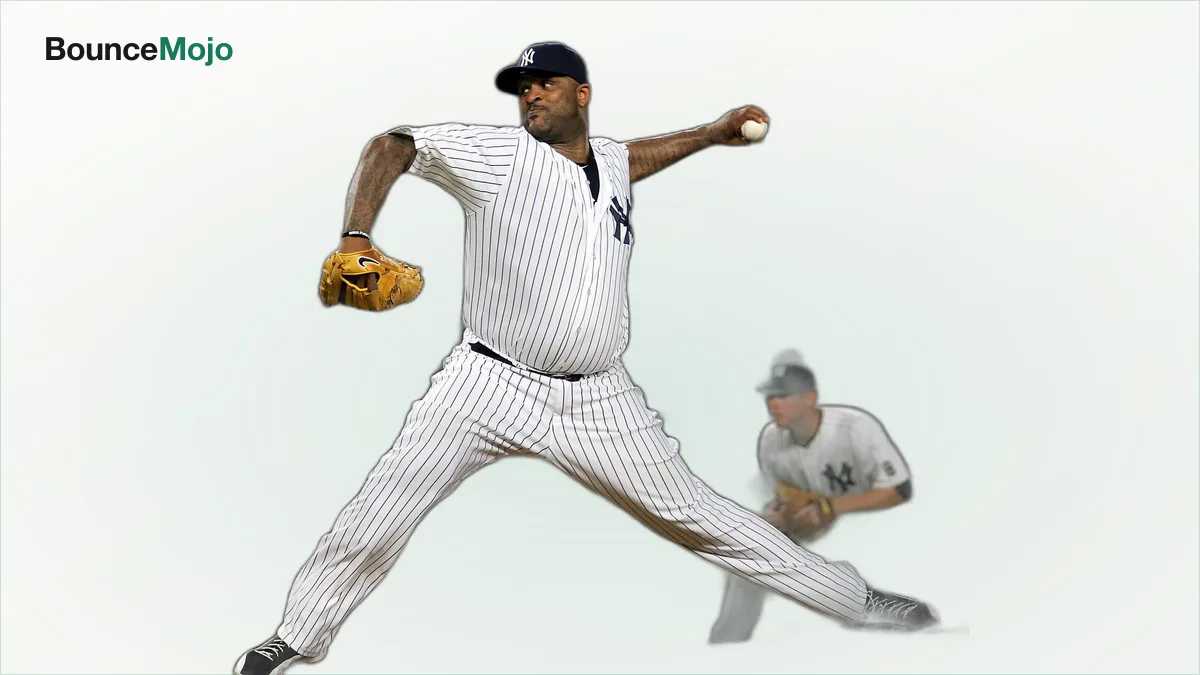
Most people know CC Sabathia as the mountain on the mound, the 300-pound lefty who ate innings for two decades. That picture leaves out the fight that nearly ended it all.
Here’s what most people miss: the biggest, most durable pitcher of his era spent years hiding a battle that had nothing to do with hitters.
The Myth vs. The Reality
The myth is simple. CC Sabathia: a gentle giant, a workhorse who threw a lot of innings, won a lot of games, and cruised into Cooperstown. Big smile. Bigger frame. Roll credits.
The reality is heavier.
Here’s the deal: behind the durability was a man carrying weight the stat sheet never showed. Sabathia pitched through pressure, grief, and a drinking problem that grew in the dark while he was winning championships. The “easygoing big man” narrative flattened a far more complicated human being.
And the “small-town kid makes good” framing misses the part that matters most. Sabathia’s greatest performance was not a playoff shutout. It was the day he admitted he needed help, on the eve of the biggest games of the year, with everything to lose.
You might be wondering: how does a kid from a fractured home in Vallejo end up carrying a Yankees rotation? To understand that, you have to understand where he came from.
The World That Made CC Sabathia
Sabathia was born in 1980 in Vallejo, California, a working-class city on the edge of the Bay Area.
It was not a place that handed out easy exits. Vallejo was proud, tough, and hit hard by economic decline, a city where sports could be a lifeline and where a gifted kid got noticed fast. Sabathia grew up Black in a baseball world that was slowly losing its Black American players, and he carried that awareness with him his whole career.
Now: he came up in the era when baseball money exploded. The players a generation ahead of him signed contracts their fathers could never have imagined, and Sabathia arrived just in time to ride that wave. But the wave came with a current, the expectation that a big, talented arm should simply produce, without complaint, forever.
That collision, immense physical gifts meeting immense expectations, is the backdrop for everything Sabathia became. He was built to carry a rotation. What nobody saw was the cost of carrying everything else.
But before the majors, there was a boy in Vallejo learning that the game might be his way out.
The Crucible: Early Life and the Climb
The Environment That Shaped Him
Sabathia was raised largely by his mother, Margie, and his grandmother. His father, Corky, was in and out of his life.
That absence left a mark. His father saw the talent early and predicted his son would pitch for the Yankees one day, an eerie prophecy that eventually came true. But Corky’s struggles and his death years later became one of the deepest wounds Sabathia carried, and part of what he later medicated with alcohol.
At Vallejo Senior High, Sabathia was a three-sport star, dominant in baseball, football, and basketball. His senior baseball numbers were absurd. Cleveland drafted him, and by 20 he was in the big leagues.
Here’s the truth: talent got him there fast. Staying there, and staying whole, would be the harder job.
The Catalyst
Sabathia’s breakout as a franchise-altering force came in 2008.
Traded from Cleveland to Milwaukee mid-season, he did something almost unheard of in the modern game. He pitched on short rest, again and again, dragging the Brewers into the playoffs on sheer will. It was a public statement: this man would carry a team on his back if you let him.
It gets better, and it set up the payday. That contract-year performance made him the most coveted free agent in baseball. The Yankees paid a record price for a pitcher, and Sabathia delivered a title in his very first season in pinstripes. That is where the legend truly began, but the same relentlessness that made him great was quietly running him down.
The Key Players
No one carries a career alone, and Sabathia’s story is full of people who shaped him.
Margie and his grandmother. The women who raised him gave him his foundation and his work ethic. Their influence runs through everything he built.
Corky Sabathia. His father was both an inspiration and a source of pain. The prediction about the Yankees came true, but Corky’s death haunted his son and became part of the grief he later drank to numb.
Amber Sabathia. His wife, whom he married in 2003, became his anchor and, eventually, the person who helped push him toward getting help. She is also his business partner in his post-career ventures.
The Yankees clubhouse. Veterans like Derek Jeter and the closer beside him in the bullpen, Mariano Rivera, gave Sabathia a championship standard to meet. He met it, then quietly started to crack under everything he was holding in.
Think about it: every one of these relationships pulled at the same tension, the gap between the strong man everyone saw and the struggling man he kept hidden. That tension broke open at his peak.
The Turning Point
The Pinnacle
By any baseball measure, Sabathia’s peak was enormous.
A 2007 Cy Young Award. A 2009 World Series title and ALCS MVP with the Yankees. More than 250 career wins and over 3,000 strikeouts, a number reached by only a handful of pitchers in history. He was a six-time All-Star and, for a stretch, the most reliable big-game starter in the sport. His full net worth story lays out how that dominance translated into a fortune worth an estimated $80 million.
He was the ace every contender wanted, the man who never asked out of the ball.
The Price
Here’s the kicker: the more he carried, the more it cost him.
Sabathia’s body absorbed the punishment of thousands of innings. His knees gave out. And beneath the surface, his drinking grew heavier, a private crisis hidden behind a public reputation for durability. The man who never missed a start was, in his own later words, coming apart.
The pinnacle brought rings and money. It also brought him to the edge. Which is where his real turning point happened, and it had nothing to do with a fastball.
The Unvarnished Truth
Sabathia has been remarkably honest about his flaws, which is part of what makes him admirable.
He drank heavily for years while pitching at an elite level. He hid it. And in October 2015, on the eve of the Yankees’ playoff run, he checked himself into an alcohol rehabilitation program instead of taking the mound. He chose his life over the postseason.
Now: that decision took a courage most highlight reels never capture. Walking away from your team in its biggest moment, publicly, to admit you have a problem, is far harder than throwing a shutout. Sabathia did it anyway.
He has since said the hardest part was the shame, the fear that admitting weakness would erase the strongman image he had built. Instead, it did the opposite. His honesty made him one of the most respected figures in the sport.
The most honest thing anyone can say about Sabathia is this: his greatest performance was an act of surrender. He beat the one opponent that had beaten so many before him.
Controversies and Criticisms
Sabathia’s career was not without friction, though his controversies are mild by superstar standards.
The weight questions. For years, critics questioned whether his size would shorten his career or sap his effectiveness. He answered by pitching into his late 30s and reaching 3,000 strikeouts, outlasting the doubters.
The 2015 timing. Some questioned him leaving the Yankees before the playoffs to enter rehab. That criticism has aged badly. Most now see it as the bravest and best decision of his life.
On-field flashes of temper. Late in his career, Sabathia had a few heated moments, including an ejection in his final season while defending a teammate. Even his critics tended to read those as loyalty rather than malice.
The bigger picture. Sabathia also became an outspoken voice on the decline of Black participation in baseball, a stance that made some uncomfortable but that he refused to soften. He treated it as a responsibility, not a talking point.
What We Can Learn From CC Sabathia
Navigating Hard Times
The first lesson is about honesty. Strength is not pretending you are fine. Sabathia spent years projecting invincibility, and it nearly destroyed him. His life changed the moment he admitted it could not.
But here’s the truth the whole arc makes plain: asking for help is not the end of your reputation. For Sabathia, it was the beginning of a better one. The vulnerability he feared would define him as weak instead defined him as brave.
The Success Blueprint
If you want the replicable part, it’s this: Sabathia won by being reliable when it was hard. He pitched on short rest, took the ball when others begged out, and made durability his signature. That relentlessness put him among the game’s greats, right alongside contemporaries on our richest baseball players list and the broader field of richest athletes.
The lesson isn’t “never rest.” It’s “be the person others can count on, and value follows.” Teams paid a record price for Sabathia because they knew exactly what they were getting.
Becoming Better
The deepest lesson is about the second act. Sabathia built his R2C2 podcast and his media career while still pitching, so his identity did not vanish when the game ended. And he turned his hardest experience, addiction and recovery, into a platform that helps others.
In other words, your struggles can become your purpose. Sabathia proved that the story you are most afraid to tell can be the one that matters most.
Final Verdict
CC Sabathia is one of the great left-handed pitchers in baseball history, and the word “great” undersells the human being. He won a Cy Young, a World Series, and a first-ballot Hall of Fame induction in 2025. He struck out more than 3,000 hitters. But his defining moment was a hospital admission, not a strikeout.
And here’s the twist that reframes everything: the man built to carry weight finally put the heaviest load down. He stopped hiding, got sober, and became a voice for people fighting the same battle. The full picture of the fortune he built lives in his net worth breakdown, and it is proof that the strongest thing a strong man can do is admit he needs help.
If you want the real story, read Sabathia’s memoir Till the End (2021), written with Chris Smith. It is honest about race, family, addiction, and the pressure of being the big man everyone leaned on. Read it if you love baseball, and read it more carefully if you have ever hidden a struggle behind a smile.
Shop CC Sabathia on Amazon
Books, audiobooks, merch and more, handpicked for fans.
As an Amazon Associate we earn from qualifying purchases.
Frequently Asked Questions
Where did CC Sabathia grow up?+
CC Sabathia grew up in Vallejo, California, raised largely by his mother Margie and his grandmother. His father was intermittently present, and Sabathia has spoken about the pressures of that working-class upbringing.
How many Cy Young Awards did CC Sabathia win?+
Sabathia won one Cy Young Award, in 2007 with the Cleveland Indians. He also earned ALCS MVP honors in 2009 while leading the New York Yankees to a World Series title.
Did CC Sabathia struggle with alcohol?+
Yes. In 2015, Sabathia checked into an alcohol rehabilitation program on the eve of the playoffs. He has since spoken openly about his recovery and made sobriety central to his public story.
Is CC Sabathia a Hall of Famer?+
Yes. Sabathia was elected to the Baseball Hall of Fame in January 2025 in his first year on the ballot, finishing his career with over 250 wins and 3,000-plus strikeouts.
What does CC Sabathia do now?+
He co-hosts the R2C2 podcast, works as an MLB Network analyst, and has become a leading voice on mental health and recovery in sports.
Want the money side of the story?
Read CC Sabathia's Full Net Worth Breakdown →Shop CC Sabathia on Amazon
Books, audiobooks, merch and more, handpicked for fans.
As an Amazon Associate we earn from qualifying purchases.