Caroline Wozniacki Biography: The No. 1 Who Silenced Every Doubter
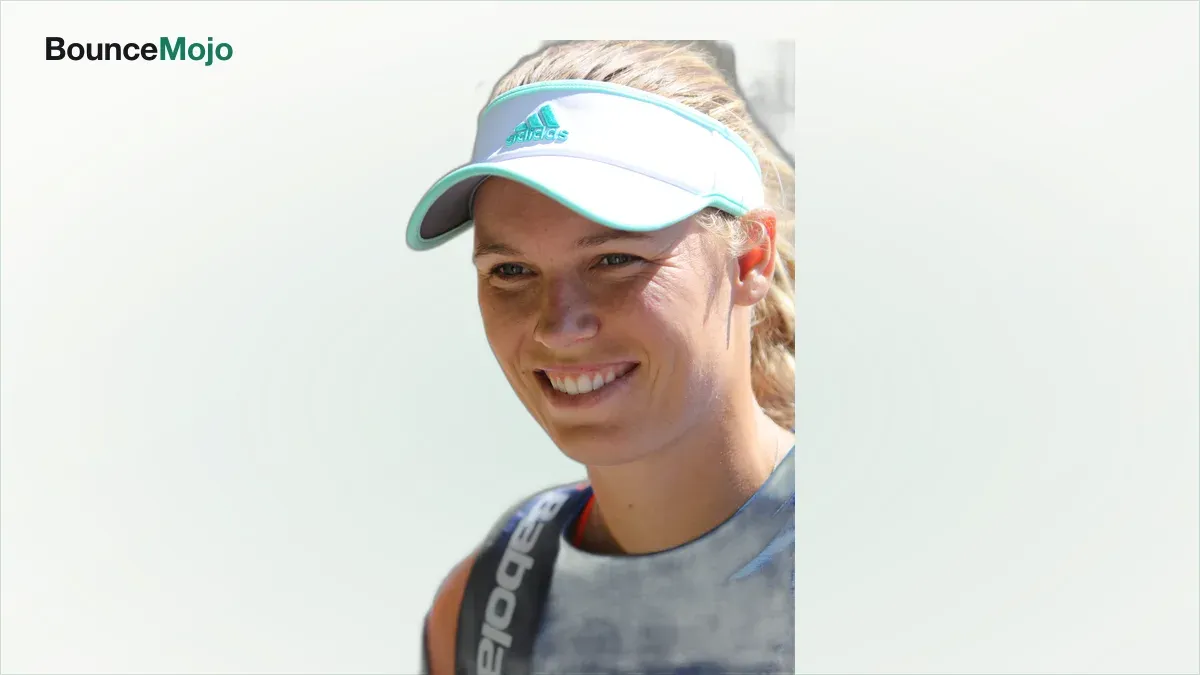
Most people know Caroline Wozniacki as the No. 1 who “hadn’t won anything.” That label followed her for years, and she buried it in one unforgettable night.
Here’s what most people miss: the woman critics called an undeserving champion outlasted, outworked, and eventually out-earned plenty of the players who mocked her.
The Myth vs. The Reality
The myth is dismissive. Caroline Wozniacki: the “fraud” No. 1, a defensive grinder who reached the top of the rankings without a major and clearly didn’t belong there. A stat quirk. An asterisk.
The reality is a story of endurance the doubters never understood.
Here’s the deal: Wozniacki reached No. 1 and held it for 71 weeks through sheer, relentless consistency, week after week, year after year, against a brutal field. That’s not a fluke. That’s a grind almost no one could sustain. The critics mistook her patience for weakness.
And the “never won anything” line has a punchline they didn’t see coming: in 2018 she won the Australian Open, and did it while quietly carrying a diagnosis that would have ended lesser careers. The undeserving champion became a Grand Slam champion, on her own terms.
You might be wondering: where does that kind of stubborn resilience come from? To understand it, you have to understand the family that built her.
The World That Made Caroline Wozniacki
Wozniacki was raised in a household where sport wasn’t a hobby. It was the family business.
She was born in 1990 in Odense, Denmark, to Polish immigrant parents who were both professional athletes, her father a footballer, her mother a volleyball player. Athletic excellence was in the water she drank. From an early age, tennis became the family’s shared project, with her father, Piotr, taking on the role of coach and constant presence.
Now: Denmark was not a tennis powerhouse. There was no deep national pipeline, no army of Danish champions before her to light the path. Wozniacki was carving something new, becoming her small country’s first genuine global tennis superstar. That meant carrying the hopes of a nation with almost no tennis tradition on her own shoulders.
That backdrop, an immigrant family’s all-in bet, in a country with no tennis blueprint, shaped a player defined by discipline and self-reliance. She wasn’t a product of a system. She was a product of her family’s will. But that same grinding style would make her a target the moment she reached the top.
The Crucible: Early Life and the Climb
The Environment That Shaped Her
Wozniacki’s game was a mirror of her upbringing: disciplined, patient, and relentlessly hard-working.
Coached largely by her father, she developed into a defensive baseliner with extraordinary movement and stamina. She didn’t blast opponents off the court. She wore them down, chasing every ball, extending every rally, forcing errors through sheer persistence. It was a style built on fitness and mental toughness rather than raw power.
That approach made her spectacularly consistent, and it demanded a work ethic most players couldn’t match. She trained obsessively, her fitness legendary. This wasn’t glamour tennis. It was grind tennis, and she was one of the best grinders the women’s game ever produced.
Here’s the truth: that style took her to the very top of the rankings. It also handed her critics an easy weapon, because a grinder without a big weapon is easy to call “boring” and “undeserving.”
The Catalyst
Wozniacki broke through fast, rising into the top ranks as a teenager and reaching her first major final at the 2009 US Open at just 19.
Then, in 2010, she did it: she became world No. 1. A young woman from a country with no tennis history sat atop the entire sport. It should have been pure celebration.
Instead, it triggered a years-long controversy. Because she reached No. 1 without a Grand Slam title, critics and commentators openly questioned whether she deserved it, whether the ranking system was broken, whether she was a “real” No. 1 at all.
It gets more intense from here. Because that criticism, unfair as much of it was, would follow her for years, and the people around her, in triumph and heartbreak, would shape how she carried it.
The Key Players
No career unfolds alone, and Wozniacki’s story is populated by figures who defined her path.
Piotr Wozniacki. Her father and longtime coach, the architect of her game and her career. Their bond was central, a family project that put a Dane at the top of world tennis.
Rory McIlroy. The golf superstar to whom she was engaged. Their relationship was one of sport’s most glamorous couplings, until McIlroy abruptly ended the engagement in 2014, reportedly by phone, a very public heartbreak she had to absorb in the spotlight.
Serena Williams. A rival on court and a genuine close friend off it. Their friendship, unusual between fierce competitors, was one of the warmer stories in women’s tennis.
David Lee. The former NBA champion who became her husband in 2019 and the father of her children, the steady partner of her post-tennis and comeback chapters. As her net worth story details, their marriage joined two athlete fortunes.
In other words, Wozniacki’s life swung between intense support and very public pain, and how she handled both defined her. All of it came to a head in early 2018.
The Turning Point
The Pinnacle
The 2018 Australian Open is Wozniacki’s mountaintop, and it was pure redemption.
After years of “she’s never won a major,” Wozniacki finally broke through, beating Simona Halep in a grueling, classic final to win her first Grand Slam. In doing so she also returned to world No. 1. The doubters who’d spent nearly a decade dismissing her were silenced in a single night. She’d proven she belonged, on the biggest stage, against the best.
She retired in 2020 with more than $36 million in career prize money, one of the highest totals in women’s tennis, and the full financial legacy is laid out in her net worth breakdown.
The Price
Here’s the kicker: the same year she reached the summit, her body delivered devastating news.
In 2018, Wozniacki was diagnosed with rheumatoid arthritis, a chronic autoimmune condition that causes joint pain and fatigue, a brutal diagnosis for a professional athlete whose entire game was built on movement and endurance. She kept competing, and kept winning, while managing a disease that could have ended her career on the spot.
The triumph and the trial arrived together. And how she responded, refusing to hide the diagnosis, revealed the real depth of her character. Which brings us to the human side of her story.
The Unvarnished Truth
Wozniacki’s career carried genuine vulnerability beneath the tough exterior.
She endured years of public criticism that would have crushed many players, the relentless “undeserving No. 1” narrative that questioned her legitimacy at every turn. She absorbed a very public, humiliating end to her engagement with McIlroy. And she competed at the highest level while managing a painful chronic illness that she could easily have used as a reason to walk away.
Now: none of this made her bitter. If anything, she channeled it into resilience. She’s spoken candidly about the arthritis diagnosis and the challenge of playing through it, using her platform to raise awareness rather than seek sympathy.
The most honest thing about Wozniacki is that her greatest strength was never a weapon or a shot. It was her refusal to quit, on the court, in the face of criticism, and against her own body. That stubbornness defined every chapter of her career.
Controversies and Criticisms
Wozniacki spent much of her career defending her own legitimacy.
The “undeserving No. 1” debate. For years, pundits argued she shouldn’t be ranked No. 1 without a major. The criticism was often harsh and, in hindsight, unfair to a player who dominated the week-to-week grind. Her 2018 title finally ended the argument.
The playing style. Critics called her defensive game dull, a war of attrition rather than shot-making brilliance. Fans of power tennis found her matches frustrating. She never apologized for winning her way.
The father-coach dynamic. As with many player-parent coaching setups, Wozniacki’s arrangement with her father drew occasional scrutiny about pressure and independence, the familiar questions that follow family-run careers.
The comeback questions. When she returned to tennis after retiring to start a family, some questioned whether she could compete at a high level again while managing arthritis and motherhood. She answered by simply showing up and competing, the way she always had.
What We Can Learn From Caroline Wozniacki
Navigating Hard Times
The first lesson is about persistence: keep going, and let the results answer the critics. Wozniacki spent years being told she didn’t belong at the top, then won a major to prove she did. She didn’t argue. She endured, and let the trophy speak.
But here’s the truth underneath: resilience isn’t loud. It’s showing up, day after day, through criticism, heartbreak, and even chronic illness, and refusing to be defined by any of it.
The Success Blueprint
If you want the replicable part, it’s this: consistency compounds. Wozniacki wasn’t the flashiest or most powerful, but her relentless reliability took her to No. 1 and built a fortune bigger than many more decorated players. That’s transferable, in tennis and in life, and it’s exactly why she ranks among the wealthiest names on our richest tennis players list.
Becoming Better
The deepest lesson is about grace under pressure. Wozniacki handled public heartbreak, unfair criticism, and a life-altering diagnosis without losing her composure or her drive.
In other words, character shows most clearly in how you carry the things that aren’t your fault. Wozniacki carried hers with a quiet dignity that, in the end, earned her far more respect than any doubter’s approval ever could.
Final Verdict
Caroline Wozniacki is one of the most underrated figures in modern tennis, and “underrated” is the whole point. She spent years being told she wasn’t good enough, then answered with a Grand Slam, 71 weeks at No. 1, and a fortune that outstripped many players with fuller trophy cabinets.
Her real legacy isn’t a shot or a single title. It’s resilience, the refusal to be defined by critics, by heartbreak, or by a chronic illness that arrived at her career’s peak. She grinded her way to the top of a sport her country had never conquered and stayed there through sheer will.
Her playing legacy, a major, world No. 1, one of the great careers in women’s tennis, is secure. The wealth she built alongside it is detailed in her net worth breakdown. For where she ranks among the sport’s wealthiest, see our richest tennis players list. The champion they called undeserving proved, again and again, that she was anything but.
Shop Caroline Wozniacki on Amazon
Books, audiobooks, merch and more, handpicked for fans.
As an Amazon Associate we earn from qualifying purchases.
Frequently Asked Questions
Where is Caroline Wozniacki from?+
Caroline Wozniacki was born on July 11, 1990, in Odense, Denmark, to Polish immigrant parents. Her father was a professional footballer and her mother a volleyball player, giving her an intensely athletic upbringing.
How many weeks was Caroline Wozniacki world No. 1?+
Wozniacki held the world No. 1 ranking for 71 weeks across her career. For years she was criticized for reaching No. 1 without a major, until she finally won the 2018 Australian Open.
What Grand Slam did Caroline Wozniacki win?+
Wozniacki won the 2018 Australian Open, her lone Grand Slam singles title, beating Simona Halep in a classic final. The win came after years of doubters questioning whether she deserved her No. 1 ranking.
What health condition does Caroline Wozniacki have?+
In 2018, Wozniacki was diagnosed with rheumatoid arthritis, an autoimmune condition. She continued competing and became a public advocate for awareness, later returning to tennis after retiring to start a family.
Who is Caroline Wozniacki married to?+
Wozniacki is married to former NBA champion David Lee, whom she wed in 2019. She was previously engaged to golf superstar Rory McIlroy, a high-profile relationship that ended in 2014.
Want the money side of the story?
Read Caroline Wozniacki's Full Net Worth Breakdown →Shop Caroline Wozniacki on Amazon
Books, audiobooks, merch and more, handpicked for fans.
As an Amazon Associate we earn from qualifying purchases.