Bubba Watson Biography: The Self-Taught Outsider Who Won the Masters
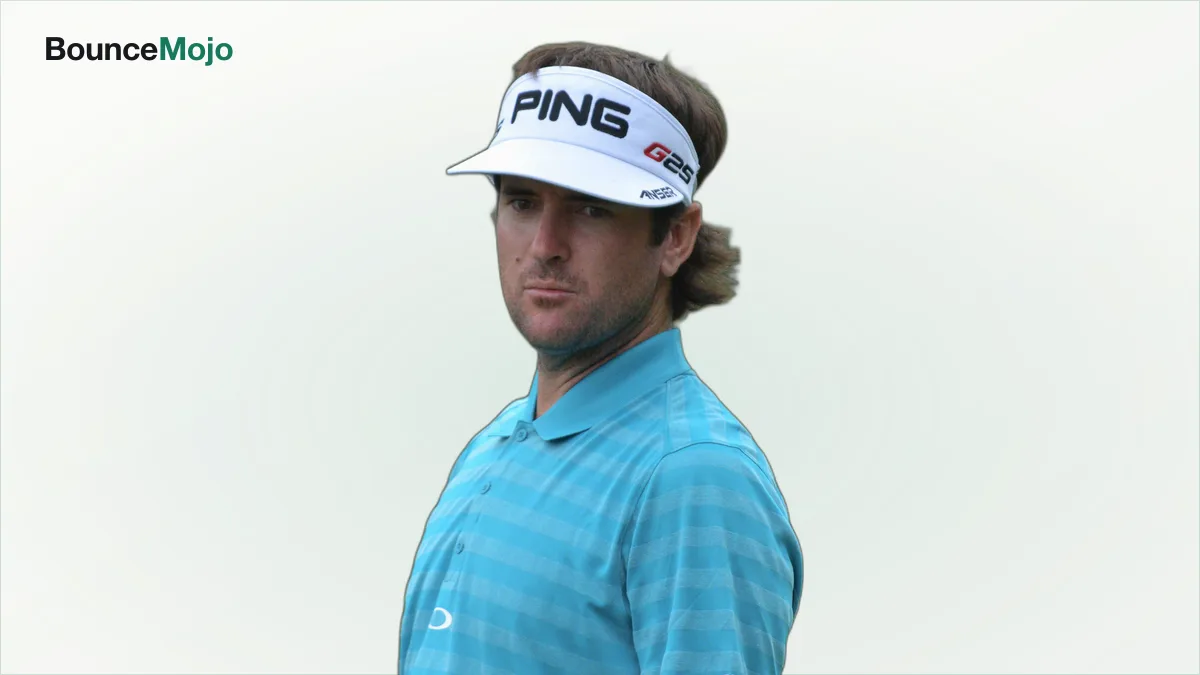
Most people know Bubba Watson as the emotional lefty who hits shots no one else would even try. What they miss is how far outside the system he built that whole career.
Here’s what most people miss: Watson became a two-time Masters champion without ever taking a formal golf lesson, an almost unheard-of feat at the highest level of a technical, coaching-obsessed sport.
The Myth vs. The Reality
The myth is colorful. Bubba Watson: the wild, emotional, self-taught genius who curves the ball around trees, cries on the green, and wins Masters titles on pure feel.
The reality has more shadow in it.
Here’s the deal: the same emotional openness that makes Watson so watchable also made his life genuinely hard. Behind the highlight-reel shots and the tears of joy, he wrestled with anxiety, self-doubt, and the crushing weight of expectation. The feel-based genius was also a man often at war with his own mind.
And the “self-taught” label isn’t a gimmick. Watson really did build his entire game alone, which made him an outsider in a sport that runs on coaches, data, and conformity. That outsider status is the key to everything, his triumphs and his struggles alike.
You might be wondering: how does a self-taught kid from a small Florida town beat the most polished players in the world? To understand that, you have to understand where he came from.
The World That Made Bubba Watson
Gerry Lester “Bubba” Watson Jr. was born in 1978 and raised in Bagdad, Florida, a small town near Pensacola in the state’s panhandle. This was not the world of elite golf academies and country-club privilege.
His father, Gerry Sr., a former Green Beret, was a huge influence, tough, loving, and central to Bubba’s story. Young Bubba started hitting balls as a toddler, using a cut-down club, developing his game in fields and backyards rather than under the eye of a pro.
Now: the panhandle produced a certain kind of person, plainspoken, faith-oriented, unpretentious. Watson carried all of it onto the biggest stages in golf, refusing to sand down his rough edges for anyone.
Think about it: while future rivals were being coached and refined at exclusive academies, Bubba was teaching himself to bend a golf ball in a small Southern town. That gap, homemade talent versus manufactured perfection, defined his entire career. And it started with a boy, a club, and no instruction manual.
The Crucible: Early Life and the Climb
The Environment That Shaped Him
Watson’s refusal to take lessons wasn’t stubbornness for its own sake. It was how he learned, by feel, by experimentation, by hitting thousands of shots and watching what the ball did. He developed the ability to curve it enormously in both directions, a creative, artistic style no coach would have dared teach.
Here’s the truth: that self-taught foundation made him unlike anyone else. It also meant he had no technical safety net when things went wrong, no swing coach to fall back on, just his own feel and faith.
He played college golf at the University of Georgia, then grinded through the developmental tours before earning his PGA Tour card. The climb was slow, and the emotional highs and lows were always visible.
The Catalyst
Watson broke through on tour and quickly became known for two things: prodigious, curving drives and raw, on-his-sleeve emotion.
Then came the moment that made him a legend.
Let that land. In the 2012 Masters playoff, Watson found himself in the trees off the 10th fairway, seemingly out of options. He hit a wedge that hooked violently, curving something like 40 yards through the air around the trees and onto the green. Minutes later, he won the green jacket and collapsed in tears.
It gets better, and heavier. Because just before that win, Bubba and his wife had adopted a baby boy, and just as his career soared, his beloved father’s health was failing. Triumph and grief were about to arrive almost together.
The Key Players
No one climbs alone, and Watson’s story is full of the people who shaped him.
Gerry Watson Sr. His father, a former Green Beret, who introduced him to golf and was the emotional anchor of his life. Gerry Sr. died in 2010, a loss that hit Bubba hard and colored his emotional victories thereafter.
Angie Watson. His wife, a former professional basketball player, and his steady partner through the highs and lows. Together they adopted their children, and family became the center of Bubba’s identity.
Ted Scott. His longtime caddie during his Masters wins, a trusted partner who helped manage both the strategy and the emotions of a player who felt everything intensely.
Ping. His equipment partner, famous for the pink-shafted driver Watson used to promote awareness for good causes, a signature that fit his colorful, unconventional brand.
By the way, notice the theme: family and faith at the center, a small trusted circle, and a refusal to change who he was. That authenticity won hearts, but it also left him exposed. And the exposure took a real toll.
The Turning Point
The Pinnacle
Watson’s peak came in two green jackets.
He won the Masters in 2012 with that unforgettable hooking wedge, then won it again in 2014, joining an elite group of multiple Masters champions. Twelve PGA Tour wins in total placed him among the best players of his generation. As his net worth breakdown details, that success built a fortune estimated near $40 million, later boosted by a move to LIV Golf.
He also represented the United States multiple times in the Ryder Cup, one of the great honors in the sport.
The Price
Here’s the kicker: the emotional intensity that made Watson great also nearly broke him.
At the height of his success, Watson has said, he was miserable. He struggled with anxiety, with the scrutiny of fame, and at times with his own reputation for being difficult. He has been open about a period when he questioned whether he could keep going, when the pressure outweighed the joy.
The price of feeling everything so deeply was that the lows cut as deep as the highs soared. Winning the Masters didn’t make him happy. Figuring out his own mind, slowly, was the harder and more important victory.
The Unvarnished Truth
Watson’s flaws were real, and he has been unusually honest about them.
He earned a reputation, at times, for being prickly with playing partners, officials, and media, a byproduct of his intensity and anxiety. He has acknowledged that he could be difficult to be around during tough stretches, and that his emotions sometimes got the better of him.
Now: rather than hiding it, Watson has spoken openly about his mental health struggles, his anxiety, his self-criticism, and his journey toward a healthier mindset. That candor made him a meaningful voice for athletes dealing with the same pressures.
The most honest thing about Watson is that he let people see the whole man, the joy and the pain, the genius shots and the hard days. In a sport that prizes composure, he wore his humanity in the open.
Controversies and Criticisms
Watson’s career drew its share of debate.
A prickly reputation. For years, Watson was dogged by stories of being difficult with caddies, partners, and officials. Some players anonymously ranked him among the tougher personalities on tour, a criticism he has since acknowledged and worked to address.
The LIV Golf move. Watson’s decision to join LIV Golf drew criticism from those who saw the breakaway league as damaging to the sport. He defended the choice on grounds of family, schedule, and finances, but it placed him in one of golf’s most divisive debates.
On-course emotion. His visible frustration and occasional outbursts drew critics who felt he lacked composure, even as fans loved his authenticity.
Style over substance claims. Early in his career, some questioned whether his flashy, curving game could produce consistent results. Two green jackets answered that emphatically.
The “why isn’t he happier?” narrative. As Watson opened up about his struggles, some fans and pundits found it hard to reconcile a two-time Masters champion who described himself as miserable. A few dismissed it as ingratitude. Others recognized it as an honest, and important, admission that success doesn’t automatically deliver contentment. That gap between public envy and private pain became part of his story.
Faith in the public square. Watson’s open expressions of his Christian faith drew admiration from some and eye-rolls from others, a familiar divide for openly religious athletes. He never toned it down to please critics, which fit his broader refusal to be anyone other than himself.
What We Can Learn From Bubba Watson
Navigating Hard Times
The first lesson is that success and happiness are not the same thing. Watson won the Masters and was still miserable. His real turnaround came when he confronted his anxiety and his mindset, not when he lifted a trophy.
But here’s the truth his story makes plain: being open about your struggles is a strength, not a weakness. Watson’s willingness to talk about his mental health helped him heal and helped others feel less alone.
Consider how rare that was in his sport at the time. Golf prizes composure, control, and a stiff upper lip. A player admitting he was anxious and unhappy at the height of his success cut against every unwritten rule. Watson did it anyway, and in doing so he gave permission to others, fans and fellow pros alike, to admit that winning and wellness are not the same thing. That honesty may end up being a bigger legacy than either green jacket.
The Success Blueprint
If you want the replicable part, it’s this: your difference is your advantage.
Watson never fit the mold, self-taught, left-handed, curving the ball where others hit it straight, and that uniqueness became his edge. That refusal to conform is exactly why he sits among the wealthy names on our richest golfers list, and among the richest athletes he stands out as a true original.
There’s a temptation, in any competitive field, to sand down the very things that make you different in order to fit in. Watson did the opposite. He leaned into the weird, curving shots, the homemade swing, the outsider identity, and made them the foundation of his brand and his game. The lesson isn’t “never take advice.” It’s “know which parts of yourself are load-bearing,” and protect them. For Watson, that homemade artistry was the whole point, and copying someone else’s textbook swing would have made him worse, not better.
Becoming Better
The deepest lesson is about grounding yourself in what matters. When golf and fame threatened to consume him, Watson anchored himself in family, faith, and his hometown, adopting his children, investing in Pensacola, staying true to his roots.
In other words, he learned that the trophies were never going to fill him up. The self-taught kid from Bagdad, Florida, found his real success in the life he built off the course, not just the shots he hit on it.
Final Verdict
Bubba Watson is one of the most distinctive figures golf has ever produced, and “distinctive” fits him better than “conventional,” though his achievements are serious. Two Masters titles, 12 tour wins, and a swing no one taught him.
And here’s the twist that reframes everything: the emotional, self-taught outsider who hit the most creative shots in the game spent his peak years quietly struggling, then found peace by being honest about it. The full picture of the fortune he built, from green jackets to hometown businesses to LIV Golf, lives in his net worth breakdown. His story proves you don’t have to fit the mold to win at the highest level. Sometimes being unapologetically yourself is the whole point.
Shop Bubba Watson on Amazon
Books, audiobooks, merch and more, handpicked for fans.
As an Amazon Associate we earn from qualifying purchases.
Frequently Asked Questions
Who is Bubba Watson?+
Bubba Watson is an American professional golfer and two-time Masters champion (2012 and 2014), known for being entirely self-taught, hitting the ball with dramatic curves, and playing left-handed.
Is Bubba Watson really self-taught?+
Yes. Watson is one of the rare elite golfers who never used a formal swing coach, developing his unique curving, left-handed game entirely on his own from childhood.
What was Bubba Watson's famous Masters shot?+
In the 2012 Masters playoff, Watson hit a wildly hooking wedge from deep in the trees on the 10th hole, curving the ball around obstacles to set up the win, one of the most famous shots in Masters history.
Has Bubba Watson been open about mental health?+
Yes. Watson has spoken publicly about battling anxiety and personal struggles, including a period where the pressures of fame affected his well-being, making him a notable voice on mental health in golf.
Why did Bubba Watson join LIV Golf?+
Watson joined LIV Golf as a team captain later in his career, citing the guaranteed money, reduced schedule, and family time, a decision that stirred debate but made financial sense for him.
Want the money side of the story?
Read Bubba Watson's Full Net Worth Breakdown →Shop Bubba Watson on Amazon
Books, audiobooks, merch and more, handpicked for fans.
As an Amazon Associate we earn from qualifying purchases.