Bryson DeChambeau Biography: The Scientist Who Reinvented Golf
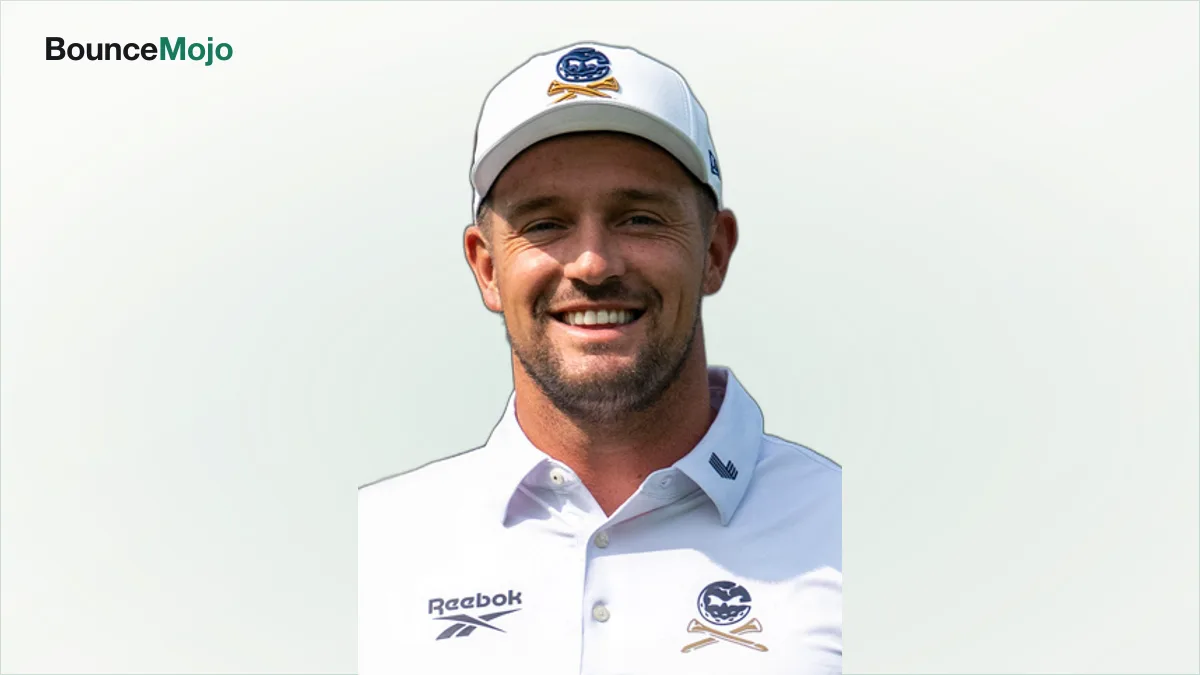
Most golf fans know Bryson DeChambeau as the mad scientist who bulked up and bombed the ball into orbit. That headline skips the more surprising story of a man who reinvented himself twice.
Here’s what most people miss: the same quirks that once made DeChambeau one of golf’s most divisive figures are exactly what turned him into one of its most beloved. He didn’t change who he was. He changed how the world saw it.
The Myth vs. The Reality
The myth is loud. Bryson DeChambeau: the eccentric muscle-bound experiment, all speed and science, more spectacle than substance.
The reality is a genuine original who kept being proven right.
Here’s the deal: DeChambeau really did treat golf like a laboratory. Single-length irons, launch-angle math, a body he rebuilt to swing harder than almost anyone. Plenty of people laughed. Then he won a U.S. Open by overpowering one of the hardest courses on earth, and the laughing stopped.
And the “polarizing villain” framing missed something important. Underneath the controversy was a curious, playful personality that just needed the right platform. When he found YouTube, the same man the crowd once booed became someone millions wanted to root for.
You might be wondering: how does a divisive physics nerd become one of golf’s most likable stars? To understand that, you have to understand the world that made him.
The World That Made Bryson DeChambeau
DeChambeau was born in 1993 in Modesto, California, and grew up in Clovis.
He came up in a golf culture that prized feel and tradition, and from the start he rejected it. Where most junior players learned by instinct and repetition, DeChambeau approached the game like an engineering problem, reading about the physics of the swing and questioning why anyone did things the conventional way.
Now: this was a kid who genuinely thought differently. He embraced ideas most coaches dismissed, like clubs that were all the same length, because the math made sense to him even if the tradition said otherwise.
That analytical mind set him apart immediately. It also set him up for a lifetime of being doubted, because golf’s establishment tends to resist anyone who challenges its orthodoxy.
The California junior scene gave him his start. But his refusal to conform would make his whole career a running argument with the sport itself.
The Crucible: Early Life and the Climb
The Environment That Shaped Him
DeChambeau’s obsession with the science of golf crystallized early. As a teenager he committed to single-length irons and a physics-first philosophy, guided by influences like the book The Golfing Machine, which treats the swing as a mechanical system.
He took that approach to SMU, where he became one of the best amateurs in the country. In 2015 he pulled off a rare double, winning both the NCAA individual championship and the U.S. Amateur in the same year, joining a tiny club of players to do so.
Here’s the truth: the results validated the method. His strange, mathematical approach wasn’t a gimmick. It was producing elite golf, and it forced the establishment to take him seriously even as many rolled their eyes.
The Catalyst
DeChambeau turned pro and started winning on the PGA Tour, but his defining experiment was still to come. During the COVID-era break, he undertook a radical body transformation, adding dozens of pounds of muscle to swing faster and hit the ball dramatically farther.
It gets better: it worked spectacularly. At the 2020 U.S. Open at Winged Foot, one of the game’s toughest tests, DeChambeau simply overpowered the course, blasting drives and winning going away. The experiment that everyone questioned had produced a major champion.
But turning golf into a power contest, and himself into a lightning rod, came with a cost. The boos and the feuds were coming, and they would test whether he could win over anyone at all.
The Key Players
No transformation this dramatic happens in isolation, and DeChambeau’s story has key figures.
His coaches and mentors. From early instructors who tolerated his unorthodox ideas to the team behind his body transformation, DeChambeau surrounded himself with people willing to test the unconventional.
Brooks Koepka. No rivalry shaped his public image more. The feud between DeChambeau and Koepka, sparked by comments and a viral eye-roll clip, became one of golf’s biggest storylines and, ironically, made both men bigger stars.
Greg Norman. As the face of LIV Golf, Norman signed DeChambeau into the breakaway league, opening the chapter that transformed his finances.
His fans and followers. Perhaps the most important “player” of all is his audience. The millions who followed his YouTube journey turned him from a polarizing pro into a beloved entertainer.
Think about it: DeChambeau’s career is a series of relationships with skeptics, rivals and fans, and his genius was slowly converting doubters into believers.
The Turning Point
The Pinnacle
DeChambeau’s mountaintop is defined by his two U.S. Opens.
The 2020 win at Winged Foot proved his power experiment could conquer the hardest setups. The 2024 U.S. Open, a thrilling, emotional victory, showed a matured champion who had learned to win the crowd as well as the tournament. That second title, celebrated by galleries that once jeered him, marked his full arrival as a beloved figure. As his own net worth story shows, that popularity became a genuine business asset.
The Price
Here’s the kicker: getting to that beloved place meant surviving years as golf’s punching bag.
DeChambeau endured relentless criticism, slow-play complaints, mockery of his methods, and open feuds that made him an easy villain. There were stretches where the boos followed him around courses, and his relationship with fans and peers was genuinely toxic.
The price of being a revolutionary is that the world resists you first. DeChambeau paid that price for years before the reinvention took hold. Which brings us to the more human side of the story.
The Unvarnished Truth
DeChambeau is a more complicated figure than either the villain or the hero version suggests.
His intensity and self-belief could tip into arrogance. He argued with rules officials, alienated peers, and at his lowest point seemed to relish being an antagonist. The single-minded obsession that made him great also made him hard to be around.
Now: none of that was fake, and neither is the warmth he later showed. The reinvention on YouTube wasn’t a marketing costume. It revealed a genuinely curious, fun-loving side that had always been there, buried under the controversy.
He has been candid about the toll of being disliked, and about wanting to be understood rather than just tolerated. The pivot to content was partly a business move and partly a very human desire to show people who he really was.
You might be wondering: which is the real Bryson, the divisive scientist or the crowd-pleasing entertainer? The honest answer is both. He is a man of genuine contradictions, an obsessive competitor and a playful showman living in the same body.
The most honest thing you can say is this: DeChambeau never stopped being himself. He just finally got the world to meet him halfway.
Controversies and Criticisms
For all his brilliance, DeChambeau collected controversies along the way.
Slow play. His methodical, calculation-heavy approach drew repeated criticism for painfully slow rounds, frustrating fans and officials.
The Koepka feud. His public rivalry with Brooks Koepka delighted some and struck others as a manufactured distraction.
The power debate. His bulk-up and bombing strategy sparked arguments that he was making courses obsolete, forcing the sport to reckon with distance.
The LIV move. His decision to join LIV Golf in 2022 for a reported nine-figure guarantee drew backlash from those who saw the breakaway league as a betrayal.
What We Can Learn From Bryson DeChambeau
Navigating Hard Times
The first lesson is about enduring ridicule: being mocked is not the same as being wrong. DeChambeau was laughed at for his single-length clubs, his math and his muscle, and he kept going until the results proved him right.
But here’s the truth his story makes plain: surviving the doubt took a thick skin and a genuine belief in his own method. He had to be willing to look foolish in public for years before the vindication arrived.
The Success Blueprint
If you want the replicable part, it’s this: DeChambeau questioned every assumption instead of accepting how things were done. He asked why irons had to be different lengths, why he couldn’t just get stronger, why golf had to be played the traditional way.
That first-principles thinking is transferable. The lesson is to challenge the defaults in your own field and test what happens when you ignore the conventional wisdom, the same relentless curiosity that later powered his climb up our richest golfers ranking.
Becoming Better
The deepest lesson is about reinvention and self-acceptance. DeChambeau transformed his body, his game, and eventually his public image, but the biggest shift was learning to share his authentic self rather than fight the world.
In other words, sometimes the win isn’t changing who you are. It’s changing how you let people see it. DeChambeau’s journey from booed villain to beloved star is a case study in that quieter kind of growth.
Final Verdict
Bryson DeChambeau is one of the most original figures golf has ever produced, and “original” is the whole point, because there has genuinely never been anyone like him. He treated the game like a science project, remade his body to conquer it, endured years of ridicule, and came out the other side as both a two-time major champion and a fan favorite.
And here’s the twist that reframes everything: the eccentric who once divided golf built a media empire that made him one of the sport’s most commercially powerful stars, an audience he owns outright. The full mechanics of that fortune live in his net worth breakdown, and they prove the quirks were never a weakness. They were the whole strategy.
DeChambeau’s story is a case for thinking differently and outlasting the doubters. It’s the tale of a man who refused to play golf, or life, the way he was told to, and eventually got the whole world to come around. Read it closely if you’ve ever been mocked for doing things your own way, and needed proof that being right takes time.
Shop Bryson DeChambeau on Amazon
Books, audiobooks, merch and more, handpicked for fans.
As an Amazon Associate we earn from qualifying purchases.
Frequently Asked Questions
Where did Bryson DeChambeau grow up?+
Bryson DeChambeau was born in Modesto, California, in 1993 and grew up in Clovis, California, where he developed his science-driven approach to golf as a teenager.
Why does Bryson DeChambeau use single-length clubs?+
DeChambeau uses single-length irons, all the same length, because he believes standardizing the setup makes the swing more repeatable, a hallmark of his physics-based philosophy.
Why did Bryson DeChambeau gain so much weight?+
DeChambeau deliberately bulked up by dozens of pounds to swing faster and hit the ball farther, a radical experiment that helped him overpower the 2020 U.S. Open.
How did Bryson DeChambeau become popular on YouTube?+
After being one of golf's more polarizing figures, DeChambeau leaned into YouTube content, playing fun challenges and collaborations that showed a relatable side and won over millions of fans.
How many majors has Bryson DeChambeau won?+
DeChambeau has won two major championships, both U.S. Opens, in 2020 and 2024.
Want the money side of the story?
Read Bryson DeChambeau's Full Net Worth Breakdown →Shop Bryson DeChambeau on Amazon
Books, audiobooks, merch and more, handpicked for fans.
As an Amazon Associate we earn from qualifying purchases.