Brock Lesnar Biography: The Farm Boy Who Conquered Two Sports
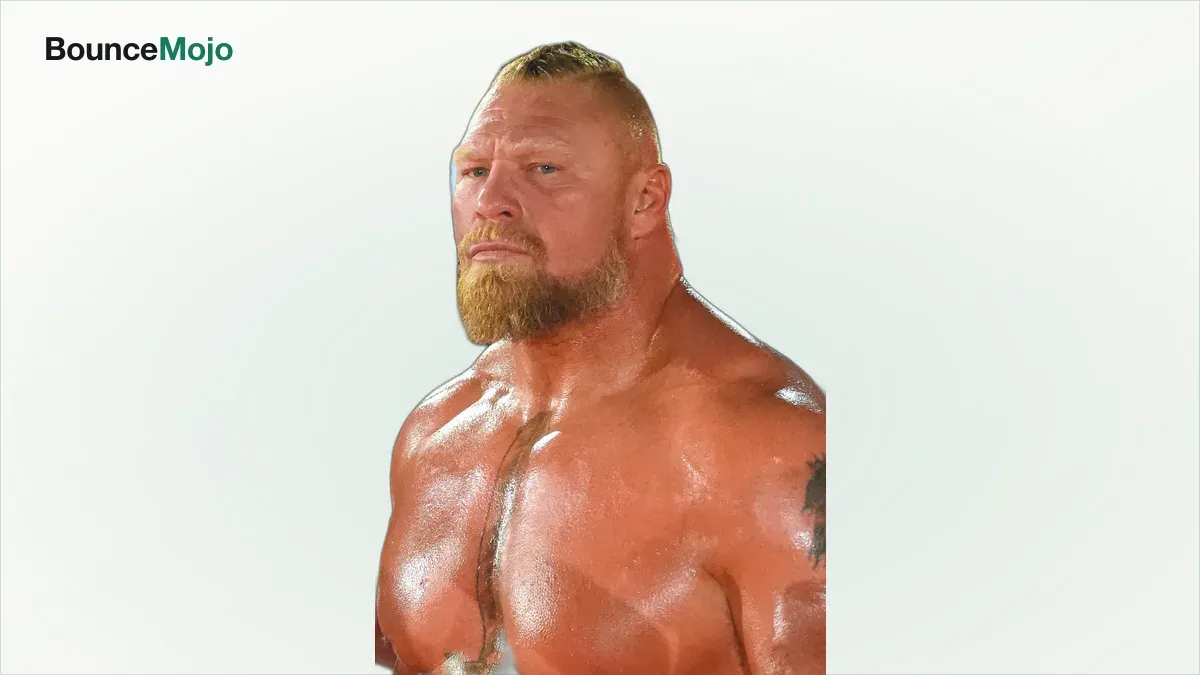
The easy read on Brock Lesnar is that he is a character somebody else invented.
The credentials underneath the character are entirely real, which is close to unheard of in professional wrestling.
The Myth vs. The Reality
The myth is that Brock Lesnar is a manufactured character, a scripted monster built by a wrestling company.
Here’s the truth: the scary part is real.
The reality is that Lesnar is one of the most legitimately accomplished combat athletes of his generation, a genuine NCAA national champion wrestler and a real UFC world champion. The “Beast Incarnate” is not entirely an act. Under the theatrics is a man who could actually do the things the storylines only pretended.
What makes Lesnar different is not showmanship. It is the opposite. He has almost no interest in celebrity. He gives few interviews, avoids Hollywood, and disappears to his ranch between paydays. Most stars chase attention. Lesnar treats it as a job he clocks out of.
And to understand that instinct, you have to go back to a farm where the work never stopped.
The World That Made Brock Lesnar
Brock Edward Lesnar was born on July 12, 1977, in Webster, South Dakota. His family ran a dairy farm, and Brock grew up doing the brutal, unglamorous labor that farm life demands. Bales of hay. Early mornings. Physical work before school and after.
Picture it: a kid building raw, functional strength not in a gym but in a barn, year after year.
Here’s the deal: that upbringing gave him something no training program could. He credits the farm for his freakish base of power and his relentless work ethic. It also gave him a taste for rural quiet that never left him, a preference for open land over crowded rooms.
Rural South Dakota in the 1980s was not a launchpad to fame. It was isolation, chores, and self-reliance. But it forged a young man who was already extraordinarily strong and comfortable with hard, lonely work. Those two traits would define everything that followed.
He just needed an arena to put them to use.
The Crucible: Early Life and the Climb
The Environment That Shaped Them
Lesnar found wrestling, and wrestling found the perfect body. He rose through the amateur ranks and earned a spot at the University of Minnesota, where he became one of the most dominant heavyweights in college wrestling.
The environment was cutthroat. Elite collegiate wrestling is a grind of weight cuts, conditioning, and technical mastery, and Lesnar thrived. He won an NCAA Division I national championship, cementing himself as a legitimate athlete long before any camera turned him into a character.
Now: that credential matters. Everything Lesnar later did in entertainment rested on the fact that he had genuinely been one of the best in a real sport.
The Catalyst for Breakout
WWE came calling, and Lesnar’s rise was almost instant. His combination of size and speed had never been seen. Within a year of his main-roster debut, he was one of the youngest world champions in company history.
But here’s the truth: the road broke him. The relentless travel, the nonstop schedule, the loss of privacy, all of it wore him down fast. In 2004, at the absolute peak of his fame, Lesnar quit.
It was a shocking move. He tried out for the Minnesota Vikings, a bid to play professional football despite never having played in college, and made it deep into training camp before being cut. Then he found the thing that would define his second act: mixed martial arts.
The wrestling world scoffed. The cage was about to prove them wrong.
The Key Players
Lesnar’s career ran through a few essential figures, on-screen and off.
The most enduring is Paul Heyman, his longtime advocate and mouthpiece. Heyman did the talking Lesnar had no interest in doing, and their pairing became one of the most effective in entertainment history. Heyman’s words made Lesnar’s silence menacing.
Then there is Dana White, the UFC president who took a gamble by signing a pro-wrestling star to a legitimate fight promotion. That bet paid off enormously when Lesnar won the heavyweight title and drew record pay-per-view numbers.
You might be wondering about home.
Lesnar’s wife, Sable, a former WWE performer herself, has been his partner through the chaos, and family life on their Canadian ranch is what he has consistently said he values most. His grounding is domestic and rural, not glamorous.
Those relationships steadied a man built for conflict. And the conflict reached its peak in the cage.
The Turning Point
The Pinnacle of Achievement
The turning point came in the UFC. In only his fourth professional MMA fight, Lesnar defeated Randy Couture to become the UFC heavyweight champion. It was one of the fastest ascents to a major title the sport had ever seen.
It gets better: he became box-office gold. His fights drew some of the biggest pay-per-view numbers in UFC history, and he headlined cards as a genuine crossover attraction. The pro-wrestling star had proven himself a legitimate world-class fighter.
For a stretch, Lesnar was the biggest draw in two different combat industries at once.
The Price of Admission
But the body paid a heavy toll. Lesnar developed diverticulitis, a serious intestinal condition that nearly ended his life and forced him out of competition. He fought through it, returned, and eventually lost his title, his aura of invincibility cracked by illness and elite competition.
Here’s the kicker: even at his lowest, his value never collapsed. When he returned to WWE, he did so on his own terms, a part-time superstar who could name his schedule and his price.
Yet the private cost was real. The illness, the punishment, the years of grind, all of it deepened his desire to retreat from the spotlight the moment the cameras stopped rolling.
Behind the beast was a man who never fully trusted the fame.
The Unvarnished Truth
Lesnar is not a warm, media-friendly star, and he has never pretended to be.
He can be aloof, even cold, with fans and press. He has skipped conventions, avoided interviews, and made no secret of the fact that he does the work for the money and the lifestyle it funds, not for love of the spotlight. To some, that reads as ungrateful.
He has also faced real setbacks that complicate the invincible image. A failed drug test connected to one of his UFC returns resulted in a suspension and overturned result, a serious blemish on an otherwise legitimate combat résumé.
Think about it: the honesty is its own kind of integrity. Lesnar does not fake affection he does not feel. He is transactional and private, and he owns it. In an industry built on manufactured emotion, his refusal to perform off the clock is oddly authentic.
That authenticity has not shielded him from criticism.
Controversies and Criticisms
Lesnar’s career has real controversies. The overturned UFC result and suspension tied to a banned substance remain the most significant, casting a shadow over part of his fighting legacy.
His abrupt 2004 WWE exit angered the company and left storylines in disarray, and his later part-time deals have drawn criticism from fans who felt a top spot was going to someone who rarely appeared.
Here’s the deal: Lesnar has never much cared about defending himself. He lets his in-ring and in-cage work answer the critics and otherwise stays silent. That silence frustrates some and impresses others, but it is consistent. He does not chase approval, and he never has.
His few public words, though, reveal plenty.
Quote Analysis and Literary Breakdown
Lesnar rarely speaks, which makes his statements land harder when he does.
“I’m just a farm boy from South Dakota.” He returns to this framing again and again, a reminder that under the spectacle is someone who never wanted the spectacle. It grounds him and explains his choices.
“I did it for my family.” On his UFC comebacks and grueling schedule, he has framed the punishment as provision, not glory. The fighting was a means to security, not an ego trip.
On leaving WWE at his peak: he spoke of burnout and wanting his life back. Few stars walk away from fame at full height. Lesnar did, twice choosing peace over profile.
Read together, the quotes reveal a man who treats extraordinary talent as a tool for an ordinary goal: land, family, and quiet.
There is a clear lesson in that.
What We Can Learn From Brock Lesnar
Navigating Hard Times
Lesnar’s health crisis and career detours teach resilience without drama. He nearly died, lost his title, and rebuilt his value anyway. He kept his options open and never let one setback define him.
His willingness to walk away is its own lesson. Leaving fame at its peak, twice, took a rare kind of self-knowledge. He understood what he actually wanted and refused to be trapped by what others expected.
The Success Blueprint
The professional lesson is about leverage and scarcity. Lesnar built two legitimate careers and used the credibility of each to command premium pay in the other. He made himself rare, and rarity paid. That strategy is why he sits among the wealthiest names on our richest MMA fighters list.
The financial lesson is discipline. He spends like a rancher, avoids ego-driven ventures, and lets his wealth compound in quiet. In a business littered with broke ex-stars, Lesnar’s frugality is the quietest superpower he has.
Becoming Better
The deepest lesson from Lesnar is about knowing yourself. He never pretended to want what the industry told him he should want. He did not chase Hollywood, did not court the press, did not perform gratitude he did not feel. He figured out early that his goals were land, family, and freedom, and he bent an extraordinary career toward those ends without apology. Most people spend their lives chasing someone else’s definition of success. Lesnar defined his own, then went and built exactly that. There is a rare clarity in a man who refuses to be seduced by his own fame.
That combination points to a clear final take.
Final Verdict
Brock Lesnar’s story is about a man who was genuinely extraordinary and genuinely uninterested in acting like it. From a South Dakota dairy farm, he became an NCAA champion, a WWE phenomenon, and a real UFC heavyweight king, dominating two sports that almost never share a champion.
He did it his way. He walked away when the road broke him. He fought through a life-threatening illness. He returned only on his own terms, then retreated to a Canadian ranch the moment the work was done.
What lingers is the contradiction: the most fearsome athlete of his era wanted nothing more than quiet, land, and family. Lesnar proved you can conquer the spotlight without ever loving it, and that the smartest thing a star can do is know exactly what he is chasing. For him, it was never the fame. It was the freedom the fame paid for.
That is the strange, quiet triumph of Brock Lesnar. He took two of the loudest industries on earth, professional wrestling and mixed martial arts, and used them to buy silence. He gave the world a monster and kept the man for himself, hidden away on a ranch where the cameras cannot reach. Few athletes have ever been so dominant. Fewer still have wanted so little from the dominance itself. In the end, the farm boy from South Dakota simply went home, richer and freer than when he left, exactly as he always planned.
Shop Brock Lesnar on Amazon
Books, audiobooks, merch and more, handpicked for fans.
As an Amazon Associate we earn from qualifying purchases.
Frequently Asked Questions
Where did Brock Lesnar grow up?+
Brock Lesnar was born on July 12, 1977, and raised on a dairy farm in Webster, South Dakota. He grew up doing hard physical labor, which he has credited for his early strength and work ethic.
Was Brock Lesnar a real wrestler?+
Yes. Before entertainment, Lesnar was a NCAA Division I national champion amateur wrestler at the University of Minnesota, one of the most decorated collegiate wrestlers of his era.
Did Brock Lesnar really fight in the UFC?+
Yes. Lesnar became the UFC heavyweight champion, winning the title in only his fourth professional MMA fight, one of the fastest rises to a major title in the sport's history.
Did Brock Lesnar play in the NFL?+
Lesnar attempted an NFL career, earning a spot in the Minnesota Vikings training camp in 2004 despite never playing college football, before he was cut and returned to combat sports.
Why did Brock Lesnar leave WWE the first time?+
In 2004, at the height of his fame, Lesnar walked away from WWE, citing burnout and the grind of the road, before pursuing football and then mixed martial arts.
Want the money side of the story?
Read Brock Lesnar's Full Net Worth Breakdown →Shop Brock Lesnar on Amazon
Books, audiobooks, merch and more, handpicked for fans.
As an Amazon Associate we earn from qualifying purchases.