Brian Rafalski Biography: The Undrafted Kid Who Won Everything
Ask hockey people about Brian Rafalski and they’ll tell you he was a winner. Three Stanley Cups, two Olympic silvers, a Hall of Fame plaque.
Here’s what most people miss: not a single NHL team drafted him. He had to leave the country to force his way into the league at all.
The Myth vs. The Reality
The myth is tidy. Brian Rafalski is the three-time champion, the reliable American defenseman who always seemed to be on winning teams.
The reality was far harder to build.
Here’s the truth: Rafalski went undrafted. Every NHL team passed on him, again and again, deciding a smart, skilled defenseman from Wisconsin wasn’t worth a pick. He had no guaranteed path, no signing bonus, no team betting on his future.
Now think about how easy it would have been to quit. Most undrafted players never sniff the NHL.
That gap, between the polished champion and the overlooked kid nobody wanted, is where his real story lives. And it starts in the shadow of Detroit.
The World That Made Brian Rafalski
Brian Rafalski was born on September 28, 1973, in Dearborn, Michigan, in the heart of American hockey country near Detroit. He grew up loving the game in a region that lived and breathed the Red Wings.
This was a time when American players still fought to be taken seriously in a league dominated by Canadians and Europeans. Undersized defensemen like Rafalski faced extra skepticism, judged too small and too slow to make it at the highest level.
Rafalski went the college route, starring at the University of Wisconsin, where he earned an economics degree while playing top-level hockey. He did everything right. And still, when the draft came, no one called his name.
But here’s the kicker: that rejection didn’t end his career. It redirected it, across an ocean.
The Crucible: Early Life and the Climb
The environment that shaped him
Rafalski came up in a hockey-mad part of Michigan and developed into a skilled, cerebral defenseman at Wisconsin. His game was built on smarts and skating rather than size, exactly the profile scouts underrated.
Going undrafted was a gut punch. It told him the NHL didn’t believe in him. Many players in that position drift into other careers, especially one with an economics degree to fall back on.
Rafalski refused. What no one knew was how far he’d go to prove them wrong.
The catalyst
The catalyst was Europe.
Instead of giving up, Rafalski headed overseas, playing in Sweden and then Finland. There, he flourished, winning awards as one of the best defensemen in the Finnish league, capturing a championship, and earning honors no import had won before him. He dominated for four seasons until NHL scouts finally paid attention.
Here’s the deal: those European years were the turning point that made his entire NHL career possible.
Want to know what happened when a team finally took a chance on him? He won a Stanley Cup almost immediately.
The Key Players
You cannot tell the Rafalski story without a few names.
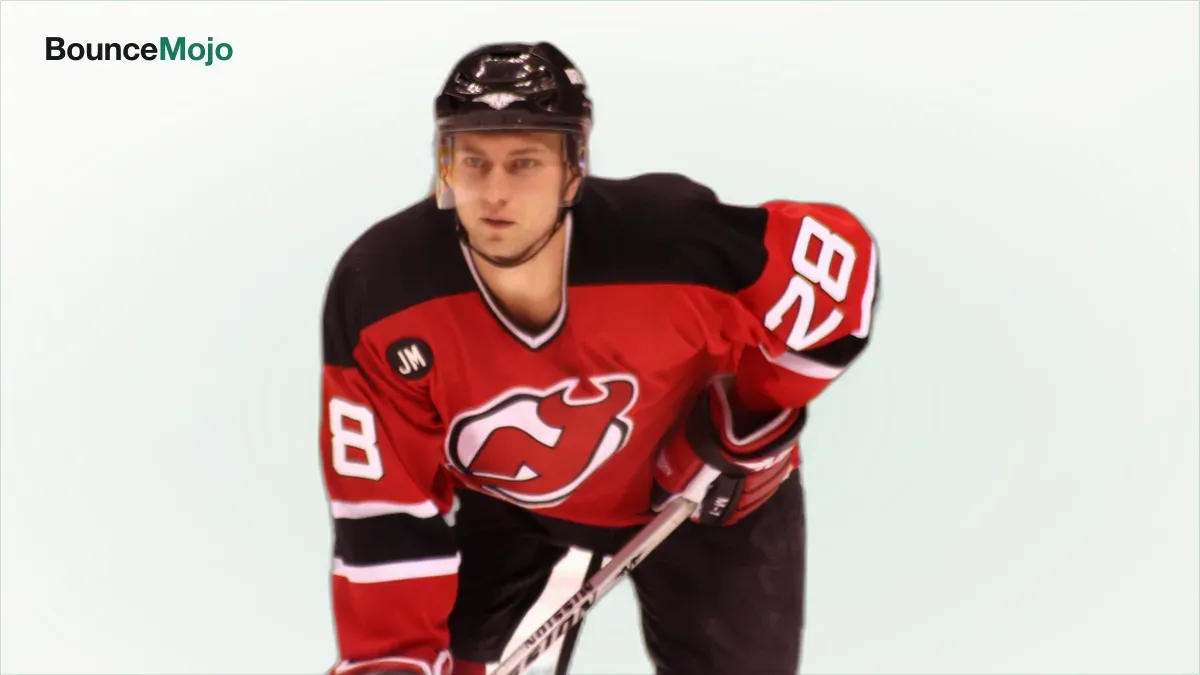
The New Jersey Devils are the first. They signed the undrafted Rafalski as a free agent, giving him the NHL chance no draft ever did. He rewarded them by becoming a top-pairing defenseman and a two-time champion, forming the backbone of a defensively dominant team.
Scott Niedermayer is the second. As Rafalski’s frequent defense partner in New Jersey, the Hall of Famer helped anchor a blue line that won championships. Playing alongside an elite talent elevated Rafalski’s game and reputation.
Team USA mattered enormously too. Rafalski became a cornerstone of the American national team, playing in three Olympics and leading the blue line at the 2010 Games in Vancouver, where the U.S. pushed Canada to overtime in an unforgettable gold-medal final. Representing his country was among the proudest chapters of his life, and it cemented his status as one of the best American defensemen of his generation. The pride he carried in wearing the American sweater, after being overlooked at home for so long, gave those tournaments extra meaning.
Here’s the truth: everything Rafalski built was about to reach its highest peak in a most fitting place.
The Turning Point: Triumph and Its Hidden Cost
The pinnacle
Start with the homecoming, because it was perfect.
After two Stanley Cups in New Jersey, Rafalski signed as a free agent with the Detroit Red Wings in 2007, the team he’d grown up watching in his home state of Michigan. In his first season there, he won his third Stanley Cup in 2008, completing a storybook return home.
By then, the undrafted kid had become one of the most respected defensemen in hockey, a three-time champion and a leader for Team USA on the biggest international stages.
Sit with the improbability of it. A player no NHL team wanted, who had to leave the country just to be seen, ended up with three Stanley Cup rings, one of them won for his home-state team. Most high draft picks never win a single championship. Rafalski won three, alongside Hall of Fame teammates, while consistently logging big minutes against the best players in the world. The gap between how he started and how he finished is one of the widest in modern hockey.
The price
Now the cost, which was measured in his body.
Years of hard, physical hockey took a toll on a smaller defenseman who never had size to spare. Rafalski battled knee and back problems that eventually forced his hand.
There was also the quieter cost of the long road itself: the years spent overseas, far from home, grinding to earn a chance most players are simply handed. That delay meant he reached the NHL late and had a shorter league career than his talent deserved.
You might be wondering why a healthy-looking champion walked away when he did. The answer reveals his self-awareness.
The Unvarnished Truth
Let’s not pretend the path was smooth.
Going undrafted was a real rejection, one that could have ended his career before it began. For years, Rafalski carried the label of a player nobody wanted, and he had to overcome that doubt every step of the way.
Reaching the NHL at 25 also cost him time. Had he been drafted and developed normally, he might have played more seasons and earned even more. The long European detour, while ultimately his salvation, delayed the prime years of his NHL career.
And there was the physical wear. Rafalski played a demanding game without size, and the injuries piled up until he chose to retire in 2011 rather than grind through decline.
Here’s the truth: Rafalski’s greatest strength, his refusal to quit after being overlooked, came with a cost in time and toll. He had to work harder and wait longer than almost anyone to get what draft picks were handed.
Even so, he retired a three-time champion, on his own terms.
Controversies and Criticisms
For a player this respected, Rafalski’s controversies are almost nonexistent.
The knocks against him were always about perception, not conduct. Scouts called him too small and too slow, and those doubts followed him early. He answered every one of them with championships and All-Star-level play.
Some might argue his late start makes his career totals look modest next to longer-serving peers. But that’s a critique of the system that overlooked him, not of the player himself.
Beyond that, there’s little to criticize. Rafalski was known as a smart, humble, hard-working professional, the kind of teammate every winning team wants. He wasn’t a headline-chaser or a locker-room problem. He was the steady, cerebral defenseman coaches trusted in every situation, from penalty kills to overtime, and that reliability was a big part of why three different championship teams valued him so highly.
Here’s the thing though: none of it dents the legacy. Because three Cups and a Hall of Fame induction answered every doubt.
Quote and Career Analysis
Rafalski’s career is best read through three defining facts.
First, undrafted. That single word captures everything he overcame, a player no team wanted who became a three-time champion.
Second, four years in Europe. Those seasons in Finland and Sweden were the gamble that made his NHL dream real, proof that the road less traveled can still lead to the summit. He didn’t just survive overseas, he thrived, winning individual awards and a championship and becoming the first non-Finnish player to claim the Finnish league’s Golden Helmet as its top performer. That dominance is what finally convinced NHL scouts they’d made a mistake.
Third, the 2008 Cup in Detroit. Winning a championship for his home-state team, in his first year there, was the storybook payoff for years of patience and belief.
Put those three together and you get the real Rafalski: an underdog, a proven winner, and a champion who earned everything the hard way.
Now here’s what his story teaches anyone who’s been told no.
What We Can Learn From Brian Rafalski
Navigating hard times
When the door slams shut, you can accept it or find another way in.
Rafalski found another way. Undrafted and overlooked, he went to Europe, dominated, and forced the NHL to notice him. The lesson isn’t to ignore rejection. It’s that a closed door in one place doesn’t mean every door is closed.
The success blueprint
Now the part that built the fortune and the legacy.
Rafalski turned an undrafted start into more than $41 million in NHL salary by betting on himself, winning championships, and cashing in on his hard-won reputation. His economics education helped him manage that money wisely. That combination of grit and discipline is why he ranks among the richest hockey players in the world. The full money breakdown lives in our Brian Rafalski net worth analysis, and you can see where he sits among the richest athletes overall.
Becoming better
The deepest lesson is about persistence and self-belief. Rafalski was told he wasn’t good enough at every early turn, and he answered with three Stanley Cups. He proved that being overlooked is not the same as being finished.
So what’s the final word on hockey’s greatest undrafted success story?
Final Verdict
Brian Rafalski is the rare champion whose greatest achievement was simply getting a chance, and then making the most of it.
On the ice, he’s a three-time Stanley Cup winner, a two-time Olympic silver medalist, and a U.S. Hockey Hall of Famer. Off it, he’s a smart, grounded family man who managed his career and his money with the same intelligence he showed on the blue line.
Here’s the bottom line: the trophies were never the whole story. Behind them was a kid no NHL team wanted, a player who crossed an ocean to prove himself, and a champion who came home to Michigan to win it all one more time.
Anyone who remembers only the rings has missed the rejection he beat to earn them. Rafalski’s real story is perseverance, and it’s better than any highlight reel.
For anyone who has been overlooked, his career is proof of a simple, powerful idea: being passed over is not the same as being finished. Rafalski could have accepted the verdict of every scout who ignored him. Instead, he found a stage that would give him a fair look, dominated it, and forced the league to reconsider. Then he made the most of the chance, winning everywhere he went. Talent matters, but the willingness to keep proving yourself when the door is shut matters just as much, and that quiet stubbornness is the truest measure of the undrafted kid who won everything.
Shop Brian Rafalski on Amazon
Books, audiobooks, merch and more, handpicked for fans.
As an Amazon Associate we earn from qualifying purchases.
Frequently Asked Questions
Where did Brian Rafalski grow up?+
Brian Rafalski was born on September 28, 1973, in Dearborn, Michigan, and played college hockey at the University of Wisconsin before an unusual road to the NHL.
Why is Brian Rafalski's story unusual?+
He went completely undrafted, spent four seasons proving himself in Finland and Sweden, and didn't reach the NHL until age 25.
How many Stanley Cups did Brian Rafalski win?+
He won three Stanley Cups, two with the New Jersey Devils in 2000 and 2003, and one with the Detroit Red Wings in 2008.
Did Brian Rafalski win Olympic medals?+
Yes. He won silver medals with Team USA at the 2002 and 2010 Winter Olympics, becoming a leader on the American blue line.
Is Brian Rafalski in the Hall of Fame?+
Yes. He was inducted into the U.S. Hockey Hall of Fame in 2014, honoring one of the finest American defensemen of his generation.
Want the money side of the story?
Read Brian Rafalski's Full Net Worth Breakdown →Shop Brian Rafalski on Amazon
Books, audiobooks, merch and more, handpicked for fans.
As an Amazon Associate we earn from qualifying purchases.